The Uplift Saga Reading Order: Where to Start
David Brin's Uplift books are six novels in two trilogies, and the standing argument is about the opening. Sundiver was published first and is first in internal chronology, but it is early, comparatively slight work, and starting there is the commonest reason readers never reach the good part. Begin with Startide Rising — it won the Hugo and the Nebula, it needs no setup, and it is the book the series is actually famous for. Sundiver reads far better afterwards, as background rather than as a doorway.
Start Here: Startide Rising
BeginnerEnter the setting at its strongest and absorb the central premise — that no species in the galaxy reaches intelligence alone, except possibly humans.
▸ Study plan for this stage
Pace: About three weeks for Startide Rising's 462 pages, roughly 25 pages a day. Give the first fifty pages a slower, more forgiving pass than the rest — Brin drops you into a crippled ship crewed mostly by dolphins with no glossary, and the vocabulary settles by around page 80. After that the short rotat
- Uplift is the whole premise: no species in the galaxy is supposed to reach intelligence on its own. An older patron species genetically raises a client to sapience, and the client owes the patron roughly a hundred thousand years of indenture. Every political fact in the series descends from that deb
- Humans are the scandal because they have no known patron and apparently did it themselves, which either makes them impossible or makes them liars. They then compounded the offence by uplifting dolphins and chimpanzees before earning the standing to do so.
- The Streaker's crew is the argument made flesh: a starship run by neo-dolphins, with a handful of humans and one chimp aboard. The book asks whether uplifted dolphins are people, and answers it by making you spend 462 pages inside their heads.
- Trinary is the sticking point. Brin gives the dolphins three registers — Anglic for formal speech, Trinary in haiku-like verse for emotional and instinctive thought, and Primal for the older, pre-uplift mind they fall back into under stress. Reading the verse passages as characterisation rather than
- The Library is the galaxy's substitute for research: five galaxies of species who look things up rather than discover them, because everything has already been found. Human science is contemptible to them precisely because it is original.
- The plot engine is a derelict fleet the Streaker stumbled on and the galactic religions that all want it, which is why a damaged survey ship is being hunted by every major power at once.
- Structure: many short chapters, dozens of viewpoints, no single protagonist. Brin cuts away constantly, and the pleasure is in holding several simultaneous crises at once rather than following one hero.
- What does a client species owe its patron, and what practical power does that give the patron over it?
- Why is humanity's status as a 'wolfling' species so destabilising to galactic society that fleets go to war over one small survey ship?
- What are the three dolphin languages in the book, and what does a character's slide from Anglic into Primal tell you about their state?
- Why is Brin's Library civilisation described as decadent when it possesses vastly more knowledge than humanity does?
- What do the different alien factions each believe the derelict fleet is, and how do those beliefs shape how they fight over it?
- Which crew members are treated as fully sapient by the humans aboard, and where does the book quietly show that even sympathetic humans do not fully mean it?
- Read the Trinary passages aloud. They are set as verse and scan as verse; hearing them is the fastest way to stop skimming them, and skimming them is why some readers report the dolphins are hard to tell apart.
- Keep a running list of species names and which are patrons of which. Brin introduces perhaps a dozen without exposition, and a half-page family tree turns the middle third from confusing into fast.
- After the first hundred pages, write one sentence for each of the three or four viewpoint dolphins fixing who they are. The book gives you no reintroductions, so the readers who bounce off it usually lost track of the crew rather than the plot.
- Track one moment where a dolphin's judgement is overruled by a human and ask whether the book endorses the override. This is the series' actual subject, and Startide Rising is where it is posed most sharply.
- Stop at the end and note down which questions the book pointedly refuses to answer — about the Progenitors, and about what the fleet actually is. Those are the threads the Storm trilogy picks up two stages later.
Next up: You now have the uplift premise, the Library civilisation and the galactic factions from the inside, which means The Uplift War can start in the middle of a war without explaining itself and Sundiver can finally be read as the origin story it is rather than as the doorway it was published as.
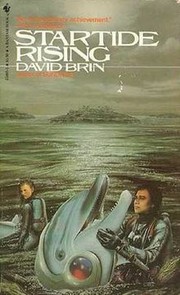
The correct first book despite being second in publication. A ship crewed mostly by uplifted dolphins finds something that makes every major galactic power want them dead, and hides on a water world while the fleets fight overhead. It explains its own universe as it goes and needs nothing before it.
The Rest of the First Trilogy
IntermediateComplete the original three books, taking Sundiver in the position where it works — as background you now have a reason to want.
▸ Study plan for this stage
Pace: Five to six weeks. The Uplift War is the longest book here at 638 pages — three to four weeks at 25–30 pages a day — and Sundiver is a short 340-page mystery you can take in a week to ten days. Do them in this order and not the reverse; the whole point of the stage is that Sundiver arrives as backgr
- The Uplift War is a companion, not a sequel. It runs roughly parallel to Startide Rising on the colony world Garth while the Streaker is being hunted elsewhere, so nothing in it resolves the earlier cliffhanger and it is not meant to.
- Its subject is the other client species humanity uplifted: neo-chimpanzees, who are further from human than the dolphins in some ways and much closer in others. Reading the two books together is how the series makes its argument about what uplift costs the uplifted.
- The tone is different on purpose — occupied-planet resistance comedy, with the avian Gubru as absurd and genuinely dangerous at once. If you came for the oceanic strangeness of Startide Rising, expect satire instead, and judge it on that.
- Garth is an ecologically wrecked world given to humanity as a poisoned gift, which is the book's quiet argument that galactic 'patronage' is mostly extraction.
- Sundiver, published in 1980, is first in internal chronology and is the weakest of the six. It is a locked-room murder mystery aboard a ship diving into the Sun's chromosphere, with thinner characters and a more conventional 1970s shape.
- What Sundiver is genuinely good for is institutional detail: the Library branch on Earth, the Institutes, the diplomatic machinery, and the earliest human arguments about whether to accept a patron. Read it for the furniture, not the plot.
- Reading it third rather than first is a deliberate correction. Chronological order is the commonest reason readers start this series and never reach Startide Rising, which is the book it is actually famous for.
- How does neo-chimpanzee uplift differ from neo-dolphin uplift, both biologically and in how humans treat the result?
- What does the Gubru occupation of Garth reveal about how galactic law is actually enforced, as opposed to how it is written?
- Why is Garth's ruined ecology the right setting for a novel about client species?
- What do the Institutes and the Library branch in Sundiver add to your understanding of why the Streaker cannot simply hand over its discovery?
- Having now read all three, can you say what each book contributes that the other two do not — and why publication chronology and internal chronology point to different starting places?
- Before starting Sundiver, write down what you expect Earth's early galactic contact to have looked like. Reading it as confirmation-or-correction of your own model is far more interesting than reading it cold.
- Compare a chimp viewpoint chapter in The Uplift War with a dolphin viewpoint chapter in Startide Rising and note what each species notices first. Brin builds the difference into the sentence rhythm, not just the content.
- Keep a note of every reference in Sundiver to something you already met in the two later-written books. The novel is thin as a story and rich as a source document, and reading it that way is what makes it enjoyable here.
- List the unresolved threads across all three: the fleet, the Progenitors, the fate of the Streaker. The Storm trilogy is a direct continuation of exactly these, so the list is your entry ticket.
Next up: With the original trilogy complete you have the full galactic frame and the Streaker's unfinished cliffhanger, which is precisely where the Storm trilogy opens — as one continuous novel that assumes every one of these three books.

The direct companion to Startide Rising, set during the same crisis on a different planet, with uplifted chimpanzees resisting an alien occupation. Read it second: it shares the situation but not the cast, and it is the warmest and funniest of the six.
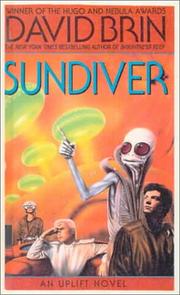
The first-published book, a murder mystery set inside the Sun. Read it third rather than first — it is thinner than what you have just read, but it lays out the Library, the patron-client system and the mystery of humanity's missing uplifters, all of which the next trilogy is built on.
The Uplift Storm Trilogy
IntermediateRead the three-book sequence that is genuinely one continuous novel, and see the galactic questions the first trilogy raised finally answered.
▸ Study plan for this stage
Pace: Ten to twelve weeks for 1,782 pages, at 25–30 pages a day. Treat it as one long novel in three bindings rather than three books: Brightness Reef and Infinity's Shore both end mid-motion, so plan to have the next volume physically on hand before you finish the previous one. If you must break, break a
- This is a direct continuation. It picks up the Streaker's story from Startide Rising, and none of it is designed to be readable without the first trilogy — the earlier stages are load-bearing here in a way they are not for each other.
- Jijo is the new setting: a world declared fallow and left to recover, on which six alien races have illegally settled anyway. They are sooners, hiding from galactic law, and their entire civilisation is built around leaving no trace.
- The sooner races have chosen a deliberate technological regression — the Path of Redemption — believing that devolving to pre-sapience is the way to escape the uplift cycle and be re-uplifted clean. It is the series' most interesting idea and the trilogy's real argument.
- Brightness Reef is almost entirely Jijo, with the galactic plot arriving from outside. Expect a slower, more anthropological book than the first trilogy, and expect the first two hundred pages to be world-building rather than momentum.
- Infinity's Shore raises the stakes and reunites the two storylines; Heaven's Reach abandons Jijo almost entirely for very large-scale galactic cosmology, transcendence and the fate of the five galaxies. The scale shift between the second and third volumes is abrupt.
- Be warned honestly: Heaven's Reach is the most divisive book in the series. It resolves the Streaker plot but leaves the deepest questions — the Progenitors, the ultimate purpose of uplift — deliberately open, and many readers find the ending rushed rather than mysterious.
- Brin narrates a large chunk of Brightness Reef through in-world journals and multiple first-person accounts, including non-human ones. The voices are the point; the plot moves slowly while they are being established.
- What are the sooners hiding from, and why does their crime carry a penalty severe enough to justify how they live?
- What is the Path of Redemption, and what does it claim about the relationship between sapience and freedom?
- How does the Jijo storyline connect to the Streaker's — and at what point in the three volumes does the connection become explicit?
- What does Heaven's Reach say happens to species that transcend, and how does that reframe the whole uplift system you learned in stage one?
- Which questions from Startide Rising are answered by the end, and which are left open? Can you distinguish the ones Brin closes from the ones he chooses not to?
- Make a one-line note for each of the six sooner races as it is introduced in Brightness Reef. There are more named characters here than in the first trilogy combined, and this is the single most useful thing you can do to keep the first two hundred pages moving.
- Track the narrators in Brightness Reef by voice alone, without checking the chapter headings. Brin differentiates them by species-typical syntax, and noticing that is most of the enjoyment of the slow opening.
- When the technological-regression argument is first laid out, write down whether you find it persuasive. The trilogy tests that position from several sides, and holding your own starting answer makes the argument land.
- At the end of Heaven's Reach, write a paragraph on whether the ending satisfied you, and separately on whether it was consistent with what the series had set up. Those are different judgements, and the disagreement among readers turns almost entirely on conflating them.
- Go back and reread the final chapter of Startide Rising after finishing. The Storm trilogy changes what several lines in it mean.
Next up: This closes the six-book sequence: the Streaker's story ends here, the galactic questions the first trilogy raised are answered as far as Brin ever answers them, and you have read the whole of the Uplift saga as it currently exists.
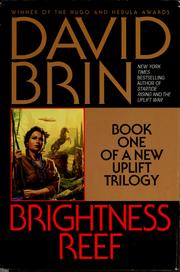
Opens the second trilogy on Jijo, a forbidden world where six sapient species are hiding together as illegal settlers. Much denser and slower than the first trilogy — commit to all three or none, because this one stops rather than ends.
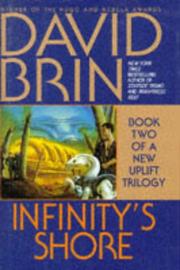
The middle volume, which brings the Streaker crew from Startide Rising into contact with the Jijo settlers. Read it immediately after Brightness Reef; the two were originally conceived as a single book and split for length.

The finale, and where Brin finally addresses the questions about the Progenitors and humanity's origins that Sundiver first raised. Big, strange and divisive — but it is the end of the saga, and there is no seventh book.
Discussion
Keep reading
Paths that share books, cover the same subject, or open a related topic.