The Forsyte Saga Reading Order: Where to Start
The Forsyte Saga is three novels, not nine — The Man of Property, In Chancery and To Let, plus two short interludes that are printed between them and are not separate books. Galsworthy then wrote two further trilogies about the same family, A Modern Comedy and End of the Chapter, and modern omnibuses often bundle all nine together under the Saga name, which is where the confusion comes from. This path takes the true Saga first, then the sequels in order, and says clearly what each covers.
The Forsyte Saga proper
IntermediateRead the actual trilogy that the name refers to, and understand the property-and-marriage argument that drives all nine books.
▸ Study plan for this stage
Pace: 8-10 weeks. Be precise about what you are reading: The Forsyte Saga is THREE novels — The Man of Property, In Chancery and To Let — plus TWO short interludes, Indian Summer of a Forsyte and Awakening, which are roughly twenty and thirty pages and are printed between the novels rather than being volu
- Soames Forsyte's defining conviction that his wife Irene is property, and the marital rape scene in The Man of Property that the novel treats as the moral centre of the whole sequence
- The Forsyte instinct for possession as Galsworthy's real subject — a whole upper-middle-class family described as a system for acquiring and holding things
- Bosinney, the house at Robin Hill, and the way a commissioned building becomes the object every subsequent book fights over
- The interlude Indian Summer of a Forsyte, following old Jolyon's last summer, which is the most-praised thing Galsworthy wrote and takes an hour to read
- In Chancery as a divorce novel: English matrimonial law before 1923, and what a wife had to prove that a husband did not
- Awakening, the second interlude, introducing young Jon — short, and structurally necessary for To Let
- To Let closing the trilogy on the children of the feud falling in love, with the property at Robin Hill as the ground of both the original quarrel and its repetition
- Galsworthy's Nobel Prize was awarded largely on the strength of this trilogy, and the reputation has swung hard since — read him as a social anatomist, not a stylist
- What does Soames believe he is entitled to, and where does the novel let him be sympathetic anyway?
- Why does the house at Robin Hill matter to so many different people, and what does each want from it?
- What does In Chancery show about how divorce actually worked, and who could afford it?
- How do the two interludes change the emotional temperature between the novels, and what would be lost by skipping them?
- In To Let, is the younger generation repeating the feud or resolving it?
- Is Irene a character or an absence, and is that a flaw or Galsworthy's method?
- Check your edition before buying: a complete Forsyte Saga volume contains three novels and two interludes. If your book has only one novel in it, you have a partial edition.
- Draw the Forsyte family tree at the start. Galsworthy names dozens of relatives and expects you to hold the branches apart.
- Read Indian Summer of a Forsyte in one sitting, on its own. It is the best twenty pages in the sequence.
- Track every reference to the value of a thing in The Man of Property. The vocabulary of price is the characterisation.
- Decide consciously at the end of To Let whether to continue. This is the Saga; the next six books are sequels.
Next up: To Let ends the Saga on its own terms, so the second trilogy is a genuine sequel — same family, new decade, and a shift of the centre from Soames to his daughter.
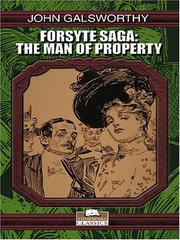
Soames Forsyte, a solicitor who regards his wife Irene as an asset, commissions a country house and loses everything by trying to own it. The Nobel Prize was awarded largely for this book. Note that the short interlude Indian Summer of a Forsyte is printed immediately after it inside any complete edition — it is about twenty pages, not a fourth volume, and it should be read where it falls.
Divorce law, the Boer War, and the next Forsyte generation. Published fourteen years after The Man of Property, and the interlude Awakening follows it in the same way Indian Summer follows the first novel.

The children of the feud fall in love, which closes the trilogy on the same soil the first book fought over. Stop here and you have read The Forsyte Saga as Galsworthy defined it.
A Modern Comedy
BeginnerContinue into the second trilogy, which moves the family into the 1920s and shifts the centre of gravity to Fleur.
▸ Study plan for this stage
Pace: 8-10 weeks for the three. Roughly the same length as the Saga, with two further short interludes printed inside the trilogy exactly as before — read them in place. 30 pages a day. Note the change of register: the title is not decorative, and the tone here is lighter, more satirical and more journali
- Fleur Forsyte as the new centre of gravity, and the way the sequence's obsession with possession survives into a generation that claims not to have it
- The White Monkey's post-war London: a publishing house, a City scandal, and Michael Mont as an entirely different kind of Forsyte husband
- Galsworthy writing contemporary satire rather than historical anatomy — the Saga looked back, A Modern Comedy is reporting
- The libel action in The Silver Spoon, which turns a drawing-room insult into a public verdict on the post-war generation
- Soames at his most sympathetic here, defending his daughter with the same instincts that made him monstrous forty years earlier
- The General Strike of 1926 in Swan Song, used as the backdrop for the sequence's emotional resolution
- Fleur and Jon meeting again, which reopens the wound of To Let deliberately
- The ending Galsworthy gives Soames, which is the real conclusion of the family's story regardless of the three books that follow
- What has changed about the Forsyte instinct by the 1920s, and what has only changed its vocabulary?
- What is the libel case in The Silver Spoon actually about, and what does the verdict decide beyond the parties?
- How does Galsworthy make Soames sympathetic without softening what he did in The Man of Property?
- What does Michael Mont represent, and does the sequence take him seriously?
- Why does the General Strike make the right setting for Swan Song?
- Is Fleur her father's daughter, and in what specific way?
- Read the interludes in place rather than as appendices; several editions print them in small type and readers skip them.
- Compare a scene of Soames in The Man of Property with one in The Silver Spoon and mark what the prose does differently.
- Track the money in The White Monkey's City plot; the satire is precise about it.
- At the end of Swan Song, decide whether to continue. Many readers reasonably stop here.
Next up: Swan Song closes the Forsyte story properly, which is why the last trilogy takes up a different family and has to be approached as a related work rather than a continuation.
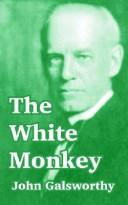
Fleur's marriage, a publishing house and a City scandal. The tone is lighter and more satirical than the Saga, which is the point of the new title, and two more interludes are printed within this trilogy exactly as before.

A libel action over a piece of drawing-room gossip, expanding into a verdict on the post-war generation. Soames is at his most sympathetic here.
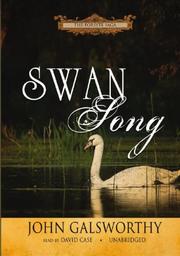
The General Strike, Fleur and Jon again, and the ending Galsworthy gave Soames. Read as the real conclusion of the family's story.
End of the Chapter
BeginnerFinish the nine-book Forsyte Chronicles with the last trilogy, which follows the Cherrell cousins rather than the Forsytes themselves.
▸ Study plan for this stage
Pace: 8-10 weeks for the three, and this is the optional stage. Know before starting that End of the Chapter is only loosely a Forsyte story — the leads are the Cherrell cousins, chiefly Dinny, and the Forsytes appear at the edges. Many readers stop after Swan Song and lose nothing essential. One buying t
- Dinny Cherrell as the lead — a cousin by marriage, which is precisely how loosely this trilogy connects to the Saga
- Maid in Waiting as the slowest of the three and largely a setup volume for the two that follow
- Flowering Wilderness turning on a public accusation of apostasy in the East, and an English society that treats a coerced conversion as a permanent disgrace
- That novel's handling of empire, honour and reputation is the reason to continue past Swan Song, and it is the best writing in the last six books
- Over the River as a divorce case, closing a nine-volume sequence on the same legal terrain In Chancery opened
- Galsworthy died the year Over the River appeared, so the nine books end at the point his career did
- The Forsyte Chronicles as the nine-book bundle modern omnibuses sell under the Saga name — three trilogies, not one, and the source of nearly all the confusion about how many books this is
- What connects the Cherrells to the Forsytes, and is the connection doing any work?
- What is Wilfrid accused of in Flowering Wilderness, and why does English society find it unforgivable?
- How does the divorce case in Over the River compare with In Chancery, thirty years and one law reform apart?
- Does Dinny carry a trilogy, and what does she have that Fleur does not?
- Having finished all nine, what is the Forsyte Chronicles about — property, marriage, or class?
- Would you tell a new reader to stop at three, at six, or to read all nine?
- Verify the title before buying the last volume: Over the River and One More River are the same novel.
- If Maid in Waiting stalls you, skim to Flowering Wilderness; it is the volume that earns the trilogy.
- Set the divorce material of Over the River beside In Chancery and list what the law changed.
- Write a one-paragraph account of the whole nine books, and note how much of it is still about the house at Robin Hill.
Next up: This is the end of the path — all nine Forsyte Chronicles read in order, with the three that actually constitute the Saga clearly separated from the six that followed.

Dinny Cherrell, a cousin by marriage, becomes the lead. Worth knowing before you start that this trilogy is only loosely a Forsyte story, which is why many readers stop after Swan Song.

A love affair wrecked by a public accusation of apostasy in the East. The strongest of the three and the one that justifies continuing.
A divorce case and the close of the whole nine-volume sequence, published in the year Galsworthy died. Sold in the United States as One More River, so check before buying it twice.
Discussion
Keep reading
Paths that share books, cover the same subject, or open a related topic.