Riftwar Reading Order: Where to Start
Feist wrote roughly thirty novels in the world of Midkemia, which is why most reading orders for it are unusable. This path picks the core sequence instead: the original Riftwar Saga, the Empire trilogy written with Janny Wurts that shows the same war from the enemy's side, and the two bridging novels — and then names a sensible stopping point rather than marching you through every later cycle. Read in publication order throughout; Feist never wrote a prequel that rewards being read first.
Start Here: The Riftwar Itself
BeginnerMeet Pug and Tomas and get the war between Midkemia and Kelewan, which every later book in the world assumes you know.
▸ Study plan for this stage
Pace: 4–6 weeks. Before you buy anything, sort out the edition, because this is the one genuinely confusing thing about starting Feist. Magician was published outside the United States as a single enormous volume; the US publisher split it in two, as Magician: Apprentice and Magician: Master. The entries
- The rift itself: a gateway between Midkemia and Kelewan opens a war between two worlds, and every one of the roughly thirty Midkemia novels assumes you know how and why
- Pug and Tomas are deliberate opposites — one becomes a magician, the other inherits Valheru armour and something close to a god's memory — and the split governs the whole original saga
- Kelewan and the Tsurani are the more interesting invention: a rigidly honour-bound imperial culture rather than a generic enemy, which is why the Empire trilogy later works so well
- Feist's Midkemia began as a tabletop roleplaying campaign, which shows in the geography and the abundance of named minor characters, and is a strength rather than an embarrassment
- This is classic-mode fantasy written plainly: keep-boy to power, war, prophecy. The pleasure is in execution and pace, not in subversion
- Pug's captivity section is the structural hinge of the whole project — it is where the enemy stops being an enemy and becomes a place with its own politics
- Publication order is the correct order throughout Midkemia; Feist never wrote a prequel that rewards being read first
- What actually opens the rift, and who on each side wants the war to continue?
- How does Pug's status change on Kelewan, and what does the Tsurani system of honour and slavery let Feist show that a Midkemian viewpoint could not?
- What separates Tomas's power from Pug's in kind, not just in degree?
- What is the Assembly of Magicians, and how does it constrain Tsurani politics?
- Which parts of this story are conventional classic fantasy and which are Feist's own? Being able to answer this makes the rest of the path easier to navigate.
- Before buying, check which edition you are looking at — single-volume Magician, or the US split into Apprentice and Master. Getting this wrong is the single most common way readers start Feist badly.
- Keep a two-column list of Midkemian and Tsurani names as you go. Feist introduces a lot of people quickly and the Kelewan names in particular are easy to lose.
- Note every scene where the Tsurani are shown as reasonable rather than alien. Those scenes are the seed of the Empire trilogy, which is the best sequence in the whole world, and spotting them makes stage three land harder.
- Read the last fifty pages of the second half in one sitting. Feist writes towards set-piece endings and breaking one up flattens it.
Next up: With the rift, the two worlds and the Pug–Tomas split established, the remaining two novels of the original saga can move directly into the Valheru mythology they have been holding back.

The first half of Magician, split in two for US publication. A keep boy is apprenticed to a magician and a rift opens to another world — this is the correct first page of the entire Midkemia project, and one of the cleanest classic-fantasy openings there is.

The second half, following Pug into captivity on Kelewan. Outside the US these two are sold as the single volume Magician, so if you find that edition you have both — do not buy it as well.
The Rest of the Original Saga
BeginnerFinish the original trilogy and understand the Valheru backstory that drives the world's cosmology.
▸ Study plan for this stage
Pace: 3–4 weeks for 407 and 448 pages. Both read faster than Magician did — Silverthorn in particular is a tight, conventional quest novel and can be done in a week. Read them back to back; A Darkness at Sethanon opens almost directly out of Silverthorn's ending.
- Silverthorn is a deliberate scaling-down after Magician's enormous scope: a poisoning, a quest for a cure, a small party and a clear objective
- A Darkness at Sethanon is where the Valheru — the Dragon Lords who preceded every civilisation in Midkemia — move from background mythology to the actual antagonist
- The cosmology introduced here is the substrate for every later Midkemia cycle: the Chaos Wars, the gods, and the reason Pug's power keeps escalating
- Arutha becomes the series' second centre in these two books, and the Krondor of every later cycle is built on his court
- The original saga is genuinely complete at the end of A Darkness at Sethanon — this is a real ending, and a defensible place to stop reading Feist forever
- Feist's set-piece siege writing is at its best here, and it is the thing the later cycles most often try and fail to repeat
- What are the Valheru, and how does their existence change the status of Midkemia's gods?
- Why does Feist follow an epic like Magician with something as small as Silverthorn, and does the contrast work?
- What is resolved at Sethanon and what is deliberately left open for later cycles?
- How has Pug's role changed since Kelewan, and is he still usable as a protagonist at this power level?
- If you stopped here, would the story feel finished? Answer honestly — it will determine how much of the rest of this path you need.
- Sketch the Midkemian cosmology after A Darkness at Sethanon — Valheru, gods, the Chaos Wars, the Lifestone. Half a page is enough and it will save you confusion in every later cycle.
- Mark the moment the Valheru stop being backstory. Feist plants that turn a long way in advance and the setup is more careful than the plain prose suggests.
- Decide in writing whether you are continuing, and why. Most readers who burn out on Feist do so because they never made this decision and simply kept buying the next book.
- Reread the Kelewan chapters of Magician after Sethanon if you have time. They read differently once the cosmology is in place.
Next up: You now know the Riftwar from the Midkemian side in full, which is exactly what the Empire trilogy needs you to know in order to work — because it tells the same war from the other end and expects you to recognise the events.
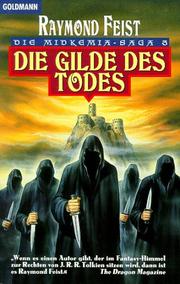
A tighter, more conventional quest novel picking up a few years after Magician, and a good palate-cleanser after that book's enormous scope.
The real climax of the original saga, where the Valheru mythology moves from background to foreground. If you only ever read three Feist books, they are these — this one closes the arc properly.
The Empire Trilogy: The Best of Midkemia
IntermediateSee the Riftwar from the Tsurani side and read the sequence most Feist readers consider the high point of the whole world.
▸ Study plan for this stage
Pace: 8–10 weeks for 448, 691 and 676 pages. Servant of the Empire and Mistress of the Empire are both substantially longer than anything in the original saga and are denser with political manoeuvre, so 30 pages a day is the right target rather than the 50 you may have managed with Magician. Read all thre
- The whole trilogy is set on Kelewan and is co-written with Janny Wurts, whose influence makes it sharper and far more character-driven than the original saga
- Mara of the Acoma inherits a ruined house as a teenager and survives by politics rather than combat — the Game of the Council is the plot engine throughout
- Tsurani honour is treated as a real system with rules that can be exploited, not as exotic colour, and most of Mara's victories are legalistic
- Servant of the Empire crosses directly into events you watched from the Midkemian side, which is the single strongest argument for reading the original saga first
- Mistress of the Empire takes on the Assembly of Magicians and the foundations of Tsurani society, ending as a genuine argument about whether a culture can be reformed from inside
- Slavery, caste and the position of women are the trilogy's actual subjects, and it is more serious about all three than anything else with Feist's name on it
- Many long-time readers rate this trilogy above everything else in Midkemia, and this path agrees
- What are the rules of the Game of the Council, and how does Mara win her first major move without any military strength?
- Which events from the original saga appear here from the Tsurani side, and how does the change of vantage alter what they mean?
- How does the trilogy treat Tsurani slavery — as a fact of the setting, as a moral problem, or as both, and where does that show?
- What does Wurts's involvement change about the prose and the characterisation compared with Silverthorn or Sethanon?
- What is Mara actually trying to reform by Mistress of the Empire, and does the trilogy think she can succeed?
- Is this better than the original saga? Say what specifically is better, not just that it is.
- Keep a chart of the great houses, their alliances and their standing as Mara changes them. The political plot is intricate and the chart is genuinely useful in a way it would not be for the original saga.
- When Servant of the Empire reaches events you recognise from Magician or Sethanon, stop and reread the corresponding Midkemian chapter. This is the payoff the whole reading order was arranged for.
- Note every rule of Tsurani honour as it is stated, then note every time Mara uses one against its intent. Read together, the two lists are the trilogy's method in miniature.
- Write a paragraph comparing Mara with Arutha as a ruler. It is the clearest way to see what a co-writer brought to the world.
- Compare the closing chapters of Mistress of the Empire with those of A Darkness at Sethanon. Two very different ideas of what an ending is for.
Next up: Having read the high point of the world, you are in the best possible position to judge the later cycles honestly — which is what the last stage asks you to do before committing to another twenty books.
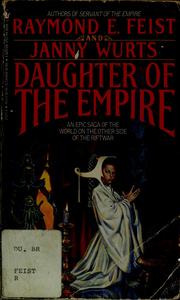
Co-written with Janny Wurts and set entirely on Kelewan: a teenage girl inherits a ruined house and has to survive Tsurani political intrigue. Wurts's influence makes it sharper and more character-driven than anything in the original trilogy. Read it after A Darkness at Sethanon so the overlap with the war reads as revelation.
The middle volume, where Mara's story crosses directly into events you watched from the Midkemian side. This is the payoff for having read the original saga first.

The conclusion, taking on the Assembly of Magicians and the foundations of Tsurani society itself. Many readers rate this trilogy above everything else Feist put his name to.
The Bridge Books, and Where to Stop
IntermediateRead the two novels that bridge to the next generation, sample the strongest later cycle, and make an informed decision about whether to keep going.
▸ Study plan for this stage
Pace: 5–7 weeks for 360, 544 and 498 pages — but this stage is explicitly optional and is designed to be abandoned partway. Read Prince of the Blood first; if it does not hold you, skip The King's Buccaneer and go straight to Shadow of a Dark Queen, which is the real test. If that does not hold you either
- Prince of the Blood jumps roughly twenty years and follows Arutha's sons in Kesh — openly transitional, lighter, and mainly a device for handing the world to a new generation
- The King's Buccaneer takes Nicholas to sea and closes the bridging sequence; nothing after it absolutely requires either book
- Shadow of a Dark Queen opens the Serpentwar Saga, the strongest of the later cycles and the correct test case for whether you want the rest of Midkemia
- Erik and Roo in the Serpentwar are Feist's best non-noble protagonists, and the cycle's opening army sequence is the closest he comes to writing about ordinary soldiers
- The later cycles get progressively more diffuse and no book after this point improves on A Darkness at Sethanon or the Empire trilogy — this is the honest assessment the path is built on
- Roughly thirty novels exist in Midkemia; reading all of them is a choice about volume, not about completing a story, because the story has ended twice already
- What does Prince of the Blood establish that later cycles depend on, and how much of it could you have absorbed from a summary?
- How does Shadow of a Dark Queen differ in register from the original saga, and is the difference an improvement?
- Does Feist's Midkemia get better or merely bigger after Sethanon? Cite specifics from what you have read.
- Where would you tell a new reader to stop, and why?
- Having read ten Midkemia books, what is Feist actually good at — and is it the thing his reputation credits him with?
- Give yourself a hundred-page rule for Prince of the Blood and Shadow of a Dark Queen. If you are not engaged by page one hundred, stop and treat the path as complete. This series punishes obligation reading more than most.
- Write down, before starting Shadow of a Dark Queen, what you would need from it to justify another cycle. Deciding the criteria in advance is the only reliable defence against a thirty-book series.
- Rank the ten books you have read. The ranking almost always puts the Empire trilogy and A Darkness at Sethanon at the top, which is the argument this path has been making throughout.
- If you do continue into Serpentwar, note where it stops surprising you. That page number is your real stopping point for the rest of Midkemia.
Next up: This is the end of the path: you have the Riftwar, its proper ending, the trilogy that outdoes it, and a clear-eyed sample of the later work — so the next move is either the Serpentwar in full, or Janny Wurts's own solo fantasy, which is where the sharpest half of the Empire trilogy came from.
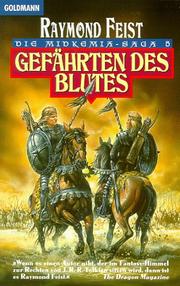
Twenty years on, following Arutha's sons in Kesh. Lighter than what came before and openly transitional, but it sets up the Krondor of everything that follows.
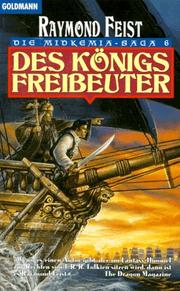
Nicholas at sea, and the last of the bridging novels. Read it if Prince of the Blood held you; skip both if it did not, because nothing after this point requires them absolutely.
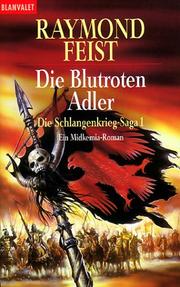
The opening of the Serpentwar Saga, the strongest of the later cycles and the natural test case. If this grips you, continue through Serpentwar; if it does not, stop here — the remaining cycles get progressively more diffuse and no later book improves on A Darkness at Sethanon or the Empire trilogy.
Discussion
Keep reading
Paths that share books, cover the same subject, or open a related topic.