Children of Time Reading Order: Where to Start with Adrian Tchaikovsky
The Children of Time books are a trilogy in the loosest sense: each one jumps thousands of years, swaps in a different uplifted species, and could almost be read as a standalone. Almost — because what carries over is not the cast but a single set of characters preserved by technology and a specific idea about how two intelligences can learn to talk to each other, and book one is where both are established. Read them in publication order. After the three, the useful thing a reading path can do is point you at the rest of Tchaikovsky, who is enormously prolific and wildly uneven in register, and then at the deep-time and uplift tradition he is writing inside.
The Trilogy, In Order
IntermediateRead the three core novels in sequence and see how each one rebuilds the same argument with a different species.
▸ Study plan for this stage
Pace: Six to eight weeks. These are long books — Children of Time and Children of Ruin both run past 550 pages and Children of Memory is not far behind — so budget roughly two to three weeks each at 30-40 pages a night. Start with Children of Time; there is no other entry point, and publication order is t
- Uplift by accident. Avrana Kern's nanovirus was built for monkeys and lands on Portia labiata instead — every book in the trilogy restages this same mistake with a different clade
- Understandings: the spiders' inherited, chemically encoded memory, which lets Tchaikovsky run a civilisation across millennia while reusing the names Portia, Bianca and Fabian generation after generation
- The two-strand structure — an alien civilisation advancing in chapter-length jumps against a human crew in slow shipboard time — and the way the strands finally meet
- Avrana Kern as the actual continuity of the trilogy: not a character who survives so much as a pattern that keeps being instantiated, degraded and copied
- Communication as the trilogy's real subject. Every book turns on whether two intelligences can build a shared protocol, and the answer is never that they simply talk
- Octopus cognition in Children of Ruin as a deliberate contrast to the spiders: distributed, emotional, non-linguistic, and much harder to negotiate with
- The thing in Ruin that is not an uplift at all, and what it means that the trilogy's optimism has to survive an encounter with something that cannot be reasoned with
- Children of Memory's unreliable frame, and why the disorientation in its first third is the argument rather than a flaw
- What exactly does the nanovirus do, and why does the spiders' inherited-memory route to civilisation produce a different society from the one Kern intended?
- By the end of Children of Time, what has to be true about both species for the ending to be possible? Name the specific technology and the specific concession each side makes.
- How does Children of Ruin's octopus society differ from the Portiids in decision-making, and why does that make first contact harder rather than easier?
- What is Avrana Kern by the third book, and can you state honestly whether she is the same entity as the woman in the first chapter of Children of Time?
- What is Children of Memory actually about, and at what page did you work it out? What was the book doing before you did?
- Across the three novels, what is Tchaikovsky's consistent claim about how two intelligences come to understand each other?
- Keep a two-column log while reading Children of Time: on the left, what the spiders have just achieved; on the right, the year-count and the human ship's status. The whole book is built on that asymmetry and seeing it laid out makes the ending land properly.
- Track every recurrence of the name Portia in Children of Time and write one line on what that generation contributed. This is the cheapest way to feel how Understandings works as a plot device.
- After finishing Children of Ruin, reread the first Kern chapter of Children of Time. It reads as a different scene once you know what she becomes.
- Stop at page 150 of Children of Memory and write down what you think the book is. Finish it, then read your note. Tchaikovsky is doing this to you on purpose and the note is the evidence.
- Write a one-paragraph comparison of how each of the three novels solves its communication problem — chemical, electrical, and whatever Memory does. The differences are the trilogy's argument.
Next up: You now know what Tchaikovsky wants from a non-human mind — patience, a real cognitive architecture, and no shortcut to mutual understanding — which is the standard the rest of his catalogue is worth reading against.
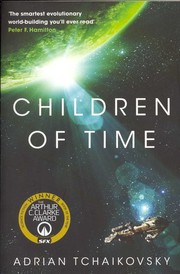
The one that has to come first. A terraforming experiment goes wrong and an uplift virus lands on spiders instead of monkeys, while a generation ship of the last humans arrives millennia later. Everything the sequels do with communication and with the character of Avrana Kern is set up here.
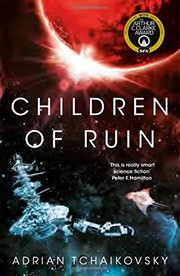
Octopuses this time, plus something considerably less comprehensible. It is a horror novel more than the first book was, and it depends on you already accepting the first book's premise about what uplift produces.

The strangest and most formally ambitious of the three — a failing colony, corvids, and a structure that withholds what kind of book it is for a long time. Read it third and be patient with the first third; the reason for the confusion is the point.
Tchaikovsky in the Same Key
IntermediateRead the other Tchaikovsky novels that share the trilogy's central interest: non-human minds treated seriously.
▸ Study plan for this stage
Pace: Four to five weeks for four books, and these are shorter than the trilogy — Dogs of War and Service Model are both comfortably under 400 pages, Bear Head and Alien Clay similar. Read Dogs of War and Bear Head back to back, since Bear Head is a direct sequel and its satire has nothing to push against
- Legal personhood as the question Dogs of War substitutes for the trilogy's communication problem — Rex can already talk, and it does not help him
- Rex's narration: a designed intelligence reasoning within a designed value system, and the slow widening of what he is able to want
- Bear Head's shift of arena from battlefield to politics, and what happens to the personhood argument once it becomes a lobbying question on Mars
- Alien Clay's biology, which refuses Earth taxonomy entirely, and Tchaikovsky's use of a scientist narrator to make the reader do real classification work
- Prison-planet politics as the frame in Alien Clay: a regime that insists the universe conform to its ideology, meeting an ecosystem that will not
- Service Model's comedy of protocol — a valet robot following procedure into an empty world — and how a joke structure carries the same question about minds built for a purpose
- Tchaikovsky's range as a deliberate fact about him: he writes military SF, satire, horror and farce with the same underlying interest in constructed cognition
- What specifically does Rex want at the start of Dogs of War and what does he want at the end? What changed him — argument, experience, or design?
- Why does Bear Head need Honey to carry the intellectual half of the argument? What can she do in a political setting that Rex cannot?
- How does Alien Clay's ecosystem break the categories the narrator brings to it, and what does the regime do when the data refuses to cooperate?
- Service Model is funny where the trilogy is grave. Does it make a weaker version of the same claim about non-human minds, or a different claim entirely?
- Which of these four is closest to Children of Time in method rather than subject, and why?
- While reading Dogs of War, note every moment Rex's narration reaches for a concept it does not have the vocabulary for. Tchaikovsky is showing you the shape of a mind by its gaps.
- Read the last chapter of Dogs of War and the first chapter of Bear Head consecutively and write down what the intervening decades did to the argument.
- Keep a running taxonomy while reading Alien Clay — your own attempt to classify the organisms as they appear. Compare it to where the novel ends up.
- Write a paragraph on Service Model in the voice of a Portiid observer from Children of Time. It is a silly exercise that makes very clear how differently the two books treat purpose-built minds.
- Rank all four for how seriously they take non-human interiority, and defend the bottom of your ranking in two sentences.
Next up: Having seen Tchaikovsky work the same idea across four registers, you are in position to judge the reservation most Children of Time readers hold — that his premises outrun his plotting — against the trilogy where plot is the whole point.

Bioengineered animal soldiers and the question of legal personhood, narrated by a very large dog. The nearest thing to Children of Time in his catalogue and the obvious next book.
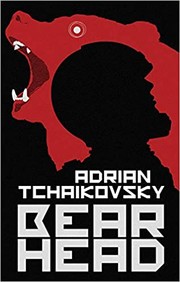
The sequel to Dogs of War, moving the argument to Mars and to human politics. Read it directly after; on its own the satire has nothing to push against.

A prison-planet novel about a biology that does not fit any Earth category, written with the trilogy's same patience about scientific method. Standalone and one of his best recent books.
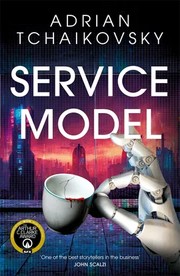
A robot valet in a collapsed world, and much funnier than anything in the trilogy. Included as the deliberate change of register — it shows how wide his range is once you have read four serious books in a row.
The Big Space Opera
IntermediateMove to the Final Architecture trilogy, which is Tchaikovsky doing scale rather than biology, and read it as its own complete sequence.
▸ Study plan for this stage
Pace: Six to seven weeks. The Final Architecture books are long — Shards of Earth and Eyes of the Void both run past 550 pages, Lords of Uncreation longer — but they move much faster than the Children of Time books, so 40-50 pages a night is realistic. Read them in order and have Lords of Uncreation on ha
- The Architects: moon-sized entities that reshape inhabited planets into sculpture, and a threat designed to be unnegotiable at the outset so that negotiation becomes the plot
- Idris Telemmier and the Intermediaries — humans surgically altered to navigate unspace and, incidentally, the only ones able to make contact
- Unspace as a worldbuilding device that is also a horror device: the presence you must not look at while travelling alone
- The Vulture God crew as a competence-and-banter ensemble, a mode Tchaikovsky does not use in the Children of Time books at all
- Factional politics — Hugh, the Parthenon, the Colonies, the Essiel and their Hegemony — as the machinery that generates plot rather than premise
- Middle-volume structure: what Eyes of the Void widens (politics, alien roster, scale) and what it deliberately declines to resolve
- Whether Lords of Uncreation actually concludes, and what conclusion costs a story built on an unnegotiable enemy
- What are the Architects doing, and at what point in the trilogy does the answer stop being 'destroying planets' and become something stranger?
- Why is an Intermediary specifically required? What does the surgery buy that a ship or a machine cannot?
- What does Eyes of the Void add to the political map, and which of those additions actually matter to the ending?
- Is the crew of the Vulture God characterised or merely differentiated? Pick two and make the case.
- Does Lords of Uncreation resolve the trilogy on its own terms, and does that resolution answer the charge that Tchaikovsky is better at premises than plots?
- Draw the faction map after Shards of Earth — Hugh, the Parthenon, the Essiel, the Partheni, the Nativists, the Architects — and update it after each book. This trilogy has more moving political parts than anything else on the path.
- Log every unspace sequence and note what is different about each one. Tchaikovsky escalates the same set-piece across three books and the escalation is trackable.
- After Eyes of the Void, write down the three most plausible endings. Read Lords of Uncreation and grade yourself.
- Compare the first contact scene here with the first contact scene in Children of Time in a short paragraph: same author, opposite methods.
- Time yourself over 50 pages of Shards of Earth and 50 pages of Children of Time. The difference in reading speed is the difference in what the two trilogies are for.
Next up: You have now read the full range of what Tchaikovsky does with alien minds, which is the right preparation for the three novels he is arguing with rather than extending.

First of the Final Architecture books: moon-sized entities reshape inhabited planets into sculpture, and a salvage crew carries the one person who can talk to them. Faster and more conventional than Children of Time, and unconnected to it.

The middle volume, which widens the politics and the alien roster considerably. It has the classic middle-book problem of ending mid-motion, so plan to have the third to hand.
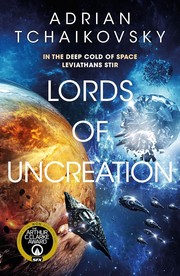
The conclusion, and it does conclude. Together the three make the best argument that Tchaikovsky can build a plot as well as a premise, which is the reservation most Children of Time readers hold.
The Tradition Behind It
IntermediateRead the three novels the Children of Time books are in conversation with — uplift, deep time, and the limits of consciousness.
▸ Study plan for this stage
Pace: Five to six weeks. Startide Rising runs around 450 pages and won both the Hugo and the Nebula; A Fire upon the Deep is the longest of the three at roughly 600 and the densest; Blindsight is the shortest at under 400 and by far the hardest per page. Read them in that order and give Blindsight a slow
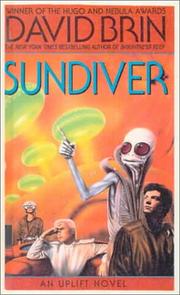
- Uplift as a genre invention: Brin's Five Galaxies run on patron species owning their clients for a fixed term, which makes uplift a property relation rather than an accident
- Why Tchaikovsky is arguing with Brin rather than extending him — the nanovirus produces a civilisation nobody owns, and the trilogy's ethics follow from that difference
- Vinge's Zones of Thought: a galaxy where the physics of computation varies by region, so intelligence itself is location-dependent
- The Tines as a solution to the same problem the Portiids solve differently — a self distributed across several bodies, with identity as a pack composition
- Blindsight's central claim: that intelligence and consciousness are separable, and that consciousness may be the expensive, dispensable one
- Scramblers as the counterargument to everything Children of Time hopes for — something that processes, models and responds without anyone being home
- Rorschach, and the idea of communication as an attack surface rather than a bridge
- The three books as a spectrum of optimism about contact, with Children of Time sitting nearer Brin and Blindsight at the far end
- How does client status work in Brin's galaxy, and what would the Portiids' legal position be if Children of Time happened inside it?
- What do the Tines gain and lose by distributing a self across bodies, and how does that compare with Portiid Understandings as a way of persisting?
- What is the Zones device actually for, in narrative terms? What plot problem does it solve that a normal galaxy would not?
- State Blindsight's argument about consciousness in your own words in three sentences, then state the strongest objection to it.
- Which of the three most directly contradicts Children of Time, and does Tchaikovsky's trilogy have an answer to it?
- After all six Tchaikovsky books and these three, is mutual comprehension between species a reasonable expectation or a genre convention?
- Write the Portiids into Brin's system: name their patron, their client status, and what the Institutes would rule about the nanovirus. A page is enough, and it makes the Brin-Tchaikovsky disagreement concrete.
- Chart a single Tines pack across A Fire upon the Deep as members join and die, and note where you stop treating it as one character. Then do the same for a Portiid lineage across Children of Time.
- Reread the last thirty pages of Blindsight immediately after finishing it. Almost nobody gets the ending on one pass and the second is where the argument becomes visible.
- Set Blindsight's scramblers beside the second alien in Children of Ruin and write 200 words on what each book concludes about a mind you cannot talk to.
- Build a one-page ranking of all nine books on the path by how optimistic each is about contact, with a sentence of justification per position. That ranking is your actual reading of the tradition.
Next up: You have read the trilogy, the author's range and the three novels it answers, which means the next Tchaikovsky you pick up is a choice you can make on your own terms rather than a recommendation.
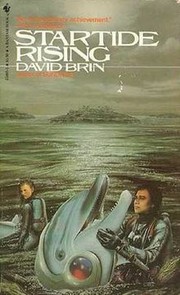
The book that made uplift a subgenre: dolphins and chimpanzees crewing a starship in a galaxy where patron species own their clients. Tchaikovsky is arguing with this model rather than extending it, which is clearest once you have read it.
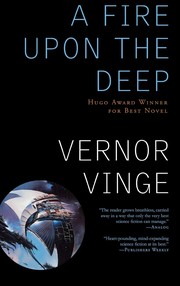
The other great novel of alien cognition — group-mind dogs whose selfhood is distributed across bodies. Read it for the same pleasure the spider chapters give, done a different way.
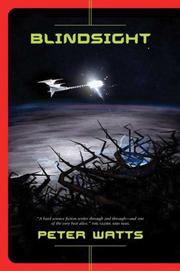
The hardest and bleakest of the three: first contact with something intelligent that may not be conscious at all. It is the direct counterargument to Children of Time's optimism about mutual comprehension, which makes it the right book to finish on.
Discussion
Keep reading
Paths that share books, cover the same subject, or open a related topic.