Vorkosigan Reading Order: Publication or Chronological?
The Vorkosigan Saga by Lois McMaster Bujold is a sprawling science-fiction series best approached in two complementary ways: publication order (how Bujold built the world and its readership) and internal chronological order (how the story unfolds in-universe). This curriculum begins with the most celebrated entry points, builds familiarity with the core characters and universe, then expands into the full saga — giving you the tools to appreciate both orderings and decide which suits you best.
The Best Entry Point: Where to Begin
BeginnerGet hooked on the saga with the two most universally recommended starting novels, understanding Miles Vorkosigan as a character and Bujold's voice before committing to a full reading order.
▸ Study plan for this stage
Pace: 3–4 weeks total: Week 1–2 — Read *The Warrior's Apprentice* (~300 pages, ~20–25 pages/day); Week 3–4 — Read *The Vor Game* (~345 pages, ~25 pages/day), with a 2–3 day reflection pause between books.
- Miles Vorkosigan's core character paradox: his physical limitations (brittle bones, short stature) exist in direct tension with his outsized ambition, charisma, and improvisational genius — this tension drives every plot in the saga
- The 'forward momentum' principle: Miles's personal philosophy of never stopping, never admitting defeat, and letting each lie or improvisation snowball into the next — illustrated by the accidental birth of the Dendarii Free Mercenaries in *The Warrior's Apprentice*
- The dual identity problem: Miles lives as both Lord Vorkosigan (Barrayaran aristocrat bound by honor and feudal obligation) and Admiral Naismith (freewheeling mercenary commander) — *The Vor Game* deepens this split and its psychological cost
- Barrayaran society and its rigid caste system: the Vor (military aristocracy), the Emperor, and the culture of honor that simultaneously empowers and imprisons Miles and his family
- Bujold's narrative voice: fast-paced, witty, and deeply character-driven — she uses Miles's interiority and dark humor to make high-stakes space opera feel intimate and personal
- The role of consequences: unlike many adventure heroes, Miles's schemes always have real fallout — *The Vor Game* in particular shows that improvisation has limits and that loyalty can be weaponized against him
- Supporting cast as mirrors: characters like Bothari, Elena, and Gregor are not just companions but reflections of different facets of Barrayaran society and of Miles's own contradictions
- By the end of *The Warrior's Apprentice*, how did Miles go from a failed entrance exam to commanding a mercenary fleet — and what does the chain of improvisations reveal about his character strengths and blind spots?
- How does Barrayaran culture (its obsession with physical fitness, military honor, and the Vor caste) function as the specific source of Miles's deepest wounds, and why does he keep choosing to return to it rather than escape into his Naismith identity?
- In *The Vor Game*, Miles is given a relatively small assignment that spirals catastrophically out of control. How does this compare structurally to *The Warrior's Apprentice*, and what does the difference in outcome suggest about Miles's growth (or lack thereof)?
- What is Emperor Gregor's function in *The Vor Game* — thematically and plot-mechanically — and what does Miles's relationship with him reveal about duty, friendship, and the personal cost of loyalty?
- How does Bujold use humor and wit as a narrative tool? Find two or three moments in either book where a joke or a piece of comic timing is doing serious character or thematic work beneath the surface.
- After reading both books, how would you describe Bujold's prose style and pacing to someone who has never read her? What makes her voice distinctive within the science fiction genre?
- **The Snowball Map:** After finishing *The Warrior's Apprentice*, draw a cause-and-effect chain diagram tracing how Miles's very first improvisation (at the jump point blockade) leads, step by step, to him commanding the Dendarii. Annotate each node with what Miles risked and what he gained — this makes his 'forward momentum' philosophy viscerally concrete.
- **Dual Identity Journal:** While reading *The Vor Game*, keep a running two-column log labeled 'Lord Vorkosigan' and 'Admiral Naismith.' Each time Miles shifts between identities (in action, dialogue, or internal thought), jot down the trigger and the cost. At the end, write a short paragraph on which identity you think Miles actually *prefers* and why.
- **The Bujold Voice Exercise:** Choose one tense or comedic scene from either book and rewrite a single page of it in a flat, action-report style (no interiority, no humor). Then compare your version to the original. Write 3–4 sentences on what is lost — this isolates exactly what Bujold's narrative voice is contributing.
- **Character Mirror Analysis:** Pick one secondary character from either book (Bothari, Elena Bothari, Gregor, or Elli Quinn) and write a one-page profile: What aspect of Miles or of Barrayaran society do they reflect or contrast? How would the story's themes change if they were removed?
- **The 'What Could Go Wrong' Stress Test:** Before you start Part Two of *The Vor Game*, pause and write down your predictions: given what you know about Miles, list three ways his current situation could spiral further out of control. After finishing, compare your predictions to what actually happened — this trains you to think like Bujold plots.
- **Stage Reflection Post:** After both books, write an informal 200–300 word response to this prompt: *'Miles Vorkosigan is described as a hero, but is he a good person?'* Use specific scenes from *The Warrior's Apprentice* and *The Vor Game* as evidence. This question will resurface — and deepen — throughout the rest of the saga.
Next up: Having established Miles's core character engine and Bujold's voice through these two high-energy entry points, the next stage expands the saga's universe outward — introducing the broader cast, the political world of Barrayar, and the emotional registers (grief, trauma, family legacy) that the action-adventure framing of these first two books only hints at.
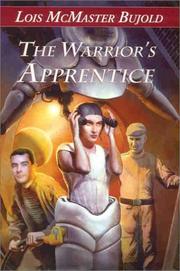
The novel that introduced Miles Vorkosigan to the world in publication order — it establishes his personality, his physical limitations, his genius, and the Barrayaran political backdrop. Reading this first mirrors how the original audience fell in love with the series.
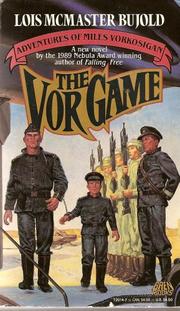
The Hugo Award-winning direct sequel that deepens Miles's military career and his relationship with Emperor Gregor. It cements the core cast and raises the stakes, making it the perfect second step before branching out.
The Hugo Peaks: The Saga's Most Celebrated Works
BeginnerRead the three novels most frequently cited as the saga's masterpieces — all Hugo winners — to understand why this series is considered a landmark of science fiction.
▸ Study plan for this stage
Pace: 8–10 weeks total, reading roughly 20–25 pages per day. Suggested breakdown: Barrayar (weeks 1–2, ~330 pages), Mirror Dance (weeks 3–5, ~450 pages), Memory (weeks 6–8, ~480 pages), with weeks 9–10 reserved for reflection, journaling, and completing exercises. All three novels reward slow, attentive r
- The cost of loyalty and duty: Barrayar forces Cordelia to weigh her own values against Barrayaran culture, establishing that the saga treats political obligation as a genuine moral burden, not a backdrop.
- Motherhood as heroism: Cordelia's arc in Barrayar reframes the 'action hero' archetype — her most consequential acts are protective, intimate, and ethically complex, culminating in the uterine replicator rescue.
- Identity fragmentation and the clone dilemma: Mirror Dance centers on Mark's struggle to exist as a person distinct from Miles, making the question 'Who am I if I was made to be someone else?' the saga's sharpest philosophical edge.
- Trauma, dissociation, and recovery: Mark's 'the Killer / Grunt / Howl / Black Mark' coping mechanism in Mirror Dance is one of SF's most unflinching portrayals of psychological survival under torture.
- The hero's fall and reinvention: Memory is structurally a deconstruction — Miles loses his military identity and must discover who he is without the Admiral Naismith persona, asking whether a person is their role or something deeper.
- Institutional trust and betrayal: Memory's central mystery is inseparable from a meditation on what happens when the institutions we rely on for safety are corrupted from within (ImpSec under Haroche).
- Bujold's use of genre hybridization: Each Hugo winner blends a different genre — Barrayar is political thriller/war novel, Mirror Dance is psychological horror/adventure, Memory is detective mystery/character study — showing the saga's remarkable range.
- The Vorkosigan family as moral compass: Across all three books, Aral, Cordelia, and Miles function as a living ethical framework against which other characters (Vordarian, Mark, Haroche) are measured and found wanting or redeemed.
- In Barrayar, Cordelia tells Aral that Barrayar 'eats its children' — what specific events in the novel justify this verdict, and how does Cordelia's final act (retrieving Miles's fetus and killing Vordarian) embody her answer to Barrayaran brutality?
- Mirror Dance opens with Mark impersonating Miles and ends with Miles having to reclaim his own identity after death and revival — how does the novel use this structural mirror to argue that identity is performed rather than innate?
- How does Mark's internal fragmentation into sub-personalities function both as a survival mechanism and as a narrative device? What does his eventual partial integration suggest about the nature of healing?
- In Memory, Miles lies in his after-action report about his seizure — a seemingly small act that cascades into catastrophe. What does Bujold argue, through this plot, about the relationship between self-deception and institutional integrity?
- All three novels won the Hugo Award. What common qualities — thematic, structural, or character-driven — do you think the voters were responding to? Where do the three books feel most distinctly different from one another?
- Cordelia in Barrayar and Miles in Memory both undergo a form of identity crisis triggered by loss (of her home culture; of his military rank). Compare how each character resolves — or fails to resolve — that crisis by the novel's end.
- Character map exercise (all three books): Draw a relationship web for each novel separately, then overlay them. Note which characters appear across multiple books and annotate how their roles shift — pay special attention to how Miles is perceived differently in Barrayar (as a fetus/infant), Mirror Dance (as a corpse/absence), and Memory (as a disgraced officer).
- Close-reading journal — Cordelia's voice vs. Miles's voice: Choose one page of interiority from Barrayar and one from Memory. Write a one-paragraph comparison of Bujold's prose style in each: sentence length, emotional register, use of irony. What does the difference tell you about how Bujold tailors voice to character?
- The Hugo case: Write a 300–400 word 'award nomination argument' for whichever of the three novels you found most deserving. Cite at least two specific scenes and one structural choice. Then write a one-paragraph counter-argument for why one of the other two might have been the stronger choice.
- Trauma and recovery timeline for Mark: Create a chapter-by-chapter emotional arc chart for Mark in Mirror Dance, tracking his psychological state. Identify the three moments of greatest crisis and the three moments of incremental recovery. Use this to evaluate whether Bujold earns the novel's cautiously hopeful ending.
- Rewrite a scene from a different POV: Pick any scene from Memory told from Miles's perspective and rewrite 1–2 paragraphs from Simon Illyan's point of view. What does Illyan notice that Miles misses? What does this exercise reveal about Bujold's choice to stay in Miles's head?
- Thematic thread tracker: The phrase 'What do you want?' or its equivalent appears as a key question in all three novels. Find at least two instances per book where a character is forced to answer this question (explicitly or through action). Write a short paragraph on how the saga's answer evolves across the three Hugo winners.
Next up: By mastering the saga's three Hugo-winning peaks — its political tragedy, its psychological depths, and its identity-driven mystery — the reader has internalized Bujold's full thematic range and is now equipped to explore the broader Vorkosigan universe, including earlier and later works that gain enormous resonance when read with knowledge of these masterpieces.
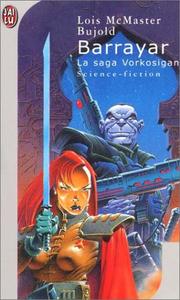
A Hugo winner set before Miles's birth, following his mother Cordelia — chronologically early but emotionally richer once you know Miles. It reframes everything you've read so far and shows Bujold's range beyond Miles's POV.
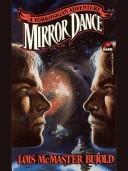
Widely considered the saga's emotional and thematic peak, this Hugo winner centers on Miles's clone-brother Mark and contains the series' most shocking plot turn. Prior Miles novels make its payoff devastating in the best way.
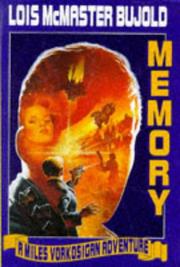
Often called the saga's finest character study, this novel forces Miles to reinvent himself after a catastrophic failure. It is the essential bridge between the early adventure novels and the more mature later works.
Filling the Chronology: Origins and Context
IntermediateExplore the chronological beginning of the saga — Cordelia's story and the Cetagandan universe — to understand the full internal timeline and the political world Miles inherits.
▸ Study plan for this stage
Pace: 3–4 weeks total: Week 1–2 — read Shards of Honor (~310 pages, ~25–30 pages/day); Week 3–4 — read Cetaganda (~310 pages, ~25–30 pages/day). Allow 1–2 buffer days between books for reflection notes.
- Cordelia Naismith's Betan identity and value system: how her egalitarian, psychologically sophisticated Betan upbringing creates a permanent ideological counterweight to Barrayaran militarism throughout the saga
- Aral Vorkosigan as a political and moral figure: his reputation as the 'Butcher of Komarr,' his genuine ethical complexity, and how Cordelia's outsider perspective allows the reader to see him clearly before Miles ever exists
- Barrayaran feudal-military culture at its roots: the Vor caste, the concept of honor as a social operating system, and the tension between tradition and reform that Aral and Cordelia will spend their lives navigating
- The founding trauma — the Regency: Shards of Honor ends with the seeds of the Vorkosigan political dynasty being planted; understanding Aral's acceptance of the Regency is essential to understanding every political crisis Miles later inherits
- Cetagandan imperial structure and the haut/ghem divide: the haut as a deliberate genetic-engineering project aimed at posthuman transcendence, the ghem as a warrior-aristocrat buffer class, and the Star Crèche as the true seat of power
- The role of women in Cetagandan society vs. Barrayaran society: haut women wield hidden, absolute genetic power behind a veil of decorative invisibility — a direct structural contrast to the overtly patriarchal but more permeable Barrayaran Vor system
- Miles as an accidental diplomat: Cetaganda is the first book where Miles operates in a purely political/intelligence arena without military command, revealing his improvisational genius and the limits of his impulsiveness
- Internal chronology and dramatic irony: reading these two books fills in the 'before Miles' world and the 'empire Miles stumbles into,' giving the reader a layered timeline that enriches every earlier-published book already read
- In Shards of Honor, what specific moments reveal that Cordelia's Betan worldview is not simply 'better' than Barrayar's, but rather in genuine, costly tension with it — and how does Bujold prevent the novel from becoming a simple culture-clash morality tale?
- How does Aral Vorkosigan's reputation as the 'Butcher of Komarr' function narratively in Shards of Honor? What does the gap between his reputation and Cordelia's direct experience of him tell us about how Barrayaran society constructs and weaponizes honor?
- In Cetaganda, what is the actual crime Miles is investigating, who committed it and why, and what does the resolution reveal about the internal power dynamics between haut women and the male-facing Cetagandan imperial court?
- How does the haut/ghem distinction in Cetaganda map onto (and complicate) the lord/soldier distinction in Barrayar's Vor system? What does each society's 'aristocracy' actually optimize for?
- By the end of both books, what is the political relationship between Barrayar and Cetaganda, and what historical grievances (referenced in Cetaganda) explain why that relationship is so volatile?
- How does reading Shards of Honor change or deepen your understanding of the Barrayaran political world Miles operates in — specifically the weight of the Vorkosigan name and the legacy of the Regency?
- Timeline construction: After finishing both books, draw a single annotated timeline placing the events of Shards of Honor and Cetaganda in relation to each other and to any previously read books in the saga. Note which events are 'before Miles,' 'during Miles's childhood,' and 'during Miles's early career.' Identify at least three moments in Cetaganda where Miles's behavior is directly explained b
- Character contrast journal — Cordelia vs. Miles: Write 300–500 words comparing how Cordelia (in Shards of Honor) and Miles (in Cetaganda) each handle a situation where their personal ethics clash with the political reality around them. Focus on method, cost, and outcome. What did they each inherit from the other?
- Cetagandan society diagram: Create a visual org-chart or diagram of Cetagandan power structure as revealed in Cetaganda — place the Emperor, the haut constellation-lords, the haut women/Star Crèche, and the ghem-lords in relation to each other. Annotate where the real decision-making power sits versus where it appears to sit.
- Close-reading passage analysis: Select one scene from Shards of Honor in which Cordelia explicitly rejects or critiques a Barrayaran custom, and one scene from Cetaganda in which Miles unconsciously replicates a Barrayaran assumption. Write a paragraph on each explaining what Bujold is doing thematically by juxtaposing these cultural blind spots across generations.
- Political legacy essay (500–700 words): Argue whether Aral Vorkosigan's decision to accept the Regency (as set up in Shards of Honor) is the single most consequential event for the political world Miles inhabits in Cetaganda. Use specific evidence from both books. Consider counterarguments.
- Predictive reading note: Before moving to the next stage, write a half-page prediction of what unresolved political or personal tensions from these two books you expect to resurface. Revisit and annotate this note after completing the next stage.
Next up: By grounding the reader in both the emotional origins of the Vorkosigan family (through Cordelia's eyes) and the geopolitical architecture of the wider empire (through Cetaganda), this stage equips the reader to engage with the saga's later, more complex political and personal crises with full awareness of the inherited world Miles was born into and can never fully escape.

The very first Vorkosigan novel published and the chronological start of the saga, following Cordelia Naismith and Aral Vorkosigan. Reading it now, after the later books, gives it enormous dramatic irony and emotional weight.
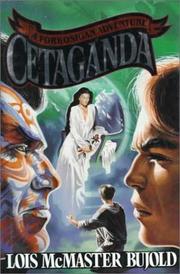
A standalone Miles adventure set chronologically between earlier novels, it expands the universe's most important rival empire. It fits naturally here as world-building enrichment once the core saga is established.
The Later Miles: Love, Politics, and Maturity
IntermediateFollow Miles into his thirties as the saga shifts from military adventure to political intrigue and romance, completing the main arc of his life.
▸ Study plan for this stage
Pace: 3–4 weeks total: Week 1–2 — A Civil Campaign (~400 pages, ~30–35 pages/day, savoring the comedic set-pieces and political maneuvering); Week 3–4 — Diplomatic Immunity (~300 pages, ~25–30 pages/day, with slower reading during the bioweapon mystery sequences to track plot details carefully)
- Miles's transition from covert operative (Admiral Naismith) to Auditor and political actor on Barrayar, marking a fundamental identity shift
- The Regency-era Barrayaran inheritance and Count's law system as a driver of plot in A Civil Campaign — how feudal structures create modern comedic and tragic consequences
- The 'comedy of manners' genre in A Civil Campaign: Bujold's deliberate homage to Georgette Heyer and Regency romance, including mistaken intentions, social catastrophe, and ensemble romantic subplots (Kareen/Mark, Ekaterin/Miles, Lord Dono/Olivia)
- Miles's courtship of Ekaterin Vorsoisson as a study in his flaws — manipulation, obsession, and eventual genuine growth toward honesty and respect
- The Quaddies of Graf Station in Diplomatic Immunity as a lens on Bujold's recurring theme of bodily difference, engineered humanity, and civil rights
- The bioweapon/plague plot in Diplomatic Immunity as a meditation on unintended consequences of genetic engineering and the ethics of biological warfare
- Ekaterin's agency and arc across both books — from a widow escaping a controlling marriage to an active partner and political figure in her own right
- The maturing of Miles's relationship with power: using the Auditor's Voice not for adventure but for diplomacy, justice, and protection of the vulnerable
- In A Civil Campaign, how does Miles's secret campaign to win Ekaterin backfire, and what does his eventual public humiliation reveal about the gap between his tactical brilliance and his emotional intelligence?
- How does the Barrayaran Count's law and inheritance system function as both a plot engine and a social critique in A Civil Campaign — particularly through the Lord Dono storyline and the butter bug enterprise?
- In Diplomatic Immunity, what does Miles's handling of the Graf Station crisis reveal about how his role as an Imperial Auditor differs from his old identity as Admiral Naismith, and how has his decision-making matured?
- How does Bujold use the Quaddies in Diplomatic Immunity to extend her series-long exploration of engineered and 'non-standard' human bodies, and how does their society contrast with Barrayar's?
- By the end of Diplomatic Immunity, Ekaterin is pregnant and Miles has survived another near-death experience. How do these two books together argue that Miles has finally found a sustainable identity — and do you find that argument convincing?
- Both books involve Miles navigating complex social and political systems rather than winning through military force. What does this shift in problem-solving say about Bujold's thematic concerns at this stage of the saga?
- Map the ensemble cast of A Civil Campaign: draw a diagram connecting each romantic subplot (Miles/Ekaterin, Mark/Kareen, Lord Dono/Olivia, Gregor/Laisa if referenced) to the central political inheritance plot — note how each thread intersects and what each character wants vs. what they fear
- Write a one-page 'defense' of Miles's courtship strategy in A Civil Campaign as if you were his advocate, then write a one-page prosecution. Use specific scenes from the book. Conclude with your own verdict on whether his behavior is forgivable.
- Track Ekaterin's decision-making across both books: list every major choice she makes independently (not in reaction to Miles), and assess how her agency grows from A Civil Campaign to the end of Diplomatic Immunity
- After finishing Diplomatic Immunity, write a short compare-and-contrast (300–400 words) between the Quaddies' Graf Station society and Barrayar as depicted in A Civil Campaign — focus on how each society treats those who don't fit its default physical or social 'norm'
- Identify three moments in either book where Miles uses the Imperial Auditor's authority. For each, ask: Could the old 'Admiral Naismith' Miles have solved this the same way? What does the difference tell you about his growth?
- Reread the disastrous dinner party scene in A Civil Campaign and the climactic confrontation scene in Diplomatic Immunity. Write a brief journal entry from Ekaterin's point of view for each — what is she thinking that the text doesn't explicitly tell us?
Next up: By closing Miles's romantic and early-Auditor arcs, these two books establish the stable domestic and political foundation from which any further Vorkosigan stories — whether revisiting side characters like Mark or Ivan, or following the next generation — can depart, making the reader ready to explore the saga's expanding universe beyond Miles himself.

An explicit homage to Regency comedies of manners, this novel is Miles's courtship story and a fan favorite — it rewards readers who know the full cast deeply, making it perfect at this stage.
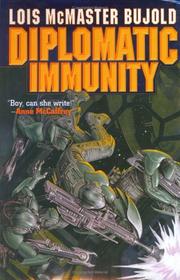
A return to Miles-as-investigator in a new alien setting, this novel bridges his married life with the wider universe and is a satisfying, self-contained thriller for readers now fluent in the saga's world.
The New Generation and Meta-Reflection
ExpertEngage with the saga's newest novels featuring a next-generation protagonist, and reflect critically on publication versus chronological order as a reading strategy — understanding the saga as a whole artistic work.
▸ Study plan for this stage
Pace: 2–3 weeks total: spend ~10 days on "Gentleman Jole and the Red Queen" (~20–25 pages/day, pausing mid-book for reflective journaling), then ~3–4 days on "The Flowers of Vashnoi" (it is a novella, readable in 1–2 sittings), leaving 3–4 days at the end for synthesis, comparison, and completing exercise
- Late-life protagonism and the 'third act' of a life: Cordelia Vorkosigan as a woman redefining identity, desire, and purpose after loss
- Queerness and retroactive canon: how 'Gentleman Jole and the Red Queen' quietly but radically expands the emotional and sexual history of Aral Vorkosigan and Oliver Jole, and what that means for re-reading the entire saga
- Grief as a generative force: Cordelia's mourning of Aral not as paralysis but as a catalyst for new life choices — biological, romantic, and political
- Next-generation protagonism in 'The Flowers of Vashnoi': Ekaterina Vorsoisson Vorkosigan and Enrique Borgos as a scientific partnership, and the novella's focus on inherited trauma (Barrayaran radiation zones) as a metaphor for generational responsibility
- The saga as a whole artistic work: publication order vs. internal chronological order as two distinct but valid reading lenses, and what each reveals about Bujold's evolving themes
- Soft science fiction and the primacy of character: how both works prioritize domestic, emotional, and ethical stakes over military or political action, signaling a deliberate late-saga tonal shift
- Ecological and biological ethics: 'The Flowers of Vashnoi' as an environmental fable — remediation, mutation, and the moral weight of fixing what past generations broke
- Closure vs. continuation: how these two works function simultaneously as epilogues to the saga and as genuine new beginnings, resisting tidy resolution
- How does 'Gentleman Jole and the Red Queen' recontextualize Aral Vorkosigan's character across the entire saga, and how might a reader who encounters this book last experience the retroactive revelation differently from one who reads it first?
- In what ways does Cordelia's decision to have more children on Sergyar function as both a personal and a political act, and how does it reflect her character arc from 'Shards of Honor' onward?
- How does 'The Flowers of Vashnoi' use the mutant wasps and the irradiated landscape as symbols of Barrayar's historical guilt, and what does Ekaterin's role in the remediation project say about the next generation's relationship to inherited harm?
- Both works are notably quiet and domestic compared to earlier saga entries. What does Bujold gain — and potentially risk — by ending the saga in this register rather than with military or political climax?
- Compare the romantic arcs in the two works: Cordelia/Oliver in 'Gentleman Jole' and Ekaterin/Miles (as background presence) in 'The Flowers of Vashnoi.' How do both texts treat long-term partnership and love as an ongoing, active practice rather than a destination?
- Having now read both publication-order and chronological-order perspectives on the saga, which reading strategy do you find more rewarding for a first-time reader vs. a re-reader, and why?
- Retroactive re-reading journal: After finishing 'Gentleman Jole and the Red Queen,' write a 500-word entry on one earlier scene or character moment from the saga (e.g., any scene involving Aral and Jole) that you would now read completely differently. Articulate specifically what the new context changes.
- Publication vs. chronology map: Create a two-column annotated list of all the saga's books — one column in publication order, one in internal chronological order. Mark where the two diverge most sharply, and write two or three sentences on what thematic or emotional effect each ordering produces for the reader.
- Character third-act analysis: Write a short essay (400–600 words) arguing whether Cordelia in 'Gentleman Jole' is the same character as Cordelia in 'Shards of Honor,' using specific textual evidence from 'Gentleman Jole' and contrasting it with what you remember of her earlier self.
- Environmental ethics close reading: Select one scene from 'The Flowers of Vashnoi' involving the wasps or the Vashnoi landscape and perform a close reading (300–400 words) that connects the ecological imagery to Barrayar's broader cultural history of stigmatizing mutation.
- Tonal shift reflection: Write a comparative paragraph (250–350 words) identifying one specific stylistic or structural choice Bujold makes in each book — 'Gentleman Jole' and 'The Flowers of Vashnoi' — that signals a deliberate departure from the saga's earlier adventure-driven tone, and evaluate whether you find it satisfying.
- Whole-saga synthesis discussion (or solo essay): Pose yourself the question, 'What is the Vorkosigan Saga ultimately about?' and write a 600–800 word answer that draws on at least one moment from 'Gentleman Jole' and one from 'The Flowers of Vashnoi' as your primary evidence, treating them as the saga's final statement.
Next up: By completing this stage, the reader has experienced the saga's full emotional and thematic arc — from its military-adventure origins to its quiet, character-driven late works — and is now equipped to step back entirely from the text and engage with the saga as a critical object: its reception history, Bujold's craft interviews, fan scholarship, and comparative genre studies.

The most recent Miles-era novel, returning to Cordelia in later life — quieter and more reflective than earlier entries, it serves as an emotional coda to the entire saga and is best appreciated last.

A novella featuring Ekaterin and Miles that fills in a key piece of Barrayaran history; reading it here, with full saga knowledge, lets you appreciate every layer of its environmental and political themes.
Discussion
Keep reading
Paths that share books, cover the same subject, or open a related topic.