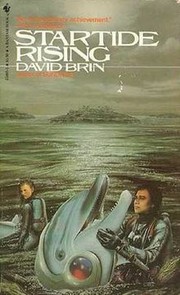
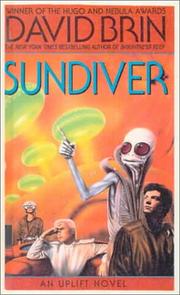
Start with Startide Rising, which is neither the first published nor the first chronologically. It is the second Uplift novel and the one the series is famous for, and it is the right door for a blunt reason: Sundiver is the weakest of the six, and beginning with it is the commonest way readers give up before reaching the good one.
That is the order controversy in this series, and it is worth stating both cases. The argument for Sundiver is real — it is first in internal chronology, it was published first, and it lays out the institutional furniture of the setting. The argument against is that it is a conventional 1970s locked-room murder mystery with thin characters, and that everything it explains, Startide Rising teaches you faster by immersion. Read Sundiver third and it lands as background; read it first and it too often lands as a stopping point.
Startide Rising, and the fifty-page rule
Give the opening fifty pages a slower, more forgiving pass than the rest. Brin drops you into a crippled starship crewed mostly by dolphins with no glossary, and the vocabulary settles around page eighty. After that the short rotating chapters make it fast.
The premise governs everything: no species in the galaxy is supposed to reach intelligence on its own. An older patron uplifts a client to sapience, and the client owes roughly a hundred thousand years of indenture. Humans are the scandal, having no known patron and apparently done it themselves, which makes them either impossible or liars — and they compounded the offence by uplifting dolphins and chimpanzees before earning the standing to do so.
The dolphins have three registers: Anglic for formal speech, Trinary in haiku-like verse for emotional and instinctive thought, and Primal for the older pre-uplift mind they fall back into under stress. Reading the verse as characterisation rather than decoration is the skill this book teaches. There is no single protagonist and Brin cuts away constantly; the pleasure is holding several crises at once.
The rest of the first trilogy
The Uplift War is a companion rather than a sequel. It runs roughly parallel to the first book on the colony world Garth, so it does not resolve the cliffhanger and is not meant to. Its subject is the other species humanity uplifted, neo-chimpanzees, and its tone is different on purpose — occupied-planet resistance comedy, with the avian Gubru absurd and genuinely dangerous at once. Garth itself is an ecologically wrecked world handed over as a poisoned gift, which is the book's quiet argument that galactic patronage is mostly extraction.
Then Sundiver, read for the furniture rather than the plot: the Library branch on Earth, the Institutes, the diplomatic machinery, and the earliest human arguments about whether to accept a patron at all.
The Uplift Storm trilogy
Brightness reef, Infinity's shore and Heaven's reach are one long novel in three bindings, and they pick the Streaker's story up directly. Unlike the first trilogy, these are not readable without what came before. The first two both end mid-motion, so have the next volume on hand; if you must break, break after the second, never between the first two.
Jijo is the new setting — a world declared fallow and left to recover, on which six alien races have illegally settled anyway, hiding from galactic law and building a civilisation around leaving no trace. Their chosen technological regression, the Path of Redemption, is the series' most interesting idea. Brightness reef is slower and more anthropological than anything in the first trilogy, with the first two hundred pages given to worldbuilding and to in-world journals in multiple first-person voices, several of them non-human.
Infinity's shore reunites the storylines. Heaven's reach abandons Jijo almost entirely for large-scale cosmology and transcendence, and the scale shift is abrupt. It is the most divisive book of the six: it resolves the Streaker plot but leaves the deepest questions — the Progenitors, the ultimate purpose of uplift — deliberately open, and many readers find that rushed rather than mysterious.
Where to stop
Stopping after the first trilogy is entirely reasonable, with the caveat that Startide Rising ends on an unresolved hunt. Continue into the Storm trilogy if the galactic frame interests you more than the ships. Six books is the whole saga as it exists. More science fiction is on Discover.
Follow the full ordered path here: The Uplift Saga Reading Order: Where to Start.