Best Books on the Trail of Tears and Indian Removal
This curriculum moves from accessible narrative history through primary legal and political analysis to deep scholarly immersion, tracing the full arc of Indian Removal — its ideological roots, the landmark Cherokee legal battles, the horror of the marches themselves, and the long aftermath for the Five Civilized Tribes. Each stage builds the vocabulary, context, and critical framework needed to fully absorb the next, turning a beginner into a genuinely well-informed reader on one of American history's gravest chapters.
Foundations: The Story and Its Stakes
BeginnerGain a clear narrative understanding of what the Trail of Tears was, who suffered it, and why it happened — building the basic chronology and cast of characters needed for everything that follows.
▸ Study plan for this stage
Pace: 6–8 weeks total: Spend weeks 1–3 on "Bury My Heart at Wounded Knee" (focus on the relevant chapters covering Cherokee removal and broader Native displacement, ~25–30 pages/day), then weeks 4–8 on "Trail of Tears" by John Ehle (~20–25 pages/day), which is denser with personal detail and political nar
- The Indian Removal Act of 1830: its political origins, congressional debate, and Andrew Jackson's role in pushing it into law
- Cherokee nationhood and resistance: the Cherokee people's sophisticated governmental structures, literacy (the Sequoyah syllabary), legal battles, and why their assimilation efforts did not protect them
- The Supreme Court cases Worcester v. Georgia and Cherokee Nation v. Georgia — what was decided, what Jackson ignored, and what that defiance meant for the rule of law
- The cast of key figures: Andrew Jackson, John Ross (Principal Chief), Major Ridge, John Ridge, Elias Boudinot, and the fatal split between the Treaty Party and the National Party
- The Treaty of New Echota (1835): how it was negotiated by an unauthorized minority faction, why most Cherokees rejected it, and how it became the legal instrument of removal
- The physical Trail itself: the routes taken, the seasons of travel, the death toll (estimated 4,000+ of ~16,000 removed), and the conditions of the internment camps that preceded the march
- Dee Brown's narrative method in 'Bury My Heart at Wounded Knee': using Native voices and perspectives as primary sources to reframe American expansion as conquest rather than destiny
- The concept of 'civilized' vs. 'savage' as a political tool: how the rhetoric of civilization was used both by Cherokees to argue for their rights and by removal advocates to justify dispossession regardless of Cherokee achievements
- According to Dee Brown's framing in 'Bury My Heart at Wounded Knee,' how does the Trail of Tears fit into the broader pattern of U.S. policy toward Native nations, and whose voices does he center to make that argument?
- In John Ehle's 'Trail of Tears,' what were the core differences in strategy and belief between John Ross and the Ridge/Boudinot faction, and how did the Treaty of New Echota expose and deepen that split?
- Why did the Cherokee Nation's legal victories in the Supreme Court ultimately fail to prevent removal, and what does that failure reveal about the limits of law when political will is absent?
- Drawing on both books, describe the human experience of the Trail itself: What were conditions like in the stockades? What killed people on the march? Who was most vulnerable?
- How did the Cherokee Nation's own internal political divisions — as detailed by Ehle — contribute to the success of the removal effort, and how did U.S. officials exploit those divisions?
- After reading both books, how would you define 'the Trail of Tears' to someone who had never heard of it? What facts, names, dates, and moral dimensions would you include?
- Build a master timeline: As you read, maintain a running chronology (on paper or digitally) of key dates from both books — from the Indian Removal Act (1830) through the final arrivals in Indian Territory (1839). Note which book provides which detail to see how the two accounts complement each other.
- Create a character map: Draw a diagram of the major figures in Ehle's 'Trail of Tears' — John Ross, Major Ridge, John Ridge, Elias Boudinot, Andrew Jackson, General Winfield Scott — and annotate each with their position on removal, their motivations, and their ultimate fate. Draw lines showing alliances and conflicts.
- Write a one-page 'before and after' portrait: Using details from both books, describe Cherokee life in Georgia/Tennessee before removal and then describe conditions on the Trail and in Indian Territory afterward. This forces you to internalize the human cost rather than just the political narrative.
- Reread Dee Brown's opening methodology note and write a short reflection (half a page) on how his choice to center Native voices changes the emotional and moral texture of the history compared to a traditional political history. How does Ehle's approach differ?
- Map the routes: Find or sketch a blank map of the southeastern U.S. and Indian Territory (present-day Oklahoma). Using details from Ehle, trace the main removal routes — the water route and the overland routes — and mark key locations: New Echota, the stockade sites, river crossings, and the destination. Annotate with death-toll estimates where the books provide them.
- Draft 3–5 'exam questions' you would ask a fellow reader to test genuine comprehension of both books, then answer them yourself in writing. Focus on questions that require connecting information across both texts rather than recalling isolated facts.
Next up: By establishing a firm narrative skeleton — the chronology, the key players, the legal and political machinery, and the human suffering — this stage gives the reader the factual and emotional grounding needed to move into deeper analytical or thematic study, such as examining the Trail of Tears through the lenses of law, memory, Indigenous sovereignty, or comparative colonial history without losin

A landmark, highly readable account of the destruction of Native American peoples told from Indigenous perspectives; the opening chapters establish the broader pattern of dispossession that makes the Trail of Tears intelligible as policy, not accident.
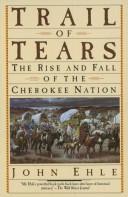
The single most accessible and narrative-driven book focused specifically on the Cherokee removal; read second so the foundational context from Brown gives this story its full moral weight.
Policy and Power: Andrew Jackson and Indian Removal
BeginnerUnderstand the political machinery behind removal — Jackson's ideology, the Indian Removal Act of 1830, and the role of Congress, settlers, and land speculators — so the legal battles ahead make sense.
▸ Study plan for this stage
Pace: 6–8 weeks total: Weeks 1–4 cover "American Lion" (~25–30 pages/day, reading in focused 45-minute sessions); Weeks 5–8 cover "A Century of Dishonor" (~15–20 pages/day, slower pace to absorb the documentary evidence and moral argumentation). Allow one buffer day per week for note review and reflection
- Andrew Jackson's 'paternalistic' ideology toward Native peoples — his genuine belief that removal was protective rather than destructive, and how that self-justification shaped policy
- The Indian Removal Act of 1830: its legislative path through Congress, the razor-thin margins of passage, and the political coalitions (Southern planters, land speculators, frontier settlers) that drove it
- States' rights vs. federal authority as a fault line — how Georgia's defiance of federal treaties set the stage for removal and exposed the limits of federal protection for tribes
- The role of land speculation and economic self-interest: how cotton expansion and the hunger for Cherokee, Creek, and Choctaw lands made removal politically irresistible to Southern elites
- Treaty-making as a tool of dispossession — how the U.S. government used fraudulent or minority-faction treaties to claim legal cover for forced relocations
- Helen Hunt Jackson's moral indictment in 'A Century of Dishonor': her method of using the government's own records and broken treaties to expose systemic dishonesty
- The distinction between legal legitimacy and moral legitimacy — tribes held valid treaty rights, yet those rights were systematically nullified by political power
- The pattern of repetition: Jackson's documentation that the Trail of Tears was not an isolated event but one episode in a century-long cycle of promise, violation, and removal
- According to Meacham's 'American Lion,' what were the core beliefs that led Andrew Jackson to view Indian removal as justified, and how did his personal history with Native peoples shape those beliefs?
- What political forces — regional, economic, and ideological — made the Indian Removal Act of 1830 passable in Congress, and which groups most fiercely opposed it?
- How does Helen Hunt Jackson use the government's own treaty records in 'A Century of Dishonor' to build her argument, and why did she choose that evidentiary strategy over emotional appeal alone?
- What is the significance of Georgia's actions against the Cherokee Nation in the late 1820s, and how did Jackson's response (or non-response) reveal his true priorities regarding federal treaty obligations?
- In what ways does 'A Century of Dishonor' reframe removal not as a single Jacksonian policy but as a structural feature of U.S.–Native relations across many administrations?
- How do the two books together illustrate the gap between the stated legal framework governing Native nations and the actual exercise of political power against them?
- Timeline construction: After finishing 'American Lion,' build a hand-drawn or digital timeline from 1820–1838 marking key events — Jackson's election, the Indian Removal Act, Georgia's anti-Cherokee laws, Worcester v. Georgia — and annotate each with one sentence on who benefited politically or economically.
- Stakeholder mapping: Draw a simple diagram with four nodes — Jackson's administration, Southern planters/speculators, tribal nations, and Congress — and map the pressures, incentives, and relationships between them as described in 'American Lion.' Add a fifth node (reform advocates) after reading 'A Century of Dishonor.'
- Primary source comparison: Locate the text of the Indian Removal Act of 1830 (freely available online) and read it alongside Meacham's account of its passage. Write a one-page reflection: what does the Act's language reveal or conceal about its true intent?
- Argument reconstruction: After finishing 'A Century of Dishonor,' write a one-page summary of Helen Hunt Jackson's central argument as if you were presenting it to a skeptic. What evidence does she marshal? What is her logical structure? What counterarguments does she anticipate?
- Broken-treaty log: As you read 'A Century of Dishonor,' keep a running list of at least five specific treaties Jackson documents as violated. For each, note the tribe, the promise made, and how it was broken — this log will be essential reference material for the legal battles covered in the next stage.
- Comparative reflection journal: After completing both books, write a two-paragraph journal entry answering: 'Meacham humanizes Jackson; Jackson (Helen Hunt) indicts the system. Can both be true at once? What does holding both perspectives simultaneously reveal about how political power operates?'
Next up: By mapping the political machinery and treaty violations that made removal possible, the reader now has the factual and moral foundation needed to understand why tribes turned to the courts — and what was truly at stake in the landmark legal battles, such as Cherokee Nation v. Georgia and Worcester v. Georgia, that define the next stage.

A Pulitzer Prize-winning biography that places Jackson's Indian Removal policy inside his full presidency; reading this before the legal histories shows how removal was driven by personal conviction and political calculation, not just abstract law.

Published in 1881, this is the foundational reform text documenting broken federal treaties with Native nations; it provides the moral and documentary vocabulary — treaties, violations, precedents — essential for the legal stage ahead.
The Law on Trial: The Cherokee Cases
IntermediateDeeply understand the two landmark Supreme Court cases — Cherokee Nation v. Georgia (1831) and Worcester v. Georgia (1832) — their legal arguments, their outcomes, and why Jackson defied them.
▸ Study plan for this stage
Pace: 4–5 weeks, ~25–30 pages/day. Start with "The Cherokee Cases" (2–3 weeks), then move to "Conquest by Law" (2–3 weeks). Allocate 2–3 days per week for review, note-taking, and exercises.
- The legal doctrine of 'domestic dependent nation' established in Cherokee Nation v. Georgia and its implications for tribal sovereignty
- The distinction between the Court's ruling in Cherokee Nation v. Georgia (denying jurisdiction) versus Worcester v. Georgia (affirming Cherokee rights), and why this apparent contradiction matters
- The specific legal arguments marshaled by the Cherokee Nation's attorneys and how they challenged Georgia's authority
- President Jackson's political and ideological opposition to the Court's decisions and the mechanisms by which he effectively nullified Worcester v. Georgia
- The role of federal Indian law and the Commerce Clause in framing the constitutional debate over Cherokee rights
- How the Cherokee Cases represented a collision between judicial power and executive will, and why the Court's victory was pyrrhic
- The historical and legal precedents that shaped Chief Justice Marshall's reasoning in both cases
- What was the legal status the Supreme Court assigned to the Cherokee Nation in Cherokee Nation v. Georgia, and why did Chief Justice Marshall refuse to hear the case on its merits?
- How did the legal arguments in Worcester v. Georgia differ from those in Cherokee Nation v. Georgia, and what changed to allow the Court to rule in favor of Cherokee rights?
- What specific laws and policies did Georgia enact to undermine Cherokee sovereignty, and how did the Cherokee legal team challenge them?
- Why did President Jackson refuse to enforce the Worcester v. Georgia decision, and what were the political consequences of his defiance?
- How did the concept of federal supremacy over state law figure into the Court's reasoning in both cases?
- What does 'domestic dependent nation' mean, and how has this doctrine shaped subsequent Indian law?
- Create a two-column comparison chart: Cherokee Nation v. Georgia vs. Worcester v. Georgia. Include the parties, the legal question, the Court's holding, and the reasoning. Annotate where and why the outcomes differed.
- Read excerpts from the actual Supreme Court opinions (available in Norgren's book and online). Underline Chief Justice Marshall's key phrases about tribal sovereignty and federal authority. Write a one-page summary of his constitutional logic.
- Map the timeline: List Georgia's major laws targeting the Cherokee (Indian Removal Act, Georgia's extension of state law, etc.) alongside the two Supreme Court decisions and Jackson's responses. Identify the causal relationships.
- Role-play exercise: Prepare oral arguments for both sides in Worcester v. Georgia. One person argues for Worcester/the Cherokee Nation; another argues for Georgia. Use actual legal reasoning from the case.
- Write a 2–3 page analytical essay: 'Why did Jackson defy the Court?' Use evidence from both books to explain his political ideology, his relationship with Georgia, and his vision for westward expansion.
- Create a visual diagram showing the hierarchy of legal authority as the Court saw it (federal law > state law > Cherokee law) and as Jackson saw it. Explain the conflict.
Next up: This stage equips you with a precise understanding of how the law was weaponized against the Cherokee and why judicial victory proved hollow without executive enforcement—essential context for understanding the Trail of Tears as the inevitable consequence of unchecked executive power and the failure of legal remedies.

The definitive scholarly yet accessible account of both Supreme Court cases; it should be read first in this stage because it lays out the legal arguments clearly before the more demanding political analysis that follows.

Traces how Johnson v. M'Intosh (1823) created the legal doctrine of 'discovery' that undermined Native land rights and made removal legally conceivable; reading it after Norgren shows the deeper jurisprudential roots of the Cherokee cases.
The March Itself: Voices and Suffering
IntermediateConfront the human reality of the forced marches — the logistics, the death toll, the military role, and the experiences of Cherokee, Creek, Choctaw, Chickasaw, and Seminole peoples — through both scholarship and primary voices.
▸ Study plan for this stage
Pace: 4–5 weeks, ~25–30 pages/day, with 2–3 days per week dedicated to reflection and primary source work
- The ideological justification of Indian Removal under Manifest Destiny and how it masked economic and political motivations
- The logistics and organization of the forced marches: routes, conditions, supply chains, and military command structure
- The staggering human cost: mortality rates, disease, starvation, and exposure across the five nations
- The role of the U.S. military and government officials in executing and managing the removal
- Diverse experiences across the five nations (Cherokee, Creek, Choctaw, Chickasaw, Seminole) and how removal affected each differently
- Primary voices and testimonies: how survivors and witnesses documented their suffering and resistance
- The distinction between official narratives and the lived reality of removal as experienced by Indigenous peoples
- How did the concept of Manifest Destiny serve as ideological cover for Indian Removal, and what economic and political interests actually drove the policy?
- What were the major logistical challenges of the forced marches, and how did inadequate planning and resources contribute to mass suffering?
- What was the death toll across the five nations, and what were the primary causes of mortality (disease, starvation, exposure, violence)?
- What was the specific role of the U.S. military in organizing and enforcing the removal, and who were the key military figures involved?
- How did the removal experience differ among the Cherokee, Creek, Choctaw, Chickasaw, and Seminole peoples?
- What do primary sources (letters, diaries, oral histories, government records) reveal about the emotional, physical, and spiritual toll of removal that official accounts omit?
- Create a detailed timeline of the removal process for one nation (Cherokee, Creek, Choctaw, Chickasaw, or Seminole), marking key dates, routes, and mortality milestones based on Filler's account
- Construct a logistics map: trace the proposed routes, identify supply depots, and annotate where shortages or failures occurred, using Filler's descriptions of the marches
- Compile a 'voices document': extract 5–8 direct quotes or paraphrased accounts from primary sources cited in Filler that illustrate individual or family experiences; annotate what each reveals
- Write a comparative analysis (2–3 pages) contrasting the official government justification for removal (Manifest Destiny) with the human reality Filler documents
- Create a data visualization or chart showing mortality rates, causes of death, and demographics (age, gender, family status) across the five nations, based on Filler's evidence
- Conduct a close reading of one primary source excerpt (letter, treaty language, military order, or testimony) cited in Filler; write a 1–2 page analysis of what it reveals and what it conceals
Next up: This stage anchors you in the documented human and logistical reality of removal, preparing you to explore in subsequent stages the long-term consequences, resistance strategies, and how the five nations rebuilt their societies and cultures in the West.
A primary-source reader collecting speeches, letters, and testimonies from both defenders and opponents of removal; reading original voices at this stage transforms abstract history into lived argument and grief.
Survival and Legacy: The Nations After Removal
ExpertUnderstand how the Five Tribes rebuilt nations in Indian Territory, how removal shaped Indigenous identity and sovereignty into the present, and how historians continue to debate its meaning.
▸ Study plan for this stage
Pace: 5–6 weeks, ~40–50 pages/day (approximately 280–300 pages total across both books)
- Demographic recovery and nation-building: How Cherokee, Creek, Choctaw, Chickasaw, and Seminole populations stabilized and rebuilt political institutions in Indian Territory despite catastrophic losses
- The role of slavery and racial hierarchy in tribal societies: How enslaved African Americans and mixed-race individuals complicated post-removal tribal identity and sovereignty
- Sovereignty and self-determination: How the Five Tribes negotiated treaties, established governments, and asserted autonomy within U.S. colonial frameworks
- Removal as a foundational trauma shaping modern Indigenous consciousness: How the Trail of Tears became a defining narrative for tribal identity, memory, and political mobilization
- Historiographical debates: Competing interpretations of removal's causes, consequences, and meaning—from nationalist triumphalism to Indigenous-centered analysis
- Continuity and rupture: How removal disrupted but did not erase pre-removal cultural, economic, and political practices
- How did the Cherokee population recover demographically after the Trail of Tears, and what does Thornton's analysis reveal about the relationship between removal and population dynamics?
- What role did slavery and racial hierarchy play in shaping tribal societies in Indian Territory, and how did this complicate notions of tribal sovereignty and belonging?
- How did the Five Tribes establish and exercise sovereignty in Indian Territory, and what were the key tensions between tribal self-governance and U.S. federal authority?
- How does Dunbar Ortiz's Indigenous-centered framework challenge dominant historical narratives about removal, and what alternative interpretations does she offer?
- What is the relationship between the Trail of Tears as a historical event and the Trail of Tears as a symbol or narrative in contemporary Indigenous politics and identity?
- How do Thornton and Dunbar Ortiz differ in their emphasis on causes, actors, and consequences of removal, and what do these differences reveal about historiographical debates?
- Create a comparative timeline: Map demographic, political, and cultural developments for each of the Five Tribes in the 20 years following removal (1840–1860). Use Thornton's population data and Dunbar Ortiz's institutional analysis to identify patterns and divergences.
- Analyze a primary source document (treaty, tribal constitution, or government record from Indian Territory, 1840s–1860s): How do tribal leaders articulate sovereignty, and what does this reveal about how removal shaped their political strategies?
- Write a historiographical essay (1,500–2,000 words): Compare how Thornton's demographic/sociological approach and Dunbar Ortiz's Indigenous-centered political economy approach explain the same historical processes. What does each framework illuminate or obscure?
- Create a visual genealogy or family narrative: Trace one family (real or composite) through removal and resettlement, incorporating details about slavery, mixed-race identity, and economic adaptation from both books. Reflect on how individual stories complicate grand narratives.
- Debate preparation: Develop arguments for and against the proposition that 'removal was a catastrophe that fundamentally broke Indigenous nations' versus 'removal was a trauma that Indigenous nations survived and transcended.' Ground your arguments in specific evidence from both texts.
- Annotated bibliography: Identify 3–4 secondary sources cited by Thornton or Dunbar Ortiz that address historiographical debates about removal. Write 200-word summaries explaining how each source contributes to competing interpretations.
Next up: This stage establishes how Indigenous nations survived and transformed removal, positioning the reader to examine how these legacies shaped tribal-federal relations, sovereignty struggles, and Indigenous activism in the 20th and 21st centuries.

A rigorous demographic study of Cherokee population collapse and recovery; it reframes removal not as a single catastrophe but as a long demographic crisis, providing the analytical depth that crowns the curriculum.
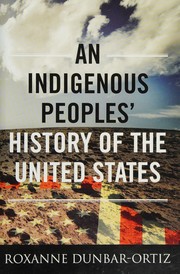
Places the Trail of Tears inside a sweeping Indigenous-centered reinterpretation of American history; reading it last allows the learner to synthesize everything they have learned into a critical, present-day framework for understanding settler colonialism and Native survival.
Discussion
Keep reading
Paths that share books, cover the same subject, or open a related topic.