The Trail of Tears is often taught as a moral episode detached from procedure, which obscures the most disturbing thing about it: it was conducted through legislation, litigation, and treaty, with a Supreme Court ruling in the Cherokee Nation's favor that was simply not enforced. Removal happened lawfully in form. Reading in the right order is how you see the machinery instead of only the outcome.
It also helps to know that the Cherokee were not a passive party. They had a written constitution modeled on the American one, a newspaper in their own syllabary, and a sophisticated legal strategy that took them to the Supreme Court twice. The tragedy is not that they failed to adapt; it is that adaptation made no difference.
Start with the sweep and the specific
Bury My Heart at Wounded Knee by Dee Brown is where many readers begin, and it still works as an entry point: it retells the nineteenth-century conquest of the West from Indigenous accounts and changed how a generation of Americans understood it. Its focus is the plains and the later wars, so treat it as the frame rather than the subject.
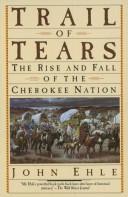
Then read Trail of Tears by John Ehle, the standard narrative of Cherokee removal itself. Ehle builds it around real figures — John Ross, Major Ridge, the Treaty Party — and the internal Cherokee split over whether to sign the Treaty of New Echota is handled as the genuine political tragedy it was, not as betrayal shorthand.
Then the president and the contemporary protest
American lion is Jon Meacham's biography of Andrew Jackson in the White House. It is sympathetic in places, and readers should know that going in; it is nonetheless the most accessible account of Jackson's own reasoning and of how removal fit his conception of the presidency. Read it as the perpetrator's-side document.
A Century Of Dishonor by Helen Hunt Jackson, published in 1881, is the contemporary indictment — a catalogue of broken treaties written to shame Congress, and one of the first works to put federal policy on trial in public. It is a nineteenth-century book with nineteenth-century assumptions, but it is a primary text in the history of protest.
Get the law right
The Cherokee Cases by Jill Norgren covers Cherokee Nation v. Georgia and Worcester v. Georgia — the litigation that produced Marshall's ruling recognizing Cherokee sovereignty, and then the failure to enforce it. Conquest by Law by Lindsay Robertson goes further back, to Johnson v. M'Intosh in 1823 and the doctrine of discovery, which is the legal foundation the whole edifice rests on and which remains cited in American law today. These two are the analytical core of the path.
The removal of the Cherokee Nation: manifest destiny or national dishonor? is a documents-and-debate reader assembled by Louis Filler, useful for seeing the arguments as contemporaries made them rather than as we summarize them.
Close with Cherokee and Indigenous perspectives
Russell Thornton's The Cherokees is a demographic and population history by a Cherokee scholar, and it is the book that quantifies what removal cost and how the nation rebuilt. Finish with An Indigenous Peoples' History of the United States by Roxanne Dunbar-Ortiz, which places removal inside a continuous settler-colonial framework rather than treating it as an aberration. Her argument is deliberately confrontational and not universally accepted; read it after the case histories so you can weigh it against the record.
The legal and constitutional threads connect to the political science hub if you want to go further.
Follow the full path to keep these in order.
Follow the full ordered path here: Best Books on the Trail of Tears and Indian Removal.
Ready to learn something deeply?
Build a reading path — free