Dmitri Shostakovich: The Best Books to Read, in Order
No composer's literature is as distorted by a single disputed document as Shostakovich's. Solomon Volkov's Testimony, published in 1979 and presented as the composer's dictated memoirs, recast him from Soviet laureate to secret dissident, and its authenticity has been contested ever since — which means almost every book about him is positioned relative to that argument. This path takes the two reliable biographies first so you have a factual baseline, then works through the Testimony dispute from both sides, then the documentary record and the political frame, then the music itself, and finally the Leningrad symphony, the episode where the biography and the myth are hardest to separate.
The Two Indispensable Biographies
IntermediateEstablish a documented account of the life — the 1936 Lady Macbeth denunciation, the Fifth Symphony, the 1948 Zhdanov decree, the 1960 Party membership — before encountering any interpretation of it.
▸ Study plan for this stage
Pace: 10 weeks. Laurel Fay's Shostakovich: A Life is around 450 pages and is deliberately austere — it reports what the documents establish and declines to speculate about inner meaning, which makes it slower reading than its length suggests; four weeks. Elizabeth Wilson's Shostakovich: A Life Remembered
- The documented spine of the life: the 1936 Pravda editorial 'Muddle Instead of Music' attacking Lady Macbeth of the Mtsensk District, the withdrawal of the Fourth Symphony, the Fifth in 1937, the wartime Seventh, the 1948 Zhdanov decree and the second denunciation, the Thirteenth Symphony on Babi Ya
- Fay's method is documentary: archival sources, dated correspondence, contemporary press, and an explicit refusal to infer intention from music. What she will not say is as much a part of the book as what she will.
- The 'Soviet artist's creative reply to just criticism' subtitle attached to the Fifth Symphony was not the composer's phrase — it came from a newspaper — and the misattribution is a useful early lesson in how the record around him was assembled.
- Fay is also the scholar who first demonstrated, in 1980, that the opening pages of several chapters of Testimony were reprinted verbatim from articles Shostakovich had published earlier. That finding is the factual centre of the argument the next stage takes up, and knowing who established it matter
- Wilson's book is a compilation of testimony rather than a narrative: dozens of witnesses, quoted at length, frequently contradicting one another, with Wilson connecting rather than adjudicating.
- That method carries an obvious unreliability — these are recollections, many recorded decades after the events and after Testimony had reframed how everyone remembered him — and Wilson says so; the value is the texture Fay's method necessarily excludes.
- Party membership in 1960 is the biographical crux on which the whole dissident-versus-loyalist question turns, and the two books present the same event with very different surrounding material.
- Read together they set up the problem the rest of the path is about: a documented public life that is compatible with more than one account of the private one.
- What did the 1936 Pravda editorial actually say, and what happened to Shostakovich's position in the following two years?
- What is the documentary record on the 1960 Party membership, and what does Fay decline to conclude from it?
- How does Wilson handle two witnesses who contradict each other? Find an instance and describe her editorial choice.
- What exactly did Fay establish about the opening pages of Testimony, and what did she not claim it proved?
- Where does Wilson's book give you something Fay's cannot, and where is Wilson's material least trustworthy?
- Build a one-page chronology from Fay: date, event, source. Keep it beside you for the rest of the path, because every subsequent book will assert something about one of those dates.
- Take the 1948 Zhdanov decree and read Fay's account, then find every witness in Wilson who was present or nearby. Note where the recollections agree with the documents and where they do not.
- Listen to the Fifth Symphony's finale while reading Fay's paragraph on its reception, then Wilson's collected recollections of the premiere. The finale is the single most contested passage in his output and the two books give you the two kinds of evidence about it.
- For three claims made by witnesses in Wilson, ask what documentary evidence would confirm them, and check whether Fay cites any. This is the habit the next stage requires.
Next up: With a documented baseline in place, the next stage is the memoir that reorganised the entire field and the argument about whether it is what it claims to be.
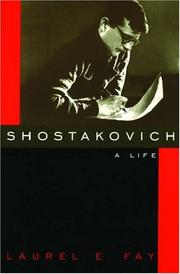
The scholarly biography of record, built from archival documents and deliberately refusing to speculate about inner meaning. Read it first: it is the baseline every other book here departs from, and Fay is also the scholar who first demonstrated that pages of Testimony were reprinted from previously published articles. Catalogued under the bare display title Shostakovich.
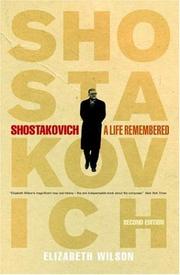
An oral history assembled from the testimony of friends, pupils and colleagues, with Wilson's connecting commentary. Read second, as the human texture Fay's documentary method excludes — and note that it is a compilation of recollections, with all the unreliability that implies. Also catalogued under the bare title Shostakovich.
The Testimony Argument
BeginnerRead the disputed memoir and then the case for and against it, and form your own view of what it can be used to support.
▸ Study plan for this stage
Pace: 14 to 16 weeks, and this is the hardest stage on the path. Testimony is around 290 pages and reads fast — a bitter, contemptuous first-person voice, and it is designed to be persuasive; a week. The New Shostakovich is about 350 pages of sustained interpretive argument; three weeks. Shostakovich Reco
- The claim: Volkov states that Testimony consists of the composer's own recollections, dictated to him in a series of meetings and shorthand-recorded, and that Shostakovich signed the first page of each chapter.
- The evidentiary problem: Fay showed that the signed opening pages of eight chapters reproduce, word for word, articles Shostakovich had already published under his own name. What follows from that is exactly what the dispute is about, and it is not settled.
- Volkov's position and that of his defenders is that recycling his own published material is consistent with how the memoirs were assembled, and that the substance is authentic even where the transcription method was unusual.
- The critics' position, argued by Fay, Richard Taruskin and others in the Casebook, is that the original shorthand manuscript has never been made available for independent examination, and that until it is the book's provenance cannot be established.
- Ho and Feofanov's Shostakovich Reconsidered is a book-length defence: it marshals witness statements — including from the composer's son Maxim, from Rostropovich and from Ashkenazy — and attacks the scholarly critics directly, at length and by name.
- MacDonald's The New Shostakovich is a separate move: it takes the dissident reading as established and produces a systematic decoding of the works as political commentary. Musicologists have criticised it for circularity — the music is read as coded because the memoir says so, and the memoir is cred
- The wider question underneath the provenance question is whether instrumental music can carry determinate political meaning at all, and the two camps disagree about that as much as they disagree about the manuscript.
- Having read all four you will not have an answer, and you should not expect one. What you will have is the ability to say which claims rest on documents, which on testimony, and which on interpretation — which is what everyone arguing about Shostakovich actually needs.
- What precisely does Volkov claim about how Testimony was produced, and what has he offered in support of it?
- State Fay's finding about the signed pages, and state the strongest reply Ho and Feofanov make to it.
- What would settle the provenance question, and why has it not been settled?
- MacDonald reads specific works as coded dissent. Take one of his readings and say what evidence it rests on other than Testimony.
- What is the circularity objection to MacDonald, and does his book contain an answer to it?
- After the Casebook, which of your beliefs about Shostakovich rest on documents and which on testimony? List them separately.
- Read Testimony's account of one specific episode — the 1936 denunciation is the obvious choice — and check every checkable claim in it against the chronology you built from Fay. Mark each as corroborated, contradicted or unverifiable. That three-column list is the most useful thing you can make in this stage.
- Find the eight chapter openings Fay identified and read them beside the earlier published articles where the Casebook reproduces them. Seeing the overlap on the page is different from being told about it.
- Take one work MacDonald decodes politically, listen to it without his commentary and write down what you hear, then read his chapter. Doing it in that order is the only way to test whether the reading is being supplied by the music or by the book.
- Write out the strongest case for Testimony's authenticity and the strongest case against it, each in a page, each using only evidence the other side accepts as evidence. If both pages are hard to write, you have understood the dispute.
- Track how the two sides characterise each other. The tone of Shostakovich Reconsidered and the tone of the Casebook are themselves data about how an academic dispute becomes intractable.
Next up: The next stage steps away from the contested memoir entirely, to sources whose provenance nobody disputes and to the institutional machinery he actually worked inside.
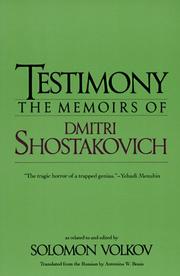
The book that started the argument: a bitter, contemptuous first-person voice claiming to be Shostakovich's. Read it after the biographies, not before — its power depends on your not yet knowing which of its claims are corroborated. Catalogued with Shostakovich as co-author, which is itself the contested question.

The fullest statement of the dissident reading, treating the works as coded political commentary. Vigorously argued and widely criticised by musicologists for circular reasoning; read it as the strongest version of a position, not as a settled account.

Ho and Feofanov's book-length defence of Testimony's authenticity, marshalling counter-evidence and witness statements. Combative in tone. Read it directly after MacDonald to see the case at its most thorough.
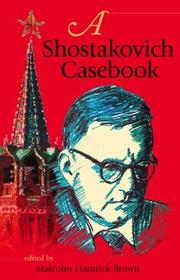
The scholarly reply — a collection including Fay's forensic articles and other documentary work on Testimony's origins. Read it last in this stage: it is the response to Ho and Feofanov, and having read both, the dispute stops being a matter of whom you trust.
The Documentary Record and the Political Frame
BeginnerMove past the memoir dispute to sources whose provenance is not in question, and to the institutional machinery the composer worked inside.
▸ Study plan for this stage
Pace: 9 weeks. Story of a Friendship is around 340 pages — Shostakovich's letters to Isaak Glikman over more than thirty years, with Glikman's connecting commentary; three weeks, and read the letters slowly, because they are short and evasive and the interest is in what is not said. Shostakovich and Stali
- The Glikman letters are the largest surviving body of Shostakovich's own undisputed words, and they are guarded, ironic and frequently about nothing — which is itself the most direct evidence available about how he wrote when he assumed he might be read by others.
- Glikman is a friend and an editor of his own correspondence: he selected and annotated, and his commentary supplies context that the letters withhold. He is a participant, not a neutral archivist.
- The letters' irony is the interpretive problem in miniature. A sentence praising a Party decision can be read straight or inverted, and the same reader will do both within a page.
- Volkov's Shostakovich and Stalin makes the case for the composer as a 'yurodivy', a holy fool speaking truth through apparent submission, and applies it to the relationship between the artist and the state.
- It is the same thesis as Testimony, argued in Volkov's own voice with sources that can be checked — which is why it is the fairer test of his position than the memoir is, and why it belongs after stage two rather than inside it.
- Frolova-Walker's Stalin's Music Prize works from the actual minutes of the Stalin Prize committees and shows the awards being argued over, lobbied for and repeatedly overturned, sometimes by Stalin personally and often not.
- Its consequence for this path is structural: it replaces a picture of monolithic state control with one of contested, incompetent and factional institutions, which weakens the premise that both the dissident and loyalist readings depend on.
- Read as a group these three move the question from what Shostakovich secretly meant to what the system he worked in actually was, which is a question that has documents behind it.
- What do the Glikman letters say about the 1948 decree and its aftermath, and how would you characterise the tone?
- Find a sentence in the letters that can be read two ways. What decides the reading — the sentence, or what you already believe?
- What is a yurodivy in Volkov's usage, and what evidence does he offer that Shostakovich occupied that role deliberately?
- What do the Stalin Prize committee minutes show about how decisions were actually made, and which popular assumption does that undermine?
- If the state was as factional as Frolova-Walker shows, what happens to the argument that every public statement was coerced?
- Take the ten letters written closest to the 1948 decree and read them in one sitting against Fay's account of the same months. Note every event that appears in Fay and not in the letters. The omissions are the evidence.
- Choose three letters and write two paraphrases of each — one straight, one ironic. Then decide which you believe and say what made the difference. This is the whole methodological problem of the field, done in an afternoon on primary sources.
- Trace one Stalin Prize decision through Frolova-Walker's account from nomination to award and write down every person who influenced it. Compare that list with the one-actor model implied by most writing about Soviet music.
- Read Volkov's Shostakovich and Stalin with a pencil and mark every claim that is sourced to Testimony. Then read the argument again with those claims removed and see what is left standing.
Next up: Every book so far has been about the life; the next stage turns to the music, and above all to the quartets, where the private work of the last two decades is concentrated.
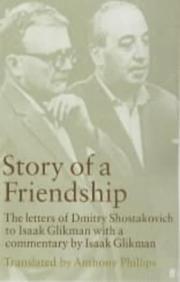
Shostakovich's letters to Glikman over thirty years, with the recipient's commentary — the most substantial body of the composer's own undisputed words. Guarded, often evasive, and far more interesting for what he avoids saying than for what he says.
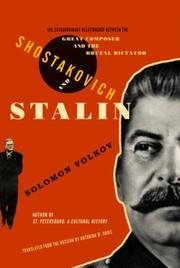
Volkov's later book on the relationship between the composer and the state, argued as a study of the artist and the tyrant. Read it knowing Volkov's position from Testimony — this is the same thesis, made in his own voice and with sources you can check.

An archival study of how the Stalin Prize committees actually chose winners, which replaces the picture of monolithic state control with something far messier and better evidenced. The best corrective in this path to the whole dissident-versus-loyalist framing.
The Music Itself
BeginnerTurn from biography to analysis — the symphonies, and above all the fifteen string quartets, where the private work of the last two decades is concentrated.
▸ Study plan for this stage
Pace: 10 weeks, and this stage should be read with recordings. The Cambridge Companion to Shostakovich is around 430 pages of commissioned essays and is the map — three weeks, read straight through. Shostakovich Studies is about 300 pages, is the most technically demanding book on the path, and assumes sc
- The Cambridge Companion is a survey of where the scholarship stands rather than an argument — genre by genre, plus reception history and the historiography of the dispute itself, which is the most useful chapter for a reader arriving from stage two.
- Shostakovich Studies is the collection that moved Anglophone scholarship from biography toward analysis, and its subject is how the music is made rather than what it meant.
- The DSCH monogram — the pitches D, E flat, C, B natural spelling the composer's initials in German notation — is the most concrete link between the life and the notes, and it appears across the Eighth Quartet, the Tenth Symphony and elsewhere.
- Quotation and self-quotation are structural devices in his late work: the Eighth Quartet is built almost entirely from citations of his own earlier pieces, which makes it an autobiographical document in a way that requires no memoir at all.
- The fifteen quartets are the private counterpart to the fifteen symphonies, written mostly for one ensemble, and the argument of Lesser's book is that the composer is more findable there than in the public works.
- Lesser is a literary critic writing about music without technical analysis; her book is interpretation and biography rather than musicology, and it should be read as such alongside the two academic volumes rather than instead of them.
- The reception-history question the Companion raises directly: how much of what listeners hear as irony, grief or protest in this music is in the notes, and how much was installed by the arguments of stage two.
- The Thirteenth Symphony, setting Yevtushenko's Babi Yar, is the case where the political content is explicit in a text rather than inferred from instrumental music, which makes it the useful control case for the whole debate.
- What is the DSCH motto, and in which works does it appear? What does its presence establish, and what does it not?
- The Eighth Quartet quotes at least five of his own earlier works. Which, and what does the sequence of quotations suggest?
- What does Shostakovich Studies claim about his use of quotation that a purely biographical reading would miss?
- Why does Lesser argue the quartets rather than the symphonies are where he is to be found? What is her evidence?
- The Thirteenth Symphony sets an explicitly political text. How does that change the kind of argument you can make about it, compared with the Tenth?
- After this stage, how much of what you hear in the Fifth Symphony's finale do you think is in the score?
- Listen to the Eighth Quartet with a list of its self-quotations in front of you and mark each one as it arrives. The piece becomes a different object once you can hear the citations, and it takes twenty minutes.
- Learn the four notes of the DSCH motto well enough to recognise them by ear, then listen for them across the Eighth Quartet and the Tenth Symphony's third movement. This is the single highest-return listening exercise on the path.
- Take one analytical chapter of Shostakovich Studies and follow it with the score and a recording, stopping at every example. If you do not read music, do it with a recording and the timings; you will get most of it.
- Listen to the fifteen quartets in order over the course of the stage, one every few days, with Lesser's corresponding chapter after each. Her book is organised to be used this way.
- Pick one work MacDonald decoded in stage two and read the Cambridge Companion's treatment of the same piece. The difference in what each is willing to assert is the state of the field, demonstrated on a single case.
Next up: One episode remains where the life, the music and the propaganda are hardest to separate, and the last stage takes it directly and then hands the whole problem to a novelist.

Edited with David Fanning, and the best single-volume survey of current scholarship across the genres and the reception history. Read it first in this stage as the map of where the musicological argument now stands.
The essay collection that did most to move Anglophone scholarship from biography toward analysis, including work on the quartets and on the composer's use of quotation. Demanding, and assumes score-reading.

A writer's book on the fifteen string quartets, treating them as the private counterpart to the public symphonies. Not a technical analysis; read it for the argument that the quartets, not the symphonies, are where the composer is actually to be found.
Leningrad, and One Novel
IntermediateTake the single episode where the life, the music and the propaganda are hardest to disentangle, and finish with a fictional treatment of the whole problem.
▸ Study plan for this stage
Pace: 4 weeks. Symphony for the City of the Dead is around 450 pages, written for a general and younger readership, and moves quickly; two weeks. It covers the siege of Leningrad in detail, including mass starvation, the deaths of children, and cannibalism, reported as historical fact. The Noise of Time i
- The factual spine: the Seventh Symphony was begun in Leningrad during the German encirclement, completed in evacuation, microfilmed and flown out of the Soviet Union, and performed in the besieged city in August 1942 by an orchestra assembled from surviving and recalled musicians.
- Its Western reception — Toscanini's broadcast, the Time magazine cover, the wartime alliance politics around it — made the Seventh the most politically useful piece of music of the war, and made its composer an international symbol before anyone in the West knew anything about him.
- The interpretive dispute in miniature: whether the symphony's invasion theme depicts the German advance, as the wartime programme said, or totalitarianism generally, as Testimony claims, or neither. All three readings have serious defenders.
- Anderson's book is the clearest available narrative of the siege itself, and the siege is the part of this story that is not disputed by anyone; where he handles the memoir controversy he compresses it, so hold it against stage two.
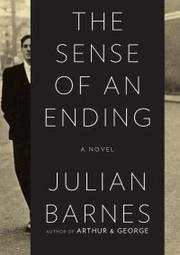
- Barnes's novel takes three moments of confrontation with power — the wait by the lift after Lady Macbeth was denounced, the 1949 New York peace conference, and Party membership in 1960 — and imagines the interior life the documentary record cannot supply.
- It is fiction and must be read as fiction, but read last it functions as a distillation: it is the question the entire literature circles, stated as a novel because the archives cannot answer it.
- The recurring image of the Leningrad episode — a starving orchestra playing a symphony broadcast at the German lines — is the point where the biography and the myth are least separable, which is why the path ends here rather than with the biographies.
- After all five stages the honest position is that the dispute is unresolved, that the documents constrain it without settling it, and that anyone claiming otherwise is selecting evidence. That is a defensible place to arrive.
- What is the factual record of the August 1942 Leningrad performance, and which details are best documented?
- What did the Seventh Symphony do politically in the West in 1942, and how much of that was the music and how much the circumstances?
- Give the three main readings of the invasion theme and the evidence for each.
- Where does Anderson simplify the Testimony dispute, and would you now correct him?
- Barnes puts thoughts in Shostakovich's head. Which of them are consistent with the documented record, and which are inventions the record cannot support?
- Having read the whole path: what do you think can be said with confidence about what Shostakovich believed, and what cannot?
- Listen to the first movement of the Seventh Symphony while reading Anderson's chapters on the composition and the premiere. The invasion theme's build is the passage everything in this stage is about and it is thirteen minutes long.
- Take Anderson's account of the siege and check three of its central facts against a scholarly history of the blockade. He is writing for a general readership and the exercise shows where narrative history compresses.
- For each of Barnes's three scenes, find what Fay's biography says about the same episode and write the two accounts side by side. The novel's licence is measurable that way, and it is smaller than most readers expect.
- Write a single page stating what you now believe about the dissident-versus-loyalist question, with every claim labelled by the kind of evidence supporting it — document, testimony, or interpretation. If the page is mostly the third category, that is the honest result.
Next up: That is the literature as it stands; from here the useful directions are outward — Taruskin's essays on Russian music and its politics, Fairclough on Soviet musical institutions, and the letters and memoirs of his contemporaries, none of which will settle the argument either.

The Seventh Symphony, the siege of Leningrad, and the score's journey out of the USSR, told as narrative history. Written for a general and younger readership, so it simplifies the Testimony dispute — but it is the clearest available account of the siege itself.
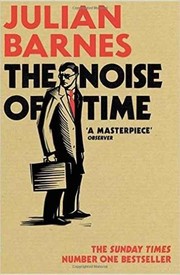
A short novel imagining Shostakovich at three moments of confrontation with power. Fiction, and it should be read last and read as fiction — but after the preceding stages it works as a distillation of the question the entire literature is circling.