The German army did not intend to take Leningrad. The plan, set out in orders from the autumn of 1941, was to encircle the city and let hunger empty it, because feeding two and a half million civilians did not fit the campaign's logistics. The siege lasted 872 days. Somewhere around 800,000 civilians died, the great majority of starvation, most of them in the winter of 1941 to 1942 when the ration fell to 125 grams of adulterated bread a day for dependants.
That winter also produced more than 2,000 arrests for cannibalism, recorded in NKVD files that stayed closed until the 1990s. The distinction the police themselves drew was between corpse-eating and killing for meat, and both categories were prosecuted. These are facts about what happened, and a reading list that leaves them out is describing a different siege.
The reading order matters because the archives opened late. Books written before about 1991 could not use the party and NKVD records, and they were also constrained by a Soviet account in which the city was uniformly heroic. Start with what came after.
The modern narrative
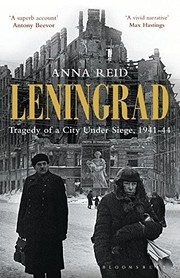
Leningrad by Anna Reid is the right first book: a post-Soviet account built on the reopened archives, clear on the German plan, on Soviet mismanagement of evacuation and food stocks, on the party officials who ate well, and on the criminal files. It states what happened without either Soviet heroics or voyeurism.
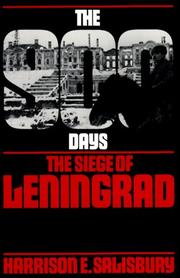
The 900 days is the classic that Reid supersedes and does not replace. Harrison Evans Salisbury was an American correspondent in the Soviet Union and interviewed survivors when they were still young; the book was banned in the USSR. Its limits are the closed archives and the caution about Stalin's role. Read it second, for the human texture and the reporting.
Symphony for the city of the dead is M. T. Anderson's account of the siege through Shostakovich and the Seventh Symphony, written for younger readers and read widely by adults. Leningrad: Siege and Symphony is Brian Moynahan doing the same pairing at full adult length and with more on the terror of the 1930s. The two overlap heavily; take Moynahan unless you want the shorter, faster book.
The diaries
This is where the subject actually lives.
Blockade Diary is Lidiya Ginzburg's, and it is unlike anything else on the list — not a chronicle but a philosophical reconstruction of what starvation does to thought, written by a literary scholar in the third person. It is short and it is the best book here.
The Diary of Lena Mukhina is a schoolgirl's, kept from May 1941 through the first winter: homework and a crush, then bread weights and deaths in the flat. She survived. It is unbearable in the specific way only an ordinary diary can be.
The Leningrad Blockade, 1941-1944 is Richard Bidlack and Nikita Lomagin's documentary history, pairing translated archival documents with scholarly commentary — the reference volume for the whole subject, and the place to check any claim. Writing the siege of Leningrad collects women's diaries and memoirs with Cynthia Simmons's analysis, and it corrects a record that is otherwise heavily male and official.
The military side
The battle for Leningrad is David M. Glantz's operational history, drawn from Soviet military archives — army by army, offensive by offensive, and the standard work on the fighting rather than the starving. It is dense and it is not a narrative.
Leningrad, 1941-44 is Robert Forczyk's short campaign study with maps and orders of battle, and it is the efficient way to understand the encirclement, the Ladoga ice road and the eventual relief. Absolute war is Chris Bellamy's history of the whole Soviet-German war, which is what places Leningrad inside a conflict that killed 27 million Soviet citizens.
Afterwards
Shostakovich is Elizabeth Wilson's life-in-documents, assembled from the testimony of people who knew him, and the responsible source on a composer whose politics remain disputed. The Unwomanly Face of War is Svetlana Alexievich's oral history of Soviet women who fought, which extends the frame beyond the city. The Siege is Helen Dunmore's novel of that first winter, and it is the one piece of fiction here — accurate, restrained, and a good final book once you know the history it is built on.
Browse more history reading paths on Discover.
Follow the full ordered path here: The Siege of Leningrad: Books to Read, in Order.