The Sea of Fertility Reading Order and Guide
This curriculum is designed for an expert reader who wants to read Mishima's Sea of Fertility tetralogy with full comprehension of its philosophical, literary, and cultural architecture. The path begins with the tetralogy itself read in sequence, then deepens through the Buddhist and Noh-drama sources that underpin the cycle's metaphysics, and finally situates the work within Mishima's own life, aesthetics, and the broader tradition of Japanese modernism he was both inheriting and destroying.
The Tetralogy in Sequence
ExpertRead the four novels in their intended order, tracking the reincarnation of Isao/Honda's witness across decades, and experiencing the cumulative irony of Mishima's final vision firsthand before analysis begins.
▸ Study plan for this stage
Pace: 12–16 weeks total (~4 weeks per novel); aim for 25–35 pages per day on weekdays with longer sessions on weekends to preserve narrative momentum — especially for The Temple of Dawn, which demands sustained attention across its two-part structure. Read each novel to completion before beginning the nex
- The reincarnation schema: how Mishima uses the Yogācāra Buddhist doctrine of consciousness-streams to link Kiyoaki (Spring Snow), Isao (Runaway Horses), Ying Chan (The Temple of Dawn), and Tōru (The Decay of the Angel) as successive vessels of the same soul — and why each vessel fails or is denied.
- Honda as the sole continuous witness: his role shifts from sympathetic friend, to ideological observer, to voyeur, to aged skeptic — tracking this arc reveals Mishima's deepening nihilism across the four decades the tetralogy spans (1912–1975).
- The aesthetics of doomed beauty: Spring Snow establishes the template — passionate, aristocratic, self-destructive love — against which each subsequent novel measures its protagonist's more violent or degraded form of longing.
- Ultranationalism and the body as sacrifice: Runaway Horses introduces the ideology of the Shield Society and the logic of the purifying act, showing how political violence becomes a substitute for the transcendence Kiyoaki found in eros.
- East–West cultural collision and the decay of Meiji idealism: across all four novels, Japan's modernization is experienced as spiritual loss; The Temple of Dawn literalizes this by staging Honda's philosophical crisis in Thailand and India.
- The unreliability of memory and perception: by The Decay of the Angel, Honda can no longer trust his own witness — Mishima systematically dismantles the epistemological ground on which the entire tetralogy has rested.
- Cumulative irony of the final scene: the garden of Gesshūji in The Decay of the Angel, where the aged Honda visits a nun who may or may not be Satoko, collapses all four novels into a single devastating question about whether any of it — the beauty, the sacrifice, the witness — was real.
- Mishima's autobiographical shadow: the tetralogy was completed days before his ritual suicide (November 25, 1970); reading the four novels in sequence allows the reader to feel the author's own approaching death encoded in the text's escalating despair.
- By the end of Spring Snow, what specific signs does Mishima plant — in Kiyoaki's dreams, his birthmark, and his final words — that establish the reincarnation motif, and how do those signs recur or mutate in Runaway Horses with Isao?
- How does Honda's moral character change between his role in Spring Snow (loyal friend, legal mind) and his role in The Decay of the Angel (aging voyeur, property owner), and what does that degradation argue about the cost of being a mere witness to beauty rather than its embodiment?
- Runaway Horses presents political violence as a form of aesthetic purity. How does Mishima frame Isao's failed coup and seppuku — as tragedy, as farce, or as something more ambiguous — and how does that framing complicate the reader's sympathy?
- The Temple of Dawn is structurally divided between Honda's journey through Asia and his return to postwar Japan. How does the Thai/Indian section (featuring Ying Chan as a child princess) function philosophically, and why does Mishima place the novel's erotic climax in a Japanese garden rather than abroad?
- In The Decay of the Angel, Tōru is the first 'reincarnation' who is aware of — and consciously rejects — his role. What does Mishima suggest by making the final vessel an active nihilist rather than a passionate innocent, and how does this invert the pattern set by Kiyoaki?
- What is the reader left to conclude from the final scene of The Decay of the Angel? Does Satoko's apparent denial that she ever knew Kiyoaki destroy the tetralogy's premise, affirm it, or open a third possibility — and what textual evidence from all four novels supports your reading?
- Reincarnation tracking log: keep a running document as you read each novel. For each protagonist (Kiyoaki, Isao, Ying Chan, Tōru), record: (a) the birthmark/physical sign, (b) the nature of their passion or drive, (c) the manner of their death or disappearance, and (d) Honda's emotional response. After finishing The Decay of the Angel, write a one-page synthesis of what the pattern reveals — and w
- Honda's witness journal: after completing each novel, write a 200-word first-person entry in Honda's voice, set immediately after the novel's final scene. Force yourself to inhabit his evolving psychology — idealistic in Spring Snow, conflicted in Runaway Horses, compromised in The Temple of Dawn, hollowed-out in The Decay of the Angel. Comparing all four entries at the end will map his arc viscer
- Structural close-reading: select one chapter from each novel that you consider its emotional or philosophical climax (e.g., Kiyoaki's death scene, Isao's seppuku, Honda's voyeurism in the garden, Tōru's confrontation with Honda). Annotate each for: imagery of water/snow/fire/decay, Buddhist or Shinto allusions, and the presence or absence of transcendence. Look for Mishima's evolving symbolic voca
- Timeline and historical anchor map: construct a timeline placing each novel's events against actual Japanese history (Taishō era, the 1930s nationalist movements, postwar Occupation and recovery, the 1970 Mishima incident). For each historical moment Mishima references or implies, note whether his characters engage with it, flee from it, or are destroyed by it. This grounds the tetralogy's abstrac
- The final scene debate: after finishing The Decay of the Angel, write two short argumentative paragraphs — one arguing that Satoko's denial confirms the reincarnations were real (Honda simply cannot be trusted as a witness), and one arguing they were always his projection. Then write a third paragraph explaining which reading Mishima's prose style, across all four novels, most strongly supports.
- Pre-analysis immersion reflection: before moving to any secondary criticism, write a one-to-two page unmediated response to the tetralogy as a whole. What did you feel at the end of The Decay of the Angel? Where did the cumulative irony land hardest? What questions feel genuinely unanswered? Seal this document and return to it after the next stage of the curriculum to measure how analysis changes
Next up: Completing the tetralogy as a raw reading experience — with its unresolved ironies and emotional residue still intact — gives the reader the necessary firsthand ground truth against which the next stage's critical and philosophical analysis (Buddhist doctrine, nationalist ideology, Mishima biography, and comparative literature) can be tested rather than simply absorbed.
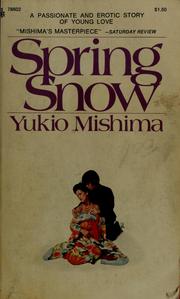
The first volume establishes the doomed romantic idealism of Kiyoaki and introduces Honda as the rational observer-witness; its lush, Proustian style sets the aesthetic register for the entire cycle.
The second volume reincarnates Kiyoaki's soul in the ultra-nationalist Isao, pivoting from aestheticism to violent political action and introducing the Hagakure as a counter-text to the first volume's sensibility.

The third volume disperses the soul into a Thai princess, forcing Honda—and the reader—to confront Buddhist transmigration doctrine directly through Honda's aging voyeurism and spiritual crisis.
![The Decay of the Angel (The Sea of Fertility [4])](https://covers.openlibrary.org/b/id/4615510-M.jpg)
The fourth and final volume, completed the morning of Mishima's suicide, delivers the cycle's devastating nihilistic reversal; reading it last is essential because its final pages retroactively destabilize everything that preceded them.
The Buddhist Metaphysical Spine
ExpertUnderstand the Hossō school Buddhist doctrine of consciousness (ālayavijñāna) and the Yuishiki (Consciousness-Only) philosophy that Mishima studied and embedded in the tetralogy's theory of reincarnation and illusion.
▸ Study plan for this stage
Pace: 6–8 weeks total: Weeks 1–4 on Mookerjee's "The Buddhist Philosophy of Universal Flux" (~20–25 pages/day, allowing time for re-reading dense Abhidharma and Vijñānavāda passages); Weeks 5–8 on Suzuki's "The Zen Doctrine of No-Mind" (~15–20 pages/day, with slower reading for the paradoxical Zen dialect
- Ālayavijñāna (storehouse consciousness): the sub-stratum consciousness that 'stores' karmic seeds (bījas) and conditions all future experience — the direct philosophical engine of the tetralogy's reincarnation mechanism
- The Hossō / Yogācāra Vijñaptimātratā (Consciousness-Only / Yuishiki) thesis: the claim that all phenomena are nothing but representations within consciousness, with no independently existing external world — the metaphysical ground for Mishima's treatment of beauty and illusion as equivalent
- The doctrine of universal flux (santāna): Mookerjee's exposition of momentariness (kṣaṇavāda) — every dharma arises and perishes in an instant — which underpins why identity across rebirths is a continuity of process, not of substance
- The eight-consciousness model (aṣṭa-vijñāna): the five sense-consciousnesses, mano-vijñāna (intellect), manas (the ego-grasping faculty that mistakes ālaya for a self), and ālayavijñāna — understanding how manas generates the illusion of a permanent self is key to reading Honda's epistemological tra
- Bīja (seed) theory and the ripening of karma (vipāka): how latent impressions stored in ālaya 'perfume' (vāsanā) future consciousnesses, providing Mishima's reincarnating protagonist with continuity without identity
- Śūnyatā as encountered through Suzuki: the Zen re-reading of Consciousness-Only that dissolves even the ālaya into no-mind (mushin / wu-hsin), the state Suzuki identifies as the ground of Zen enlightenment — contrasting with the more scholastic Hossō position Mishima also draws on
- The role of the 'Original Mind' (hongaku) and its relationship to no-mind in Suzuki: how the Zen tradition reframes the Yogācāra storehouse as something to be seen through rather than inhabited, illuminating why Honda's accumulation of consciousness leads not to liberation but to paralysis
- Illusion (māyā /ке幻) as a structural, not merely decorative, device: synthesizing Mookerjee's technical account of vijñāna-transformation (pariṇāma) with Suzuki's experiential account of satori to understand why Mishima frames each reincarnation as simultaneously real and a dream
- After reading Mookerjee, can you explain in your own words how the ālayavijñāna stores and transmits karmic seeds across rebirths without positing a permanent soul — and why this matters for the philosophical coherence of Mishima's tetralogy?
- How does Mookerjee's account of momentariness (kṣaṇavāda) challenge the common-sense notion of personal identity, and how does this challenge map onto the recurring question in the tetralogy of whether Isao, Ying Chan, and Tōru are 'really' Kiyoaki reborn?
- What is the function of manas in the eight-consciousness schema, and how does its persistent misidentification of ālaya as a self illuminate Honda's increasingly voyeuristic and ego-driven relationship to the reincarnations he witnesses?
- How does Suzuki's concept of no-mind (mushin) differ from mere unconsciousness or blankness, and in what sense does it represent the 'other side' of the Consciousness-Only doctrine that Mookerjee expounds scholastically?
- Suzuki argues that the Zen doctrine of no-mind is not a negation of mind but its purest activity. How does this paradox resonate with the ending of 'The Decay of the Angel,' where Honda confronts a garden that may contain nothing — or everything?
- How do the concepts of vāsanā (perfuming/latent impressions) from Mookerjee and the 'Original Mind' from Suzuki together explain Mishima's insistence that beauty is always already a memory — something recognized rather than encountered for the first time?
- Consciousness-mapping exercise: Draw the full eight-consciousness diagram using Mookerjee's exposition. Then annotate each level with a character or moment from the tetralogy (e.g., label ālayavijñāna with the birthmark motif, manas with Honda's self-deception). This forces a direct bridge between doctrine and text.
- Seed-and-perfuming journal: Each day after reading Mookerjee, write one paragraph tracing a single bīja (e.g., the desire for beauty, the impulse toward death) as it 'perfumes' from one reincarnated character to the next across the four novels. Build this into a cumulative document over the four weeks.
- Close-reading dialectic with Suzuki: Choose any two consecutive pages of Suzuki where he defines no-mind, then write a one-page 'Socratic dialogue' between a Hossō scholiast (using Mookerjee's vocabulary) and a Zen practitioner (using Suzuki's vocabulary) arguing about whether ālayavijñāna is an obstacle or a gateway to liberation.
- Comparative terminology glossary: Compile a two-column glossary — Sanskrit/Pāli technical term on the left (from Mookerjee), its Zen/Japanese functional equivalent on the right (from Suzuki). Aim for at least 20 paired entries. This glossary will serve as a reference tool for all subsequent stages.
- Passage translation exercise: Take the final scene of 'The Decay of the Angel' (Honda in the garden at Gesshuji) and write a 500-word philosophical commentary on it using only concepts drawn from these two books — no secondary Mishima criticism allowed. This tests whether the doctrine has been genuinely internalized.
- Debate-prep exercise: Prepare a 5-minute spoken argument for the position that Mishima's tetralogy is fundamentally a Hossō/Yuishiki work (using Mookerjee), then prepare an equally strong 5-minute counter-argument that it is fundamentally a Zen/no-mind work (using Suzuki). Delivering both aloud reveals where your understanding is still superficial.
Next up: Mastering the ālayavijñāna and no-mind frameworks from these two books equips the reader with the precise philosophical vocabulary needed to interrogate how Mishima dramatizes — and ultimately subverts — these doctrines through the lived aesthetics of Noh, the samurai body, and the Apollonian/Dionysian tension that the next stage addresses through his literary and cultural sources.

A rigorous scholarly account of the Yogācāra/Vijñānavāda tradition—the philosophical school behind Hossō Buddhism—giving the expert reader the precise doctrinal vocabulary Mishima was working with.
Suzuki's analysis of the relationship between consciousness, emptiness, and the dissolution of the self provides the experiential and literary dimension of the Buddhist ideas the tetralogy dramatizes, complementing the doctrinal account.
Noh, Aesthetics, and the Classical Sources
ExpertGrasp the Noh drama tradition and classical Japanese aesthetic categories—mono no aware, yūgen, the warrior ethic—that Mishima consciously wove into the cycle's structure, imagery, and character types.
▸ Study plan for this stage
Pace: 6–8 weeks total: Weeks 1–4 on "The Noh Plays of Japan" (~20–25 pages/day, including Waley's introductory essays read slowly and annotated); Weeks 5–8 on "Hagakure" (~15–20 pages/day, reading reflectively in short sittings to mirror the aphoristic, meditative nature of the text).
- Yūgen: the Noh aesthetic of mysterious, shadowy beauty and the 'what lies beneath' quality that Waley identifies as the animating spirit of Noh performance and text
- Mono no aware: the pathos of impermanence, most visible in Waley's ghost and warrior plays where beauty and loss are inseparable
- The structure of Noh drama — the two-act shite/waki dynamic, the role of the travelling witness, and the revelation of a haunted past — as a template Mishima replicates across the Sea of Fertility tetralogy
- Character types in Noh: the shite (protagonist/ghost), the waki (witness/priest), and how these map onto Honda and the successive reincarnations of Kiyoaki in the cycle
- The warrior ethic in Hagakure: Yamamoto's insistence that the samurai must live as if already dead, making each moment absolute — the philosophical root of Mishima's obsession with beautiful, early death
- Bushido as aesthetic system: in Hagakure, death is not merely duty but the completion of form, linking the warrior code directly to Mishima's treatment of Isao in 'Runaway Horses'
- The concept of 'the way of the samurai is found in death' (shikisoku zekū) and its relationship to Buddhist impermanence threading through both Waley's Noh plays and the Sea of Fertility's reincarnation framework
- Seasonal and natural imagery as moral language: how both Waley's translated plays and Hagakure use cherry blossoms, autumn, and transient beauty as ethical and not merely decorative symbols
- After reading Waley's introductions and selected plays, how would you describe yūgen in your own words, and can you identify at least two specific moments in the Noh plays where Waley's translation choices seem designed to evoke it?
- How does the two-part structure of a typical Noh play — the waki's arrival, the shite's gradual revelation, and the climactic re-enactment of a past event — anticipate the narrative architecture Mishima uses across the four novels of the Sea of Fertility?
- What does Yamamoto Tsunetomo mean when he says the samurai must 'live as though already dead,' and how does this differ from nihilism — what is the aesthetic and ethical content of that stance as presented in Hagakure?
- In what ways do both Waley's Noh texts and Hagakure treat beauty and death as inseparable rather than opposed? What specific images or passages support this reading?
- How does the warrior ethic in Hagakure function as an aesthetic system — that is, how does it prescribe not just what to do but how to appear, move, and die — and why would this matter to a novelist like Mishima?
- Taken together, what vision of time, selfhood, and repetition do these two books construct, and how might that vision explain the reincarnation conceit at the heart of the Sea of Fertility?
- Close-reading log for Waley: After each Noh play, write a 100-word note identifying (a) the shite's unresolved grief or attachment, (b) the natural image that carries the emotional weight, and (c) the moment of yūgen — train yourself to see these three elements as a unit.
- Structural mapping: Choose three plays from Waley and diagram their two-act structure on a single page. Then, from memory, sketch the narrative arc of one Sea of Fertility novel alongside it and annotate the parallels — this makes the template visible before you read the novels.
- Hagakure aphorism journal: Select one aphorism per reading session that strikes you as most relevant to Mishima's themes. Paraphrase it in modern prose, then write two sentences on how a character living by this maxim would behave differently from a character who does not.
- Comparative image index: Create a two-column list — one for recurring images in Waley's plays (falling blossoms, moonlight, armor, weeping pines) and one for recurring images in Hagakure (the drawn sword, the cherry blossom, the moment of decision). Note every overlap; this shared vocabulary is Mishima's raw material.
- Write a one-page 'Noh synopsis' of a scene you invent: a traveller meets the ghost of a young man who died beautifully and too soon. Use the structural conventions Waley describes and the ethical vocabulary of Hagakure. This exercise forces active synthesis rather than passive reading.
- Timed reflection: At the end of each week, spend 20 minutes writing freely on this prompt — 'What does it mean for a life to have the right shape?' — letting your answers evolve as you move from Waley into Hagakure. Compare your week-one and week-eight responses to measure conceptual growth.
Next up: By internalizing the aesthetic grammar of Noh and the warrior ethic from these two foundational texts, the reader now holds the interpretive keys — yūgen, mono no aware, the beauty of chosen death — that Mishima encoded directly into the Sea of Fertility novels, making the first reading of "Spring Snow" a recognition rather than a discovery.
Waley's translations include the Noh play 'Hagoromo' and others that Mishima directly echoes in Spring Snow; reading them reveals how the tetralogy's dreamlike, cyclical structure is modeled on Noh's ghost-and-witness form.

The text that Isao venerates in Runaway Horses and that Mishima himself wrote a commentary on; reading it reveals the ideological and aesthetic code of death-as-beauty that drives the second volume and haunts the entire cycle.
Mishima's Own Aesthetic and Autobiographical Writings
ExpertRead Mishima's own theoretical and autobiographical prose to understand the personal and artistic logic behind the tetralogy—his theory of beauty, his relationship to the body, and his conscious construction of his own death as the cycle's final act.
▸ Study plan for this stage
Pace: 4–5 weeks total: Week 1–2 — "Sun and Steel" (~10–15 pages/day; it is a short but dense philosophical essay, so read slowly, annotating every major claim); Week 3–5 — "Confessions of a Mask" (~20–25 pages/day, pausing at the end of each chapter to journal responses before moving on).
- The word–body dialectic in 'Sun and Steel': Mishima's argument that language alienates the self from physical existence, and that only disciplined bodily cultivation can recover authentic selfhood
- The aesthetics of the 'tanned, steel-hard body' as a literary and philosophical program — musculature as a counter-text to prose
- The concept of death as aesthetic consummation: Mishima's insistence in 'Sun and Steel' that a beautiful death is the logical completion of a beautiful life, prefiguring the tetralogy's cyclical endings
- The tension between performance and authenticity in 'Confessions of a Mask': the narrator's elaborate self-staging as a window into Mishima's own lifelong theatricality
- Homoeroticism and the aestheticization of the male body in 'Confessions of a Mask' — desire mediated through images of martyrdom (St. Sebastian), violence, and death
- The mask as ontological condition: the idea that the 'true self' may be permanently inaccessible, and that identity is always already a constructed performance
- Mishima's relationship to the classical Japanese aesthetic of 'mono no aware' and its transformation into a personal cult of transience and bodily destruction
- The autobiographical pact and its limits: how both texts blur the line between confession, fiction, and manifesto, and what that instability means for reading the tetralogy
- According to 'Sun and Steel,' why does Mishima regard words as fundamentally opposed to the body, and how does he propose to resolve that opposition through physical training and, ultimately, death?
- How does the St. Sebastian episode in 'Confessions of a Mask' function as a condensed statement of Mishima's mature aesthetic — what does it reveal about the relationship between beauty, suffering, and desire?
- In what ways does the narrator of 'Confessions of a Mask' construct and perform identities for different audiences, and how does this prefigure the theme of illusion versus reality that runs through the Sea of Fertility tetralogy?
- How do 'Sun and Steel' and 'Confessions of a Mask' together illuminate Mishima's decision to choreograph his own death as a public, aesthetic, and political act in 1970?
- Both texts treat the body as a site of meaning-making. How do their approaches differ — the essay's philosophical abstraction versus the novel's sensory, narrative immersion — and what does each mode reveal that the other cannot?
- What does Mishima mean by the 'mask,' and is the mask ultimately a tragedy, a liberation, or both? Use evidence from both books to support your answer.
- Close-reading annotation sprint: Select one sustained passage from 'Sun and Steel' (the core word–body argument) and one from 'Confessions of a Mask' (the St. Sebastian fantasy). Write a 300-word comparative gloss on each, identifying shared imagery, logical moves, and emotional register.
- Concept map: Draw a visual diagram connecting the key terms from both books — word, body, mask, death, beauty, desire, performance — with labeled arrows showing how Mishima argues they relate to one another. Pin specific page references to each node.
- Reverse-engineer the manifesto: After finishing 'Sun and Steel,' write a one-page 'counter-manifesto' from the perspective of a critic who believes language, not the body, is the truest path to selfhood. Then write Mishima's rebuttal using only evidence from the text.
- Mask journal: While reading 'Confessions of a Mask,' keep a running log of every moment the narrator consciously performs an identity for an audience. At the end, categorize the performances by type (social, erotic, patriotic, artistic) and ask: is there any moment where the mask slips entirely?
- Intertextual bridge essay (500–700 words): Choose one character from the Sea of Fertility tetralogy you have already read (Honda, Kiyoaki, Isao, or Ying Chan) and argue how either 'Sun and Steel' or 'Confessions of a Mask' provides a theoretical key to understanding that character's fate.
- Timed comparative reflection: Set a 20-minute timer and free-write on this prompt — 'Mishima's autobiographical writings are themselves a form of fiction.' Use both books as evidence, then spend 10 minutes revising your argument into a clear thesis statement.
Next up: By internalizing Mishima's own aesthetic logic and autobiographical self-construction across these two books, the reader is now equipped to return to the tetralogy itself with a fully theorized lens — able to read Honda's voyeurism, the recurring motif of beautiful young deaths, and the final emptiness of "The Decay of the Angel" not as narrative puzzles but as the deliberate, philosophically grou

Mishima's own philosophical essay on the body, action, and the relationship between language and physical existence; it is the most direct key to understanding why the tetralogy ends in negation rather than transcendence.
Mishima's semi-autobiographical first major novel reveals the psychic and erotic foundations of his aesthetics of death and beauty, providing essential biographical context for the obsessions that culminate in the tetralogy.
Critical and Comparative Contexts
ExpertSituate the Sea of Fertility within Japanese literary modernism, the tradition of the 'I-novel,' and the global critical conversation about Mishima's legacy, achieving a fully synthesized scholarly perspective on the cycle.
▸ Study plan for this stage
Pace: 6–8 weeks total: Weeks 1–3 on "Accomplices of Silence" (~20–25 pages/day, with slower reading for dense critical passages); Weeks 4–7 on "Mishima: A Biography" (~25–30 pages/day, reading thematically as well as chronologically); Week 8 reserved for synthesis, comparative note review, and essay draft
- The 'I-novel' (shishōsetsu) tradition and its defining tension between confessional authenticity and literary artifice, as Miyoshi frames it in 'Accomplices of Silence'
- Miyoshi's central thesis: that modern Japanese fiction is characterized by a systematic evasion of social reality and an inward, solipsistic turn — and how this applies directly to Mishima's narrative choices in the Sea of Fertility
- The concept of 'silence' as a structural and ideological feature of Japanese modernism — what is left unsaid, unrepresented, or suppressed in the literary tradition Mishima inherits
- Mishima's biography as literary context: John Nathan's account of Mishima's psychological formation, his relationship to prewar nationalism, his body, his sexuality, and his public persona as inseparable from the themes of the tetralogy
- The dialectic between Mishima's Westernized aestheticism and his ultra-nationalist ideology, and how Nathan traces this contradiction across his life and work
- Mishima's deliberate positioning of himself against the shishōsetsu tradition — his embrace of theatrical artifice, classical Noh aesthetics, and grand structural ambition in the Sea of Fertility as a counter-move to confessional realism
- The concept of literary legacy and reception: how Mishima's suicide on November 25, 1970 — the day he completed 'The Decay of the Angel' — shapes the global critical conversation about the cycle's meaning
- Synthesizing external critical frameworks (Miyoshi's structuralist/cultural critique) with biographical evidence (Nathan) to produce a fully rounded scholarly reading of the tetralogy
- According to Miyoshi in 'Accomplices of Silence,' what are the defining evasions of Japanese literary modernism, and in what specific ways does Mishima's work both participate in and resist those evasions?
- How does Nathan's biographical account of Mishima's childhood, his wartime experience, and his relationship to his own body illuminate the obsessive themes of beauty, death, and reincarnation that structure the Sea of Fertility?
- What does Miyoshi mean by 'silence' as a literary-critical category, and can you identify at least two moments in the Sea of Fertility where this concept explains something that a purely plot-level reading would miss?
- How does Nathan characterize the relationship between Mishima's public political performance (the Tatenokai, the final speech at Ichigaya) and his private artistic project — and does this relationship change how you read the tetralogy's ending?
- In what ways do Miyoshi and Nathan complement, contradict, or create productive tension with each other as critical lenses? Where does the cultural-structuralist approach diverge from the biographical one?
- How does situating the Sea of Fertility within the global critical conversation about Mishima's legacy — rather than reading it in isolation — alter your interpretation of its central philosophical claims about time, identity, and illusion?
- Annotated comparison chart: Create a two-column document mapping Miyoshi's key critical categories (solipsism, silence, evasion of the social) onto specific scenes or passages from the Sea of Fertility you have already read, then add a third column noting where Nathan's biography provides a causal or biographical explanation for those same moments.
- Close-reading drill: Select one chapter from any volume of the tetralogy and write a 600–800 word analysis applying Miyoshi's framework of 'silence' — focus on what the narrative refuses to represent, whose perspective is absent, and what social realities are aestheticized away.
- Biographical-to-textual mapping: Using Nathan's chronology of Mishima's life, identify five biographical events or psychological patterns that Nathan documents and trace each one to a corresponding motif, character, or structural choice in the Sea of Fertility. Write a one-paragraph explanation for each.
- Scholarly dialogue essay: Write a 1,000–1,200 word essay in which you stage a dialogue between Miyoshi and Nathan on a single question — e.g., 'Is the Sea of Fertility a work of evasion or confrontation?' — using direct evidence from both books to let each critic 'respond' to the other.
- Reception history timeline: Research and construct a brief annotated timeline (1970–present) of major critical responses to Mishima's work in both Japan and the West, using Nathan's biography as your anchor for the immediate post-death reception. Note where critical consensus has shifted and why.
- Synthesis position paper: Draft a 500-word scholarly abstract for a hypothetical paper titled 'Mishima and Japanese Modernism: Complicity and Rupture,' drawing exclusively on evidence and frameworks from Miyoshi and Nathan. This abstract should represent your fully synthesized scholarly perspective on the cycle.
Next up: By grounding the Sea of Fertility in both the structural critique of Japanese modernism (Miyoshi) and the lived contradictions of its author's life (Nathan), the reader has built the scholarly scaffolding needed to engage independently with primary texts, write original criticism, or pursue specialized academic research on Mishima and his place in world literature.
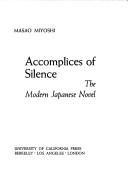
Miyoshi's landmark critical study of modern Japanese fiction provides the literary-historical framework—including the shishōsetsu tradition and its discontents—within which Mishima's tetralogy makes its most radical formal and ideological moves.

Nathan, Mishima's own translator, wrote the most authoritative English-language biography; reading it last allows the expert reader to triangulate the life, the doctrine, and the tetralogy's final meaning with full critical distance.
Discussion
Keep reading
Paths that share books, cover the same subject, or open a related topic.