Japanese literature: an ordered reading list for beginners
This curriculum traces Japanese literature from its most accessible modern voices back through its classical masters, building cultural and aesthetic intuition at each stage. Beginning with contemporary, globally familiar novels, the reader gradually develops the sensitivity to appreciate the subtler, more demanding beauty of Kawabata, Tanizaki, and Mishima — the pillars of Japan's literary canon.
First Steps: Contemporary Japan
BeginnerGet comfortable with Japanese narrative style, themes of memory, identity, and longing, through the most internationally accessible modern novels.
▸ Study plan for this stage
Pace: 8–10 weeks, ~40–50 pages/day (approximately 2–3 weeks per novel)
- Murakami's use of memory and the past as a psychological landscape—how characters revisit and reinterpret formative moments
- Yoshimoto's minimalist prose style and the concept of 'home' as emotional refuge rather than physical place
- Ogawa's narrative constraint (the Professor's amnesia) as a structural device that explores how identity persists beyond memory
- The Japanese aesthetic of subtlety: how meaning emerges through silence, gaps, and what is left unsaid
- Longing and loss as central emotional currents—romantic loss in Norwegian Wood, existential loss in Kitchen, the loss of continuity in Housekeeper and the Professor
- First-person and intimate narrative perspectives that invite readers into deeply introspective, solitary consciousness
- The role of everyday objects and domestic spaces as carriers of meaning and emotional weight
- How does Toru's memory of his past relationships shape his present emotional state in Norwegian Wood, and what does the novel suggest about the relationship between memory and identity?
- In Kitchen, how does Mikage's concept of 'home' evolve, and what role do domestic spaces and food play in her emotional healing?
- What is the significance of the Professor's mathematical amnesia in Housekeeper and the Professor, and how does his condition force both him and the narrator to reconsider what identity means?
- Compare the narrative voices across the three novels: how does each author use first-person perspective to create intimacy, and what does each narrator withhold or struggle to articulate?
- What are the major differences in how each novel treats the theme of longing—romantic, domestic, and relational—and what do these differences reveal about Japanese narrative sensibility?
- How do the three novels use physical objects, spaces, or rituals (trains in Norwegian Wood, the kitchen in Kitchen, mathematical equations in Housekeeper and the Professor) as emotional anchors?
- Close-read a passage from each novel (e.g., Toru's first memory in Norwegian Wood, Mikage's kitchen scene in Kitchen, a lesson between the Professor and the narrator in Housekeeper and the Professor) and annotate where meaning emerges through implication rather than explicit statement.
- Keep a reading journal tracking how each narrator's voice differs—note moments of emotional restraint, what they choose to describe in detail, and what they leave ambiguous.
- Create a 'memory map' for Norwegian Wood: chart which past moments Toru returns to mentally and why, then reflect on how the novel uses cyclical structure to explore psychological time.
- Write a short scene (500–750 words) set in a domestic space (kitchen, bedroom, train) where emotional meaning is conveyed through sensory detail and silence rather than direct emotional declaration—practice the minimalist style of Yoshimoto and Ogawa.
- Compare how the three novels handle loss: create a three-column chart identifying the type of loss each novel centers on, the emotional tone surrounding it, and how each character responds or adapts.
- Reread the ending of each novel and write a reflection on what each ending suggests about memory, identity, and acceptance—how does each author resolve (or leave unresolved) the tensions built throughout?
Next up: This stage establishes your fluency in Japanese narrative sensibility—the aesthetic of subtlety, the psychological depth of introspection, and the thematic preoccupations with memory and identity—preparing you to engage with more formally experimental, historically layered, or philosophically demanding works in the next stage.
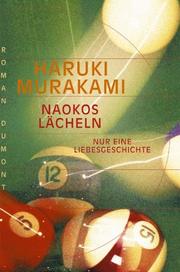
The ideal entry point: emotionally direct, set in recognizable modern Tokyo, and free of Murakami's more surreal elements. It introduces core Japanese literary themes — loss, isolation, and quiet grief — in a welcoming, linear story.

Short, warm, and deeply felt, this novella eases the reader into the Japanese aesthetic of mono no aware (the bittersweet impermanence of things) without demanding prior cultural knowledge.

A gentle, precise novel about memory and human connection that introduces the restrained, elliptical prose style characteristic of Japanese fiction — perfect preparation for the more demanding classics ahead.
Modern Masters: Mishima & Abe
IntermediateEncounter the psychological intensity and philosophical ambition of postwar Japanese literature, expanding beyond realism into existential and symbolic territory.
▸ Study plan for this stage
Pace: 8–10 weeks, ~25–30 pages/day (with 2–3 days per week for reflection and note-taking)
- Absurdism and existential entrapment: how Abe uses repetitive, surreal scenarios (the sand pit) to explore the human condition beyond rational control
- The mask as psychological metaphor: Mishima's exploration of performed identity, desire, and the gap between inner fantasy and outer conformity
- Beauty, destruction, and nihilism: the relationship between aesthetic perfection and the impulse to annihilate it (the Golden Pavilion's symbolic power)
- Postwar Japanese identity crisis: how these authors grapple with tradition, modernity, and the collapse of prewar certainties
- Narrative unreliability and psychological depth: techniques like first-person confession and fragmented consciousness that expose inner turmoil
- Desire and transgression: the role of forbidden impulses (sexual, violent, destructive) as drivers of character and plot
- Symbolic architecture: how physical spaces (the sand pit, the temple) become projections of inner psychological states
- How does the sand pit in *The Woman in the Dunes* function as both a literal trap and a metaphor for the human condition? What does Abe suggest about adaptation and acceptance?
- What is the relationship between Kochan's mask (his performed heterosexuality) and his inner life in *Confessions of a Mask*? How does Mishima use this tension to explore identity?
- In *The Temple of the Golden Pavilion*, what drives Mizoguchi's obsession with the temple, and why does he ultimately feel compelled to destroy it? What does the destruction represent?
- How do these three works differ in their approach to postwar Japanese society and tradition? What does each author suggest about the possibility of authentic living?
- Compare the narrative techniques in these three novels. How do first-person narration, unreliable perspective, and fragmented consciousness serve each author's philosophical aims?
- What role does desire—sexual, aesthetic, or destructive—play in each novel? How does unfulfilled or transgressive desire shape the protagonists' fates?
- Close-read the opening 20 pages of *The Woman in the Dunes*: annotate how Abe establishes the ordinary world before the trap. Note the shifts in tone and perspective that signal the absurdist turn.
- Create a character map for Kochan in *Confessions of a Mask* tracking his fantasies, crushes, and public persona across different life stages. Write a one-page analysis of how these diverge.
- Write a 500-word interior monologue from Mizoguchi's perspective the night before he burns the Golden Pavilion. What thoughts, justifications, and contradictions occupy his mind?
- Compare the three protagonists (Niki, Kochan, Mizoguchi) in a chart: their relationship to society, their central obsession/trap, their final act or state. What patterns emerge?
- Select one symbolic object or space from each novel (the sand, the mask, the temple) and write a 300-word reflection on how it embodies that book's central philosophical concern.
- Read critical excerpts on postwar Japanese literature (e.g., on the influence of Western existentialism on Abe and Mishima). Write a 400-word essay on how *one* of these novels engages with existential philosophy.
Next up: This stage establishes the psychological and philosophical sophistication of postwar Japanese literature, preparing you to encounter how subsequent authors (whether Murakami's metafictional playfulness or Yoshimoto's minimalism) either extend, subvert, or move beyond the existential intensity and symbolic density you've now internalized.

A gripping existentialist parable that bridges Western absurdism and Japanese sensibility — its relentless tension and allegorical depth prepare the reader for Mishima's more demanding symbolism.
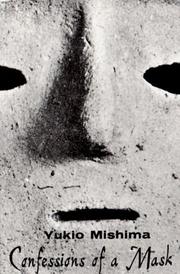
Mishima's semi-autobiographical debut is the most accessible entry into his world, exploring identity and desire with raw honesty before the reader tackles his more ornate later masterworks.
Mishima's greatest novel, and one of the finest in world literature — a psychological portrait of obsession and destruction. Reading Confessions first makes the narrator's tortured inner logic fully legible.
Classical Modernity: Kawabata & Tanizaki
IntermediateAbsorb the aesthetic heart of 20th-century Japanese literature — its sensory beauty, erotic undertow, and deep roots in classical Japanese culture and aesthetics.
▸ Study plan for this stage
Pace: 4–5 weeks, ~20–25 pages/day (essay is ~50 pages; allow time for rereading key passages and reflection)
- Ma (negative space): How Tanizaki celebrates emptiness, shadow, and absence as sources of beauty rather than light and clarity
- Sensory aesthetics: The primacy of touch, smell, and dimness over visual spectacle; beauty as felt rather than seen
- Wabi-sabi and Japanese classical tradition: How shadow connects to ancient Japanese aesthetics (Noh theater, ink painting, tea ceremony)
- Eros and restraint: The erotic power of concealment, suggestion, and the unseen body in Japanese culture
- Critique of Western modernization: Tanizaki's argument that Japan's embrace of electricity and Western clarity destroys indigenous beauty
- The aesthetics of imperfection: Patina, decay, and incompleteness as markers of authenticity and depth
- What does Tanizaki mean by 'beauty of darkness' and how does it differ from Western aesthetic values?
- How does the concept of ma (negative space) function in Tanizaki's vision of Japanese aesthetics, and where does he see it disappearing in modern Japan?
- What role does the unseen or concealed play in Tanizaki's discussion of eroticism and sensuality?
- How does Tanizaki connect shadow and restraint to classical Japanese art forms like Noh theater and ink painting?
- What is Tanizaki's critique of Western modernization, and how does it relate to his defense of traditional Japanese beauty?
- How does 'In Praise of Shadows' reflect the tension between tradition and modernity that defines 20th-century Japanese literature?
- Close-read 3–4 key passages (e.g., on lacquerware, Noh theater, or the toilet) and annotate how Tanizaki builds his argument about shadow and beauty
- Visit or study images of traditional Japanese interiors, Noh masks, or ink paintings while rereading relevant sections; journal on how shadow functions visually in these works
- Write a 500-word comparative analysis: choose one modern/Western aesthetic object (e.g., a bright, minimalist room) and one traditional Japanese object Tanizaki praises, and argue which embodies his philosophy
- Create a sensory inventory: list 5–7 objects or spaces in your own environment and rewrite their descriptions using Tanizaki's language of shadow, restraint, and concealment rather than clarity
- Debate exercise: argue both for and against Tanizaki's position that Western modernization destroys Japanese beauty; identify where his nostalgia may be selective or idealized
- Read Tanizaki's essay alongside a short Noh play excerpt or images of Japanese lacquerware; write a reflection on how the essay illuminates the aesthetic principles embedded in these art forms
Next up: This essay establishes the philosophical and sensory foundation of Tanizaki's aesthetic vision—now you are ready to encounter how these principles animate his fiction, where shadow, restraint, and erotic suggestion become the narrative architecture itself.
This short, luminous essay on Japanese aesthetics — shadow, subtlety, and the beauty of imperfection — is the single best key to unlocking the sensibility behind all the novels in this stage and the next.
Deeper Waters: Surrealism & Late Murakami
ExpertSynthesize everything learned — cultural depth, aesthetic sensitivity, and psychological complexity — to tackle the most ambitious and demanding works in the modern canon.
▸ Study plan for this stage
Pace: 8–10 weeks, ~40–50 pages/day with intensive analytical sessions
- Narrative bifurcation and metafictional structure in Hard-Boiled Wonderland—how Murakami uses dual timelines to explore consciousness and reality
- The surrealist aesthetic in Hard-Boiled Wonderland: dream logic, symbolic landscapes, and the dissolution of rational boundaries
- Psychological interiority in Murakami: isolation, disconnection, and the search for meaning in fragmented modern consciousness
- Mishima's aesthetic philosophy of beauty, tradition, and the body in The Sound of Waves as a counterpoint to Murakami's abstraction
- The role of sensory detail and physicality in The Sound of Waves versus psychological abstraction in Hard-Boiled Wonderland
- Temporal manipulation and cyclical time: how both authors use time to explore human existence and mortality
- The relationship between individual consciousness and external systems (capitalist society, nature, tradition) in both works
- Synthesis of modernist technique with Japanese literary tradition across both texts
- How do the two parallel narratives in Hard-Boiled Wonderland function structurally and thematically? What does the bifurcation suggest about the nature of consciousness?
- Identify and analyze three surrealist elements in Hard-Boiled Wonderland. How do they differ from Western surrealism, and what specifically Japanese anxieties do they express?
- Compare the treatment of isolation in Hard-Boiled Wonderland and The Sound of Waves. How does each author use solitude to explore human connection?
- What is Mishima's aesthetic vision in The Sound of Waves, and how does it contrast with Murakami's approach to beauty and meaning?
- How do both authors use sensory and physical detail differently? What does this reveal about their philosophical approaches to reality?
- Trace the theme of time across both works. How do cyclical, linear, and fragmented temporal structures shape meaning in each novel?
- Create a detailed timeline/diagram of both narrative strands in Hard-Boiled Wonderland, then write a 2–3 page reflection on how the structure mirrors the protagonist's psychological state
- Collect 10–15 surrealist images or passages from Hard-Boiled Wonderland and annotate them with: (a) what makes them surrealist, (b) what Japanese cultural anxiety they embody, (c) how they contrast with Western surrealism
- Write two parallel character sketches—one of the Hard-Boiled Wonderland protagonist and one of the young lovers in The Sound of Waves—analyzing how each author constructs interiority and selfhood
- Conduct a close reading exercise: select one 3–5 page passage from each book that best exemplifies the author's aesthetic. Analyze sentence structure, imagery, pacing, and what philosophical vision emerges
- Create a comparative essay (3,000–4,000 words) on how Murakami and Mishima each answer the question: 'What does it mean to be human in the modern world?' Ground it in specific textual evidence
- Develop a visual or written 'aesthetic map' for each novel—what colors, textures, sounds, and emotional tones dominate? How do these aesthetic choices reinforce each author's worldview?
Next up: This stage synthesizes the full arc of Japanese literary modernism—from Mishima's sensual, tradition-conscious aesthetics to Murakami's fragmented, surrealist consciousness—preparing you to engage with contemporary Japanese literature and postmodern global fiction that builds on or deconstructs these foundational techniques.

Now that the reader has a firm grounding in Japanese aesthetics and postwar psychology, Murakami's most structurally daring novel — a dual-narrative blend of noir and dreamlike fantasy — can be fully savored rather than merely followed.
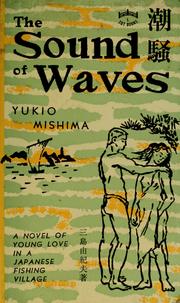
A deliberate return to simplicity after complexity: Mishima's luminous retelling of a Greek myth set on a Japanese island rewards the advanced reader with layers of classical allusion and irony invisible to a first-time reader of his work.
Discussion
Keep reading
Paths that share books, cover the same subject, or open a related topic.