Yukio Mishima Reading Order: Where to Start
This curriculum moves from Mishima's most accessible and celebrated standalone novel, through his philosophical essays, and finally into the monumental Sea of Fertility tetralogy — his life's crowning work. Each stage builds the thematic and aesthetic vocabulary (beauty, death, the body, Japanese tradition vs. modernity) needed to fully inhabit the next, culminating in a reading of the tetralogy in the order Mishima intended.
The Entry Point: Mishima's Voice and World
IntermediateEstablish an intimate feel for Mishima's prose style, his obsessions with beauty and destruction, and his cultural milieu before tackling longer or more demanding works.
▸ Study plan for this stage
Pace: 4–5 weeks total; Week 1–2: The Sound of Waves (~180 pages, ~20–25 pages/day, finishing in ~8 days); Week 3–4: The Sailor Who Fell from Grace with the Sea (~180 pages, ~20–25 pages/day); Week 5: reflection, re-reading of key passages, and completing exercises. Aim for 30–45 minutes of focused reading
- Mishima's prose style and lyricism: how he uses precise, sensory language to aestheticize both beauty and violence, even in a deceptively simple pastoral novel like The Sound of Waves
- The idealization of the body and physical purity: in The Sound of Waves, Shinji's muscular innocence is a moral ideal; in The Sailor Who Fell from Grace with the Sea, Ryuji's sailor body is fetishized and then condemned when it fails to live up to its mythic promise
- The tension between purity and corruption: The Sound of Waves presents a world where innocence is preserved; The Sailor inverts this, showing how the adult world's compromise is seen as an unforgivable betrayal by the boys' gang
- Beauty as inseparable from destruction and death: Mishima consistently frames the most beautiful things as inherently doomed or requiring sacrifice — Ryuji's 'glorious death' fantasy versus his mundane domestic fate
- The role of Japanese cultural mythology and the sea: the sea functions as a symbol of freedom, masculine power, and the sublime in both novels, but with opposite moral outcomes
- Childhood and adolescent consciousness as moral lens: the gang of boys in The Sailor act as a kind of Greek chorus of pure, amoral judgment, exposing the hypocrisy Mishima saw in adult accommodation to modern life
- Mishima's ambivalence toward the West and modernity: The Sound of Waves draws on the Greek idyll (Daphnis and Chloe) while remaining rooted in Japanese village life; The Sailor critiques the postwar Japanese bourgeoisie's absorption of Western domesticity
- Narrative control and irony: Mishima's narrators appear neutral but are subtly loaded — readers should practice detecting where his sympathies and ironies lie beneath the clean surface of the prose
- In The Sound of Waves, how does Mishima use the natural environment — the sea, the lighthouse, the island — to reflect the moral and emotional states of Shinji and Hatsue? What does this technique reveal about his aesthetic philosophy?
- The Sailor Who Fell from Grace with the Sea ends in an act of horrifying violence carried out by children. How does Mishima frame this act — as tragedy, as justice, or as something else entirely? What does the novel's tone in its final pages tell you about his values?
- Both novels center on a male protagonist whose identity is bound up in a romanticized physical ideal. How does Shinji's relationship to his body and labor differ from Ryuji's, and what does each man's fate suggest about Mishima's view of authenticity versus compromise?
- The gang of boys in The Sailor operates with a cold, systematic philosophy that rejects sentiment and adult 'weakness.' How does Mishima present their worldview — with horror, with sympathy, or with deliberate ambiguity? Use specific scenes to support your answer.
- How does Mishima's use of classical or mythological allusion (the Greek pastoral in The Sound of Waves; the quasi-ritualistic logic of the gang in The Sailor) shape the reader's experience of what are otherwise very contemporary, realistic stories?
- After reading both books, how would you describe Mishima's prose 'voice' to someone who has never read him? Identify at least two specific passages — one from each book — that you feel are most representative of his style.
- Close-reading journal: Select one passage of roughly one page from each novel that you find most 'Mishima-like' in style. Write a 200-word annotation for each, identifying specific word choices, sentence rhythms, and images that define his voice. Compare the two annotations — what is consistent across both books?
- Parallel character map: Draw a simple diagram placing Shinji (The Sound of Waves) and Ryuji (The Sailor) side by side. For each, note their relationship to: the sea, the body, purity, and their ultimate fate. Write a one-paragraph thesis about what this comparison reveals about Mishima's recurring obsessions.
- Rewrite a scene: Take the storm scene in The Sound of Waves (where Shinji proves his courage) and the scene in The Sailor where the boys pass judgment on Ryuji, and write a one-paragraph 'neutral' newspaper summary of each. Then reflect: what is lost when Mishima's aesthetic framing is removed? What does this tell you about how style carries meaning?
- Thematic tracking log: As you read The Sailor, keep a running list every time the word or concept of 'glory,' 'death,' or 'purity' appears (explicitly or implicitly). At the end, review the list — does the frequency or context shift between the first and second halves of the novel? Write 3–4 sentences on what you notice.
- Cultural context mini-research: Spend 30–60 minutes reading about postwar Japan (1950s–1960s) and the concept of 'mono no aware' (the pathos of transience). Write a half-page note on how this context illuminates one specific scene in each novel. This is not about outside sources replacing the text — it is about enriching your re-reading.
- Discussion or written reflection prompt: Both novels can be read as fables. Write a one-page response to this question: 'If The Sound of Waves is Mishima's vision of the world as it should be, is The Sailor his vision of the world as it is?' Use evidence from both texts.
Next up: By internalizing Mishima's core aesthetic obsessions — the beauty-destruction dyad, the idealized body, and the critique of modern compromise — through these two compact, accessible novels, the reader is now equipped with the interpretive vocabulary needed to engage with his longer, more psychologically dense and structurally ambitious works.
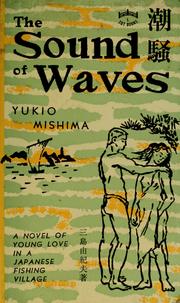
Mishima's most luminous and accessible novel — a pure, classical love story set on a remote island. It introduces his lyrical prose and his idealization of youth and physical beauty without the darkness that dominates his later work, making it the perfect entry door.

A short, razor-sharp novel that introduces Mishima's darker themes: the corruption of ideals, violence as ritual, and the collision between romantic heroism and mundane reality. Reading it second shows the shadow side of the beauty introduced in the first book.
The Masterwork Standalone: Obsession and Aesthetics
IntermediateEngage with Mishima's most celebrated and psychologically complex single novel, understanding his philosophy of art, destruction, and the impossibility of possessing beauty.
▸ Study plan for this stage
Pace: 6–8 weeks total: Weeks 1–4 for "The Temple of the Golden Pavilion" (~20–25 pages/day, allowing time for re-reading dense passages); Weeks 5–8 for "Confessions of a Mask" (~15–20 pages/day, with journaling pauses after each chapter). Budget at least one full "reflection day" per week with no new read
- The Aesthetics of Destruction: In 'The Temple of the Golden Pavilion,' Mizoguchi's act of arson is framed not as vandalism but as the only way to fully possess and be liberated from an ideal of beauty that is otherwise unattainable — explore how Mishima equates destruction with consummation.
- The Tyranny of the Beautiful: The Golden Pavilion itself functions as an oppressive force; beauty in Mishima is not comforting but paralyzing, even violent — trace how the Pavilion intrudes on Mizoguchi's consciousness and blocks his capacity to live.
- The Outsider Self and the Stutter: Mizoguchi's stammer is a physical emblem of his alienation from the world of action and normal human connection; examine how Mishima uses bodily defect as a metaphor for the gap between inner life and outward expression.
- Kinkaku-ji as Symbol vs. Reality: The tension between the physical temple and its ideal form in Mizoguchi's mind mirrors a broader Mishima theme — the impossibility of the real ever matching the imagined; connect this to Platonic idealism filtered through a Japanese aesthetic lens.
- Performative Identity and the Mask: In 'Confessions of a Mask,' the narrator constructs a false heterosexual persona to survive socially — the 'mask' is both a survival tool and a prison; analyze how performance of identity gradually hollows out the authentic self.
- Eros, Death, and the Beautiful Body: Both novels link physical beauty to mortality and desire to destruction; in 'Confessions of a Mask,' the narrator's erotic imagination is inseparable from images of death and martyrdom (e.g., Saint Sebastian) — map this thanatotic current across both texts.
- Autobiography and Fictional Distance: 'Confessions of a Mask' is semi-autobiographical; study how Mishima uses the first-person confessional mode to simultaneously reveal and conceal, and how the fictional frame grants him permission to explore what direct memoir could not.
- Postwar Japanese Identity: Both novels are set against the backdrop of wartime and postwar Japan; consider how national defeat, the collapse of imperial ideology, and the trauma of modernity shape the protagonists' psychological crises and their relationship to traditional beauty.
- In 'The Temple of the Golden Pavilion,' why does Mizoguchi ultimately burn the Pavilion rather than simply leave it behind or ignore it? What does his reasoning reveal about Mishima's philosophy of beauty and possession?
- How does Mishima use Mizoguchi's stutter in 'The Temple of the Golden Pavilion' as more than a character detail — what thematic work does it perform across the novel's arc?
- In 'Confessions of a Mask,' the narrator describes his inner life as fundamentally theatrical. How does the mask metaphor evolve from childhood to young adulthood, and at what point (if any) does the narrator lose track of where the mask ends and he begins?
- Both novels feature protagonists who are profoundly alienated from normative desire and social belonging. What distinguishes Mizoguchi's alienation from that of the narrator of 'Confessions of a Mask' — in cause, expression, and consequence?
- How does the image of Saint Sebastian function in 'Confessions of a Mask,' and what does the narrator's response to it tell us about Mishima's linking of beauty, eroticism, and death?
- Taken together, what vision of the artist — or the artistic temperament — do these two novels construct? Is Mishima sympathetic, critical, or something more ambivalent toward his protagonists?
- Destruction Journal: After finishing 'The Temple of the Golden Pavilion,' write a 500-word first-person entry in Mizoguchi's voice on the night before the arson — not describing the act, but articulating his philosophical justification. Then write a 200-word rebuttal from your own perspective. Compare the two to locate where Mishima's logic is most seductive and where it breaks down.
- Symbol Tracking Chart: As you read 'The Temple of the Golden Pavilion,' keep a running log of every appearance of the Pavilion in Mizoguchi's mind (visions, intrusions, memories). Note the context and his emotional state each time. At the end, graph the frequency and intensity — does the Pavilion's hold on him increase linearly, or are there surges and retreats? What does the pattern reveal?
- Mask Autobiography Exercise: Inspired by 'Confessions of a Mask,' write two short paragraphs (150 words each) about the same formative memory — one in your 'public' voice and one in your most private inner voice. Reflect on the gap between them as a way of making the novel's central tension viscerally personal.
- Saint Sebastian Close Reading: Locate the Saint Sebastian passage in 'Confessions of a Mask' and write a close-reading annotation of 300–400 words. Identify every sensory detail Mishima chooses, the order in which they appear, and what the accumulation of those choices argues about the relationship between beauty, pain, and desire.
- Comparative Character Essay: Write a 600–800 word comparative essay arguing which protagonist — Mizoguchi or the narrator of 'Confessions of a Mask' — is more self-aware about his own condition, and whether greater self-awareness leads to greater or lesser suffering in Mishima's moral universe.
- Historical Context Annotation: Choose three scenes across both novels that are explicitly set during or immediately after WWII. For each, write a brief note (100 words) connecting the personal psychological crisis in the scene to the broader historical moment. Consider: how does national catastrophe become a mirror or an alibi for private catastrophe?
Next up: Mastering the psychological interiority and aesthetic philosophy in these two standalone novels equips the reader to follow Mishima's ideas as they expand into epic, mythic, and explicitly political dimensions in his later tetralogy and dramatic works, where the private obsessions of a single consciousness become a diagnosis of an entire civilization.
Widely considered his greatest standalone novel, this is the essential Mishima text — a deep dive into obsession, ugliness, beauty, and nihilism. The thematic and stylistic complexity here is the direct bridge to his essays and the tetralogy.
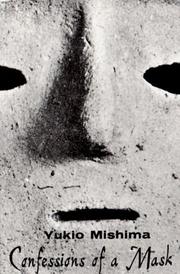
His autobiographical debut novel, best read after Golden Pavilion so the reader can map its raw self-revelation onto the more refined artistic mask of the later work. It illuminates the personal origins of every theme Mishima ever explored.
The Philosophical Foundation: Mishima's Ideas in His Own Words
IntermediateUnderstand Mishima's explicit intellectual framework — his views on the samurai tradition, the body, the emperor, and the death of Japanese culture — so the tetralogy can be read as the culmination of a coherent worldview.
▸ Study plan for this stage
Pace: 3–4 weeks total: Week 1 — read "Sun and Steel" in full (~3–5 pages/day, given its density and lyrical difficulty; pause frequently to annotate); Weeks 2–3 — read "The Way of the Samurai" (~5–8 pages/day, alternating close reading with reflective journaling); Week 4 — review, synthesize, and complete
- The body as epistemology: In 'Sun and Steel,' Mishima argues that muscular, physical self-cultivation is the only authentic path to self-knowledge, inverting the Western Cartesian privileging of mind over body.
- The paradox of action and death: Mishima frames the perfected body as inherently oriented toward destruction — the body reaches its apex of meaning only when risked or sacrificed, making death the logical completion of physical existence.
- Words vs. flesh: 'Sun and Steel' stages a sustained tension between Mishima's identity as a writer (a man of words) and his longing to be a man of action (flesh), positioning literature itself as a kind of betrayal of authentic being.
- The Hagakure as living doctrine: In 'The Way of the Samurai,' Mishima reads Yamamoto Tsunetomo's text not as a historical artifact but as a prescriptive guide for modern life, insisting that the samurai ethos of living in constant readiness for death is urgently relevant in postwar Japan.
- Bushido and the rejection of bourgeois modernity: Mishima uses 'The Way of the Samurai' to diagnose postwar Japanese society as spiritually hollow — economic prosperity and Americanization have severed Japan from its warrior soul.
- The Emperor as sacred symbol: Running through both texts is Mishima's conception of the Emperor not as a political figure but as a transcendent, almost Shinto-theological center of Japanese identity — a living embodiment of eternal Japan that the postwar constitution had desecrated.
- Beauty, decay, and urgency: Mishima consistently aestheticizes impermanence — the cherry blossom logic that beauty is most intense at the moment of its ending — applying this to bodies, cultures, and nations.
- Coherence of thought and act (chi and yu): 'The Way of the Samurai' emphasizes that wisdom and valor must be unified; intellectual understanding divorced from physical courage is, for Mishima, a form of cowardice — a theme that retroactively frames 'Sun and Steel' as his personal attempt to close th
- In 'Sun and Steel,' how does Mishima describe the relationship between writing and the body, and why does he consider his early literary life a form of deficiency or even shame?
- What specific argument does Mishima make in 'Sun and Steel' for why the body — not the mind — is the more truthful medium of self-expression, and what role does physical pain and risk play in that argument?
- How does Mishima's reading of the Hagakure in 'The Way of the Samurai' differ from a conventional scholarly or historical reading? What does he want the text to *do* to the modern reader?
- According to 'The Way of the Samurai,' what has postwar Japan lost, and what specific forces (political, cultural, economic) does Mishima hold responsible for that loss?
- How do the two books together construct Mishima's concept of an ideal death — what conditions must be met for a death to be meaningful rather than merely biological?
- Where do the two books agree and where do they create productive tension? For instance, does the samurai ideal of selfless loyalty to the lord sit comfortably with the intensely autobiographical, ego-driven project of 'Sun and Steel'?
- Annotated margin dialogue: As you read 'Sun and Steel,' mark every passage where Mishima uses a physical or athletic metaphor to describe an intellectual or emotional state. After finishing, write a one-page reflection on what this pattern reveals about his core argument — do the metaphors persuade you, or do they expose a contradiction?
- Hagakure cross-reference: 'The Way of the Samurai' is Mishima's commentary on Tsunetomo. Each time Mishima quotes or paraphrases the Hagakure, pause and write two sentences in your own words: (a) what Tsunetomo's original point seems to be, and (b) what Mishima *makes* of it. This will sharpen your sense of where Mishima is faithful to the source and where he is projecting.
- Synthesis essay (500–700 words): After finishing both books, write an essay answering: 'For Mishima, what is the relationship between a beautiful life and a beautiful death? Use specific passages from both Sun and Steel and The Way of the Samurai to support your argument.'
- Worldview map: Create a one-page visual diagram (hand-drawn or digital) that maps the key concepts from both books — body, words, death, Emperor, bushido, modernity — and draws arrows showing how Mishima connects them. Identify which concept you think is the *center* of his worldview and annotate why.
- Steelman-then-critique exercise: Write two short paragraphs. In the first, make the strongest possible case *for* Mishima's argument in 'The Way of the Samurai' — argue as if you believe it. In the second, write your honest critical response. This prevents passive reading and prepares you for the moral complexity of the tetralogy.
- Biographical timestamp: Look up the date of Mishima's death (November 25, 1970) and re-read the final pages of both books with that date in mind. Write a journal entry on whether the books read differently as documents written by a man who knew — or had decided — how he would die.
Next up: Having internalized Mishima's explicit philosophical vocabulary — the body, the samurai ideal, the sacred Emperor, and the aesthetics of death — the reader is now equipped to recognize these ideas operating beneath the surface of the fiction, where they are dramatized, tested, and sometimes tragically ironized across the four novels of the Sea of Fertility tetralogy.

A short, intense essay-memoir on the relationship between physical discipline, language, and death. It is Mishima's most direct statement of his personal philosophy and is essential preparation for understanding the tetralogy's spiritual architecture.
Mishima's commentary on the Hagakure, the classic samurai text, revealing exactly how he translated Bushido into a personal and political creed. Reading this makes the final volumes of the tetralogy — and his death — fully legible.
The Life's Work: The Sea of Fertility Tetralogy
ExpertRead Mishima's four-volume magnum opus in sequence, tracing the reincarnation of a single soul across twentieth-century Japan and arriving at his ultimate statement on time, illusion, beauty, and nothingness.
▸ Study plan for this stage
Pace: 16–20 weeks total, reading one volume roughly every 4–5 weeks: Spring Snow (~4 weeks, ~20–25 pages/day), Runaway Horses (~4 weeks, ~20–25 pages/day), The Temple of Dawn (~5 weeks, ~20 pages/day given its length and philosophical density), and The Decay of the Angel (~3–4 weeks, ~15–20 pages/day with
- The reincarnation schema: Honda Shigekuni as the fixed witness-consciousness across all four volumes, and the three white moles as the recurring physical sign of the transmigrating soul (Kiyoaki → Isao → Ying Chan → Tōru)
- Mono no aware and the aesthetics of evanescence: how Spring Snow establishes doomed beauty and aristocratic decline as the tetralogy's emotional keynote
- The tension between action and contemplation: Kiyoaki's passive, dream-saturated romanticism in Spring Snow versus Isao's violent, ideologically driven purity in Runaway Horses, as two failed modes of living absolutely
- Mishima's engagement with Yogācāra (Mind-Only) Buddhist philosophy in The Temple of Dawn: the ālayavijñāna (storehouse consciousness), the illusion of the self, and whether reincarnation is real or merely Honda's projection
- The corruption of the witness: Honda's voyeurism, legal careerism, and erotic obsession as a study in how the rational Western-educated mind degrades the sacred it tries to possess
- Tōru as anti-Kiyoaki in The Decay of the Angel: a beautiful young man deliberately constructed as hollow, nihilistic, and cruel — Mishima's interrogation of whether beauty can exist without soul
- The final scene at Gesshūji temple: the aged Honda's visit to the now-senile Satoko (Ayakura), her denial that Kiyoaki ever existed, and the image of the empty sunlit garden as Mishima's statement on memory, illusion, and nothingness (mu)
- Autobiographical and historical allegory: the tetralogy as Mishima's private elegy for imperial Japan, Meiji idealism, and his own impending death — written concurrently with his planning of the 1970 Tatenokai incident
- How does Honda's role shift from peripheral schoolfriend in Spring Snow to obsessive voyeur-protagonist by The Temple of Dawn and The Decay of the Angel, and what does this trajectory say about the limits of the intellectual witness?
- Mishima uses the three white moles as the physical proof of reincarnation, yet The Decay of the Angel systematically undermines every such 'proof' — does the tetralogy ultimately affirm or deny the reality of the transmigrating soul, and how does the final scene at Gesshūji support your reading?
- Compare Kiyoaki's death in Spring Snow with Isao's ritual suicide in Runaway Horses: how do the two deaths differ aesthetically, ideologically, and philosophically, and what does each reveal about Mishima's evolving conception of the 'beautiful death'?
- The Temple of Dawn is structurally divided between Honda's encounter with Ying Chan in Thailand/India and his return to postwar Japan — how does this geographical split mirror the novel's philosophical argument about East versus West, and about the soul's relationship to modernity?
- In what ways is Tōru in The Decay of the Angel a deliberate inversion or parody of Kiyoaki? What is Mishima arguing by making the final reincarnation beautiful but soulless and destructive?
- How does Mishima use the historical sweep of twentieth-century Japan — Meiji aristocracy, Shōwa militarism, postwar Americanization, and the economic miracle — as the macrocosmic backdrop against which the soul's microcosmic journey is measured?
- Reincarnation tracking chart: Create a four-column table (one column per volume) mapping each incarnation's name, social class, dominant passion, mode of death or disappearance, and the circumstances under which Honda identifies the three moles. Update it after each volume and write a one-paragraph synthesis at the end on what changes and what stays constant across lives.
- Close-reading journal — the final pages: After finishing each volume, write a 400–600 word close reading of that volume's final scene or paragraph. At the end of the tetralogy, place all four entries side by side and write a comparative essay on how Mishima's prose style and emotional register shift across the four endings, culminating in the famous 'empty garden' of The Decay of the Angel.
- Philosophical annotation exercise for The Temple of Dawn: Before or during reading, study a short primer on Yogācāra Buddhism (the concept of vijñāna, ālayavijñāna, and the doctrine that external reality is mind-only). Annotate every passage in the novel where Honda's legal-rationalist worldview collides with this philosophy, then write a one-page argument for whether Honda ever genuinely understa
- The Honda Problem — an argumentative essay: Write a 700–1000 word essay answering the question: 'Is Honda a tragic figure, a comic figure, or a moral warning?' Draw evidence from all four volumes, tracing the specific moments where his detachment curdles into complicity, voyeurism, or cruelty.
- Comparative character portrait — Kiyoaki vs. Tōru: Write two 300-word character sketches, one for Kiyoaki (Spring Snow) and one for Tōru (The Decay of the Angel), using only evidence from the text. Then write a 200-word reflection on what Mishima gains by bookending the tetralogy with these two figures and why Tōru cannot redeem himself the way Kiyoaki's memory is redeemed.
- Historical-literary timeline: Build a timeline that runs in two parallel tracks — (1) the real historical events of Japan from 1912 to 1970 and (2) the fictional events of each volume. Annotate five moments where Mishima's fictional narrative directly comments on or diverges meaningfully from the historical record, and consider what those divergences reveal about his ideological project.
Next up: By completing the tetralogy and confronting Mishima's final, annihilating statement on beauty, illusion, and nothingness, the reader is now equipped to step back and engage with the critical, biographical, and comparative scholarship that contextualizes his entire career — examining how the life, the ideology, and the death illuminate and complicate the work as a whole.
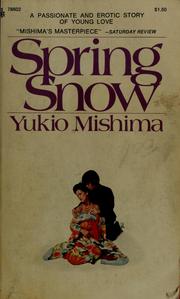
The first volume: a tragic love story set in Meiji-era aristocratic Japan, written in Mishima's most ravishing prose. It establishes the soul of Kiyoaki and the theme of beauty that can only be fully possessed in memory — the emotional foundation of everything that follows.
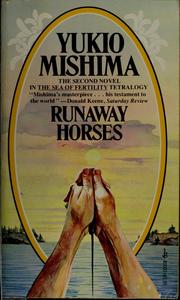
The second volume shifts to the 1930s and the reincarnated soul as a young ultranationalist fanatic. The political and martial themes introduced in the essays now explode into fiction; this volume is the ideological heart of the tetralogy.

The third volume spans India and postwar Japan, introducing Buddhist philosophy of reincarnation as the tetralogy's metaphysical framework. It is the most demanding volume and rewards the philosophical groundwork laid in Stage 3.
![The Decay of the Angel (The Sea of Fertility [4])](https://covers.openlibrary.org/b/id/4615510-M.jpg)
The fourth and final volume, completed the morning of Mishima's suicide. Its devastating, ambiguous ending — one of the most discussed in world literature — can only be fully felt by a reader who has traveled the entire path of this curriculum.
Discussion
Keep reading
Paths that share books, cover the same subject, or open a related topic.