The Science of Sex: The Best Books on Sexuality and the Research Behind It, in Order
This is a path about sex research rather than about sex advice: what has actually been measured, by whom, with what sample, and what is still argued over. It opens with two accessible entries and a textbook, then goes back to Kinsey and to Masters and Johnson with their critics attached, moves to modern population surveys, and spends the second half on the field's live dispute — how much of human sexual behaviour the evolutionary account explains. Where a book is advocacy rather than a report of findings, the note says so.
Two ways in, and a textbook to check them against
BeginnerGet the shape of the field: what questions sex researchers ask, why the research has always been institutionally difficult to fund and publish, and what the standard undergraduate account looks like. Finish able to tell a claim supported by a study from a claim supported by a plausible story.
▸ Study plan for this stage
Pace: Read two of these and consult the third. Roach's Bonk (320pp) and Nagoski's Come as you are (432pp) are 752 pages of trade nonfiction and take about four weeks at 40 pages a session — Bonk first, because its history of how sex research got funded and published is the context everything later needs.
- The dual-control model: sexual response as an excitation system and an inhibition system rather than a single drive
- Why sex research has always been institutionally hard to fund, and what that selects for in the published literature
- Responsive versus spontaneous desire, and the clinical consequences of assuming only the second exists
- The difference between a claim supported by a study and a claim supported by a plausible mechanism
- Laboratory measurement of arousal, and the gap between physiological response and reported desire
- How to use a textbook as an adjudicator: what Hock's chapter structure tells you about which findings are settled
- What is the dual-control model, and what evidence does Nagoski give that inhibition is a separate system rather than the absence of excitation?
- From Bonk, name three practical obstacles that have shaped what sex research exists at all.
- Where does Come as you are move from reporting a finding to recommending a course of action? Find two clear instances.
- What does the arousal non-concordance research show, and how does Hock's textbook present it?
- Pick one confident claim from Bonk or Nagoski and check it in Hock. Does the textbook agree, hedge, or omit it?
- For each chapter of Come as you are, write one line naming the study or model behind it, then look that topic up in Hock and note any disagreement.
- Take three of the experiments Roach describes and write out what each actually measured and on how many people.
- Build a two-column list — findings and recommendations — from Nagoski's book, and see which column is longer.
- Use Hock's index to find the sections you will need later on Kinsey, on the sexual response cycle, and on evolutionary accounts. Mark them now; you will return in stages two and four.
Next up: You now know how the field measures things and where its measurements are weak, which is exactly what you need to read the founding studies as evidence rather than as legend.
Roach's tour of sex research from Victorian gynaecology to modern MRI studies, including the experiments she volunteered for. The best possible first book because it teaches the field's history and its methodological problems as comedy rather than as a reading list.
The popular statement of the dual-control model — sexual response as an accelerator and brakes rather than a drive — which is a real and well-supported research framework. Note that it is written as applied self-help for women as well as science reporting, so it argues for conclusions as often as it reports them; the catalogue record also carries a Spanish translator in the author field.
The standard undergraduate textbook, organised around the studies rather than around opinion, and the right thing to consult when a trade book asserts something confidently. Use it as reference alongside the rest of the path rather than reading it cover to cover.
The founding studies, with their critics attached
BeginnerRead the two research programmes that created the field and understand precisely what each measured and how its sampling failed. Kinsey's volunteers were not a random sample of Americans and Masters and Johnson observed a self-selected group in a laboratory — knowing that is more useful than knowing any individual statistic they published.
▸ Study plan for this stage
Pace: Ten to twelve weeks, and the honest advice is to read three of these selectively rather than cover to cover. Sexual Behavior in the Human Male is 806pp and Sexual Behavior in the Human Female 842pp — these are research reports full of tables, not narrative books, so read the methodology and sampling
- Volunteer bias and non-probability sampling — the specific reason Kinsey's percentages cannot be read as national rates
- The Kinsey scale, what it was constructed from, and what it was never designed to measure
- The interview method Kinsey used, its safeguards, and the criticisms of its consistency checks
- The four-phase sexual response cycle, and the fact that it has been substantially revised since
- Laboratory observation as a method: what it can capture that self-report cannot, and who volunteers for it
- The difference between an investigator's data and an investigator's framing, visible in both Kinsey volumes
- Why a biography of a researcher became a controversy about the findings
- How did Kinsey recruit his interviewees, and what does his own text concede about the sample?
- Which of Kinsey's headline figures depend most heavily on the sampling problem, and which would survive a better sample?
- What exactly did Masters and Johnson observe, on whom, and what did they infer beyond what they observed?
- Which parts of the four-phase cycle have been revised, and on what grounds?
- What is Jones's central charge, what evidence does he give for it, and what do other Kinsey scholars say against it?
- Where in the female volume does Kinsey's framing outrun his data?
- Read the sampling chapter of the male volume and write out, in your own words, what population the numbers describe. Then find three places in the text where they are discussed as if they described Americans.
- Take one statistic from Kinsey that is still widely quoted and trace it back to its table. Record the base, the definition used, and the year.
- For Human sexual response, list every physiological measure taken and mark which required apparatus the subject had to consent to. Note what that does to the sample.
- Write two pages on Jones's argument as a claim about evidence: what would have to be true for Kinsey's commitments to have changed his findings rather than his choice of subject?
- Look up the sexual response cycle in Hock from stage one and note every revision the textbook records since Masters and Johnson.
Next up: Having seen exactly how the founding samples failed, you are in a position to appreciate what a properly drawn national sample changed.
The 1948 report that made sexual behaviour a countable subject, and the origin of the six-point scale that still carries his name. Read the methodology sections rather than skipping to the numbers; the sampling problems that critics attacked are visible in Kinsey's own text.

The 1953 companion, far more socially explosive than the male volume and the reason his funding was withdrawn. Read after the male report, whose methods it reuses, and note where Kinsey's own framing outruns his data.

The critical biography that documented Kinsey's own involvement in the material he studied and reopened the question of how far his commitments shaped his findings. Contested by other Kinsey scholars, so read it as one strongly argued case rather than the settled record.
Masters and Johnson's 1966 laboratory observations and the four-phase response cycle that dominated clinical thinking for decades. Clinical and dry, and worth reading precisely because so much later writing paraphrases it without noting that the cycle has been substantially revised since.
Counting a whole population
IntermediateSee what happens when someone finally applies proper probability sampling to sexual behaviour, and how much of the received Kinsey-era picture it corrects. Learn why self-report is the field's permanent weak point and what researchers do about it.
▸ Study plan for this stage
Pace: Three weeks for 588 pages, both of them short and both readable at 40 pages a session. Sex in America (300pp) reports the 1992 National Health and Social Life Survey for a general audience — ten days — and its findings are notably less dramatic than Kinsey's, which is the point of reading it here ra
- Probability sampling versus volunteer sampling, and what each licenses you to say about a population
- Response rate and non-response bias, the two numbers to look for before any headline figure
- Why the NHSLS findings were less dramatic than Kinsey's, and what that implies about the earlier numbers
- Self-report as the field's permanent weak point, and the standard techniques for reducing social-desirability bias
- Prevalence versus variation — the distinct questions a well-sampled survey and a large self-selected one can answer
- Sexual networks and assortative partnering, findings that only a population sample can produce
- How was the NHSLS sample drawn, and what was its response rate?
- Name three NHSLS findings that directly contradict a widely held belief traceable to Kinsey.
- What does Lehmiller say about his own sample, and which of his conclusions survive that limitation?
- What techniques do these researchers use to reduce misreporting, and how well do they work?
- If you wanted to know what fraction of a country had a given experience, which of these two designs would you use, and why can the other not answer it?
- Take five findings from Sex in America and write down for each the question wording, the base, and the year of collection.
- For one of Lehmiller's fantasy categories, write the version of the claim his sample supports and the version it does not.
- Set an NHSLS figure beside the corresponding Kinsey figure from stage two and account for the whole gap: sampling, wording, era, or definition.
- Design, in half a page, the survey you would run to settle one question these two books leave open. Say what it would cost you in sample size.
Next up: With a clear sense of what survey evidence can establish, you can judge the field's biggest argument on the quality of the evidence each side actually brings.
The readable account of the 1992 National Health and Social Life Survey, the first properly sampled national study of American sexual behaviour, whose findings were far less dramatic than Kinsey's. The full scientific report is published separately as The Social Organization of Sexuality if you want the tables.

A large modern survey of sexual fantasy, reported by the researcher who ran it, and the clearest contemporary example of what a big self-report study can and cannot establish. The sample is a self-selected online one, which Lehmiller states plainly — read it as a map of variation, not of prevalence.
The evolutionary account and the case against it
IntermediateEngage the field's biggest live argument. Buss claims evolved and sex-differentiated mating strategies; Ryan claims the prehistoric evidence points the other way; Fine claims the whole framework overreads small and unstable differences. Understand what each side would accept as disconfirming evidence — this is where the science of sex is genuinely unsettled rather than merely controversial.
▸ Study plan for this stage
Pace: Five weeks for 939 pages, read as a set and in this order because the second and third books are replies to the first. Buss's The Evolution of Desire (267pp) states the evolutionary-psychology account and rests on his cross-cultural survey of thirty-seven cultures — ten days, and read the methods de
- Sexual strategies theory: sex-differentiated mating preferences as evolved adaptations, and the cross-cultural evidence Buss offers
- Parental investment as the mechanism the whole evolutionary account rests on
- Ryan's claim that agriculture, not biology, produced monogamy, and the specific primatological objections to it
- Effect size and replication — Fine's central tools, and why a real but small difference cannot carry a large story
- The distinction between a preference stated on a questionnaire and a behaviour observed
- Disconfirming evidence: what each of these three authors would have to see to give up the position
- How a popular science argument can pass peer review nowhere and still set the terms of public debate
- What did Buss's thirty-seven-culture study actually ask, and what did it find that is robust across cultures?
- Which of Ryan and Jethá's evidential claims have been specifically disputed, and by whom?
- What is Fine's argument about testosterone, and which primary studies does she reread to make it?
- State, for each of the three, what evidence would count against their position.
- Is Sex at Dawn a scientific argument, an advocacy argument, or both? Answer from the text.
- Where do Buss and Fine agree on the data and disagree only on the interpretation?
- Take one of Buss's cross-cultural findings and find where Fine discusses the same literature. Write out both readings of the same result.
- Pick three factual claims from Sex at Dawn, look up the sources it cites for each, and record whether the source says what the book says it says.
- For each author, write a single sentence beginning 'I would abandon this if...' in their voice, using only their own text.
- Check two claims from this stage against Hock's textbook from stage one and note how a teaching text handles a contested question.
- Write 500 words arguing the position among these three you find least convincing, using only its own evidence.
Next up: Both sides of that argument assume orientation and desire are stable things to explain, and that the research happens in ordinary scientific conditions — the last stage takes both assumptions apart.
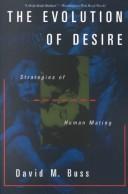
The standard statement of evolutionary psychology's account of mating, built on Buss's cross-cultural survey of thirty-seven cultures. Read it first in this stage because the two books after it are replies to this specific argument.
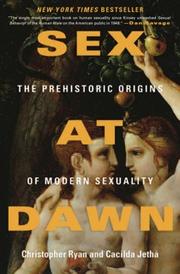
The best-known popular counter-argument, claiming that prehistoric human sexuality was promiscuous and that monogamy is an agricultural artefact. Openly polemical and heavily criticised by anthropologists and primatologists for selective use of evidence — included because the debate matters, not because the case is proven.

A psychologist's systematic dismantling of the testosterone-and-mating-strategy story, working through the primary studies rather than the popular summaries. The most methodologically careful book in this stage and the right one to finish it on.
Fluidity, desire and the politics of doing this research
IntermediateClose on two things the earlier stages assume away: that sexual orientation is fixed, and that sex research is conducted in a normal scientific environment. You should end able to explain why this field's controversies are so often fought over the researcher rather than the finding.
▸ Study plan for this stage
Pace: Four weeks for 689 pages. Diamond's Sexual fluidity (352pp) is a ten-year longitudinal study written up for a general reader — two weeks at 30 pages a session, and the methodology chapters are worth the slower pace because the design is what makes the findings mean anything. It is cautious about its
- Sexual fluidity as Diamond defines it, and its distinction from bisexuality and from choice
- Longitudinal design: why repeated measurement of the same people answers a question a single survey cannot
- Scope conditions — what Diamond's sample supports and what it does not
- The gap between a categorical model of orientation and the variation the data shows
- Why disputes in this field are so often fought over the researcher's motives rather than the finding
- Advocacy and evidence in tension, and what a researcher owes when a finding is politically costly
- What did Diamond measure, how often, and over what period?
- What does her data show about the stability of self-labelled orientation, and what does it not show?
- Give an example of Diamond's findings being overstated in secondary use, and say exactly what was added.
- In one of Dreger's cases, separate the evidential dispute from the conduct dispute. Can the first be settled without the second?
- How does Dreger's own participation affect what her book can establish, and how does she handle it?
- What would a research environment look like in which the controversies in this stage did not arise?
- Chart one of Diamond's participants across the waves of the study — attractions, labels, relationships — and write what a single-timepoint survey would have recorded instead.
- For one case in Galileo's middle finger, list what Dreger establishes documentarily and what she asserts from her own involvement.
- Return to the Kinsey scale from stage two and write half a page on what Diamond's findings do to it.
- Take one claim from each stage of this path and grade it: settled, contested, or advocacy. Say what moved each into its category.
Next up: You can now read a new claim about sex — from a study, a trade book or a headline — and say what was measured, on whom, and how far the conclusion travels beyond it.

A ten-year longitudinal study of women's attractions over time, and the strongest evidence that orientation is more variable than the categories assume. Careful, cautious about its own scope, and frequently overstated by people citing it.

A historian of science and activist investigating cases where sex and gender researchers were attacked, sometimes justly and sometimes not, and what that does to the evidence base. Dreger is a participant in several of the disputes she describes, which she states, and the book has itself been contested — read it as the field arguing about its own conduct.
Discussion
Keep reading
Paths that share books, cover the same subject, or open a related topic.