Make love last: the science of couples
This curriculum moves from the foundational science of what makes relationships succeed or fail, through the practical skills of conflict, communication, and repair, into the deeper terrain of desire, intimacy, and long-term growth together. Each stage builds the vocabulary and emotional framework needed for the next, so that by the end the reader has both research-backed knowledge and lived, applicable wisdom for sustaining a partnership across decades.
Foundations: What Makes Love Last
BeginnerUnderstand the landmark research on why relationships thrive or collapse, and learn the core habits — emotional attunement, trust, and friendship — that distinguish lasting couples from those who drift apart.
▸ Study plan for this stage
Pace: 6–8 weeks total: Weeks 1–4 for "The Seven Principles for Making Marriage Work" (~25–30 pages/day, including journaling time); Weeks 5–8 for "Hold Me Tight" (~20–25 pages/day, with slower, reflective reading for the conversation exercises embedded in each chapter).
- The Four Horsemen (criticism, contempt, defensiveness, stonewalling) as Gottman's primary predictors of relationship breakdown, and their antidotes
- Love Maps: the practice of deeply knowing your partner's inner world — their hopes, fears, history, and daily life — as the bedrock of friendship
- Turning Toward vs. Turning Away: how small, everyday 'bids' for emotional connection either build or erode the relationship's emotional bank account
- The Sound Relationship House: Gottman's layered model showing how trust, commitment, and shared meaning are built on a foundation of friendship and positive sentiment
- Gridlocked vs. Perpetual Problems: distinguishing solvable conflicts from recurring differences rooted in core needs, and why accepting some conflict is healthy
- Emotionally Focused Therapy (EFT) and Sue Johnson's view that adult love is an attachment bond — not a contract or a skill set alone, but a deep biological need for a secure base
- The Demon Dialogues: Johnson's three destructive patterns (Find the Bad Guy, Protest Poltergeist / Freeze & Flee, Clingy & Distant) that mirror Gottman's Four Horsemen at the attachment level
- Hold Me Tight Conversations: Johnson's seven structured dialogues for de-escalating conflict, reaching for each other, forgiving injuries, and keeping love alive — the practical bridge between theory and daily life
- According to Gottman, what distinguishes the 'Masters' of marriage from the 'Disasters,' and which single factor — contempt — is the most corrosive, and why?
- What is a 'bid for connection' in Gottman's framework, and how does consistently turning away from bids predict long-term relationship decline?
- How does Sue Johnson define adult love as an attachment bond, and why does she argue that emotional dependency is a strength rather than a weakness?
- What are the three Demon Dialogues in 'Hold Me Tight,' and how do they map onto the cycle of protest and withdrawal that Johnson says underlies most couples' fights?
- How do Gottman's Love Maps and Johnson's concept of 'accessible, responsive, and engaged' (A.R.E.) complement each other as descriptions of emotional attunement?
- What is the difference between a gridlocked perpetual problem and a solvable problem in Gottman's model, and what does he recommend couples do differently for each?
- **Love Map Interview (Gottman):** Using the Love Maps questionnaire in Chapter 3 of Seven Principles, take turns asking each other 20 questions about your partner's inner world. Score yourselves, then update your answers weekly for one month to build the habit of curiosity.
- **Bid Tracking Journal:** For one full week, keep a small notebook and log every bid for connection you make or receive — note whether it was met with 'turning toward,' 'turning away,' or 'turning against.' Review patterns together at the week's end.
- **Four Horsemen Audit:** Watch or recall a recent disagreement and identify which, if any, of the Four Horsemen appeared. Write down the specific antidote Gottman prescribes for each one you spotted, then role-play the same conversation using the antidote instead.
- **A.R.E. Check-In (Johnson):** After reading Part 2 of Hold Me Tight, sit together and each answer Johnson's three A.R.E. questions: 'Are you accessible to me? Are you responsive to me? Do you engage with me?' Share one concrete example where you felt each was present — and one where it was absent.
- **Demon Dialogue Mapping:** Write a one-page narrative of a recurring argument in your relationship. Using Johnson's framework from Hold Me Tight, label the roles each partner plays (pursuer/withdrawer) and identify which Demon Dialogue pattern it most resembles. Discuss what the underlying attachment fear might be for each person.
- **Hold Me Tight Conversation Practice:** Work through at least two of Johnson's seven structured conversations (recommended: 'Recognizing the Demon Dialogues' and 'Revisiting a Rocky Moment') as written exercises, following her step-by-step prompts at the end of each chapter. Write a brief reflection on what felt vulnerable or surprising.
Next up: Mastering why love thrives or collapses (the 'what') naturally raises the question of how to sustain it through life's inevitable stressors — conflict, parenting, career pressure, and change — which the next stage addresses by moving from foundational research into applied, real-world relationship skills.
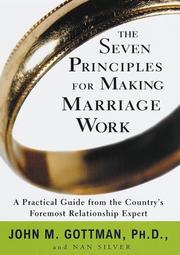
The single best starting point: Gottman distills decades of observational research into clear, actionable principles. It establishes the foundational vocabulary (bids for connection, the Four Horsemen, love maps) that every later book in this curriculum assumes you know.

Introduces Emotionally Focused Therapy and the science of adult attachment, showing why partners get stuck in painful cycles. Reading this second gives the emotional 'why' beneath Gottman's behavioral 'what.'
Conflict, Communication & Repair
BeginnerDevelop concrete skills for navigating disagreement without damage — learning to fight fair, de-escalate, and repair ruptures before they become resentment.
▸ Study plan for this stage
Pace: 6–8 weeks total: Weeks 1–3 on "Why Marriages Succeed or Fail" (~25–30 pages/day, including journaling pauses); Weeks 4–6 on "Crucial Conversations" (~20–25 pages/day with active note-taking); Week 7–8 reserved for review, exercises, and reflection across both books.
- The Four Horsemen (Criticism, Contempt, Defensiveness, Stonewalling) — Gottman's core predictors of relationship failure and how to recognize each in real arguments
- Flooding & Physiological Arousal — how the body's stress response hijacks rational conflict and why taking breaks is a skill, not avoidance
- The Sentiment Override Effect — how accumulated positive or negative sentiment colors the interpretation of a partner's neutral or ambiguous actions
- Repair Attempts — small, often imperfect bids to de-escalate a conflict mid-fight, and why accepting them is as important as making them
- The Crucial Conversations framework — recognizing when a conversation becomes 'crucial' (high stakes, opposing opinions, strong emotions) and why most people go to silence or violence
- Creating Mutual Purpose & Mutual Respect (Patterson's 'Pool of Shared Meaning') — establishing safety so both partners can speak honestly without triggering defensiveness
- STATE My Path (Share facts, Tell your story, Ask for their path, Talk tentatively, Encourage testing) — Patterson's structured method for raising difficult topics without triggering a defensive shutdown
- Contrasting Statements — Patterson's tool for clarifying what you do NOT mean to prevent misinterpretation and restore safety quickly
- According to Gottman, which of the Four Horsemen is the single most corrosive to a relationship, and why does he single it out above the others?
- What is 'flooding,' how does Gottman say you can detect it in yourself during an argument, and what does he recommend doing when it occurs?
- How does Gottman distinguish between a complaint and a criticism, and why does that distinction matter for how a partner receives feedback?
- In Patterson's model, what does it mean for a conversation to have 'mutual purpose,' and what specific steps do you take when you sense that safety has broken down?
- What is the 'Pool of Shared Meaning' in Crucial Conversations, and how does adding to it (rather than withholding) lead to better decisions and stronger relationships?
- How do the repair attempt concept from Gottman and the 'contrasting statement' tool from Patterson complement each other in the moment a conflict is escalating?
- Four Horsemen Audit: After your next disagreement (or while reading Gottman), write a brief transcript of what was said. Label each statement with any Horseman present, then rewrite each flagged line using its antidote (e.g., replace criticism with a complaint using 'I' language, replace contempt with appreciation).
- Flooding Check-In Practice: For two weeks, agree with your partner to call a 20-minute time-out the moment either person notices their heart rate spiking or they feel the urge to shut down. Log what you did during the break and how the conversation went when you resumed.
- Sentiment Ledger: Create a two-column list — one for specific positive memories/interactions with your partner, one for lingering grievances. Use Gottman's lens to assess whether your 'sentiment override' is currently positive or negative, then identify one concrete action to add to the positive column this week.
- Repair Attempt Flashcards: Brainstorm 10 repair attempts that feel authentic to you (e.g., 'Can we start over?' / a touch on the arm / a self-deprecating joke). Write them on index cards or a phone note. Practice saying them aloud so they're accessible under stress.
- Crucial Conversation Rehearsal: Identify one real, avoided conversation in your relationship. Script it using Patterson's STATE framework — write out your facts, your story, the question you'll ask, and a contrasting statement to open with. Role-play it with a trusted friend or record yourself delivering it before having it for real.
- Safety Restoration Drill: With your partner, practice the 'step out and make it safe' move from Crucial Conversations. Take turns deliberately saying something that breaks safety (gently, in a practice context), then have the other person use a contrasting statement to restore it. Debrief what felt natural and what felt awkward.
Next up: Mastering how to fight without causing lasting damage creates the stable emotional foundation needed for the next stage, which builds on this safety to explore deeper emotional intimacy, vulnerability, and the ongoing cultivation of friendship and meaning inside a long-term partnership.
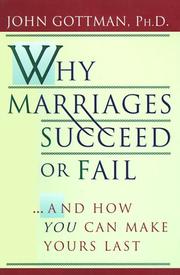
A deeper dive into Gottman's conflict research, helping readers identify their own destructive patterns. It belongs here because you now have the foundation to recognize these patterns in yourself, not just in theory.
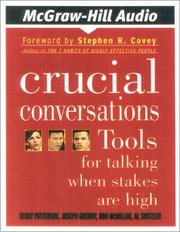
Provides a universal framework for high-stakes dialogue that complements the relationship-specific advice above — essential for couples who need practical, step-by-step communication tools.
Desire, Intimacy & the Erotic
IntermediateUnderstand the inherent tension between security and desire in long-term relationships, and learn how to sustain (or reignite) erotic and emotional intimacy over time.
▸ Study plan for this stage
Pace: 6–8 weeks total. Weeks 1–4: "Mating in Captivity" (~20–25 pages/day, reading alongside a journal). Weeks 5–8: "Come as You Are" (~20–25 pages/day, completing the embedded workbook exercises as you go). Allow 1–2 buffer days per week for reflection and partner conversation.
- The security-desire paradox: Perel's central argument that the very safety and familiarity that make a long-term relationship feel secure can quietly erode erotic charge — and that this tension is structural, not a sign of failure.
- Domesticity vs. otherness: How the 'known' partner becomes predictable, and why preserving a sense of mystery, separateness, and individual selfhood is erotic fuel rather than emotional distance.
- The erotic gaze: Perel's concept of learning to see your partner with fresh, curious eyes — noticing them as a separate, desiring subject rather than a familiar fixture.
- Dual Control Model (Nagoski): Sexual response is governed by both an accelerator (Sexual Excitation System) and brakes (Sexual Inhibition System); understanding your own and your partner's unique settings is more useful than chasing a 'normal' libido.
- Context is everything (Nagoski): Arousal does not happen in a vacuum — emotional safety, stress levels, body image, and environment are not obstacles to desire but are the very conditions that create or block it.
- Responsive vs. spontaneous desire: Nagoski's reframe that waiting to 'feel like it' before initiating is not low libido but a different (and equally valid) desire style — with profound implications for how couples initiate and interpret each other.
- Stress, the 'stress response cycle,' and the body: Nagoski's evidence-based argument that completing the biological stress cycle (through movement, connection, creativity) is a prerequisite for erotic availability, not a luxury.
- Integrating both frameworks: Perel addresses the relational and psychological architecture of desire; Nagoski addresses the individual physiological and emotional mechanics — together they form a complete picture of sustaining intimacy.
- According to Perel, why does the pursuit of security and the pursuit of desire so often work against each other in long-term partnerships — and what does she propose couples do about it?
- What does Nagoski mean by 'context' in sexual arousal, and how does identifying your personal 'brakes' change the way you approach low or mismatched desire in a relationship?
- How does Nagoski's distinction between spontaneous and responsive desire reframe common relationship complaints like 'she never initiates' or 'he's always ready and I'm not'?
- Perel argues that eroticism requires a degree of 'otherness.' How can partners maintain a sense of individuality and separateness without creating emotional disconnection?
- How does completing the stress-response cycle (as described by Nagoski) function as an act of care for your intimate relationship, not just for your individual wellbeing?
- Synthesizing both books: If a couple came to you saying 'we love each other but the spark is gone,' what would Perel diagnose and prescribe, and what would Nagoski diagnose and prescribe?
- Erotic autobiography (Perel-inspired): Independently write 1–2 pages about a time you felt most alive, desired, or playful — inside or outside this relationship. Share with your partner without judgment. Notice what conditions, feelings, or contexts appear repeatedly. These are clues to your erotic blueprint.
- The 'fresh eyes' date (Perel-inspired): Attend a social event or public space together, then spend 20 minutes apart. Observe your partner from across the room as if you were meeting them for the first time. Afterward, share one thing you noticed or admired. Practice the erotic gaze deliberately.
- Accelerator & Brakes inventory (Nagoski-inspired): Each partner independently lists 5–10 things that reliably press their sexual accelerator and 5–10 things that press their brakes (e.g., stress, body image worries, feeling criticized). Exchange lists and discuss — without defensiveness — what one change each partner could make to reduce the other's biggest brake.
- Desire style mapping (Nagoski-inspired): For one week, each partner tracks (privately, in a journal) when they notice any flicker of desire — however faint — and what the context was (time of day, mood, activity, environment). At the end of the week, compare notes. Identify patterns that neither partner may have consciously recognized.
- Stress-cycle completion ritual (Nagoski-inspired): As a couple, commit to one shared physical activity per week specifically framed as 'completing the stress cycle' — a brisk walk, a dance session, a long hug held for at least 20 seconds. Journal afterward whether emotional or physical availability shifted.
- Conversation protocol — 'What I need to feel close': Using insights from both books, each partner completes these sentences and shares them: 'I feel most desired when…', 'I lose desire when…', 'One thing that would help me feel more erotically present is…', 'One thing I miss from earlier in our relationship is…'. Set a timer for 10 minutes each and listen without interrupting.
Next up: By internalizing how desire is constructed — both relationally (Perel) and physiologically (Nagoski) — the reader is now equipped to move into the deeper work of communication, conflict, and emotional repair, understanding that erotic and emotional intimacy are not separate tracks but mutually reinforcing ones.
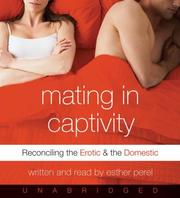
Perel reframes the desire-vs-security paradox with brilliant clarity. Placed here, after you understand attachment and conflict, her provocative ideas land with full force rather than feeling abstract.

Grounded in sexual-science research, this book explains the mechanics of desire and arousal in a way that directly informs how couples can nurture physical intimacy — a perfect complement to Perel's more philosophical lens.
Growing Together Over Decades
IntermediateZoom out to the full arc of a long partnership — how identity, meaning, and shared purpose evolve, and how couples can consciously grow together rather than apart.
▸ Study plan for this stage
Pace: 6–8 weeks total: Weeks 1–3 on "The State of Affairs" (~25–30 pages/day, including journaling pauses); Weeks 4–7 on "The All-or-Nothing Marriage" (~20–25 pages/day, with reflection breaks after each section); Week 8 reserved for synthesis, cross-book comparison, and completing exercises.
- Infidelity as a lens on desire and identity: Perel reframes affairs not just as betrayals but as windows into unmet longings, suppressed selves, and the tension between security and freedom in long-term love.
- The erotic vs. the domestic: Perel's core tension between the familiarity that builds safety and the mystery that sustains desire — and how couples can hold both simultaneously over decades.
- Narrative reconstruction after rupture: How couples can use a crisis (such as an affair) as a forced renegotiation of who they are, individually and together, rather than only as an ending.
- The historical rise of the 'All-or-Nothing' marriage: Finkel's thesis that modern Western marriage has climbed Maslow's hierarchy — from economic necessity to love to self-actualization — making it simultaneously more fulfilling and more fragile than ever.
- Suffocation vs. flourishing model: Finkel's distinction between marriages that suffocate partners by demanding too much from one person, and those that flourish because partners actively invest time and energy in the relationship.
- Calibrating expectations to investment: Finkel's practical argument that couples must either increase their investment in the relationship or consciously lower their expectations — mismatches between the two are the root of modern marital dissatisfaction.
- Shared meaning and couple identity over time: Both authors converge on the idea that long partnerships require ongoing, conscious renegotiation of shared purpose — not a one-time commitment but a living, evolving project.
- The role of self-expansion in long-term partnership: How individual growth, new experiences, and personal reinvention can either threaten or energize a relationship depending on whether growth is pursued together or in isolation.
- According to Perel, what does an affair often reveal about the person who strays — and what does her framework suggest couples should do with that revelation rather than simply treating it as a moral verdict?
- How does Perel describe the fundamental tension between security and desire in long-term relationships, and what concrete practices does she suggest for keeping erotic aliveness present over decades?
- What is Finkel's 'All-or-Nothing' thesis, and what historical and sociological forces does he argue drove marriage from a pragmatic institution to a vehicle for self-actualization?
- Explain Finkel's suffocation model: under what conditions does a high-expectation marriage become suffocating, and what two levers does he say couples have to escape that trap?
- Where do Perel and Finkel agree and disagree on what makes long partnerships sustainable? Use specific arguments from each book to support your answer.
- How have your own expectations of your partnership (or an imagined future partnership) shifted after reading both books — and what one structural change would you make based on Finkel's investment/expectation calibration model?
- Desire audit (Perel-inspired): Independently, each partner writes for 20 minutes on: 'When do I feel most alive, most myself, most desired — and how much of that happens inside vs. outside this relationship?' Share and discuss without judgment, focusing on what the answers reveal about unmet dimensions of self.
- Relationship timeline mapping: Together, draw a shared timeline of your relationship across its full arc — marking moments of closeness, distance, rupture, reinvention, and growth. Annotate each turning point with: what changed in each of you individually, and what changed in the partnership. Use Perel's lens of identity evolution and Finkel's lens of expectation shifts.
- Expectation vs. investment audit (Finkel-inspired): Each partner independently rates (1–10) their current expectations of the relationship across 5 dimensions (emotional support, intellectual stimulation, shared adventure, personal growth, physical intimacy), then rates their actual weekly time/energy investment in each. Compare scores and identify the largest gaps — then agree on one concrete reb
- Renegotiation conversation: Using Finkel's historical framework as a prompt, discuss: 'What did we implicitly sign up for at the start of this relationship — and does that contract still fit who we are now?' Draft a short (one page) informal 'renewed partnership statement' reflecting your current shared values and goals.
- Perel reflection essay: Write a 1–2 page personal essay responding to Perel's provocation: 'The victim of an affair is not always the only one who has been living a diminished life.' Whether or not infidelity is part of your experience, use this as a prompt to examine where you or your partner may have been shrinking yourselves to preserve the relationship's stability.
- Cross-book synthesis discussion: Host a 60-minute structured conversation (with a partner, friend, or reading group) using this single question as the anchor: 'Finkel says modern couples ask too much of marriage; Perel says couples stop asking enough of themselves within it — how do you reconcile these two ideas in your own life?'
Next up: By mapping the full arc of partnership — from desire and rupture (Perel) to expectation and investment (Finkel) — this stage equips the reader to zoom back in on the daily, practical architecture of a thriving relationship, making them ready to explore the concrete communication skills, conflict tools, and emotional habits that sustain long-term love at the ground level.

Examines betrayal and recovery not as an endpoint but as a lens on what couples truly want from each other — reading Perel's second book here deepens the long-view perspective on commitment and reinvention.

A sociologist's sweeping history of marriage and what modern couples now ask of it. It contextualizes everything learned so far within culture and time, giving the reader a mature, realistic vision of what a great long-term partnership can and should be.
Advanced Integration: Love as a Practice
ExpertSynthesize the psychological, philosophical, and spiritual dimensions of lasting love — moving from skills and knowledge to a deeper, ongoing practice of choosing each other.
▸ Study plan for this stage
Pace: 5–6 weeks total: Weeks 1–2 on "Attached" (~25–30 pages/day), Weeks 3–5 on "Love Sense" (~20–25 pages/day, allowing more reflection time), and Week 6 reserved for integration, journaling, and partner exercises across both books.
- Attachment styles (anxious, avoidant, secure) from 'Attached' — and how each style shapes relationship patterns, bids for connection, and conflict responses
- The concept of the 'Activating vs. Deactivating' attachment system from 'Attached' — recognizing when your nervous system is hijacking your behavior toward or away from your partner
- Earned security from 'Attached' — the idea that attachment style is not destiny; through awareness and intentional relationship choices, anyone can move toward secure functioning
- Attachment as a biological survival imperative from 'Love Sense' — Sue Johnson's argument that adult romantic love is not weakness or dependency but a hard-wired need as essential as food and shelter
- Emotionally Focused Therapy (EFT) principles from 'Love Sense' — the three core 'demon dialogues' (Find the Bad Guy, Protest Polka, Freeze and Flee) that trap couples in negative cycles
- The A.R.E. framework from 'Love Sense' (Accessibility, Responsiveness, Engagement) as the operational definition of a secure emotional bond in practice
- Love as a conscious, renewable choice from 'Love Sense' — Johnson's vision of love not as a feeling that happens to you but as a practice of turning toward your partner's emotional reality again and again
- The integration of neuroscience and attachment theory across both books — understanding that the brain's threat-detection system underlies most relationship conflict, and that safety is the prerequisite for intimacy
- After reading 'Attached,' can you accurately identify your own primary attachment style AND your partner's (or a past partner's), and explain specifically how that combination creates your recurring conflict pattern?
- What does Levine mean by 'effective dependency' in 'Attached,' and how does it challenge the cultural myth that needing your partner is a sign of weakness or immaturity?
- According to Sue Johnson in 'Love Sense,' why does she argue that adult love is not 'just' an emotion but a neurobiological bonding system — and what are the practical implications of that claim for how couples fight?
- Can you name and describe each of the three 'demon dialogues' from 'Love Sense,' identify which one most commonly appears in your own relationship, and explain what underlying attachment fear is driving each partner in that cycle?
- How does the A.R.E. framework from 'Love Sense' translate into concrete daily behaviors — what does it look like to be Accessible, Responsive, and Engaged on an ordinary Tuesday?
- Taken together, how do 'Attached' and 'Love Sense' reframe the goal of a lasting partnership — shifting it from 'finding the right person' or 'fixing problems' to something more like an ongoing, intentional practice?
- Attachment Style Mapping (after 'Attached'): Complete the attachment style self-assessment Levine includes, then write a 1-page profile of yourself and your partner/a significant past partner. Map out one recurring argument and annotate it: whose attachment system activated first, what behavior it produced, and how the other person's system responded.
- Trigger Journal — 2 Weeks (during 'Attached'): Each time you feel a strong emotional reaction in your relationship, pause and write: (1) What happened? (2) What story did my attachment system tell me? (3) What did I do? (4) What did I actually need? Review at the end of two weeks for patterns.
- Demon Dialogue Dissection (after 'Love Sense'): Using Johnson's three demon dialogue templates, write out a recent or recurring conflict as a script. Label each line with the attachment fear underneath it (e.g., 'Am I enough for you?' / 'Will you be there for me?'). Share and discuss with your partner if possible.
- A.R.E. Daily Check-In Practice (during Week 6 integration): For 7 consecutive days, use Johnson's A.R.E. framework as a nightly 10-minute ritual. Each partner answers: 'One moment today I felt you were Accessible was… One moment I felt disconnected was… One thing I need from you tomorrow is…'
- Secure Base Letter: Drawing on the concept of earned security from 'Attached' and the bonding science from 'Love Sense,' write a letter to your partner (to share or keep private) that articulates: what safety feels like with them, one pattern you are committing to change, and what kind of partner you are choosing to practice being.
- Synthesis Reflection Essay (end of Week 6): Write 2–3 pages responding to this prompt: 'How has my understanding of love changed from a feeling or a status into a practice? What does it mean, concretely, for me to choose my partner — not once, but daily?' Draw explicitly on ideas from both 'Attached' and 'Love Sense.'
Next up: By internalizing attachment science and the neurobiology of bonding across these two books, the reader has moved from acquiring relationship skills to understanding love as a living, chosen practice — a foundation that naturally opens the door to exploring the longer arc of partnership: how couples sustain, deepen, and even reinvent that practice across decades and life transitions.

A rigorous yet readable deep-dive into adult attachment styles that rewards re-reading at this advanced stage — now you can map everything you've learned onto your own attachment blueprint with much greater precision.

Johnson's most comprehensive work, weaving together neuroscience, attachment theory, and clinical wisdom into a unified theory of love as a lifelong bond. The ideal capstone: it reframes the entire curriculum as a science of human connection.
Discussion
Keep reading
Paths that share books, cover the same subject, or open a related topic.