The Science of Emotion: The Best Books on How Feelings Work, in Order
Emotion is one of the few areas of science where the leading researchers do not agree on what the object of study is. One tradition, running from Darwin through Paul Ekman, holds that there is a small set of biologically basic emotions with distinctive facial expressions and physiological signatures, recognisable across cultures. Another, argued most forcefully by Lisa Feldman Barrett, holds that no such fingerprints exist in the data and that emotions are constructed in the moment out of body sensations and learned concepts. A third line, Antonio Damasio's, is less about categories than about function: that feeling is not the opposite of reason but a necessary input to it. These are not compatible positions and this path does not pretend otherwise. It reads them in order — origin, basic emotions, the constructionist challenge, the neuroscience of feeling and the animal-affect tradition — so you can see what each side actually claims and where the evidence is genuinely contested. Two things to carry through: the cross-cultural universality studies have been criticised for their forced-choice method, and the popular offshoots of this science, particularly microexpression-based lie detection, are considerably weaker than their public reputation.
The Origin Point and the Basic-Emotions View
BeginnerStart where the field started and read the classical position at full strength. By the end you should know what the basic-emotions claim actually is — a small set of discrete, evolved affect programmes with characteristic facial signatures — and what evidence was offered for it, particularly the cross-cultural recognition studies. Also learn the applied claim built on it, because the next stage attacks the foundation and it is worth knowing what falls with it.
▸ Study plan for this stage
Pace: Five to six weeks for 874 pages. Darwin's The Expression of the Emotions in Man and Animals is 372 pages and is the founding text; it is more readable than most nineteenth-century science but the observational catalogue is long, so 20 pages a sitting over three weeks, and skim rather than abandon th
- The basic-emotions claim stated precisely: a small set of discrete, evolved affect programmes with characteristic facial signatures and physiological patterns
- Darwin's continuity argument - that expressions are inherited behaviours shared across species - and the three principles he uses to explain them
- The cross-cultural recognition studies as the load-bearing evidence for universality, and how they were actually run
- The forced-choice method: subjects picking from a supplied list of emotion words, and why the design matters to what the results can show
- The Facial Action Coding System as a descriptive instrument for muscle movement, which is a separate thing from any claim about what the movement means
- The applied claim built on the science - microexpression-based deception detection - and its weak record in independent evaluation
- Reading a founder at full strength before reading the case against him, which is the ordering principle of this whole path
- State the basic-emotions claim in one sentence. What exactly is being said to be universal - the expression, the physiology, the eliciting situation, or the category?
- How were the cross-cultural recognition studies conducted, and what did participants actually have to do?
- Why might a forced choice among supplied words inflate apparent recognition? What would the alternative design look like?
- Darwin argues from continuity across species. Which of his observations still looks strong, and which reads as of its period?
- What does the Facial Action Coding System measure, and what does it not by itself establish?
- The deception-detection application has performed poorly in independent testing. Does that bear on the basic-emotions theory itself, or only on the application?
- Write out the basic-emotions claim as a set of separable sub-claims - discreteness, universality, facial signature, physiological signature, evolutionary origin. Keep the list. The next stage attacks some of these and not others, and having them separated in advance is what lets you follow the argument rather than pick a side.
- Take Ekman's chapter on one emotion and list the evidence he offers, sorting it into cross-cultural studies, physiological measurement, and clinical or anecdotal observation. Doing this once shows you which pillar the position actually rests on.
- Use Unmasking the Face as intended: code a handful of the photographs by muscle movement before reading Ekman and Friesen's labels. The gap between what you can see and what you would have guessed is the argument for having a coding system at all.
- Read Darwin's account of one expression - blushing is the richest - and then find how Ekman treats the same one. Note what a century of experimental work added and what it simply inherited.
Next up: With the classical position in its strongest form and its sub-claims separated, the next stage reads the researcher who argues that the central ones are not supported by the data.
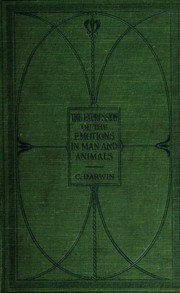
The founding text, from 1872, and still surprisingly readable: Darwin's argument that emotional expressions are inherited behaviours with a continuity across species. Every position in this path is a response to it, including the ones that reject it.
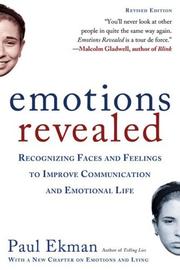
The modern basic-emotions view by the researcher most identified with it, written for general readers and organised emotion by emotion. Read it as the strongest popular statement of the position; the universality studies it rests on are exactly what stage two contests.

The technical companion, with Friesen, on reading facial muscle movement — the work that became the Facial Action Coding System. Included so you can see the actual method rather than the popularisation of it, and flagged: the deception-detection application Ekman developed from this, described in his book Telling Lies, has performed poorly in independent evaluation.
The Constructionist Challenge
BeginnerRead the case against everything in stage one. Barrett's argument is that decades of studies have failed to find consistent physiological or neural fingerprints for discrete emotions, that the cross-cultural evidence weakens badly when subjects are not given a list of words to choose from, and that emotions are constructed from interoceptive signals plus learned concepts. By the end you should be able to state which specific empirical claims are in dispute rather than merely that there is a disa
▸ Study plan for this stage
Pace: Four to five weeks for 640 pages, both books by Lisa Feldman Barrett. How Emotions Are Made is 448 pages and is the full statement of the theory of constructed emotion; read it directly after Ekman, while the classical claims are fresh, because it engages them point by point and loses much of its fo
- The theory of constructed emotion: emotions assembled in the moment from interoceptive signals plus learned concepts, rather than triggered as pre-built programmes
- The fingerprint claim under test - whether discrete emotions have consistent physiological or neural signatures - and what the meta-analytic evidence shows
- How the cross-cultural evidence weakens when subjects are not given a list of words to choose from, which is the specific methodological objection
- Interoception, and the idea of the brain as predicting body-budget needs rather than reacting to stimuli
- Concepts and language as constitutive of emotional experience rather than labels applied afterwards, and what that predicts about cultures with different emotion vocabularies
- Population thinking applied to emotion categories: variation as the phenomenon rather than as noise around a prototype
- Why the triune-brain story is wrong, and how much popular emotion writing depends on it
- Which of stage one's sub-claims Barrett attacks and which she leaves standing - the distinction most readers of this debate miss
- State the theory of constructed emotion in your own words. What is doing the constructing, and out of what?
- Which specific empirical claim from stage one does Barrett say the data fail to support? Describe the kind of study that would settle it.
- What happens to cross-cultural recognition rates without a supplied word list, and what does Barrett conclude from that? What else could explain it?
- If emotion concepts are learned, what should we observe in a culture whose emotion vocabulary carves the space differently? Does Barrett present such evidence?
- What is wrong with the triune-brain picture, and why does its persistence matter for reading the older literature?
- Name one part of the classical position that Barrett does not dispute. Being able to answer this is the test of whether you have read her as a scientist rather than as an opponent.
- Go back to the sub-claims list you wrote in stage one and mark, for each, whether Barrett contests it, reinterprets it, or accepts it. This is the most valuable single page you will produce on this path, because almost all public discussion of the debate treats the position as monolithic.
- Take the fingerprint question and follow Barrett's citations to one meta-analysis. Read what it actually pooled and what its inclusion criteria were. The dispute turns on evidence of this kind, and reading one such study directly is worth more than a hundred pages of either side's summary.
- Write down a recent emotional episode of your own and describe it twice: once in basic-emotions terms as a triggered programme, once in constructed terms as prediction plus concept. Note which description required you to add something you did not actually observe.
- Find three places in Ekman's book where the triune-brain framing is doing implicit work, then rewrite those passages as Barrett would. It is a small exercise and it demonstrates how much theoretical weight a discarded picture can still be carrying.
Next up: Both camps so far argue about what emotions are; the next stage takes up a different question entirely - what feeling is for, and what happens to a person who loses it.

The full statement of the theory of constructed emotion, and the most important book on this path regardless of which side you end up on. Read it directly after Ekman, while the classical claims are fresh, because it engages them point by point.

The short version, and a useful corrective to a specific popular error the older literature encourages — the triune-brain story of an emotional limbic system fighting a rational cortex, which is not how the brain is organised. Read it as the compact companion rather than a second argument.
Feeling, the Body, and Reasoning
IntermediateTake up the question the first two stages set aside: what emotion is for. Damasio's somatic marker hypothesis proposes that bodily states tag options with value and that patients who lose this capacity make catastrophic decisions while remaining intellectually intact. LeDoux's work on fear circuits then makes a distinction the popular literature usually collapses — between a defensive survival circuit that can be studied in a rat, and the conscious feeling of being afraid, which cannot. Note tha
▸ Study plan for this stage
Pace: Four to five months for 1,988 pages, the longest stage on the path, and it holds three books by Antonio Damasio and two by Joseph LeDoux. Take the Damasio sequence first and in order. Descartes' Error is 370 pages, built around Phineas Gage and Damasio's own frontal-lobe patients, and the clinical c
- The somatic marker hypothesis: bodily states tagging options with value, so that deliberation is guided rather than merely accompanied by feeling
- The frontal-lobe cases in which patients remain intellectually intact on testing and nevertheless make catastrophic decisions, which is the hypothesis's core evidence
- The criticism of the Iowa Gambling Task evidence, and what would be needed to settle it
- Damasio's distinction between emotion as a body state and feeling as its mental representation, and why the terminology matters for reading the rest of the field
- Homeostatic regulation as the origin of value, which is the argument Looking for Spinoza develops
- Fear conditioning and the amygdala circuit as LeDoux originally described it, including the low-road account
- LeDoux's own revision: defensive survival circuits are studiable in a rat, conscious feelings are not, and conflating them has misled a generation of popular writing
- How this stage's functional question cuts across the stage one and two dispute rather than settling it
- State the somatic marker hypothesis. What is the marker, where does it come from, and at what point in a decision does it act?
- Damasio's patients test as intellectually intact and choose disastrously. What does that dissociation establish, and what are the alternative explanations for it?
- What is the criticism of the Iowa Gambling Task, and does it undermine the hypothesis or only one line of support for it?
- Distinguish emotion from feeling as Damasio uses the terms, and then check whether Ekman and Barrett use them the same way. What does that tell you about reading across this literature?
- What exactly did LeDoux narrow in Anxious, and why did the broader version of his claim become so popular?
- Does anything in this stage decide between the basic-emotions and constructionist positions? Argue it either way and say which you find stronger.
- Reconstruct one of Damasio's patient cases as a clinical argument: what was damaged, what was preserved on testing, what went wrong in life, and what inference he draws. Then write down the strongest alternative explanation. The cases are persuasive precisely because they are vivid, which is a reason to do this deliberately.
- Read the low-road passages in LeDoux's The Emotional Brain and the corresponding correction in his Anxious side by side, and write out what changed - not the tone, the actual claim. Very few scientists do this in public, and following it is a lesson in how a finding becomes a folk belief.
- Track Damasio's vocabulary across all three of his books, noting where emotion, feeling, and background feeling are defined. His terms are consistent and almost nobody else's match them, so this glossary is what lets you read him against Barrett without generating fake disagreements.
- Take a decision you made recently and try to describe it in somatic marker terms - what bodily state accompanied which option, and when. Then say honestly whether you are reporting or reconstructing, which is the same problem the Iowa Gambling Task critics raise.
- Write a page on whether Damasio's functional claim is compatible with Barrett's constructionism. Both are about the body's regulatory states, and working out whether they are allies or rivals is the most interesting unresolved question this path raises.
Next up: The final stage brings in the cross-species evidence that sits most awkwardly with construction, the question of individual variation that the theoretical debates bracket, and the popularisation that reached far more people than any of it.
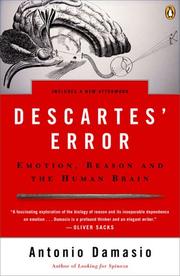
The book that put emotion back into the study of reasoning, built around Phineas Gage and Damasio's own frontal-lobe patients. Start here: the clinical cases are the most persuasive evidence anywhere on this path that feeling is functional rather than decorative.
The theoretical follow-up, distinguishing emotion as a body state from feeling as its mental representation, and connecting both to consciousness and the sense of self. Harder than Descartes' Error and dependent on it.
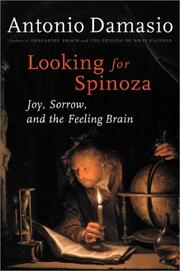
The most humane of the three, using Spinoza to argue that joy and sorrow track the body's regulation of itself. Read last of the Damasio books; his later Feeling and Knowing restates the framework more compactly if you want the summary rather than the development.
The standard account of the amygdala and fear conditioning, and the origin of the popular low-road-to-the-amygdala story. Important to read alongside LeDoux's own later revision of it, which follows.

LeDoux correcting the reading of his own earlier work: survival circuits and conscious feelings are different things, and calling an amygdala response fear confuses them. A rare and instructive case of a scientist publicly narrowing a claim that had become famous in its broader form.
Animal Affect and the Popular Spin-Off
IntermediateClose with the cross-species tradition that sits awkwardly with the constructionist account, with individual variation, and with the popularisation that reached the widest audience. Panksepp's affective neuroscience proposes evolutionarily ancient subcortical emotion systems shared with other mammals — a strongly biological position that Barrett's framework has to answer. The stage ends with emotional intelligence, which is the version of this science most people have actually encountered and th
▸ Study plan for this stage
Pace: Two to three months for 1,133 pages. Panksepp's Affective Neuroscience is 473 pages and is an academic monograph rather than a popular book - the foundational text of the field he named, proposing seven basic emotional systems identified by direct stimulation of subcortical structures across mammals
- Panksepp's seven subcortical emotional systems, and the method that identified them - direct stimulation and behavioural response across mammalian species
- Why cross-species evidence is awkward for a strongly conceptual account of emotion, and how a constructionist would answer it
- The homology argument: what shared neural circuitry across mammals does and does not establish about shared experience
- Individual variation as a real phenomenon rather than measurement noise, which the theoretical debates largely bracket and Davidson's dimensions attempt to measure
- Reading an advocate: separating Davidson's descriptive neuroscience from his claims about what practice can change
- Emotional intelligence as a construct, and the specific question of whether it predicts anything beyond general intelligence and personality
- What happens to a contested science on its way to a mass audience, which is the closing lesson of the path
- Holding an unresolved field: being able to say what each camp claims, what the evidence is, and where it is genuinely open
- Name Panksepp's systems and say what evidence identified each. What kind of claim is he making about other mammals' experience, and how strong is the inference?
- How would Barrett answer Panksepp? Construct her reply from her own arguments rather than looking for one.
- Davidson proposes six dimensions of emotional style. How were they measured, and how would you know whether they carve the variation at its joints?
- Which of Davidson's claims are descriptive and which are about intervention? Why should the second group be read more sceptically?
- What is the disputed empirical question about emotional intelligence, and what would resolve it?
- Having read all four stages: on which specific claims is the field genuinely undecided, and what evidence would move you?
- Build the summary table this path exists for: a row per major claim - basic emotions, universality of expression, physiological fingerprints, constructed categories, somatic markers, survival circuits, subcortical systems, emotional intelligence - and columns for who argues it, the strongest evidence, and the strongest objection. Fill it from the books themselves rather than from memory.
- Take one of Panksepp's systems and follow it into Barrett's account. Either she addresses it or she does not; finding out which, in her own text, is a better test of both positions than any commentary.
- Assess one of Davidson's six dimensions as a measurement: what is the instrument, what is the reliability, what does it predict. Then apply the same three questions to emotional intelligence in Goleman. The contrast is the reason both books are on this stage.
- Find where Goleman is citing work you have now read directly - Damasio, LeDoux, Ekman - and compare his rendering with the original. Some of it survives the compression and some does not, and telling which is the last skill this path teaches.
- Write a final page stating, for a reader who asked you what emotions are, what you would actually say - including the parts you would flag as contested. If the page contains a clean answer, go back and check what you left out.
Next up: This closes the path. The field has no settled answer, so the natural next step is the current review literature on a single disputed claim rather than another book attempting to survey all of it.
The foundational text of the field Panksepp named: seven basic emotional systems identified by direct stimulation of subcortical structures across mammals. An academic monograph rather than a popular book, and the most serious biological challenge to a purely constructionist reading. His later The Archaeology of Mind is the accessible version, but does not resolve in our catalogue.

Davidson's account of emotional style — six dimensions on which individuals differ measurably — and of the affective neuroscience of contemplative practice. The best treatment on the path of individual variation, which the theoretical debates largely bracket. Davidson is also an advocate for meditation research, a field with its own replication problems, so read the intervention claims more sceptically than the descriptive ones.
The book that made emotion a mainstream subject and a corporate industry, and the place to end because it shows what happens to a contested science on the way to the public. Goleman is a journalist synthesising others' work, the construct's predictive validity over general intelligence and personality is disputed, and the popular claims about it substantially exceed the evidence — all of which is worth seeing having read everything above.
Discussion
Keep reading
Paths that share books, cover the same subject, or open a related topic.