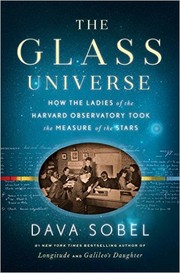
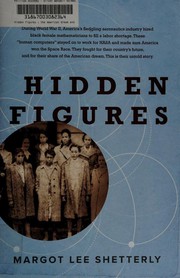
Start with The glass universe and Hidden Figures. Both are narrative histories of teams rather than of individuals, both need no scientific background, and together they set up the pattern the rest of the list exists to explain: work that turned out to be foundational, labour that was organised and cheap, and credit that went somewhere else.
There are two kinds of book on this subject and they are easy to confuse. One is biography — the life of a particular scientist, told well or badly. The other is structural history: an account of the institutions, hiring practices and credit systems that decided who got to be a scientist at all. A list made only of the first is a gallery of exceptions with no explanation; a list made only of the second is unreadable without the individuals. This path alternates deliberately, and each book below is labelled with which kind it is. It also prefers documented accounts to celebratory ones, because the celebratory books on this subject repeat each other's errors while the scholarship does not. James Essinger's Ada's Algorithm is the clearest example of what that rule leaves out: readable, and more interested in enlarging its subject's claims than in testing them.
Group narratives: the work, and the erasure
The glass universe is narrative history — Dava Sobel on the Harvard College Observatory computers, Fleming, Maury, Cannon and Leavitt, who classified hundreds of thousands of stellar spectra and produced the period-luminosity relation that made cosmic distance measurable.
Hidden Figures is narrative history, and substantially more documented than the film taken from it: Margot Lee Shetterly worked from NACA and NASA records to trace the Black women mathematicians of Langley through segregation, the space race, and the arrival of the machines that took their job title. Read the book, not the adaptation.
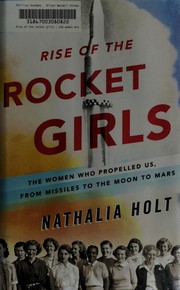
Rise of the Rocket Girls does the same for the Jet Propulsion Laboratory computers, built on oral history with surviving participants, and pairs well with Shetterly because the institutional culture was different — several of these women moved into engineering as computing was automated. Code girls covers the roughly ten thousand American women who did wartime cryptanalysis and were sworn to silence for decades. It is included because secrecy is a mechanism of erasure quite distinct from the others.
Collective biography
Nobel Prize women in science is the standard collective biography of its kind: fifteen chapters on laureates and on women whose work won a prize for somebody else. Sharon Bertsch McGrayne interviewed many of her subjects, so it is reporting rather than compilation. Headstrong is collective biography in short form, fifty-two profiles of a few pages each. Rachel Swaby is open about it being a starting point; use it to find people worth reading properly, and treat its compressed claims as leads to check.
Four documented lives
Rosalind Franklin is biography, and the book that replaced both the villain of The Double Helix and the martyr of the counter-myth with an evidenced account of a formidable and difficult crystallographer. It is the best example on this path of documentation beating a good story.
Lise Meitner is Ruth Lewin Sime's biography, written by a chemist working from Meitner's own papers, and the definitive treatment of the clearest case of a Nobel Prize going to the wrong person. Marie Curie is Susan Quinn's scholarly life, drawn from the diaries and correspondence — including the affair the French press used against her. It is on the list instead of the shorter popular biographies, Barbara Goldsmith's among them, for exactly that reason. A feeling for the organism is Evelyn Fox Keller on Barbara McClintock, and it raises the hardest question here: whether McClintock's neglect was about her sex, her solitary way of working, or a genuinely unorthodox way of doing genetics. Keller does not settle it, which is the honest position.
The structural history, and the argument about it
Women scientists in America is the foundation of the whole field: Margaret Rossiter's archival account of how American scientific institutions segregated and undervalued women's work, and the source of the term Matilda effect for the credit pattern the earlier books illustrate. Dense, and worth every page.
The Madame Curie complex is structural history about the biographies — Julie Des Jardins on how the exceptional-woman story gets constructed and what it costs, chiefly that it makes ordinary women in science invisible. Read it directly after the biography stage, as a critique of what you have just read.
Reflections on gender and science is the theoretical argument and the most contested book here: Keller's claim that the metaphors and criteria of objectivity in science are themselves gendered. By this point you have enough evidence to judge it. INFERIOR, catalogued in capitals, closes the path in the present, with Angela Saini reporting on the actual state of research into sex differences and where it is weak, disputed, or outrun by confident popular claims on both sides.
The full sequence, with a goal for each stage, is at the women in science reading path.