Emotional regulation: an ordered reading list to master feelings
This curriculum builds emotional regulation from the ground up — starting with how emotions work in the brain and body, then layering in nervous-system science, mindfulness-based skills, and finally advanced therapeutic frameworks. Each stage gives you the vocabulary and lived understanding needed to go deeper in the next, so by the end you'll have both the science and the practical toolkit to respond to life's challenges with genuine calm and clarity.
Foundations: Understanding Emotions
BeginnerUnderstand what emotions actually are, where they come from, and why we react the way we do — building the core vocabulary for everything that follows.
▸ Study plan for this stage
Pace: 4–5 weeks, ~40–50 pages/day (approximately 2 weeks per book, accounting for reflection and note-taking)
- Emotions are constructed predictions, not hardwired reactions—the brain uses past experience and context to create emotional experiences
- The concept of emotional granularity: the ability to distinguish between subtle emotional states (e.g., frustrated vs. disappointed) improves emotional regulation
- The role of the autonomic nervous system and interoception (sensing internal bodily states) in how we experience emotions
- Emotional intelligence comprises self-awareness, self-regulation, motivation, empathy, and social skills—each learnable and developable
- Emotions serve as data about our environment and needs; they are not problems to eliminate but signals to understand
- The distinction between feeling an emotion and acting on it—awareness creates choice
- How past experiences and cultural context shape what emotions mean and how we express them
- According to Barrett's theory, why are emotions not universal, hardwired reactions? How does the brain construct emotions?
- What is emotional granularity and why does it matter for emotional regulation?
- How does interoception relate to emotional experience, and what happens when someone has poor interoceptive awareness?
- What are the five components of emotional intelligence as defined by Goleman, and how do they interact?
- How can understanding emotions as 'data' rather than 'problems' change the way you respond to difficult feelings?
- What is the relationship between self-awareness and self-regulation in emotional intelligence?
- Emotion labeling practice: For one week, journal 3–5 times daily, labeling emotions with as much specificity as possible (e.g., 'anxious about the presentation' rather than just 'stressed'). Track whether more precise labels help you understand what you need.
- Interoception awareness: Spend 5 minutes daily doing a body scan—notice your heart rate, breathing, temperature, muscle tension, and stomach sensations without judgment. Record patterns between physical sensations and emotional states.
- Deconstruct an emotional memory: Choose a recent emotional reaction. Write down the trigger, your bodily sensations, the thoughts that arose, and your behavior. Reflect on how Barrett's construction theory explains what happened.
- Empathy mapping: Identify someone you interact with regularly. Spend a week noticing their emotional cues (facial expressions, tone, body language) and hypothesizing what they might be feeling. Compare your guesses with what they actually felt.
- Emotional intelligence self-assessment: Rate yourself (1–5) on each of Goleman's five components. For your lowest-scoring area, identify one concrete behavior you could practice this week.
- Emotion-to-need translation: When you feel a strong emotion, pause and ask: 'What is this emotion telling me I need?' Document at least 5 examples and the underlying needs they reveal.
Next up: This stage equips you with the foundational understanding that emotions are learnable, constructible, and informative—preparing you to move into the next stage where you'll develop specific, practical techniques to regulate these emotions in real time.

Barrett's groundbreaking neuroscience dismantles the myth that emotions 'happen to us,' showing instead that the brain constructs them — a paradigm shift that immediately gives you more agency over your emotional life.

The landmark book that introduced the concept of EQ to a mainstream audience; read second to translate Barrett's brain science into a practical framework of self-awareness, self-regulation, and empathy.
The Body & the Nervous System
BeginnerUnderstand how the nervous system drives emotional states and learn body-based tools to shift out of stress, anxiety, and reactivity.
▸ Study plan for this stage
Pace: 6–8 weeks, ~40–50 pages/day. "The Body Keeps the Score" (464 pages) takes approximately 3–4 weeks; "Burnout" (432 pages) takes approximately 3–4 weeks. Include 1–2 buffer weeks for reflection and exercise practice.
- Trauma and chronic stress are stored in the body and nervous system, not just the mind—the body keeps the score of past experiences
- The nervous system has three primary states (sympathetic activation, parasympathetic rest, and dorsal vagal shutdown) that drive emotional and behavioral responses
- Top-down approaches (talk therapy, willpower) are insufficient without bottom-up interventions that directly regulate the nervous system through the body
- Somatic practices (breathing, movement, touch, yoga, neurofeedback) can reset the nervous system and restore emotional regulation
- Burnout is a mismatch between effort and reward, and recovery requires addressing the full stress cycle—not just rest, but completing the physiological stress response
- The stress cycle must be completed through physical activity, social connection, and emotional release to prevent chronic dysregulation
- Interoception (awareness of internal bodily sensations) is foundational to recognizing and shifting emotional states before reactivity takes over
- How does the nervous system store trauma and stress in the body, and why is talk therapy alone insufficient for healing?
- What are the three primary states of the nervous system, and how does each one manifest in emotional and behavioral patterns?
- What are bottom-up nervous system regulation techniques, and how do they differ from top-down approaches?
- What is the stress cycle, and why is completing it (rather than just resting) essential for preventing burnout?
- How can interoception and body awareness be developed, and what role does it play in emotional regulation?
- What are practical, evidence-based somatic tools you can use daily to shift out of stress, anxiety, and reactivity?
- Daily body scan practice (10 minutes): Lie down and slowly scan from head to toe, noticing sensations without judgment. Track which body regions hold tension and where you feel 'stuck' energy.
- Breathing regulation: Practice the 4-7-8 breath (inhale for 4, hold for 7, exhale for 8) or box breathing (4-4-4-4) for 5 minutes daily. Notice how your nervous system responds.
- Movement-based stress completion: After a stressful event, engage in 20–30 minutes of vigorous physical activity (running, dancing, shaking, or cycling) to complete the physiological stress cycle.
- Vagal toning exercises: Practice humming, cold water face immersion, or gargling for 1–2 minutes daily to activate the parasympathetic nervous system.
- Somatic journaling: After stressful situations, write for 10 minutes focusing on where you felt the stress in your body, what sensations arose, and what shifted when you moved or breathed differently.
- Social connection ritual: Identify one meaningful social interaction per week (a phone call, hug, or in-person conversation) and notice how it affects your nervous system state and stress recovery.
Next up: This stage establishes the foundational understanding that emotional regulation begins with the body and nervous system; the next stage will build on this by introducing cognitive and relational tools that work *with* this nervous system knowledge to create lasting change.

Establishes the critical mind-body connection, showing how unprocessed emotion lives in the body — essential context before learning how to work with the body to regulate.

Translates stress-cycle science into clear, actionable strategies for completing the biological stress response — a practical and accessible bridge between nervous-system theory and daily habits.
Mindfulness & Present-Moment Skills
IntermediateDevelop a consistent mindfulness practice and learn to observe emotions without being swept away by them, building the 'pause' between stimulus and response.
▸ Study plan for this stage
Pace: 6–8 weeks, ~25–30 pages/day with 2–3 days per week dedicated to meditation practice and reflection
- Mindfulness as present-moment awareness without judgment—the foundational practice for observing emotions rather than being controlled by them
- The body scan meditation technique from Full Catastrophe Living as a core tool for developing interoceptive awareness and emotional observation
- The concept of the 'pause' or gap between stimulus and response—learning to create space where choice becomes possible
- Formal vs. informal mindfulness practice: structured meditation sessions and bringing mindful awareness into everyday activities
- Non-striving and acceptance as core attitudes in mindfulness—observing emotions as transient events rather than truths to be fought or fixed
- The role of attention and intention in reshaping your relationship with difficult emotions and bodily sensations
- Mindfulness as a skill that develops through consistent practice, not a state to achieve or a destination to reach
- What is mindfulness according to Kabat-Zinn, and how does it differ from thinking about your experience versus directly observing it?
- How does the body scan meditation work, and why is it an effective tool for developing emotional awareness and the ability to observe sensations without reacting?
- What is the 'pause' or gap between stimulus and response, and how does mindfulness practice help you access it in moments of emotional reactivity?
- What is the difference between formal and informal mindfulness practice, and how can you integrate both into daily life?
- How do the attitudes of non-judgment, non-striving, and acceptance change your relationship with difficult emotions and physical sensations?
- Why does Kabat-Zinn emphasize that mindfulness is a practice and skill rather than a state to achieve, and what does this mean for your approach to meditation?
- Establish a daily body scan meditation practice (20–30 minutes) at least 5 days per week for the entire 6–8 week period, using the techniques from Full Catastrophe Living; journal observations about what sensations, emotions, or resistance you notice
- Practice informal mindfulness during one daily activity (eating, walking, showering) by bringing full present-moment awareness to sensations, sounds, and movements without judgment; record what you notice about your usual autopilot patterns
- Create a 'pause practice': identify one recurring trigger emotion (stress, frustration, anxiety) and practice pausing for 3–5 conscious breaths before responding; track instances where you successfully accessed the gap between stimulus and response
- Sit in silent meditation for 10–15 minutes daily, focusing on breath awareness; when emotions or thoughts arise, practice observing them as transient events (using language like 'I notice anger arising' rather than 'I am angry')
- Read and annotate one key chapter per week from Full Catastrophe Living, then spend 15 minutes writing how that concept applies to a recent emotional situation you experienced
- After completing Full Catastrophe Living, read Wherever You Go, There You Are and practice the 'being mode' vs. 'doing mode' distinction by consciously shifting into non-goal-oriented awareness for 5–10 minute periods throughout your day
Next up: This stage establishes the foundational skill of observing emotions without reactivity through consistent mindfulness practice, creating the internal stability and awareness needed to move into more advanced emotional regulation techniques such as cognitive reframing, emotional labeling, and deliberate response strategies in the next stage.

The definitive guide to Mindfulness-Based Stress Reduction (MBSR), the most evidence-backed program for emotional regulation; reading it here puts your new body-awareness skills into a structured practice.

A shorter, more reflective companion that deepens the mindfulness philosophy with less clinical density — ideal for consolidating the practice before moving to more advanced therapeutic models.
Therapeutic Frameworks & Deeper Skills
IntermediateApply evidence-based therapeutic models — ACT, DBT, and self-compassion — to build lasting emotional flexibility, distress tolerance, and a kinder inner relationship.
▸ Study plan for this stage
Pace: 12–14 weeks, ~25–30 pages/day. Allocate 4–5 weeks per book with 2–3 days per week for workbook exercises and skill practice between reading sessions.
- Acceptance and Commitment Therapy (ACT): defusion, acceptance, values, and committed action as pathways to psychological flexibility
- Cognitive fusion vs. defusion: learning to observe thoughts without being controlled by them
- Dialectical Behavior Therapy (DBT): the balance of acceptance and change, and its four skill modules (mindfulness, distress tolerance, emotion regulation, interpersonal effectiveness)
- Distress tolerance skills: crisis survival strategies and ways to tolerate pain without making things worse
- Emotion regulation fundamentals: understanding emotions, reducing vulnerability, and building positive experiences
- Self-compassion as a core emotional regulation tool: self-kindness, common humanity, and mindfulness applied to suffering
- The inner critic and the compassionate inner voice: reframing negative self-talk through self-compassion
- Values-driven living: connecting daily actions to what truly matters, rather than chasing happiness or avoiding discomfort
- What is psychological flexibility in ACT, and how do defusion and acceptance work together to create it?
- How does DBT balance acceptance and change, and what are the four core skill modules?
- What are three distress tolerance skills from the DBT workbook, and when would you use each one?
- Explain the difference between self-criticism and self-compassion, and why self-compassion is an emotion regulation skill rather than self-indulgence.
- How can you apply values-driven living (from ACT) alongside emotion regulation skills (from DBT and self-compassion) in a real-life conflict or setback?
- What is cognitive fusion, and what are at least three defusion techniques from 'The Happiness Trap'?
- Complete the 'Passengers on the Bus' metaphor exercise from 'The Happiness Trap' and practice noticing thoughts without acting on them for one week.
- Work through at least 6 core DBT skills from the workbook (e.g., TIPP skills, STOP skill, opposite action) and practice one daily for 2 weeks.
- Create a personal values map identifying 5–6 core life values, then design one committed action per value for the next month.
- Practice the self-compassion break (from Neff's work) when facing a difficult emotion: pause, acknowledge common humanity, and offer yourself kind words—do this daily for 2 weeks.
- Conduct a 'thought record' exercise: write down a fused thought (e.g., 'I'm a failure'), defuse it using a technique from Harris, and notice the shift in emotional intensity.
- Combine a distress tolerance skill (DBT) with a self-compassion practice: when in mild distress, use TIPP or distraction, then follow with a self-compassion break to integrate acceptance and kindness.
Next up: This stage equips you with portable, evidence-based tools for managing emotions in real time; the next stage will likely deepen your capacity to sustain these practices under sustained stress, integrate them into relationships, and build long-term resilience and meaning.
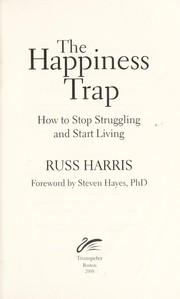
Introduces Acceptance and Commitment Therapy (ACT) in a highly readable format, teaching 'defusion' from difficult thoughts and emotions — a direct upgrade to the mindfulness skills built in Stage 3.
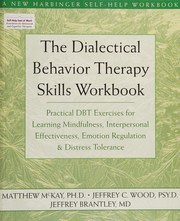
DBT is one of the most rigorously validated approaches to emotional regulation; this workbook delivers its four core skill sets (mindfulness, distress tolerance, emotion regulation, interpersonal effectiveness) in a practical, self-guided format.

Research shows self-criticism amplifies emotional reactivity while self-compassion builds resilience; Neff's work is the evidence-based capstone for turning all prior skills inward with kindness rather than judgment.
Mastery: Integration & Lasting Change
ExpertSynthesize everything into a unified, neuroscience-informed model of lasting emotional change — understanding how to rewire patterns at the level of the brain itself.
▸ Study plan for this stage
Pace: 6–8 weeks, ~25–30 pages/day (with reflection breaks every 2–3 chapters)
- Mindsight as a neural capacity: the ability to perceive the mind—your own and others'—and use that awareness to reshape neural patterns
- The triad of awareness: observing thoughts, sensations, and emotions without judgment as the foundation for rewiring the brain
- How the prefrontal cortex integrates limbic and brainstem responses, creating coherence and resilience in emotional regulation
- Neural plasticity and the role of repeated, mindful experience in creating lasting structural changes in the brain
- The window of tolerance: understanding your optimal zone of arousal and how to expand it through deliberate practice
- Integration as the core mechanism of change: linking left and right hemispheres, top-down and bottom-up processing, and implicit and explicit memory
- Secure attachment and interpersonal neurobiology: how relational experiences literally reshape the developing and adult brain
- From insight to embodied change: translating intellectual understanding into automatic, unconscious neural patterns through repetition and mindfulness
- What is mindsight, and how does developing this capacity enable you to rewire emotional patterns at the neural level?
- Explain the role of the prefrontal cortex in integrating limbic and brainstem responses. How does this integration support lasting emotional regulation?
- What is the window of tolerance, and what practical strategies can you use to expand yours?
- How does neural plasticity support lasting change in emotional regulation, and what conditions must be present for new neural patterns to become automatic?
- Describe the relationship between secure attachment and brain development. How can you cultivate secure internal states to support emotional regulation?
- What is the difference between intellectual insight and embodied change? Why is repetition and mindful practice essential for translating understanding into lasting neural rewiring?
- Daily mindsight practice (10–15 min): Sit quietly and observe your thoughts, sensations, and emotions without trying to change them. Note patterns in how your mind works. Track this for 4 weeks and identify recurring themes in your emotional reactivity.
- Window of tolerance mapping: Identify your baseline arousal state, your hyperarousal threshold (anxiety, agitation), and your hypoarousal threshold (numbness, shutdown). Practice small exposures to expand your window—e.g., gradually increase time in mildly uncomfortable situations while staying aware.
- Prefrontal integration exercise: When triggered emotionally, pause and engage your prefrontal cortex by naming what you observe ("I notice my heart is racing, my jaw is tight, I feel angry"). Then ask: "What do I actually need right now?" Practice this 3–5 times weekly until it becomes automatic.
- Bilateral stimulation and coherence practice: Use alternating left-right tapping (on your knees or shoulders) while recalling a difficult emotional memory. This engages both brain hemispheres and supports integration. Do this weekly with one challenging memory.
- Secure internal state cultivation: Recall a moment when you felt genuinely safe and connected. Spend 5 minutes daily re-inhabiting this state somatically (notice your breathing, posture, warmth). Build this as an internal resource you can access during dysregulation.
- Embodied repetition protocol: Choose one emotional regulation skill (e.g., grounding, breathing, self-soothing). Practice it daily for 30 days in low-stress moments so it becomes automatic. Then test it during mild stress. Track how quickly you can access it under pressure.
Next up: This stage synthesizes neuroscience-informed understanding of how the brain changes, preparing you to apply these principles to specific relational contexts, complex trauma patterns, or specialized populations in advanced clinical or personal development work.
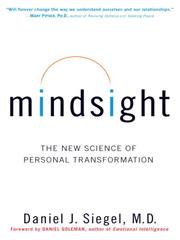
Siegel's interpersonal neurobiology framework integrates brain science, attachment theory, and mindfulness into a single coherent model — the ideal capstone that shows how all the prior tools create lasting neural change.
Discussion
Keep reading
Paths that share books, cover the same subject, or open a related topic.