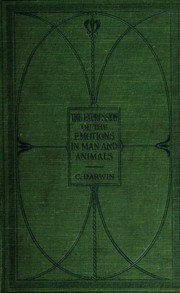
Start with The expression of emotions in man and animals, which is where the field starts: Darwin in 1872 arguing that emotional expressions are inherited behaviours continuous across species. It is more readable than its date suggests, and every later position on this list is a response to it, including the ones that reject it.
Then read the two sides in sequence rather than in summary, because this is a field where the leading researchers do not agree on what they are studying. One tradition, running from Darwin through Paul Ekman, holds that there is a small set of biologically basic emotions with distinctive facial expressions and physiological signatures, recognisable across cultures. Another, argued most forcefully by Lisa Feldman Barrett, holds that no such fingerprints appear in the data and that emotions are constructed in the moment out of body sensations and learned concepts. These are not compatible positions, and neither side has conceded.
The basic-emotions view, at full strength
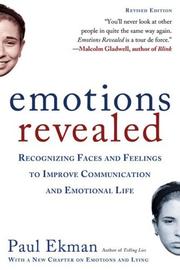
Emotions Revealed is Ekman's popular statement of the classical position, organised emotion by emotion. Read it as the strongest version of the view that the next stage attacks. Unmasking the Face is the technical companion on reading facial muscle movement, the work that became the Facial Action Coding System, and it is included so you see the method rather than the popularisation of it. One flag: the deception-detection application Ekman later built on this, set out in his book Telling Lies, has performed poorly in independent evaluation, and the microexpression lie-detection industry that followed is considerably weaker than its public reputation.
The constructionist challenge
How Emotions Are Made is the most important book here regardless of which side you finish on. Barrett argues that decades of studies have failed to find consistent physiological or neural fingerprints for discrete emotions, and that the cross-cultural evidence weakens badly when subjects are not handed a list of emotion words to choose from — a criticism of the forced-choice method underpinning the universality studies. Read it directly after Ekman, while his claims are fresh, because it engages them point by point. Seven and a Half Lessons about the Brain is the 192-page version, and it is worth reading for one thing in particular: it dismantles the triune-brain story of an emotional limbic system fighting a rational cortex, which the older popular literature encourages and which is not how the brain is organised.
Try to come away able to name which specific empirical claims are in dispute — the facial signatures, the autonomic patterns, the recognition studies — rather than only that there is a disagreement.
Feeling, the body and reasoning
Descartes' Error is the book that put emotion back into the study of reasoning, built around Phineas Gage and Antonio Damasio's own frontal-lobe patients, who remained intellectually intact while making catastrophic decisions. The clinical cases are the most persuasive evidence anywhere here that feeling is functional rather than decorative. Note that the somatic marker hypothesis is influential but contested, with the Iowa Gambling Task evidence in particular having attracted substantial criticism. The Feeling of What Happens is the harder theoretical follow-up, distinguishing emotion as a body state from feeling as its mental representation. Looking for Spinoza is the most humane of the three; his later Feeling and Knowing restates the framework more compactly if you want the summary rather than the development.
The emotional brain is the standard account of the amygdala and fear conditioning and the origin of the popular low-road story. Read Anxious alongside it, because it is Joseph LeDoux correcting the reading of his own earlier work: a defensive survival circuit that can be studied in a rat and the conscious feeling of being afraid are different things, and calling the amygdala response fear confuses them. It is a rare and instructive case of a scientist publicly narrowing a claim that had become famous in its broader form.
Animal affect, and the popular spin-off
Affective Neuroscience is the foundational text of the field Jaak Panksepp named: seven basic emotional systems identified by direct stimulation of subcortical structures across mammals. It is an academic monograph, not a popular book, and it is the most serious biological challenge to a purely constructionist reading. His accessible version, The Archaeology of Mind, does not resolve in our catalogue.
The emotional life of your brain is the best treatment here of individual variation, which the theoretical debates largely bracket — six dimensions of emotional style on which people differ measurably. Richard Davidson is also an advocate for meditation research, a field with its own replication problems, so read the intervention claims more sceptically than the descriptive ones. End with Emotional Intelligence, which made emotion a mainstream subject and a corporate industry. Daniel Goleman is a journalist synthesising others' work, the construct's predictive validity over general intelligence and personality is disputed, and the popular claims exceed the evidence — all of which is worth seeing after everything above. The staged path, with goals and study plans, is at /paths/pt_ai_the-science-of-emotion.