Best Books About Women in Science, in Reading Order
There are two kinds of book on this subject and they are easy to confuse. One is biography — the life of a particular scientist, told well or badly. The other is structural history — an account of the institutions, hiring practices and credit systems that determined who got to be a scientist at all. A reading list made only of the first produces a gallery of exceptional individuals and no explanation; one made only of the second is unreadable without the individuals. This path deliberately alternates, and each entry below says which kind it is. It also prefers documented accounts to celebratory ones, because the celebratory books on this subject repeat each other's errors and the scholarship does not.
Group narratives: the work, and the erasure
BeginnerSee how women's scientific and computational labour was organised, valued and then written out — through four narrative histories of teams rather than individuals.
▸ Study plan for this stage
Pace: Six to eight weeks for 1,325 pages across four narrative histories, all of which read at ordinary trade pace — 30-40 pages an evening — so the constraint is time rather than difficulty. Sobel's The glass universe is 330 pages and comes first because the work itself is so plainly foundational: the Ha
- Scientific computing as women's labour before it was machine labour, and the job title that moved with the work
- Classification and data reduction as intellectual work routinely reclassified as clerical
- The Harvard computers' specific results: the spectral classification system and the period-luminosity relation
- Segregation as an operating condition of the Langley workforce, not a backdrop to it
- Automation as a mechanism that displaced and, in some cases, promoted the same women
- Secrecy as a distinct mechanism of erasure — Mundy's cryptanalysts could not be credited because they could not speak
- Oral history and declassified records as sources, and what each can and cannot establish
- What exactly did Henrietta Leavitt establish, and why does it matter for measuring the universe?
- How did the Langley mathematicians' work change as electronic computers arrived, and which of them moved into engineering roles?
- What are the differences between the Langley and JPL cultures that Shetterly and Holt describe, and what produced them?
- Why does Mundy argue that secrecy erased her subjects more completely than any of the other mechanisms in this stage?
- Which of these four books rests most heavily on interviews and which on archives, and how does that show in what each can claim?
- Take one named woman from each of the four books and write down her specific technical contribution in one sentence, without any adjective about her circumstances
- Compare Shetterly's book with the film adaptation on one episode you can check, and list what the film compressed, invented or reassigned
- Trace the word 'computer' through all four books and record every point at which its meaning shifts
- For each book, identify the source base — archives, interviews, declassified files — and note one claim that source base could not support
- Build a single timeline placing all four groups on it, and mark where two of them overlap in time without either book mentioning the other
Next up: You now know four teams well; the next stage gives you the map of individuals across fields and centuries before you read any of them at length.
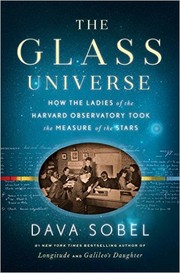
Narrative history. Sobel on the Harvard College Observatory computers — Fleming, Maury, Cannon, Leavitt — who classified hundreds of thousands of stellar spectra and produced the period-luminosity relation that made cosmic distance measurable. The best opening book because the work itself is so clearly foundational.
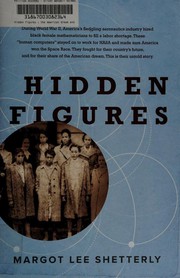
Narrative history, and substantially more documented than the film made from it: Shetterly worked from NACA and NASA records and traces the Black women mathematicians of Langley through segregation, the space race and the arrival of the machines that replaced their job title. Read the book, not the adaptation.
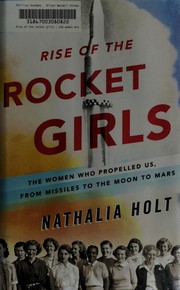
Narrative history of the JPL computers, and a useful pairing with Shetterly: a different institution with a different culture, where several of the women moved into engineering roles as computing was automated. Built on oral history interviews with the surviving participants.
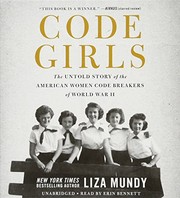
Narrative history, from declassified records, of the roughly ten thousand American women who did wartime cryptanalysis and were sworn to silence about it for decades. Included because secrecy is a distinct mechanism of erasure from the ones the other books describe.
Collective biography
BeginnerAcquire a working map of who the significant figures are, across fields and centuries, before reading any of them at length.
▸ Study plan for this stage
Pace: Two to three weeks for 724 pages, and the two books are used quite differently. McGrayne's Nobel Prize women in science is 451 pages of reporting rather than compilation — she interviewed many of her subjects — and its fifteen chapters cover laureates and women whose work won a prize for somebody el
- The Matilda effect: credit for a woman's work being attributed to a male colleague
- The Nobel structure itself — three-laureate limits, no posthumous awards, discipline boundaries — as a mechanism of exclusion independent of intent
- Collective biography as a genre, and what it gains and loses against the single life
- The distinction between a compiled profile and a reported one
- The range of fields involved, and how uneven the coverage is across them
- Why a list of exceptional individuals is a poor explanation of a structural pattern
- Which cases in McGrayne involve a prize going to a collaborator rather than to the woman who did the work, and what is the evidence in each?
- How do the Nobel rules themselves — the limit of three, the exclusion of the dead — contribute to the pattern independently of any prejudice?
- What can Swaby's five-page format establish, and what can it only assert?
- Which fields are best and worst represented across both books, and does that reflect the history or the sources?
- After both books, which figures do you want to read a full biography of, and what specifically do you want to know about each?
- Pick three of Swaby's profiles and try to verify one specific claim in each against another source; record how many you could confirm
- Take one McGrayne chapter and reconstruct the credit dispute it describes as a timeline of publications and awards
- Build a table of every figure in both books with field, period and the specific result she is known for, and note how many you had never encountered
- Identify a woman who appears in both books and compare the two accounts for factual disagreements
- Write down which four figures you will read at length in the next stage and why — the path names four, so justify accepting or substituting each
Next up: You have a map and a set of leads; the next stage tests the leads against four full-length biographies built on archives rather than on summary.
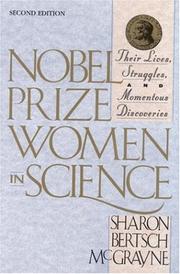
Collective biography, and the standard reference of its kind: fifteen chapters on laureates and on women whose work won a prize for someone else. McGrayne interviewed many of her subjects, so it is reporting rather than compilation.
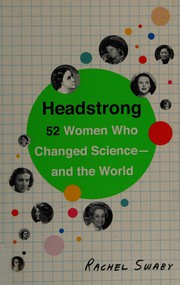
Collective biography in short form — fifty-two profiles of a few pages each. Deliberately brief and openly a starting point rather than a source; use it to find the figures you want to read properly, and treat its compressed claims as leads to check.
Single lives, documented
IntermediateRead four full-length biographies built on archives and correspondence, and see what actually happened in a particular career rather than what the summary version says happened.
▸ Study plan for this stage
Pace: Four to five months for 1,650 pages, and these are archival biographies rather than popular ones — expect 20-25 pages an evening rather than 40, because the argument is carried in evidence. Maddox's Rosalind Franklin is 380 pages and is the single best example on this path of documentation defeating
- Photograph 51 and the actual chain of events by which Franklin's data reached Watson and Crick
- The distinction between a credit dispute and a theft, and the evidence needed to establish either
- Meitner and Hahn's collaboration, and the specific division of interpretive and chemical work in the fission discovery
- Exile and the loss of institutional position as a scientific as well as a personal event
- Curie's public reputation and the mechanisms by which the French press attacked it
- McClintock's transposition work, and why its reception is genuinely ambiguous evidence
- Archival biography as a method: correspondence, laboratory notebooks and what they can settle
- Why the martyr narrative and the villain narrative are both failures of the same kind
- What does Maddox establish about how Franklin's data was used, and on what documents does she rest each claim?
- In what specific sense was Meitner's contribution to the interpretation of fission indispensable, and what does Sime cite to show it?
- How did Meitner's exile affect her ability to be credited, quite apart from any decision by the Nobel committee?
- What does Quinn's use of Curie's diaries add that the popular biographies cannot, and does it make Curie more or less admirable?
- Is McClintock's case evidence of sex-based neglect? Set out what Keller says can and cannot be concluded
- Which of these four cases is the strongest evidence for a structural claim, and which is the weakest?
- Read Maddox's account of the Photograph 51 episode alongside the corresponding chapter of The Double Helix, and list every factual disagreement
- Build a document-by-document chronology of the fission discovery from Sime, marking which step is Meitner's and which is Hahn's
- Take one claim about Curie that appears in Swaby's short profile from the previous stage and check it against Quinn's evidence
- Write out the three competing explanations Keller offers for McClintock's reception, and rank them by the evidence Keller supplies for each
- For each of the four biographies, identify the single archival source the book most depends on, and say what the book could not claim without it
- Return to the McGrayne chapters on Meitner and Curie and note what the full-length biographies changed about your reading of them
Next up: Four lives will not explain a pattern that runs across a century and every field; the next stage moves from the individuals to the institutions that produced them, and to the argument about how those individuals get written about.
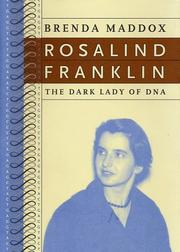
Biography, and the book that replaced both the villain of The Double Helix and the martyr of the counter-myth with an evidenced account of a difficult, formidable crystallographer. The single best example on this path of documentation defeating a good story.
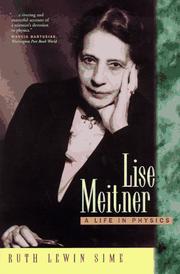
Biography, by a chemist working from Meitner's own papers, and the definitive treatment of the clearest case of a Nobel Prize going to the wrong person: Meitner co-devised the interpretation of nuclear fission and Hahn took the prize alone. Also a history of a scientist's flight from Nazi Germany.
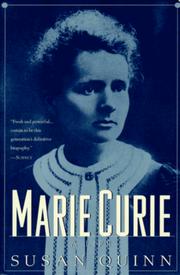
Biography. Quinn's is the scholarly life, based on Curie's diaries and correspondence — including the affair the French press used against her — rather than the saint's life that dominates children's accounts. Chosen over the shorter popular biographies for exactly that reason.
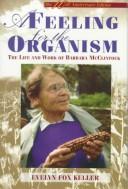
Biography of Barbara McClintock, and the one that raises the hardest question on this path: whether McClintock's neglect was about her sex, her solitary working style, or a genuinely unorthodox way of doing genetics. Keller does not settle it, which is the honest position.
The structural history, and the argument about it
IntermediateMove from individual lives to the system that produced them: the institutional history of women in science, the myth-making around it, and the ongoing dispute over how much of the pattern is biological.
▸ Study plan for this stage
Pace: Three to four months for 1,182 pages, and the reading is analytical rather than narrative throughout. Rossiter's Women scientists in America is 464 pages and is the foundation of the entire field — an archival account of how American scientific institutions systematically segregated and undervalued
- Territorial and hierarchical segregation as Rossiter's two mechanisms, distinct from outright exclusion
- The Matilda effect, and how it relates to the Matthew effect it was named against
- Coeducation, women's colleges and the separate institutional tracks that resulted
- The exceptional-woman narrative as a genre with costs, in Des Jardins's analysis
- Keller's claim that objectivity's metaphors carry gendered content, and the distinction between that and a claim about results
- The current empirical state of sex-differences research, and where the evidence is weak on both sides of the argument
- The difference between structural explanation and individual explanation, and when each is appropriate
- How to hold a contested position in view without adjudicating it
- What are Rossiter's two forms of segregation, and give an example of each from her evidence
- Why does Rossiter argue the problem was not primarily exclusion from training, and what does her evidence show instead?
- What does Des Jardins say the Curie narrative costs, and does that critique apply to any of the four biographies you just read?
- State Keller's argument in its strongest form — what precisely is she claiming is gendered, and what is she not claiming?
- Where does Saini find the sex-differences literature to be weakest methodologically, and where does she say genuine disagreement remains?
- Having read all four, what proportion of the pattern do you think is explained structurally, and what evidence would change your answer?
- Take each of the four lives from the previous stage and locate it inside Rossiter's structural framework — which mechanism does each illustrate, and does any of them not fit?
- Apply Des Jardins's critique directly to Quinn's Curie biography and to Maddox's Franklin, and judge whether either falls into the pattern she describes
- Reconstruct Keller's central argument in a page without using the words she uses, then write the strongest objection to it you can
- Follow one claim about sex differences from a newspaper report back to the study Saini discusses, and check what the study actually measured
- Return to the four group narratives from stage one and identify, for each, which structural mechanism Rossiter names was operating
Next up: This is the end of the path: from here the natural continuations are Rossiter's later volumes, the history of science literature her work founded, and the primary sources — letters, notebooks, oral histories — that all four stages have been quoting.
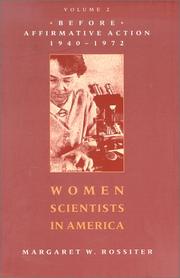
Structural history, and the foundation of the entire field: Rossiter's archival account of how American scientific institutions systematically segregated and undervalued women's work. She also coined the Matilda effect, the name for the credit pattern the earlier books here illustrate. Dense and worth every page.
Structural history about the biographies: Des Jardins examines how the exceptional-woman story gets constructed, and what it costs — chiefly, that it makes ordinary women in science invisible. Read it directly after the biography stage, as a critique of what you have just read.
The theoretical argument, from a physicist turned historian: that the metaphors and criteria of objectivity in science are themselves gendered. The most contested book on this path and included for that reason; you now have enough evidence to judge it.

Science journalism, and the closing book because it takes the argument into the present: Saini reports on the actual state of research into sex differences and shows where the science is weak, where it is disputed, and where popular claims outrun the data. Even-handed, and the antidote to the confident versions on both sides.
Discussion
Keep reading
Paths that share books, cover the same subject, or open a related topic.