The science of cooking: top books to understand flavor and technique
This curriculum takes you from curious home cook to scientifically-minded culinary thinker across four carefully sequenced stages. Each stage builds on the last — starting with intuitive, story-driven food science, moving through chemistry and technique, and culminating in rigorous, data-driven mastery. By the end, you won't just follow recipes — you'll understand exactly why they work and how to adapt them intelligently.
Foundations: Why Food Works
BeginnerBuild an intuitive, jargon-free understanding of how heat, water, fat, and basic chemistry transform raw ingredients into food — no prior science background needed.
▸ Study plan for this stage
Pace: 8–10 weeks, ~40–50 pages/day (alternating between both books to reinforce concepts through different approaches)
- Heat transfer mechanisms (conduction, convection, radiation) and how they cook food differently
- The role of water in cooking: evaporation, steam, boiling point elevation, and moisture retention
- Protein denaturation and coagulation—why eggs set, meat firms, and milk curdles
- Fat's functions: flavor delivery, texture creation, emulsification, and heat transfer
- The Maillard reaction and caramelization—how browning creates flavor and color
- Carbohydrates: gelatinization of starches and how sugar behaves under heat
- Acid-base chemistry in cooking: how salt, acid, and alkalinity affect taste and texture
- Practical ingredient science: why certain techniques work (e.g., brining, resting meat, tempering chocolate)
- Explain why a cast-iron skillet browns food better than a non-stick pan, using heat transfer principles from McGee and López-Alt's experiments.
- Why does resting meat after cooking result in juicier meat? Describe the role of protein and water.
- What is the Maillard reaction, and why does it require both high heat and the right pH conditions?
- How does salt work to improve flavor and texture? Consider both osmosis and protein interactions.
- Explain the difference between boiling and steaming vegetables in terms of heat transfer and nutrient loss.
- Why does emulsification work? Use the example of mayonnaise or vinaigrette to explain the role of fat, water, and emulsifiers.
- Cook the same dish (e.g., a steak or chicken breast) using two different heat methods (pan-searing vs. oven-roasting) and document texture, browning, and juiciness differences; connect your observations to McGee's heat transfer explanations.
- Conduct a brining experiment: cook two identical cuts of meat—one brined, one not—and taste for moisture and seasoning penetration; explain the osmosis and protein changes at work.
- Make mayonnaise from scratch (oil, egg yolk, acid) and intentionally break an emulsion, then repair it; observe and document what happens at each stage using López-Alt's emulsification principles.
- Boil, steam, and roast three identical vegetables (e.g., carrots or broccoli) and compare texture, color, and flavor; relate your findings to water's role in cooking.
- Sear meat at different temperatures (low, medium, high) and examine the crust formation; photograph and explain which temperature produces the best Maillard reaction based on McGee's chemistry.
- Bake or cook a starch-based dish (bread, pasta, or rice) and observe gelatinization; cut or break open and describe the texture changes, linking them to carbohydrate chemistry.
Next up: This stage equips you with the scientific "why" behind cooking fundamentals, preparing you to apply these principles strategically in the next stage, where you'll learn how to manipulate these forces intentionally to master specific techniques and cuisines.
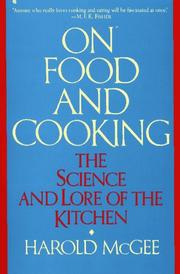
The essential starting point for food science — McGee explains the biology, chemistry, and history behind everyday ingredients in plain, engaging language. Reading this first gives you the core vocabulary and mental models every later book assumes you have.

Translates food science directly into kitchen experiments and recipes, showing you how to test and observe principles from McGee in real cooking. Its conversational tone and step-by-step reasoning make abstract science immediately tangible.
Heat & Technique: The Physics of Cooking
BeginnerUnderstand how heat transfers through conduction, convection, and radiation, and how controlling temperature is the single most powerful lever a cook has.
▸ Study plan for this stage
Pace: 4–5 weeks, ~25–30 pages/day (alternating between both books to reinforce concepts through different lenses)
- Heat transfer mechanisms: conduction (direct contact), convection (fluid movement), and radiation (electromagnetic energy) and how each operates in cooking
- Temperature as the primary control variable—how precise temperature management transforms raw ingredients into cooked dishes
- The Maillard reaction and caramelization: how heat triggers chemical transformations that create flavor and browning
- Carryover cooking and residual heat: why removing food from heat before it reaches target temperature is critical
- Salt, fat, and acid as flavor amplifiers and how they interact with heat to develop taste
- Thermal conductivity and how different cooking methods (dry vs. wet heat) transfer energy at different rates
- The relationship between temperature, time, and texture—why a 5°F difference can mean the difference between rare and overcooked
- Explain the three mechanisms of heat transfer (conduction, convection, radiation) and give a concrete cooking example of each.
- Why is carryover cooking important, and how would you account for it when cooking a steak to medium-rare?
- What is the Maillard reaction, at what temperature range does it occur, and why does it require both heat and the absence of excess moisture?
- How do salt, fat, and acid enhance flavor, and how does heat change their effectiveness in a dish?
- Compare the heat transfer efficiency of boiling versus pan-searing a chicken breast. Why would you choose one method over the other?
- If a recipe calls for 350°F, what actually happens at the molecular level, and why is oven temperature calibration important?
- Cook the same vegetable (e.g., carrot) using three different heat transfer methods (boiling/convection, pan-searing/conduction, and broiling/radiation). Document texture, color, and flavor differences.
- Sear a steak to an internal temperature 5°F below your target, remove it from heat, and measure how much carryover cooking occurs. Record the time and final temperature.
- Make two batches of caramel: one at 320°F and one at 350°F. Taste and observe color differences to experience the Maillard reaction in action.
- Cook a piece of protein (chicken breast or fish) at three different oven temperatures (200°F, 325°F, 400°F) for the same duration. Compare moisture retention and texture.
- Prepare a simple sauce (e.g., vinaigrette or pan sauce) and taste it at different stages: cold, warm, and hot. Note how temperature changes perception of salt, acid, and fat balance.
- Calibrate your oven with an oven thermometer and compare actual vs. displayed temperature. Cook a batch of cookies or roasted vegetables and observe how accuracy affects results.
Next up: Mastering heat transfer and temperature control provides the foundation for the next stage, where you'll apply these principles to specific ingredients and techniques—learning how to manipulate heat strategically to achieve precise outcomes in proteins, vegetables, and baked goods.
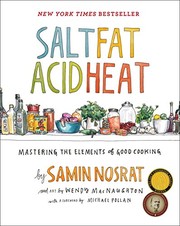
Frames cooking around four fundamental forces rather than recipes, training you to think structurally about why a dish succeeds or fails. Reading it here reinforces the science from Stage 1 with a chef's intuitive, principle-driven perspective.
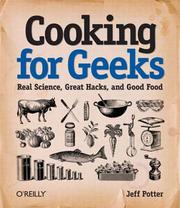
Digs into the physics and engineering of heat — oven temperatures, Maillard reaction kinetics, and equipment science — in a hands-on, experiment-friendly format that deepens your understanding of thermal control.
Chemistry Deep Dive: Reactions, Flavor & Texture
IntermediateUnderstand the key chemical reactions in cooking — Maillard browning, caramelization, emulsification, gelation, and fermentation — and how to manipulate them deliberately.
▸ Study plan for this stage
Pace: 8–10 weeks, ~40–50 pages/day. Allocate 3 weeks to "The Kitchen as Laboratory" (foundational chemistry), 2.5 weeks to "Mouthfeel" (sensory science & texture), and 2.5 weeks to "The Flavor Bible" (flavor pairing & application). Include 1 week for integration exercises and review.
- The Maillard reaction: how amino acids and reducing sugars interact at high heat to create brown color, savory depth, and complex aromas—and how to control it through temperature, pH, and ingredient composition
- Caramelization as distinct from Maillard: the breakdown of pure sugars into bitter, sweet, and aromatic compounds, and how timing and temperature determine flavor outcomes
- Emulsification: the science of suspending oil in water (or vice versa) using emulsifiers like lecithin and egg yolk, and why this matters for sauces, dressings, and foams
- Gelation and thickening: how proteins, starches, and hydrocolloids form networks that trap liquid and create texture, including the role of heat, pH, and molecular structure
- Fermentation as a chemical process: how microorganisms and enzymes transform ingredients through controlled decomposition, creating flavor, preservation, and texture
- Sensory perception of mouthfeel: how texture, viscosity, and molecular interactions on the tongue and palate influence flavor perception and eating experience
- Flavor pairing principles: how chemical compounds in ingredients interact, and how understanding molecular flavor bridges chemistry to practical cooking decisions
- Deliberate manipulation: using chemical knowledge to predict, control, and troubleshoot cooking outcomes rather than relying on intuition alone
- What is the difference between the Maillard reaction and caramelization, and why does temperature control matter differently for each?
- How do emulsifiers like lecithin and egg yolk work at the molecular level to stabilize an emulsion, and what breaks an emulsion?
- Describe the role of gelation in cooking: what molecular structures form, and how do heat, pH, and hydrocolloids influence gel formation?
- How does fermentation alter the chemical composition of food, and what role do microorganisms and enzymes play in creating flavor and texture?
- What is mouthfeel, and how do molecular interactions (viscosity, particle size, fat content) influence sensory perception on the palate?
- Using flavor pairing principles, explain why certain ingredients work well together based on shared chemical compounds, and how you would apply this to create a new dish.
- Conduct a controlled Maillard reaction experiment: brown ground meat or mushrooms at different temperatures (160°F, 180°F, 200°F+) and compare color, aroma, and flavor. Document how temperature affects browning speed and taste complexity.
- Make three caramel batches using different end temperatures (300°F, 320°F, 340°F) without stirring, and taste-test to identify the point where sweetness transitions to bitterness. Record observations on color and aroma at each stage.
- Prepare three emulsions: a traditional vinaigrette, a mayonnaise, and a beurre blanc. Deliberately break one of each type (by adding cold liquid, whisking too vigorously, or overheating) and attempt to rescue it, documenting what works and why.
- Make a gel using three different thickening agents (cornstarch slurry, gelatin, and agar-agar) at identical concentrations. Compare gel strength, mouthfeel, and how each responds to heat or acid. Relate observations to molecular structure.
- Ferment a simple ingredient (sauerkraut, yogurt, or kombucha) over 1–2 weeks, tasting and documenting flavor changes daily. Measure pH if possible, and reflect on how microbial activity transforms the ingredient.
- Create a flavor pairing map for one ingredient (e.g., tomato, coffee, or citrus) by researching its key volatile compounds in "The Flavor Bible," then design a dish that intentionally combines it with 2–3 ingredients sharing those compounds. Cook and evaluate.
Next up: This stage equips you with the chemical vocabulary and experimental mindset to understand *why* techniques work, preparing you to apply these principles strategically in advanced recipe development, troubleshooting, and creative menu design in the next stage.

A collection of peer-reviewed culinary science essays that bridges the gap between home cooking intuition and real food chemistry — ideal at this stage once you have solid foundational vocabulary.

Focuses specifically on texture — the most underappreciated dimension of cooking science — covering gels, emulsions, foams, and the physics of how food feels. It fills a crucial gap left by flavor-focused books.
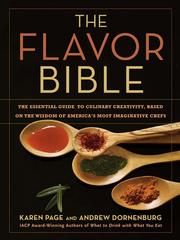
Provides a data-rich map of flavor affinities and pairing logic, helping you apply your growing chemistry knowledge to creative, intentional flavor building rather than rote recipe following.
Advanced Mastery: Precision, Modernism & Culinary Science
ExpertAchieve a rigorous, professional-level understanding of culinary science — including sous vide, hydrocolloids, emulsification physics, and the full chemistry of flavor — and learn to cook with scientific precision.
▸ Study plan for this stage
Pace: 12–14 weeks, ~40–50 pages/day with 2–3 days per week for hands-on experimentation
- Precision cooking techniques: sous vide temperature control, thermal equilibrium, and protein denaturation kinetics
- Hydrocolloids and gelling agents: agar, gelatin, sodium alginate, and their molecular mechanisms in food structure
- Emulsification physics: oil-water interfaces, emulsifier chemistry, and stability of mayonnaise, hollandaise, and modern foams
- Maillard reaction and caramelization: the chemistry of browning, flavor development, and controlling reaction rates
- Modernist cuisine principles: spherification, gelification, foaming, and applying scientific methods to plating and texture
- Flavor chemistry and sensory perception: volatile compounds, taste receptors, and how molecular structure drives taste
- Water activity, osmosis, and preservation: controlling microbial growth and texture through scientific manipulation of moisture
- Cooking as applied chemistry: reading recipes as chemical equations, predicting outcomes, and troubleshooting failures scientifically
- Explain the molecular basis of sous vide cooking: why does precise temperature control produce consistent results, and what happens to proteins at different temperature ranges?
- How do hydrocolloids like sodium alginate and agar work at the molecular level to create gels, and what are the practical differences between them in a kitchen setting?
- Describe the chemistry of emulsification: what role do emulsifiers play in stabilizing oil-water mixtures, and why do emulsions break?
- What is the Maillard reaction, how does temperature affect its rate, and how can you control it to achieve desired browning without burning?
- How do modernist techniques like spherification and foaming apply fundamental chemistry to create novel textures and presentations?
- Explain the relationship between water activity and food preservation: how does controlling moisture prevent spoilage while maintaining texture?
- Conduct a sous vide protein experiment: cook chicken breast, egg, and fish at 3–4 different precise temperatures (e.g., 60°C, 65°C, 70°C, 75°C) and document texture, firmness, and juiciness changes; correlate observations to protein denaturation curves from the texts
- Create hydrocolloid gels using agar, gelatin, and sodium alginate; vary concentrations and temperatures to understand gel strength, setting time, and mouthfeel differences; document which works best for specific applications
- Prepare three emulsions from scratch (mayonnaise, hollandaise, and a modern foam using lecithin or egg white); intentionally break one and diagnose the failure using emulsification chemistry; repair it and explain the fix
- Conduct a Maillard reaction experiment: brown the same protein or vegetable at different temperatures (150°C, 170°C, 190°C, 210°C) and taste/smell the results; document flavor development and identify the point of burning
- Execute a spherification project: make balsamic vinegar or fruit juice spheres using sodium alginate and calcium chloride; vary setting times and bath concentrations to optimize burst texture and flavor delivery
- Design and execute a modernist plating project: choose a classical dish and reimagine it using at least three techniques from the texts (e.g., foam, gel, sous vide component); document the scientific rationale for each choice
Next up: This stage equips you with rigorous scientific literacy and hands-on mastery of precision cooking, positioning you to either specialize in molecular gastronomy and restaurant-level technique, or to apply these principles to food innovation, product development, and teaching others the science-first approach to cooking.
A distilled but still deeply scientific version of the landmark Modernist Cuisine series, covering precision techniques like sous vide, pressure cooking, and gels with photographic cross-sections and rigorous data. Best saved for last when you can fully appreciate its depth.
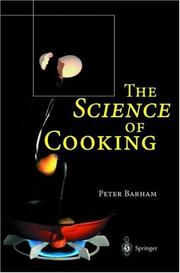
A physicist's systematic treatment of cooking — covering thermodynamics, protein denaturation, and colloid chemistry with real equations and experiments. This is the most academically rigorous book on the list and rewards readers who have built up through all prior stages.
Discussion
Keep reading
Paths that share books, cover the same subject, or open a related topic.