The Silk Road: the history, in the right reading order
This curriculum takes a beginner from vivid narrative introductions to the Silk Road, through rich historical and thematic deep-dives, and finally into scholarly works on specific civilizations, commodities, and consequences. Each stage builds the geographic, cultural, and chronological fluency needed to absorb the next, turning a curious newcomer into a genuinely well-rounded student of one of history's greatest networks.
First Steps: The Big Picture
BeginnerBuild a vivid mental map of the Silk Road — its geography, key players, and the basic flow of goods and peoples — through accessible, narrative-driven reading.
▸ Study plan for this stage
Pace: 4–5 weeks, ~40–50 pages/day. Start with Frankopan's narrative overview (2 weeks), then move to Hansen's document-based approach (2–3 weeks) to deepen understanding through primary sources.
- The Silk Road as a network of interconnected trade routes spanning Asia, the Middle East, and Europe—not a single road
- Key geographic hubs and chokepoints: Central Asia, the Levant, China, India, and the Mediterranean as nodes in a larger system
- Major players and empires: Chinese dynasties, Persian/Islamic empires, Byzantine Empire, Indian kingdoms, and nomadic groups as shapers of trade
- Goods in motion: silk, spices, metals, ceramics, and glass as drivers of economic and cultural exchange
- Cultural and religious transmission: how Buddhism, Islam, Christianity, and ideas spread alongside merchandise
- The role of nomadic peoples and Central Asian intermediaries in facilitating rather than blocking exchange
- Periodization: understanding how the Silk Road evolved from early trade networks through its peak in medieval times
- Primary sources as evidence: how documents, inscriptions, and archaeological finds reveal the lived reality of trade and contact
- What geographic regions and cities were the most critical hubs on the Silk Road, and why did they become centers of trade?
- Name at least three major empires or civilizations that shaped the Silk Road and describe how each influenced trade routes or goods exchanged.
- What were the primary goods traded along the Silk Road, and what made them valuable enough to justify long-distance transport?
- How did religions and ideas (Buddhism, Islam, Christianity) spread along the Silk Road, and what does this tell us about the nature of these networks?
- What role did nomadic peoples and Central Asian intermediaries play in the Silk Road—were they obstacles or facilitators?
- Using at least one primary source from Hansen's book, explain how a specific document or artifact reveals the reality of Silk Road trade.
- Create a hand-drawn or digital map of the Silk Road showing major cities, geographic features (mountains, deserts, seas), and trade routes. Mark at least 10 key hubs and label the empires that controlled them during a specific period (e.g., 7th century CE).
- Build a 'goods timeline': track three commodities (e.g., silk, spices, glass) across time, noting where they originated, who traded them, and how their value or demand changed. Use examples from both Frankopan and Hansen.
- Write three 1-page character sketches of merchants, rulers, or intermediaries mentioned in Frankopan's narrative. For each, explain their role in connecting distant regions.
- Analyze 2–3 primary documents from Hansen's collection (letters, inscriptions, contracts, or travel accounts). For each, identify: who wrote it, what it reveals about trade practices, and what it tells you about daily life on the Silk Road.
- Create a 'cultural exchange chart' showing how three religions or philosophies (Buddhism, Islam, Christianity, Confucianism) spread along the Silk Road. Include the approximate timeline, key routes, and evidence from the texts.
- Debate or write a short essay (500 words) addressing: 'Were the Silk Roads primarily about trade in goods, or were cultural and religious exchanges equally important?' Support your argument with specific examples from both books.
Next up: By mastering the geography, major players, and flow of goods and ideas across the Silk Road, you now have the foundational mental map needed to dive deeper into specific periods, regions, or themes—such as the role of particular empires, the mechanics of trade systems, or the lives of individual merchants and travelers.

A sweeping, readable reorientation of world history around Central Asia and the Silk Roads. Starting here gives the learner a bold conceptual framework and a sense of why the Silk Road matters before diving into details.

Hansen uses archaeological finds at specific oasis towns to ground the Silk Road in concrete, human-scale stories. Reading this second turns Frankopan's grand narrative into tangible everyday reality.
Travelers & Eyewitnesses
BeginnerExperience the Silk Road through the eyes of real travelers, developing an intuitive feel for the distances, dangers, cultures, and wonders encountered along the routes.
▸ Study plan for this stage
Pace: 8–10 weeks, ~40–50 pages/day (Marco Polo: weeks 1–4; Ibn Battuta: weeks 5–8; review & synthesis: weeks 9–10)
- The Silk Road as a lived experience: distances, travel times, and the physical toll of overland and maritime routes
- Cultural encounters and trade dynamics: how merchants, rulers, and local populations interacted across religious and linguistic boundaries
- Geography as narrative: understanding the actual layout of Central Asia, the Middle East, India, and China through travelers' descriptions
- Eyewitness observation as historical evidence: recognizing what Marco Polo and Ibn Battuta noticed, valued, and omitted
- Comparative perspective: how two travelers from different cultures and centuries experienced overlapping regions differently
- Wonder and danger: the psychological and practical realities of long-distance travel (bandits, deserts, disease, hospitality)
- Trade goods and economic networks: what was actually being moved along the routes and why it mattered
- What were the major physical obstacles Marco Polo and Ibn Battuta encountered, and how did they overcome them?
- How did Marco Polo's and Ibn Battuta's accounts differ in their descriptions of the same regions or cities they both visited?
- What role did patronage and political relationships play in enabling these travelers to move safely across the Silk Road?
- What goods, technologies, or ideas did these travelers observe being traded, and what does this reveal about economic priorities?
- How did Marco Polo and Ibn Battuta describe the religious and cultural diversity they encountered, and what biases shaped their observations?
- What can we learn from what these travelers chose to describe in detail versus what they glossed over or ignored?
- Create a detailed itinerary map: Plot Marco Polo's route on a modern map with estimated travel times and distances between major stops; repeat for Ibn Battuta. Annotate with hazards and landmarks they mention.
- Comparative city profiles: Select 3–4 cities both travelers visited or described (e.g., Baghdad, Samarkand, Delhi). Write a 1-page profile for each using only details from both texts, noting where accounts agree or diverge.
- Travel journal simulation: Write 5–7 diary entries as if you were traveling with either Marco Polo or Ibn Battuta, using specific details from the texts (food, lodging, encounters, fears) to make the experience visceral.
- Trade goods inventory: Create an annotated list of 15–20 goods mentioned in both texts (silk, spices, jade, etc.). For each, note where it originated, where it was going, and what the travelers said about its value.
- Eyewitness analysis: Select one striking passage from Marco Polo and one from Ibn Battuta describing the same phenomenon (e.g., a city's wealth, a ruler's court, religious practices). Write a 2-page analysis of how their perspectives differ and why.
- Distance and time calculation: Using the travelers' own time estimates and distances, calculate average daily travel speeds for different route segments. What does this reveal about the pace of Silk Road commerce?
Next up: By inhabiting the Silk Road through these firsthand accounts, you've internalized its geography, hazards, and human networks—preparing you to examine the broader historical forces (trade systems, political empires, religious movements) that shaped and were shaped by these routes.
The most famous firsthand account of the overland routes and the Mongol Empire. Reading it now, with geographic context already in place, makes Polo's descriptions come alive rather than feel abstract.

Ibn Battuta's 14th-century journeys across the Islamic world and beyond offer a counterpoint to Polo — a Muslim perspective that illuminates the religious and commercial networks Polo barely touched.
Goods, Religions & Ideas on the Move
IntermediateUnderstand the specific commodities, faiths, and cultural exchanges — silk, spices, Buddhism, Islam, plague — that traveled the routes and transformed civilizations at both ends.
▸ Study plan for this stage
Pace: 8–10 weeks, ~40–50 pages/day. "The Fate of Rome" (4 weeks, ~35 pages/day); "Empires of the Monsoon" (3 weeks, ~45 pages/day); "Buddhism and Islam on the Silk Road" (2–3 weeks, ~40 pages/day).
- Plague and disease as vectors of exchange: how pandemics (especially Justinian's plague in Harper) reshaped trade networks and civilizations across Eurasia
- Silk as a luxury commodity and political tool: production, monopolies, espionage, and its role in sustaining long-distance trade
- Monsoon winds and maritime routes: how seasonal patterns (Hall) enabled Indian Ocean trade and connected Africa, Arabia, India, and Asia in ways overland routes could not
- Buddhism's eastward transmission: doctrinal adaptation, missionary networks, and its role as a 'cosmopolitan' religion linking Central Asia to China and beyond
- Islam's rapid expansion and integration: how Islamic merchants, scholars, and networks transformed Indian Ocean commerce and created new religious-commercial communities
- Syncretism and cultural hybridity: how goods, religions, and ideas merged and adapted in port cities, oasis towns, and imperial courts rather than remaining 'pure'
- Civilizational transformation at both ends: how Rome's decline (Harper), Indian Ocean empires (Hall), and Chinese receptivity to foreign faiths (Elverskog) were all shaped by Silk Road exchanges
- The role of merchants, monks, and missionaries: non-state actors who drove exchange more than formal diplomacy or military conquest
- How did the Justinian plague (as described in Harper) disrupt Roman trade networks, and what does this reveal about the vulnerability of interconnected civilizations?
- What was the relationship between silk production, monopoly, and geopolitical power in the ancient and medieval world?
- How did monsoon winds enable a different pattern of trade than overland Silk Road routes, and which regions benefited most from maritime commerce (Hall)?
- What were the key doctrinal and practical reasons Buddhism spread eastward along the Silk Road, and how did it adapt to local contexts?
- How did Islamic expansion in the 7th–9th centuries reshape Silk Road trade networks, and what new commercial communities emerged?
- Provide specific examples of how a single commodity, religion, or idea transformed at least two different civilizations as it traveled the Silk Road.
- Create a timeline mapping the spread of Justinian's plague (from Harper) alongside major Silk Road trade routes; annotate which trade hubs were affected and how commerce was disrupted or redirected.
- Trace the production and trade of silk from its origins in China through at least three major markets or empires (using Harper and Hall); document the political actors and merchants involved at each stage.
- Map the monsoon wind patterns (using Hall's descriptions) and identify 4–5 major port cities that depended on them; research one city in depth and describe how it functioned as a cosmopolitan hub.
- Read Elverskog's account of Buddhist missionary networks and create a chart showing: origin region → key doctrines adapted → destination region → local synthesis. Do this for at least three major transmission routes.
- Analyze one Islamic merchant network or community described in Elverskog; write a 500-word profile explaining how Islamic law, language, and commercial practices enabled long-distance trade.
- Comparative exercise: select one commodity (silk, spices, or another good mentioned in Hall) and one religion (Buddhism or Islam from Elverskog), then write a 750-word essay on how each transformed two different civilizations and whether their impacts were similar or distinct.
Next up: This stage equips you with concrete knowledge of *what* moved along the Silk Road and *how* it transformed societies, preparing you to examine the political structures, institutions, and long-term consequences that sustained or collapsed these networks in the next stage.

Examines how climate change and pandemic disease (including plague traveling Silk Road networks) reshaped the Roman Empire — a powerful case study in how connected the ancient world truly was.
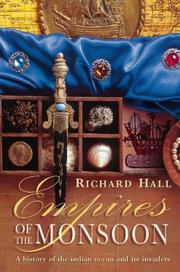
Shifts focus to the maritime Silk Road and the Indian Ocean trade system, broadening the learner's picture beyond the overland camel routes to the equally vital sea lanes.

A focused scholarly study of how the two great missionary religions interacted along the routes. Placed here, it deepens the learner's understanding of cultural transmission after they have the historical backbone.
Civilizations at the Crossroads
IntermediateZoom in on the key civilizations — Persia, the Mongol Empire, Tang China, and the Islamic Caliphates — that acted as engines, hubs, or gatekeepers of Silk Road exchange.
▸ Study plan for this stage
Pace: 8–10 weeks, ~40–50 pages/day. Weatherford's book (~400 pages) in weeks 1–3; Starr's book (~500 pages) in weeks 4–8; weeks 9–10 for review, synthesis, and exercises.
- The Mongol Empire as a unified political and commercial force that deliberately connected and protected Silk Road trade networks across Eurasia
- Genghis Khan's strategic innovations: meritocratic administration, religious tolerance, and infrastructure investment that enabled unprecedented scale of exchange
- Central Asia's role as the intellectual and commercial hub of the medieval world, particularly during the Islamic Golden Age (8th–12th centuries)
- The Arab Conquest and the rise of the Islamic Caliphates as transformative forces that reshaped Central Asian culture, religion, and trade patterns
- The relationship between political stability, security, and the flourishing of trade, knowledge exchange, and urban development along the Silk Road
- How individual civilizations (Persian, Mongol, Chinese, Islamic) functioned as gatekeepers, translators, and facilitators of goods, ideas, and technologies
- The decline of Central Asian prominence and the factors (Timurid invasions, shifts in trade routes, political fragmentation) that ended its golden age
- How did Genghis Khan's administrative and military innovations create the conditions for Silk Road trade to flourish on an unprecedented scale?
- What were the key characteristics of Central Asia's golden age (as described in Starr), and which civilizations or empires were responsible for creating them?
- How did the Arab Conquest transform Central Asia politically, religiously, and economically, and what role did the Islamic Caliphates play in Silk Road exchange?
- Compare and contrast how the Mongol Empire and the Islamic Caliphates functioned as 'engines' or 'hubs' of Silk Road trade. What were their different strengths?
- What evidence do Weatherford and Starr provide that security and political stability were prerequisites for cultural and commercial flourishing along the Silk Road?
- Why did Central Asia's dominance decline, and what role did figures like Tamerlane play in that decline (according to Starr)?
- Create a timeline (visual or written) spanning 600–1400 CE showing the rise and fall of each major civilization discussed (Persia, Islamic Caliphates, Tang China, Mongol Empire, Timurid Empire). Mark key events from both books and note which civilizations were dominant at each period.
- Map the major Silk Road trade routes and cities mentioned in both books (e.g., Samarkand, Baghdad, Chang'an, Karakorum). For each city, note which civilization controlled it during different periods and what goods/ideas flowed through it.
- Write a comparative essay (1,500–2,000 words) analyzing how Genghis Khan's Mongol Empire and the Abbasid Caliphate each enabled Silk Road exchange. Use specific examples from Weatherford and Starr.
- Create a 'civilization profile' for each of the four key civilizations (Persia, Mongol Empire, Tang China, Islamic Caliphates), listing: primary geographic region, time period of dominance, key innovations/contributions to trade, and role as gatekeeper/hub/engine.
- Identify 5–7 specific technologies, ideas, or goods that crossed the Silk Road during the periods covered by these books. For each, trace its origin, the civilizations that facilitated its movement, and its impact (e.g., papermaking, gunpowder, mathematical innovations, religious ideas).
- Write a short analytical piece (800–1,000 words) on the relationship between political stability and cultural/intellectual flourishing, using specific examples from both Weatherford and Starr to support your argument.
Next up: This stage establishes the civilizations and empires that powered Silk Road exchange, preparing you to examine in the next stage the specific goods, technologies, and ideas that moved between them—and the human networks (merchants, monks, diplomats) who made that exchange possible.
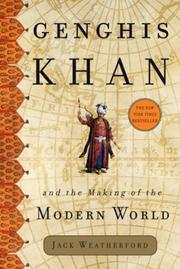
The Mongol Empire was the single greatest unifier of the Silk Road. Weatherford's accessible account shows how Mongol rule created the 'Pax Mongolica' that allowed unprecedented cross-continental movement.
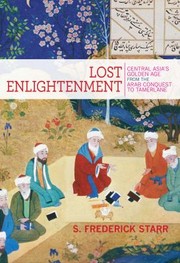
A rich account of Central Asia's golden age of science, philosophy, and commerce — the very heartland of the Silk Road. This book reveals what flourished at the crossroads before it was lost.
Advanced Synthesis & Legacy
ExpertCritically synthesize the Silk Road's long-term legacy — how its patterns of connectivity, competition, and exchange echo in modern geopolitics, globalization, and China's Belt and Road Initiative today.
▸ Study plan for this stage
Pace: 4–5 weeks, ~40–50 pages/day (approximately 280–350 pages total)
- Continuity of Silk Road patterns: how medieval trade networks prefigure modern connectivity and power dynamics
- China's strategic pivot: the Belt and Road Initiative as a deliberate revival of historical Silk Road geopolitics
- Multipolarity and competition: how regional powers (Russia, India, Central Asian states, Middle East) contest control over trade corridors and influence
- Energy and resources as drivers: the role of oil, gas, and minerals in reshaping 21st-century Silk Road routes
- Western decline and Eastern ascendancy: the geopolitical rebalancing away from Atlantic-centric to Asia-centric world order
- Infrastructure as soft power: how ports, railways, and pipelines become instruments of political leverage and dependency
- Fragility and resilience: why modern Silk Road networks remain vulnerable to conflict, climate, and geopolitical rupture
- The digital Silk Road: how technology, data flows, and digital infrastructure extend traditional trade patterns into the information age
- How does Frankopan argue that medieval Silk Road patterns of trade, competition, and cultural exchange directly prefigure modern geopolitical rivalries and connectivity?
- What is the Belt and Road Initiative, and how does Frankopan present it as both a continuation of and departure from historical Silk Road dynamics?
- Which regional powers (Russia, India, Iran, Central Asian states) does Frankopan identify as key competitors in the modern Silk Road, and what are their strategic interests?
- How does Frankopan connect energy resources (oil, gas) and infrastructure development to the reshaping of global power in the 21st century?
- What evidence does Frankopan present for the decline of Western (Atlantic-centric) dominance and the rise of Asia-centric geopolitics?
- How does Frankopan characterize the relationship between infrastructure investment and political influence in the modern Silk Road context?
- Map exercise: Plot the major Belt and Road Initiative corridors (land and maritime) on a physical map, then overlay historical Silk Road routes. Identify overlaps and divergences, and write a 1-page analysis of why certain routes persist across centuries.
- Geopolitical timeline: Create a timeline (1990–present) showing key moments in China's strategic pivot toward the Belt and Road, cross-referenced with Frankopan's narrative. Note when and why Western attention to Asia shifted.
- Regional power brief: Select one regional power Frankopan discusses (Russia, India, Iran, or a Central Asian state). Write a 2–3 page brief on their strategic interests in the modern Silk Road, using Frankopan's analysis as your foundation.
- Energy audit: Trace one major energy corridor (e.g., Central Asian gas to China, Middle Eastern oil through the Indian Ocean) that Frankopan discusses. Map the infrastructure, identify chokepoints, and assess geopolitical vulnerabilities.
- Comparative case study: Choose one historical Silk Road conflict or competition Frankopan mentions, then research a modern parallel. Write a 2–3 page essay on how the underlying dynamics persist despite technological and political change.
- Digital Silk Road exploration: Research and document one example of digital infrastructure (undersea cables, 5G networks, data centers) that extends Frankopan's Silk Road framework into the information age. Present findings in a 1–2 page memo.
Next up: This stage equips you to recognize how historical patterns of connectivity and competition shape contemporary geopolitics, positioning you to evaluate emerging challenges—whether climate-driven resource scarcity, technological disruption, or regional conflict—that will test the resilience of 21st-century Silk Road networks in the future.

Frankopan returns to argue that the ancient routes are being reborn through China's Belt and Road Initiative. Reading this last connects everything learned to the present day, completing the arc from antiquity to now.
Discussion
Keep reading
Paths that share books, cover the same subject, or open a related topic.