Michel Houellebecq Reading Order: Where to Start
Michel Houellebecq has been writing one long complaint since 1994 — that liberal individualism dissolved every bond that made life bearable and left sexual competition in its place — and the novels are variations on it rather than a developing argument. Publication order is roughly right but not essential; what matters is starting with the book that shows the method at full strength, then reading outward. These are English translations, and several carry different titles in Britain and America, so the notes below flag that where it bites.
Start Here
IntermediateMeet the Houellebecq machine — a bleak sociological thesis wrapped in a novel that is also, disconcertingly, funny and sad — and decide whether you can read him at all.
▸ Study plan for this stage
Pace: 2 weeks for The Elementary Particles (320 pages) and Whatever (256). Both are short and read quickly — 40 pages a sitting — but they are exhausting rather than difficult, and most readers want a break between them. Read this stage as a decision: Houellebecq is deliberately provocative about sex, rac
- The thesis he has been restating since 1994: liberal individualism dissolved family, religion and community, and left sexual and economic competition in their place, with predictable winners and losers
- The Elementary Particles runs the argument through two half-brothers — a molecular biologist and a failed hedonist — as a diagnosis of the post-1968 West
- The tone is the difficulty: flat, clinical, sociological prose interrupted by pornographic detail and sudden, genuine pathos
- Published in Britain as Atomised, and it is the correct entry point because everything since is a variation on it
- Whatever is his short debut, about a software consultant on a training trip, and it introduces the idea of a sexual free market with the same logic as an economic one
- Read Whatever second precisely because it is thinner — it shows the skeleton after you have seen the body
- He is funnier than his reputation suggests, and the comedy is part of what makes the bleakness bearable and the provocation harder to dismiss
- State his central thesis in two sentences. It should apply, unchanged, to every book in this path.
- Is The Elementary Particles endorsing its narrator's view of women, or exhibiting it? What in the text decides the question?
- Where does the novel argue sociologically, and where does it simply assert? Find one of each.
- What does Whatever's brevity clarify about the argument that the longer novel obscures?
- Having read both, can you separate the diagnosis from the provocation — and does he want you to?
- Mark every passage of explicit sociological generalisation and read them as a sequence. They constitute an essay embedded in the novel.
- Write down the strongest objection to the book, then find the passage that most supports it. Do not skip this if you intend to continue.
- Note the moments of unguarded tenderness in The Elementary Particles. There are more than his reputation allows and they are load-bearing.
- Decide now whether to continue, and write one sentence on why. It is a reasonable place to stop.
Next up: With the thesis established, the next three novels push it into sex tourism, cloning and the art market, and are where the prose is most controlled.
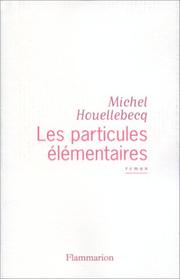
Two half-brothers, one a molecular biologist and one a failed hedonist, as a diagnosis of the post-1968 West. Published in Britain as Atomised; it is the same novel and it is the correct entry point, because everything he has written since is a rewrite of it.
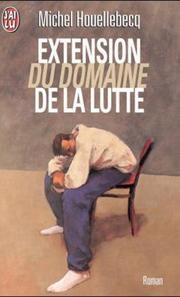
His short debut, about a software consultant on a training trip, and the book that introduced his idea of a sexual free market. Read it second precisely because it is thinner: it shows you the skeleton after you have seen the body.
The Major Novels
IntermediateRead the three books where he pushes the thesis into sex tourism, cloning and the art market, and where the prose is at its most controlled.
▸ Study plan for this stage
Pace: 4 weeks for Platform, The Possibility of an Island (423 pages) and The Map and the Territory (291). Read The Map and the Territory last — it is the warmest and works as relief. A practical note: Platform is catalogued here under an odd edition title carrying the word Proof; it is the 2002 novel, not
- Platform follows a civil servant and a travel executive who build a sex-tourism business, and ends in a terrorist attack — published a year before the Bali bombings, which made its reception impossible to separate from events
- It is the most provocative of the novels and the one that made him a defendant; its treatment of Islam and of Thai sex work is where the strongest objections to his work concentrate
- The Possibility of an Island intercuts a comedian's life with commentaries by his cloned successors thousands of years later — his most formally ambitious book and the fullest version of the escape route he keeps proposing
- The cloning material is the clearest statement of what he actually wants: an exit from desire and ageing rather than a reform of society
- The Map and the Territory follows an artist's career, the French art market and the gruesome murder of a novelist named Michel Houellebecq — the Goncourt winner and the best evidence he can write about something other than himself
- Across all three the prose is at its most controlled: the sociology tightens, the sentimentality is rationed, and the endings are less rhetorical
- The self-insertion in The Map and the Territory is a joke about his own public persona and worth reading as commentary on the reception of Platform
- What is Platform actually arguing about sex tourism, and does the novel take a position or perform one?
- How does the novel's ending read now, knowing what followed its publication?
- In The Possibility of an Island, what have the clones lost, and does the book think the trade was worth it?
- Why is The Map and the Territory so much gentler? What changed — the writer or the subject?
- What is the self-portrait in The Map and the Territory doing, beyond the joke?
- List what each novel proposes as an escape from the condition it diagnoses. The list is short and it repeats.
- Compare the treatment of a woman character in Platform with one in The Map and the Territory. The difference is the strongest internal argument about his development.
- Read a hostile critical account of Platform alongside the book and mark which objections the novel anticipates.
- Summarise the clone sections of The Possibility of an Island separately from the human ones; they read as a different book and are meant to.
Next up: The next two novels are the ones that made him a figure in European politics rather than only in literature.

A civil servant and a travel executive build a sex-tourism business, and the novel ends in a terrorist attack it published a year before Bali. The most provocative of his books and the one that made him a defendant.

A comedian's life intercut with the commentaries of his cloned successors thousands of years later. His most formally ambitious novel and the fullest version of the escape route he keeps proposing.

An artist's career, the French art market, and the gruesome murder of a novelist called Michel Houellebecq. The Goncourt winner, the warmest book he has written, and the best argument that he can write about something other than himself.
The Political Novels
IntermediateRead the two late novels that made him a figure in European politics rather than only in literature, and form a view on the charge of provocation for its own sake.
▸ Study plan for this stage
Pace: 3 weeks for Submission and Serotonin. Both are short novels and read in a few sittings each. Read Submission first — it is the more discussed and Serotonin is partly a retreat from it.
- Submission imagines a Muslim Brotherhood presidency in France in 2022 and a Sorbonne academic's accommodation to it; it was published on the morning of the Charlie Hebdo attack
- The novel is best read as a book about the exhaustion of secular liberalism rather than as the anti-Islam polemic it was received as — but the reception is a fact about the book and the reader should engage with both readings
- Its narrator converts for careerist and sexual reasons, which is the satire's real target; whether that satire lands or merely licenses the prejudice is the live critical question
- Serotonin follows an agricultural engineer on antidepressants through a farmers' revolt that anticipated the gilets jaunes protests by months
- Serotonin is quieter and, for many readers, the sadder book: the political material recedes and what remains is a man narrating his own disappearance
- The two together are where the charge of provocation for its own sake is most testable — one novel courts a national argument, the other declines to
- Both books are prophetic in ways that are partly luck and partly the result of writing about currents nobody else in French literary fiction was tracking
- What is Submission satirising: Islam, the French academy, or French secularism? Argue from specific scenes.
- How much of the novel's meaning is supplied by the date of its publication?
- Is the narrator's conversion credible as a psychological event, or is it purely a device?
- What does Serotonin's retreat from politics reveal about what he is actually interested in?
- Is the charge of provocation for its own sake fair after reading both? Answer with evidence rather than temperament.
- Read the French reception history of Submission alongside the novel. The gap between the book and its reception is instructive.
- List the political claims Submission makes explicitly versus those readers supply. The list is shorter than expected.
- Compare the depression in Serotonin with the anhedonia in Whatever twenty-five years earlier. Very little has changed and that consistency is the point.
- Write your own verdict on whether the provocation is integral to the argument or detachable from it.
Next up: The final stage is the late novel that surprised his readers by being about care rather than contempt.

A Sorbonne academic under a Muslim Brotherhood presidency in 2022 France, published on the morning of the Charlie Hebdo attack. Read it as a novel about the exhaustion of secular liberalism rather than the polemic it was received as.

An agricultural engineer on antidepressants, and a farmers' revolt that anticipated the gilets jaunes. Quieter than Submission and, for many readers, the more genuinely sad book.
The Tail
IntermediateFill in the essay on Lovecraft that explains his whole aesthetic, and the late novel that surprised people by being about care rather than contempt.
▸ Study plan for this stage
Pace: 3–4 weeks for Annihilation (544 pages) — much longer than anything else on this path and much slower. Do not treat it as a quick coda; 30 pages a day. His early essay on Lovecraft, which is the best short key to his aesthetic, is not currently in our catalogue and would have to be sourced separately
- Annihilation, published in French as Anéantir in 2022, follows a political adviser through a near-future French election, a father's stroke, and a marriage that repairs itself
- The repair of the marriage is the departure: after thirty years of novels about the impossibility of intimacy, this one takes care seriously as an answer rather than as a consolation
- The book is a genuine hybrid — political thriller, family novel, illness narrative — and the thriller strand is deliberately left unresolved, which frustrates many readers
- Illness and the hospital take up more space than politics; the late Houellebecq subject is the body's decline rather than sexual competition
- The shift is only visible as a departure if you have read the earlier books, which is why this is placed last rather than first
- It is his longest novel and among his most conventionally written, which is itself an argument about where he ended up
- What is different about the marriage in Annihilation compared with every earlier relationship in his fiction?
- Why leave the political thriller strand unresolved? Is it a failure of structure or a statement about what matters?
- Does the late tenderness invalidate the earlier bleakness, or complete it?
- How does the treatment of illness and care compare with the treatment of sex in the earlier novels — which gets the more precise prose?
- Having read the shelf, what is Houellebecq's actual subject? Answer without using the words nihilism or provocation.
- Reread the final pages of The Elementary Particles and then those of Annihilation. Twenty-four years apart, they are answering each other.
- Track how many pages Annihilation spends on politics versus on the hospital. The ratio is the book's argument.
- Write one paragraph on whether the earlier provocations should change how this book is read.
- Rank the novels and note whether your ranking follows quality or agreement. Separating the two is the whole discipline of reading him.
Next up: This closes the path; readers wanting French fiction with the same historical weight and none of the provocation should go next to Patrick Modiano.

A late, long novel about a political adviser, a father's stroke and a marriage repairing itself. Notably gentler than everything above, which is only visible as a departure if you have read the rest first.
Discussion
Keep reading
Paths that share books, cover the same subject, or open a related topic.