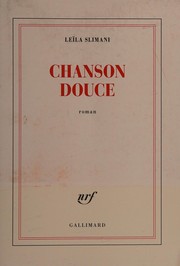
Start with Hervé Le Tellier's The Anomaly. It is a recent winner, it is a genuine page-turner built on a science-fiction premise, and it will not make you feel that reading French fiction is homework. If you want something shorter and sharper, Leïla Slimani's The Perfect Nanny does the same job in half the pages.
The book most people reach for first is the Proust, and it is the one to leave until last. In the Shadow of Young Girls in Flower won in 1919, and it is the second volume of a seven-volume novel — starting a reading list with it means starting in the middle of something enormous.
What the prize actually is
The Goncourt has been awarded since 1903 by a jury of ten writers who meet over lunch at Drouant in Paris. The prize money is symbolic — ten euros, and winners traditionally frame the cheque rather than cash it — but the sales are not: a Goncourt reliably sells in the hundreds of thousands.
Two rules shape the list. An author may win only once, which is why several major French novelists appear on it exactly one time and why the prize keeps discovering new writers. And that rule produced the prize's most famous scandal: Romain Gary won in 1956 for The Roots of Heaven, then won again in 1975 for The life before us under the invented name Émile Ajar, complete with a cousin recruited to play Ajar in public. The jury only learned it had broken its own rule after Gary's death. Both books are on this path, and reading them in sequence is the best way to see what he was doing.
The core run
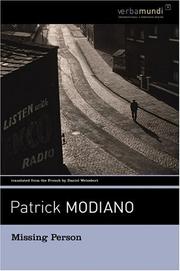
Patrick Modiano's Missing person is the entry point to a writer who later won the Nobel, and it is characteristic — a detective with no memory investigating his own identity in an Occupation-haunted Paris. Michel Houellebecq's Map and the Territory is the most approachable book by France's most argued-about living novelist. Pierre Lemaitre's The great swindle is a First World War novel that reads like a thriller.
Then the mid-century heavyweights. André Malraux's Man's fate is a novel of the 1927 Shanghai uprising written by a man who kept insisting he had been there. Simone de Beauvoir's THE MANDARINS A NOVEL — the catalogue record shouts, the book is published as The Mandarins — is a roman à clef about Sartre's circle after the Liberation.
The difficult end
André Schwarz-Bart's Last of the Just traces a Jewish family across eight centuries to Auschwitz. Michel Tournier's The ogre is a strange, mythic novel about a French prisoner of war who becomes a recruiter for a Nazi military academy, and it is deliberately uncomfortable about what it makes its reader feel.
Jonathan Littell's The kindly ones is the hardest thing here by a wide margin: nearly a thousand pages narrated by an unrepentant former SS officer. It won in 2006 and it divided French critics sharply — some called it a major novel about how ordinary men participate in atrocity, others called it pornographic. Both readings have serious people behind them. Do not start here, and do not feel obliged to finish.
Where to stop
Stopping after Lemaitre gives you a real sense of the prize's modern range. The mid-century books are for readers who want the France that the twentieth century made. Littell and Proust are for the committed.
One practical note: several of these carry more than one English title, and translations vary a great deal in quality. Check the translator before you buy.
Follow the full ordered path here: The Prix Goncourt: The Best French Novels to Read, in Order.
Ready to learn something deeply?
Build a reading path — free