Existentialism: a reading path that makes sense
This curriculum moves from accessible overviews to the primary existentialist texts themselves, building vocabulary and historical context before diving into the original thinkers. Each stage deepens the philosophical demands: you first learn the landscape, then meet the founders, then grapple with the mature existentialist tradition in its full complexity around freedom, absurdity, and authenticity.
Orientation: The Big Picture
BeginnerUnderstand what existentialism is, where it came from, and who its key figures are — before reading a single primary text.
▸ Study plan for this stage
Pace: 6–8 weeks total: Weeks 1–4 for "At the Existentialist Café" (~25–30 pages/day, reading leisurely and journaling as you go); Weeks 5–8 for "Existentialism" by Flynn (~15–20 pages/day, slower pace to absorb the denser philosophical overview and take structured notes).
- Existence precedes essence — the foundational existentialist reversal of classical metaphysics, introduced through Bakewell's narrative of Sartre's famous apricot cocktail moment and systematized in Flynn's overview
- Phenomenology as the method — understanding how Husserl's 'to the things themselves' and Heidegger's lived experience form the philosophical toolkit existentialists inherited, as traced in both books
- Thrownness and facticity — Heidegger's idea (explained accessibly in Bakewell, mapped philosophically in Flynn) that we find ourselves already 'thrown' into a world we did not choose
- Radical freedom and responsibility — Sartre's claim that humans are 'condemned to be free,' with no pre-given nature to excuse their choices, a thread woven through Bakewell's portraits and Flynn's thematic chapters
- Authenticity vs. bad faith — the ethical core of existentialism: living honestly in the face of freedom versus fleeing into self-deception, illustrated through the real lives in Bakewell and defined rigorously in Flynn
- Anxiety and the absurd — Kierkegaard's dread, Heidegger's anxiety, and Camus's absurd as distinct but related responses to the human condition, surveyed in Flynn and brought to life in Bakewell's biographical sketches
- The key figures and their relationships — Kierkegaard, Nietzsche, Husserl, Heidegger, Sartre, de Beauvoir, Merleau-Ponty, and Camus as a connected intellectual community, mapped vividly in Bakewell's café-world narrative
- Existentialism's historical moment — how WWII, occupation, resistance, and postwar disillusionment shaped the movement's urgency, a context Bakewell embeds in biography and Flynn frames philosophically
- In your own words, what does 'existence precedes essence' mean, and why is it a radical departure from earlier Western philosophy? Use at least one example from Bakewell's narrative to illustrate.
- Who were the major existentialist thinkers, and how did their personal and intellectual relationships — as portrayed in 'At the Existentialist Café' — shape the development of the movement?
- What is phenomenology, and why does Flynn argue it is the indispensable philosophical foundation for existentialism? How does Bakewell show this inheritance playing out in practice?
- What distinguishes 'authenticity' from 'bad faith' in existentialist thought? Can you give one example of each drawn from the biographical episodes in Bakewell?
- How do Kierkegaard's 'anxiety,' Heidegger's 'thrownness,' and Camus's 'absurd' each diagnose the human condition differently, as outlined in Flynn's thematic overview?
- What historical and cultural conditions — as described across both books — made Paris in the 1940s–50s the epicenter of existentialism, and why did the movement eventually fade from dominance?
- Create a 'cast of characters' reference sheet: after finishing Bakewell, draw a relationship map of the key figures (Sartre, de Beauvoir, Heidegger, Camus, Merleau-Ponty, Kierkegaard, Nietzsche, Husserl), noting one core idea and one biographical fact for each — keep it visible throughout the rest of the curriculum.
- Concept translation journal: each time Bakewell narrates a biographical episode (e.g., the apricot cocktail, Sartre in the POW camp, de Beauvoir's independence), write 2–3 sentences translating the story into the philosophical concept it illustrates, then check your translation against Flynn's definitions.
- Flynn glossary build: as you read 'Existentialism' by Flynn, maintain a running glossary of technical terms (facticity, thrownness, bad faith, the Other, the absurd, etc.) in your own words — aim for definitions a curious friend with no philosophy background could understand.
- 'Existence precedes essence' stress-test: choose three everyday objects or roles (e.g., a hammer, a teacher, a smartphone) and write a short paragraph for each asking — does this thing have its essence before its existence, or after? Then apply the same question to a human being and note where the logic breaks down or transforms.
- Thinker comparison table: using Flynn's thematic structure as a guide, build a simple table with rows for Kierkegaard, Heidegger, Sartre, de Beauvoir, and Camus, and columns for 'core problem,' 'key concept,' 'proposed response,' and 'one Flynn page reference' — this becomes a revision tool for the whole curriculum.
- Reflective letter: after completing both books, write a one-page informal letter to a friend explaining what existentialism is, why it emerged when it did, and which idea you find most personally compelling or troubling — this synthesizes orientation-level understanding before moving into primary texts.
Next up: Having built a vivid mental map of existentialism's cast, context, and core vocabulary through Bakewell's narrative and Flynn's conceptual overview, the reader is now equipped to encounter the primary texts — Sartre, de Beauvoir, Heidegger, or Camus — on their own terms, recognizing the ideas and stakes without being blindsided by unfamiliar terminology or historical context.
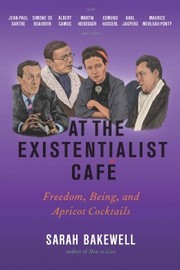
A narrative-driven, highly readable introduction that weaves biography and ideas together, covering Husserl, Heidegger, Sartre, de Beauvoir, and Camus. It gives you the human story behind the philosophy, making the abstract feel concrete from the very start.

A compact, rigorous primer that maps the core concepts — facticity, transcendence, bad faith, the absurd — in plain language. Reading this after Bakewell converts the narrative into a clear conceptual framework you can carry into harder texts.
The Founders: Kierkegaard and Nietzsche
BeginnerGrasp the 19th-century roots of existentialism — the primacy of the individual, the critique of rationalism, and the problem of how to live — through the two thinkers who made it possible.
▸ Study plan for this stage
Pace: 8–10 weeks total: Weeks 1–5 for Either/Or (~25–30 pages/day, reading both Volume I and Volume II); Weeks 6–10 for Thus Spoke Zarathustra (~15–20 pages/day, reading slowly and re-reading dense passages — Zarathustra rewards rereading over speed).
- The Aesthetic Stage of Existence (Either/Or, Vol. I): life lived for pleasure, sensation, and ironic detachment — embodied by the unnamed 'A' and his Diary of a Seducer
- The Ethical Stage of Existence (Either/Or, Vol. II): life structured by duty, commitment, and self-chosen moral responsibility — embodied by Judge Wilhelm's letters
- The Either/Or Choice itself: Kierkegaard's argument that authentic selfhood requires a radical, non-rational leap of commitment rather than endless aesthetic deferral
- Subjectivity and the Individual: Kierkegaard's foundational claim that truth is not an abstract system but is lived personally — 'subjectivity is truth'
- The Death of God (Zarathustra, Prologue): Nietzsche's diagnosis that the collapse of traditional Christian-moral values has left a dangerous cultural vacuum
- The Übermensch (Overman) as an aspirational ideal: the individual who creates new values rather than inheriting or fleeing from old ones
- Eternal Recurrence: the thought-experiment asking whether you could will your life to repeat infinitely — used as a test of life-affirmation
- Will to Power as self-overcoming: not domination of others, but the drive to master oneself, grow, and create meaning in a world without given purpose
- In Either/Or, what distinguishes the aesthetic life from the ethical life, and why does Kierkegaard present them as a forced choice rather than a comfortable synthesis?
- How does the 'Diary of a Seducer' in Volume I function as a critique — what does the seducer's calculated pursuit of experience reveal about the ultimate emptiness of the purely aesthetic mode?
- Judge Wilhelm argues in Volume II that choosing oneself ethically is an act of freedom. What does he mean, and how does this anticipate later existentialist ideas about radical self-creation?
- What does Nietzsche mean when Zarathustra announces that 'God is dead,' and why does he treat this as a crisis for humanity rather than a simple liberation?
- How does the doctrine of Eternal Recurrence function in Thus Spoke Zarathustra — is it a cosmological claim, a psychological test, or both? What is it meant to reveal about how you are living?
- In what ways do Kierkegaard and Nietzsche agree about the inadequacy of purely rational or conventional life, and where do they most sharply diverge — particularly on the role of faith versus self-creation?
- Aesthetic vs. Ethical Audit: After finishing Either/Or, write a one-page personal inventory. List three areas of your own life where you recognize the aesthetic mode (deferral, irony, pleasure-seeking) and three where you recognize the ethical mode (commitment, responsibility). Reflect honestly on which dominates.
- Voice Comparison Journal: Either/Or is written in two distinct voices ('A' and Judge Wilhelm). As you read, keep a running log of at least five stylistic or tonal differences between them. Then write a paragraph arguing which voice Kierkegaard himself finds more sympathetic — and why.
- Zarathustra's Speeches Précis: Thus Spoke Zarathustra is structured as a series of speeches and parables. Choose five chapters (e.g., 'On the Three Metamorphoses,' 'On the Tarantulas,' 'The Convalescent') and write a 3–5 sentence plain-language summary of each, stripping away the poetic language to expose the core philosophical argument.
- The Eternal Recurrence Thought Experiment: Sit quietly for 15 minutes and seriously apply Nietzsche's test to your own life: if you had to live your current life — every choice, every habit, every relationship — on infinite repeat, would you affirm it or recoil? Write a candid half-page response. This is not an essay; it is a personal reckoning.
- Dialogue Across the Century: Write a one-page imagined dialogue between Kierkegaard's Judge Wilhelm and Nietzsche's Zarathustra on this single question: 'What does it mean to live well?' Force each character to use ideas and language faithful to their respective books.
- Concept Map: Draw a visual map connecting the following terms with labeled arrows showing how they relate: Aesthetic Stage → Ethical Stage → The Leap; Death of God → Nihilism → Übermensch → Eternal Recurrence → Will to Power. Annotate each arrow with one sentence explaining the logical connection.
Next up: By internalizing Kierkegaard's demand for authentic individual commitment and Nietzsche's challenge to create values in a world stripped of absolutes, the reader has established the core existential problem — how does the individual live with freedom and without guarantees — that the 20th-century existentialists (Heidegger, Sartre, Camus, and de Beauvoir) will take up, radicalize, and answer in th
Kierkegaard's foundational exploration of the aesthetic versus the ethical life introduces the idea that existence is a personal, unchosen burden of choice. Starting with Part II (the ethical letters) is recommended to anchor the contrast before circling back.

Nietzsche's proclamation of the death of God and the challenge of self-overcoming directly seeds Sartre's radical freedom and Camus's absurdism. Its literary form makes it more accessible than Nietzsche's later works while delivering the essential provocation.
The Heart of Existentialism: Sartre and de Beauvoir
IntermediateMaster the core existentialist doctrines — existence precedes essence, radical freedom, bad faith, and the ethics of authenticity — through the movement's two central figures.
▸ Study plan for this stage
Pace: 6–8 weeks total: Week 1 — "Existentialism Is a Humanism" (short text, ~60 pages; read in 2–3 sittings, re-read key passages); Weeks 2–4 — "Nausea" (~180 pages; ~20 pages/day, journaling as you go); Weeks 5–8 — "The Ethics of Ambiguity" (~160 pages; ~15 pages/day with slower, more analytical reading
- Existence precedes essence: human beings have no pre-given nature or purpose — we define ourselves through choices and actions, as Sartre argues directly in 'Existentialism Is a Humanism'
- Radical freedom and responsibility: we are 'condemned to be free'; every choice is an act of self-creation and carries total moral responsibility for oneself and, implicitly, for all humanity
- Bad faith (mauvaise foi): the self-deception by which people deny their own freedom — pretending they are determined by roles, nature, or circumstance — illustrated viscerally through Roquentin's crisis in 'Nausea'
- Contingency and the absurd: Roquentin's nausea in the face of brute, unjustified existence reveals that the world has no inherent meaning or necessity — a lived complement to Sartre's lecture
- Authenticity: the ongoing, effortful commitment to owning one's freedom and choices rather than fleeing into bad faith or the comfort of the 'serious world'
- The ambiguity of the human condition: de Beauvoir's central insight in 'The Ethics of Ambiguity' — we are simultaneously free subjects and situated, finite beings; ethics must begin by embracing, not resolving, this tension
- The ethics of freedom: de Beauvoir's argument that genuine freedom cannot be pursued in isolation — to will one's own freedom authentically is to will the freedom of others, grounding a social and political ethics
- Oppression and the serious man: de Beauvoir's typology of inauthentic attitudes (the sub-man, the serious man, the nihilist, the adventurer) as failures to live the ambiguity, and her analysis of how oppression structurally prevents authentic existence
- According to Sartre in 'Existentialism Is a Humanism,' what does 'existence precedes essence' mean, and why does it make humans fully responsible for what they are?
- How does Roquentin's experience of the chestnut tree root in 'Nausea' function as a philosophical demonstration of contingency — and how does this lived encounter relate to the abstract arguments in 'Existentialism Is a Humanism'?
- What is bad faith, and can you identify at least two concrete examples — one from Sartre's lecture and one from Roquentin's behavior or self-reflection in 'Nausea'?
- Where does de Beauvoir agree with Sartre's framework in 'The Ethics of Ambiguity,' and where does she meaningfully extend or correct it — particularly on the relationship between individual freedom and the freedom of others?
- How does de Beauvoir's concept of 'the serious world' relate to Sartre's concept of bad faith, and why does she treat it as an ethical — not merely psychological — failure?
- According to de Beauvoir, why is it impossible to be free alone, and what obligations does this place on the authentic person toward the oppressed?
- 'Existence precedes essence' self-audit: Before starting 'Existentialism Is a Humanism,' write a one-page description of who you are using only roles, traits, and labels (student, introvert, etc.). After finishing the book, rewrite it using only choices and actions. Compare the two drafts and reflect on what shifted.
- Nausea reading journal: Each reading session with 'Nausea,' write 2–3 sentences in Roquentin's voice about something mundane in your own day — a coffee cup, a commute, a face in a mirror — trying to strip it of familiar meaning. This builds intuition for contingency and the phenomenology of the absurd.
- Bad faith field notes: Over one week during the 'Nausea' reading, keep a small notebook. Each day, record one moment — in yourself or someone around you — that looks like bad faith (denying a choice by calling it necessity, hiding behind a role). At the end of the week, write a paragraph analyzing the best example using Sartre's vocabulary.
- De Beauvoir typology mapping: After finishing Part II of 'The Ethics of Ambiguity' (the character typologies), choose a public figure, a literary character, or someone from history and write a 300-word analysis arguing which of de Beauvoir's types (sub-man, serious man, nihilist, adventurer, or genuine freedom) best describes them and why.
- Sartre–de Beauvoir dialogue essay: Write a 500-word imagined dialogue or comparative essay in which Sartre (drawing on 'Existentialism Is a Humanism') and de Beauvoir (drawing on 'The Ethics of Ambiguity') debate this question: 'Can a person be authentic in isolation?' Force each thinker to respond to the other's strongest point.
- Authentic choice reflection: Identify one real decision you are currently facing. Write a one-page analysis applying de Beauvoir's ethics: What would the 'serious man' response look like? What would bad faith look like? What would a genuinely authentic, freedom-affirming choice require of you — including with respect to others affected by the decision?
Next up: Mastering Sartre's and de Beauvoir's core doctrines — especially the problem of freedom-in-situation and the social dimension of authenticity — equips the reader to engage the broader existentialist conversation, including the movement's confrontations with phenomenology, Marxism, colonialism, and religion explored by thinkers who pushed these ideas into new and contested territory.
Sartre's 1945 public lecture is the single clearest statement of existentialist doctrine: existence precedes essence, we are condemned to be free, and we are fully responsible for what we make of ourselves. Its brevity makes it the perfect entry point to Sartre before tackling his longer work.

This novel dramatizes the existentialist experience of confronting raw, contingent existence without meaning — the philosophical ideas become viscerally felt rather than merely understood. Reading it after the lecture lets you see the doctrine lived from the inside.

De Beauvoir takes Sartre's framework and asks the question he largely avoided: how do we act ethically given radical freedom? This book is essential for understanding how existentialism becomes a social and political philosophy, not just a personal one.
The Absurd: Camus
IntermediateUnderstand the absurdist branch of existentialism — the confrontation between human longing for meaning and the universe's silence — and how Camus argues we must respond to it.
▸ Study plan for this stage
Pace: 4–5 weeks total. Week 1–2: Read "The Stranger" section of the Coles Notes (~20–25 pages/day), pausing to re-read key passages about Meursault's detachment and the trial. Week 3: Read "The Plague" section of the Coles Notes (~20 pages/day), focusing on collective vs. individual responses to suffering
- The Absurd: the irreconcilable clash between humanity's hunger for clarity and meaning and the universe's total, indifferent silence
- Absurd Revolt: Camus's imperative to live in full, defiant awareness of the absurd rather than escaping it through suicide or philosophical 'leap of faith'
- The Three Responses to the Absurd — physical suicide, philosophical suicide (e.g., religious or ideological escape), and revolt — and why Camus rejects the first two
- Meursault as Absurd Hero: his radical emotional detachment, refusal to perform social grief, and authentic indifference as an embodiment of absurdist consciousness
- The Plague as Allegory: the epidemic as a stand-in for any collective, impersonal evil (fascism, death, fate) and the characters' varying moral responses to it
- Solidarity vs. Isolation: how The Plague shifts the absurdist lens from the lone individual (Meursault) to communal human bonds forged in the face of meaningless suffering
- The Myth of Sisyphus as Paradigm: Sisyphus's eternal, futile labor reframed as a model of joyful, conscious revolt — 'one must imagine Sisyphus happy'
- Philosophical Suicide Critique: Camus's direct challenge to existentialists like Kierkegaard and Jaspers who resolve the absurd by leaping into transcendence or faith
- What exactly does Camus mean by 'the Absurd,' and why does he insist it only exists in the relationship between human beings and the world — not in either alone?
- Why does Camus reject both physical suicide and 'philosophical suicide' as responses to the absurd, and what distinguishes 'revolt' from mere resignation or despair?
- How does Meursault's behavior throughout The Stranger — particularly his reaction to his mother's death and his conduct at trial — illustrate the absurdist condition, and why does Camus consider him a hero rather than a villain?
- In The Plague, how do the different characters (e.g., Rieux, Tarrou, Paneloux) represent different philosophical stances toward collective suffering, and what does Camus ultimately endorse?
- What is the significance of the Sisyphus myth specifically? Why does Camus choose a figure condemned to eternal, pointless labor as the symbol of the ideal human response to the absurd?
- How does 'The Myth of Sisyphus' engage with and critique other existentialist and religious thinkers, and what makes Camus's position distinct from a straightforward existentialism?
- **Absurd Audit Journal:** For one week, keep a daily log of moments where you personally felt the gap between your desire for meaning and the world's indifference — a bureaucratic frustration, a random misfortune, a social ritual that felt hollow. At the end of the week, write a paragraph on whether Camus's diagnosis feels accurate to lived experience.
- **Meursault Defense Brief:** Write a 1–2 page argument defending Meursault at his trial — not by denying the facts, but by using Camus's absurdist framework to challenge the court's real accusation (that he failed to grieve 'correctly'). This forces you to translate abstract philosophy into concrete moral reasoning.
- **Three-Column Response Chart:** Draw a table with three columns — Physical Suicide / Philosophical Suicide / Revolt. As you read The Myth of Sisyphus, populate each column with Camus's specific arguments for and against each position, plus one real-world example of each you can think of. This builds a precise map of his core argument.
- **Plague Character Philosophy Cards:** Create a one-page 'philosophy card' for at least three characters from The Plague (as covered in the Coles Notes). For each, summarize their worldview, how they respond to the epidemic, and whether Camus seems to endorse, critique, or complicate their stance.
- **Rewrite the Last Page:** After finishing The Myth of Sisyphus, write your own one-paragraph ending to the Sisyphus essay — either agreeing with Camus that 'one must imagine Sisyphus happy,' or arguing for a different conclusion. Then write a second paragraph explaining what in the text you are accepting or pushing back against.
- **Socratic Dialogue:** Find a study partner (or write both sides yourself) and stage a short dialogue between Meursault from The Stranger and Dr. Rieux from The Plague. What would they agree on? Where would their absurdist stances diverge? This synthesizes both books and tests whether you can distinguish individual vs. collective absurdism.
Next up: By mastering Camus's absurdist revolt — the idea that we must create meaning defiantly in the face of a silent universe — the reader is primed to encounter Sartre's existentialism, which takes the next logical step: if there is no given meaning, then radical human freedom and the anguish of total responsibility become the central philosophical problems.
Camus's novel embodies the absurd condition through Meursault, a man who refuses to perform the meanings society demands. Reading the fiction first makes the philosophical argument that follows feel earned and necessary.
Camus's philosophical essay defines the absurd, rejects both suicide and religious 'leap of faith' as responses, and argues for revolt, freedom, and passion. It is the essential counterpoint to Sartre and rounds out the existentialist tradition.
The Depth: Heidegger and Sartre's Masterwork
ExpertEngage with the full philosophical rigor of existentialism at its most demanding — Heidegger's analysis of Being and Sartre's systematic ontology — to achieve a genuinely deep, technical understanding.
▸ Study plan for this stage
Pace: 16–20 weeks total. Weeks 1–10: Being and Time (~20–25 pages/day, 4–5 days/week, allowing extra days for re-reading dense divisions). Weeks 11–20: Being and Nothingness (~20–25 pages/day, 4–5 days/week). Budget at least one full "consolidation week" between the two books to write summaries and review
- Dasein and Being-in-the-World (Heidegger): the idea that human existence is always already embedded in a world of practical concern, not a detached Cartesian subject
- Thrownness, Fallenness, and Projection (Heidegger): the three existential structures showing that Dasein finds itself in a situation it did not choose, tends toward inauthenticity, and is always projecting toward possibilities
- Authenticity and the Call of Conscience (Heidegger): how Dasein can own its existence by heeding the silent call that pulls it back from das Man (the 'they-self')
- Being-toward-Death (Heidegger): death as Dasein's ownmost, non-relational, certain, and indefinite possibility that individualizes and discloses authentic existence
- Temporality as the Horizon of Being (Heidegger): the ecstatic unity of past (having-been), present (making-present), and future (anticipation) as the ontological ground of Dasein's care structure
- The In-itself (être-en-soi) vs. the For-itself (être-pour-soi) (Sartre): the foundational ontological distinction between brute, self-identical being and the nihilating, self-distancing consciousness that is never what it is
- Bad Faith (mauvaise foi) (Sartre): the self-deceptive strategy by which the for-itself denies its own freedom by pretending to be a fixed, thing-like in-itself
- Radical Freedom and Responsibility (Sartre): the claim in Being and Nothingness that consciousness is condemned to be free — every situation is one in which the for-itself chooses, and there is no escape from that responsibility
- The Look and Being-for-Others (Sartre): how the Other's gaze objectifies the for-itself, introducing a third ontological dimension (être-pour-autrui) and generating shame, pride, and conflict
- Nothingness and Negation (Sartre): how the for-itself introduces nothingness into being through questioning, doubt, and the nihilating power of consciousness itself
- How does Heidegger's concept of Dasein differ from the traditional philosophical notion of a 'subject' or 'mind,' and why does this distinction matter for his analysis of Being?
- What is the relationship between authenticity, Being-toward-Death, and temporality in Being and Time — how do these three structures mutually support each other?
- How does Sartre's distinction between the in-itself and the for-itself map onto (and diverge from) Heidegger's ontology of Dasein and Being?
- What exactly is bad faith in Being and Nothingness, and why does Sartre insist it is not simply lying to oneself — what makes it a unique philosophical problem?
- How does Sartre's account of 'the Look' and Being-for-Others challenge or extend Heidegger's treatment of Mitsein (Being-with) in Being and Time?
- Both Heidegger and Sartre treat human existence as fundamentally characterized by a kind of 'lack' or 'not-yet' — how do their respective accounts of this negativity compare, and what are the key points of agreement and divergence?
- Terminology Glossary: After each major division of both books, build a running personal glossary. For every technical term (e.g., 'ready-to-hand,' 'thrownness,' 'nihilation,' 'facticity'), write the definition in your own words, a one-sentence example from everyday life, and the page reference. This forces active encoding of the dense vocabulary.
- Structural Outline Mapping: Draw a one-page diagram of the overall argument structure of each book — showing how the major divisions build on each other (e.g., in Being and Time: Division I's existential analytic → Division II's authenticity and temporality; in Being and Nothingness: Introduction's ontological proof → Part One's bad faith → Part Three's Others → Part Four's freedom). Redraw it fro
- Comparative Concept Matrix: Create a two-column table with Heidegger's key concepts on the left and Sartre's closest counterparts on the right (e.g., Dasein / for-itself; thrownness / facticity; das Man / spirit of seriousness; Being-toward-Death / anguish). For each row, write 2–3 sentences on where the concepts align and where they fundamentally diverge.
- Socratic Self-Interrogation Journal: After finishing each major part of both books, write a 1–2 page journal entry in which you apply the philosopher's framework to a concrete situation in your own life (e.g., a moment of inauthenticity, an experience of 'the Look,' a choice made in bad faith). Then critique the framework: where does it illuminate, and where does it strain?
- Close-Reading Passage Analysis: Select three passages of 1–2 pages each from Being and Time (e.g., the tool-analysis in §15, the conscience section in §54–58, the temporality summary in §65) and three from Being and Nothingness (e.g., the waiter in bad faith, the keyhole scene on shame, the conclusion on radical freedom). Write a dense paragraph-by-paragraph paraphrase of each, then a paragraph ev
- Debate Preparation: Write a 500-word position paper arguing that Sartre's account of freedom is more philosophically defensible than Heidegger's account of authenticity — then write a 500-word rebuttal from the Heideggerian side. This forces you to hold both frameworks simultaneously and stress-test your understanding of each.
Next up: Mastering the technical ontological frameworks of Heidegger and Sartre equips the reader to critically evaluate how later existentialist and post-existentialist thinkers — such as Merleau-Ponty, Beauvoir, Camus, and the existentialist ethics tradition — either extend, apply, or push back against these foundational systems.
Heidegger's analysis of Dasein, thrownness, authenticity, and Being-toward-death is the philosophical bedrock beneath almost everything Sartre and de Beauvoir wrote. It is difficult, but all prior stages have built the vocabulary to make it navigable.

Sartre's magnum opus — a systematic phenomenological ontology of consciousness, freedom, and the Other — is the summit of the existentialist tradition. Having read all prior books, you now have the full context to appreciate both its brilliance and its debts.
Discussion
Keep reading
Paths that share books, cover the same subject, or open a related topic.