The Inca Empire: essential books on the Andes' greatest civilization
This curriculum takes the reader from a vivid narrative introduction to the Inca world all the way through rigorous academic scholarship on Andean society, imperial statecraft, and the catastrophe of the Spanish conquest. Each stage builds vocabulary, historical context, and analytical depth so that later, denser works feel accessible rather than overwhelming.
First Foundations: The Inca World Comes Alive
BeginnerGain a compelling, accessible overview of Inca civilization — its origins, society, sacred geography, and ultimate destruction — so that all later reading has a strong narrative backbone.
▸ Study plan for this stage
Pace: 6–7 weeks, ~40–50 pages/day (approximately 3–4 hours of reading per day). Start with "Turn Right at Machu Picchu" (weeks 1–3), then move to "The Last Days of the Incas" (weeks 4–7).
- The Inca Empire's geographical and spiritual relationship to the Andes—sacred peaks, water sources, and the concept of ceque lines as organizing principles of the landscape
- Inca origins and the founding mythology of Manco Capac, and how the empire expanded from a small kingdom in the Cusco valley to a continental power
- The structure of Inca society: the role of the Sapa Inca, the nobility, the mit'a labor system, and how the empire maintained control across diverse territories
- Machu Picchu's purpose, construction, and significance as a royal estate and sacred site—not merely a 'lost city' but a functioning part of the Inca world
- The Spanish conquest and the collapse of Inca power: Pizarro's arrival, Atahualpa's capture and execution, and the psychological and military factors that led to the empire's fall
- The role of disease, internal Inca conflict, and indigenous allies in the conquest—moving beyond the myth of Spanish military superiority alone
- The lived experience of Inca civilization: daily life, religion, architecture, and administration that made the empire function
- What was the Inca concept of sacred geography, and how did features like ceque lines and huacas organize both the physical and spiritual landscape?
- How did the Inca Empire expand from its origins in the Cusco valley, and what were the key stages of territorial conquest?
- What was Machu Picchu, and why is understanding it as a royal estate rather than a 'lost city' important to understanding Inca civilization?
- How did the Inca maintain control over such a vast and geographically diverse empire without a written language?
- What were the immediate causes of the Spanish conquest, and what role did factors beyond military technology (disease, internal conflict, indigenous allies) play in Inca collapse?
- How did the execution of Atahualpa represent a turning point in the conquest, and what was its symbolic and practical significance?
- Create a timeline of Inca expansion from Manco Capac to the Spanish conquest, marking major territorial acquisitions and noting the approximate dates and rulers involved.
- Draw or annotate a map of the Inca Empire showing major cities (Cusco, Machu Picchu, Cuzco), sacred sites, and the road system (Qhapaq Ñan), then add notes on the ceque system radiating from Cusco.
- Write a 500-word character sketch of either Pizarro or Atahualpa based on the books' portrayals, focusing on their motivations, decisions, and how each author characterizes them.
- Compile a list of 8–10 specific details about daily Inca life (food, clothing, labor, religion, family structure) from both books and organize them by social class (nobility vs. commoners).
- Create a visual comparison chart of 'Inca Myths vs. Historical Reality'—list common misconceptions about Machu Picchu, the conquest, or Inca technology, then note what the books actually reveal.
- Visit a museum website (e.g., American Museum of Natural History, Peabody Museum) and examine 3–4 Inca artifacts (textiles, ceramics, tools). Write brief notes on what each object reveals about Inca skill, values, or daily life.
Next up: This stage provides the narrative and emotional foundation—the rise, glory, and fall of a civilization—that makes deeper explorations of Inca religion, administration, archaeology, and indigenous resistance in later stages meaningful and grounded in lived human experience.
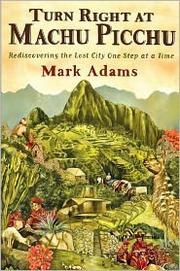
A highly readable blend of travel narrative and history that introduces Machu Picchu, Hiram Bingham's 'discovery,' and core Inca geography. It eases beginners in with storytelling before any heavy scholarship.
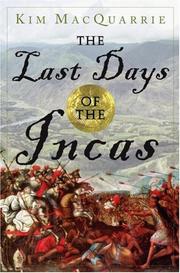
A gripping, well-researched narrative of the Spanish conquest of Peru. Reading this second gives beginners a dramatic, chronological arc of the empire's rise and fall before diving into deeper analysis.
Building the Framework: Society, Religion, and Empire
BeginnerUnderstand how Inca society was structured — its religion, economy, labor systems, and the role of Cusco as the imperial capital — providing the conceptual vocabulary for advanced reading.
▸ Study plan for this stage
Pace: 4–5 weeks, ~40–50 pages/day. Start with D'Altroy's foundational chapters on Inca society and religion (weeks 1–2), then Bauer's detailed examination of Cusco's urban structure and sacred geography (weeks 3–4), with a final week for synthesis and review.
- The Inca state as a hierarchical, multi-ethnic empire held together by ideology, kinship, and reciprocal labor obligations (mit'a)
- The role of Cusco as the sacred and administrative center, organized around ceques (sacred lines) and huacas (sacred sites)
- Inca religion as a state apparatus: the cult of the sun (Inti), veneration of the Sapa Inca as divine, and ancestor worship (mallqui)
- The mit'a labor system and the redistribution economy as mechanisms of imperial control and resource management
- The concept of ayllu (community/kinship group) as the basic social and economic unit across the empire
- Inca cosmology and the sacred landscape: how the empire was organized spatially and spiritually around Cusco
- The role of the nobility (orejones) and provincial administrators in maintaining imperial hierarchy
- How did the Inca state use religion and ideology to maintain control over a vast, multi-ethnic empire?
- What was the mit'a system, and how did it function as both a labor obligation and a mechanism of redistribution?
- How was Cusco organized as a sacred and administrative center, and what role did ceques and huacas play in Inca cosmology?
- What was the structure of Inca society, and how did the ayllu function as a basic social and economic unit?
- How did Inca ancestor worship (mallqui) and the veneration of the Sapa Inca as divine reinforce imperial authority?
- What evidence do Bauer's archaeological findings provide about Cusco's pre-Inca and early Inca occupation, and how does this complicate the traditional narrative?
- Create a hierarchical diagram of Inca society using D'Altroy's descriptions, labeling the Sapa Inca, nobility, provincial administrators, and commoners, then annotate with their respective roles and obligations.
- Map the ceque system of Cusco based on Bauer's descriptions: draw Cusco at the center and sketch the major ceques radiating outward, labeling at least 10 huacas and their religious significance.
- Write a 500-word explanation of how the mit'a system functioned as both a labor tax and a redistribution mechanism, using specific examples from D'Altroy.
- Analyze a primary source excerpt (if available in the texts) describing Inca religious practices or state ceremonies, identifying how religion reinforced imperial hierarchy.
- Create a comparison chart contrasting the ayllu as a pre-Inca community structure with its role in the imperial Inca state, based on D'Altroy's analysis.
- Design a walking tour of Cusco based on Bauer's archaeological and historical account, identifying key sites (palaces, temples, administrative centers) and explaining their significance to the empire.
Next up: This stage establishes the structural and ideological foundations of the Inca Empire, preparing you to examine how the empire expanded, adapted to different environments, and ultimately confronted Spanish conquest—topics that require understanding how deeply religion, labor, and hierarchy were woven into Inca governance.

The single best accessible academic survey of the Inca Empire, covering politics, economy, religion, and material culture. Reading it after the narrative introductions means the structures described already feel familiar.
A focused archaeological and historical study of Cusco itself — the empire's sacred navel. It deepens understanding of urban planning, ceque ritual lines, and royal power centered on the capital.
Going Deeper: Andean Society and Indigenous Voices
IntermediateMove beyond the imperial center to understand Andean peoples on their own terms — including pre-Inca cultures, oral traditions, and indigenous accounts of the conquest.
▸ Study plan for this stage
Pace: 8–10 weeks, ~25–30 pages/day (accounting for dense primary source material and analytical prose)
- Garcilaso de la Vega's dual perspective as mestizo chronicler and his role in shaping indigenous narratives of Inca history
- Pre-Inca Andean societies and their cultural continuities and discontinuities with Inca rule
- Oral tradition and quipucamayoc (quipu-keeper) knowledge systems as alternative sources to Spanish written records
- The conquest experience from indigenous viewpoints, including trauma, adaptation, and resistance narratives
- Andean cosmology, reciprocity (ayni), and labor systems (mit'a) as frameworks for understanding indigenous society beyond imperial administration
- Kenneth Andrien's synthesis of archaeological, documentary, and ethnographic evidence to reconstruct Andean worlds across time
- The role of indigenous intermediaries, caciques, and local elites in mediating colonial rule and preserving pre-Hispanic knowledge
- Gender, kinship, and household economies in Andean societies as central to understanding social organization
- How does Garcilaso de la Vega's mestizo identity and personal experience shape his account of Inca history, and what are the strengths and limitations of his perspective as a source?
- What evidence does Garcilaso provide for pre-Inca Andean cultures, and how does he position them in relation to Inca civilization?
- How do oral traditions and quipu records, as described in both texts, differ from Spanish written chronicles, and why does this distinction matter for understanding indigenous voices?
- According to Andrien, what were the key features of Andean reciprocity and labor systems, and how did these persist or change under Spanish colonial rule?
- What does the conquest look like from the perspective of indigenous peoples as portrayed in these texts, and how did different Andean groups respond to Spanish arrival?
- How do Garcilaso and Andrien use different types of evidence (narrative, archaeological, ethnographic) to reconstruct Andean worlds, and what can we learn from comparing their approaches?
- Read and annotate 2–3 key passages from Garcilaso's Royal Commentaries (e.g., his account of Inca origins, descriptions of pre-Inca peoples) and write a 500-word reflection on how his mestizo voice shapes the narrative—what does he emphasize, omit, or reinterpret?
- Create a comparative timeline of pre-Inca and Inca societies using evidence from both texts; identify cultural continuities and note where Garcilaso and Andrien agree or diverge in their interpretations
- Analyze Garcilaso's treatment of one indigenous institution (e.g., the mit'a labor system, ayllu kinship structures, or religious practices) and cross-reference it with Andrien's archaeological or ethnographic evidence to assess reliability
- Write a short indigenous account (300–400 words) of the Spanish conquest from the perspective of an Andean person (cacique, woman, or commoner) based on details scattered through both texts; cite your sources and explain your interpretive choices
- Map the geographic and cultural diversity of Andean societies using Andrien's framework; create a visual or written guide showing how different regions and ethnic groups fit into the broader Andean world before and after conquest
- Conduct a source-criticism exercise: select one major event or institution described by Garcilaso and trace how Andrien evaluates it using different evidence types (quipu, archaeology, Spanish documents, oral tradition); write up your findings in a 400-word memo
Next up: This stage equips you with the indigenous and pre-imperial perspectives necessary to critically examine how Spanish colonialism transformed Andean societies—preparing you to analyze colonial documents, indigenous resistance, and cultural syncretism in the next stage.

Written by the son of an Inca princess and a Spanish conquistador, this is the most important indigenous-perspective primary source on Inca history and culture. Reading it here, after building context, allows critical engagement with its blend of memory and myth.
Broadens the lens from the Inca state to the longer sweep of Andean indigenous history through the colonial period, showing how pre-Inca traditions shaped and survived imperial rule.
Capstone: The Conquest and Its Long Shadow
ExpertCritically reassess the Spanish conquest of Peru through multiple perspectives — military, epidemiological, and indigenous — and understand its lasting legacy on Andean identity.
▸ Study plan for this stage
Pace: 4–5 weeks, ~40–50 pages/day (Hugh Thomas's "Conquest" is approximately 600+ pages; this pace allows for careful annotation, reflection, and engagement with competing interpretations)
- The Spanish military advantage: technology, tactics, and the role of indigenous allies (not Spanish superiority alone)
- Epidemiological catastrophe: how disease—not primarily combat—decimated Andean populations and enabled conquest
- Cortés and Pizarro as historical actors: their ambitions, decisions, and limitations within broader imperial and economic systems
- Indigenous agency and resistance: how Inca factions, local rulers, and communities responded, adapted, and sometimes collaborated
- The conquest as a process, not an event: the gradual collapse of Inca authority from 1532 onwards, not a single military victory
- Psychological and cultural shock: the collision of worldviews, religious systems, and concepts of power between Spanish and Andean civilizations
- Long-term structural legacy: how conquest reshaped labor systems (encomienda, mita), land ownership, and colonial hierarchies that persist in modern Andean identity
- What specific military technologies and tactics gave Spanish forces advantages, and how did indigenous allies amplify or complicate Spanish military success?
- How did epidemic disease reshape the conquest narrative, and why do modern historians emphasize epidemiology over military prowess?
- What were Pizarro's primary motivations and constraints, and how did his decisions differ from those of earlier conquistadors like Cortés?
- In what ways did Inca civil war, factionalism, and internal politics facilitate or accelerate the Spanish conquest?
- How did indigenous peoples—both during and after conquest—resist, negotiate, or adapt to Spanish rule, and what does this reveal about indigenous agency?
- What were the immediate and long-term consequences of conquest for Andean labor systems, religious practice, and social hierarchy?
- Create a detailed timeline of key conquest events (1532–1572) with annotations distinguishing military victories, disease outbreaks, indigenous rebellions, and administrative consolidation; identify which events were truly decisive.
- Construct a comparative chart: list Spanish advantages (technology, horses, steel) against Inca advantages (terrain, logistics, numbers, local knowledge); assess which mattered most at different stages.
- Write a 2–3 page analysis from the perspective of an Inca noble or kuraka (local lord) during the conquest, using Thomas's evidence to explain their strategic choices and constraints.
- Identify and annotate 5–7 passages where Thomas presents competing interpretations of a single event (e.g., Atahualpa's capture); write a short reflection on how perspective shapes historical narrative.
- Create a visual map showing the geographic spread of Spanish control from 1532–1550, marking sites of major resistance, epidemic impact zones, and indigenous alliance networks.
- Debate exercise: prepare arguments for and against the thesis that 'disease, not Spanish military genius, was the primary cause of conquest'; use specific evidence from Thomas to support both sides.
Next up: This capstone stage equips you to recognize conquest not as inevitable triumph but as a contingent historical process shaped by disease, indigenous politics, and cultural collision—preparing you to examine how colonial structures and Andean resistance evolved in subsequent centuries and how this history continues to inform contemporary debates about indigenous identity and justice.
Though focused on the Aztec parallel, Thomas's masterwork on Spanish conquest methodology provides essential comparative context for understanding why Pizarro succeeded — reinforcing and deepening the Peru-specific reading done earlier.
Discussion
Keep reading
Paths that share books, cover the same subject, or open a related topic.