The Jesuits: the best books to read, in order
The Society of Jesus has been the Catholic Church's schoolmasters, its most effective missionaries, its most reliable scapegoat and, for forty years after 1773, an order the papacy had formally abolished. This path starts with two short histories of the whole arc, then goes back to Ignatius and the two documents — the Spiritual Exercises and the Constitutions — that explain almost everything the order later did. From there it takes the first generation, the missions in China, New France and Paraguay where Jesuit method met its hardest tests, and finally the suppression and the argumentative modern Society. Where a book is written from inside the order, the entry says so.
Two histories of the whole four centuries
BeginnerHave the shape of the story before the details: the founding, the schools, the global missions, the suppression of 1773, the restoration, and the post-Vatican II turn toward social justice that made the order politically contentious again.
▸ Study plan for this stage
Pace: Two to three weeks for 506 pages, and this is the lightest stage on the path by some margin. Wright's God's Soldiers is 352 pages of narrative history by a secular historian and reads at the pace of good popular non-fiction — a week at fifty pages a session. O'Malley's The Jesuits is only 154 pages,
- The shape of the whole arc, which everything later on this path fills in: founding in the sixteenth century, the rapid turn to schooling, the global missions, the suppression of 1773, the restoration, and the post-Vatican II turn toward social justice.
- The black legend of Jesuit intrigue — the casuist, the confessor whispering to kings, the regicide — and Wright's argument about why the caricature had purchase and where it drew on real features of the order's operation.
- That the Society was suppressed by papal brief and that the Catholic monarchies drove it, which reframes the order's history as a political problem for the Church rather than only a spiritual project within it.
- What distinguishes the Society structurally from earlier orders: no choir office, no habit, mobility instead of stability, and a fourth vow concerning missions taken by the professed.
- O'Malley's corrective emphasis on ministries — what Jesuits actually spent their days doing, which was preaching, hearing confessions, teaching and giving the Spiritual Exercises, rather than the court intrigue the narrative tradition foregrounds.
- The difference in what a secular narrative historian and a specialist institutional historian each notice, which is worth registering now because you will read O'Malley again at greater length in stage three.
- Give the order's history in ten dated events, from the founding to the present. You should be able to do this from Wright alone.
- What were the actual charges against the Jesuits that led the Bourbon monarchies to demand suppression, and how far does Wright think they were founded?
- O'Malley emphasises the ministries. Name four, and say for each why it would not have been obvious from the order's founding documents that Jesuits would end up doing it.
- Where do Wright and O'Malley disagree in emphasis rather than in fact? Point to a specific episode covered by both.
- What does 'Jesuitical' mean as an insult, and what in the order's actual practice does the insult distort?
- Build a single timeline from Wright with four tracks: Rome, the schools, the missions, and the order's political enemies. You will hang every later book on this path off it.
- Read O'Malley's short history with Wright's table of contents beside you and mark every topic O'Malley treats that Wright does not, and vice versa. The list of omissions in each direction is the most useful thing this stage produces.
- Write a page on the black legend: what it claimed, who propagated it, and which two or three genuine features of the Society gave it something to work with.
- Pick the episode from Wright you found least plausible and note it. Stages three to five each cover it at length, and you will want to know whether the specialist literature bears out the narrative.
Next up: With the outline in place you can go back to the beginning and read the two documents that explain why the order took the shape the outline describes.
The most readable single narrative — a secular historian's account, alert to the black legend of Jesuit intrigue and to why it had purchase. Start here. Note that this book was published in Britain as The Jesuits: Missions, Myths and Histories; both titles are catalogued separately, so buy one and not both.

O'Malley is the leading historian of the order and this short 2014 history is the scholarly counterpart to Wright — drier, more precise about institutions, and much better on what the Society's ministries actually consisted of. Read it second: it corrects the emphases a narrative history inevitably picks up.
Ignatius, and the two founding documents
BeginnerUnderstand the Spiritual Exercises as a practical method rather than a treatise, and see how a soldier's conversion narrative turned into a religious order with an unusual constitution — no choir office, no habit, a fourth vow to the pope, and obedience as the organising virtue.
▸ Study plan for this stage
Pace: Four weeks for 702 pages, weighted very unevenly. The Autobiography is 113 pages and can be read in two evenings; do read it first. The Spiritual Exercises is 217 pages and is not a book to be read at a book's pace at all — it is a director's manual for a four-week retreat, written as instructions t
- The Exercises as method, not doctrine — a sequenced set of prayer exercises with instructions to the director about pacing, adaptation and what to do when the exercitant reacts in particular ways. Reading it as a treatise is the standard misreading.
- The four Weeks and what each is for: sin and disorder, the life of Christ, the Passion, the Resurrection — and the meditations that structure them, including the Two Standards and the Election.
- Discernment of spirits: the rules for reading one's own consolation and desolation, which is the psychological machinery underneath everything the order later did about decision-making and obedience.
- The examen as a daily practice, and indifference as the technical term it is — not detachment from outcomes in general, but freedom from prior attachment while choosing.
- The Constitutions as a document shaped by the Exercises: obedience as the organising virtue, the absence of choir and habit, mobility, the fourth vow, and the account of the professed's availability to be sent.
- Ignatius's own trajectory as he tells it: the cannonball wound at Pamplona, the convalescent reading, Montserrat, Manresa, Jerusalem, the years as an adult student in Paris, and the Inquisition's repeated interest in him.
- That he dictated the Autobiography late, reluctantly, and in the third person as 'the pilgrim' — a self-presentation, not a diary, and worth reading as one.
- What is an Election in the Exercises, and what is the whole preceding apparatus designed to make possible?
- State the rules for discernment of spirits in your own words. What phenomenon are they trying to make legible, and why would a religious order need them formalised?
- Identify three features of the Society's constitution that follow directly from something in the Exercises, and say how.
- Ignatius spent years as a student in Paris in his thirties. Why does that matter for what the order became, and how does Brodrick treat it?
- Where does Brodrick smooth? Find one episode the Autobiography reports plainly that the biography handles more delicately, and say what the difference consists in.
- Outline the Exercises as a structure: the four Weeks, the principal meditations in each, and the annotations that govern how it is given. One page, no commentary. If you cannot do it, you have read it as prose rather than as a manual.
- Take the rules for discernment and apply them to a decision from the Autobiography — Ignatius at Manresa, or the decision to study in Paris. Do the rules describe what he did, or were they written afterwards to describe it?
- Read Brodrick's account of Manresa immediately after the Autobiography's and mark every addition, softening and inference. This is a small, controlled exercise in reading a devoted biographer.
- Write half a page on how the Exercises would work as a formation instrument for men who were about to be scattered singly across the world with no possibility of supervision. That question is the hinge between this stage and the next two.
Next up: You now know the method and the constitution, which is exactly what you need to watch the first generation improvise an institution nobody had planned.
Ignatius dictated this late and reluctantly, referring to himself in the third person as 'the pilgrim'. Short, strange and indispensable: the cannonball at Pamplona, Manresa, the Paris student years. Read it before the Exercises so you know what experience they were distilled from.
Not a book to be read so much as a director's manual for a four-week retreat, which is exactly why people misread it. Everything distinctive about Jesuit formation — discernment of spirits, the examen, indifference — is here in compressed procedural form. The widely held English record is an older public-domain translation; several modern versions read more easily.
The standard old biography, and written from INSIDE the order — Brodrick was himself a Jesuit, which shows in the sympathies and in the unmatched familiarity with the sources. Dated in its historiography and still the fullest life in English. Read it after the primary texts so you can see where a devoted biographer smooths things.
The first generation and the machine they built
IntermediateBe able to explain what the Society actually did in its first fifty years — the colleges, the confessional, the missions, the Exercises given to laypeople — and why an order founded without a plan for schools ended up running hundreds of them.
▸ Study plan for this stage
Pace: Six to seven weeks for 1,382 pages, and only one of the three books needs to be read straight through. O'Malley's The First Jesuits is 472 pages, the most important book on the path, and deserves three weeks of unhurried reading — it is written from the order's own early correspondence and its argum
- What the first generation actually did: preaching in the open, hearing confessions, giving the Exercises to laypeople, working in hospitals and prisons, and running what O'Malley calls the ministries of the Word.
- The schools as an accident that became the identity. Nothing in the founding documents anticipates colleges; within a generation the Society was running hundreds and its manpower and finances were organised around them.
- The Ratio Studiorum and the pedagogical system it codified — a standardised curriculum, a graded progression, disputation and repetition — and why a religious order became Europe's schoolmaster.
- O'Malley's method and why it matters: reconstructing the order from its own correspondence rather than from later legend, which produces a first generation far less programmatic and far more improvisational than the caricature.
- The scale and speed of expansion, and the administrative apparatus it required — the letter-writing culture, the provincials, the reporting that makes the archive O'Malley and Brockey both depend on.
- The breadth the Companion covers and a single narrative cannot: Jesuit mathematics and astronomy, theatre and emblem books, art and architecture, and the regional histories of the order.
- Lacouture's approach through individual lives — Ignatius, Ricci, the Paraguay missionaries, Teilhard de Chardin, the liberation theologians — which is vivid, opinionated and not a substitute for O'Malley's care.
- Reconstruct how the Society ended up in the schooling business. What was the sequence of local decisions, and at what point did it become policy?
- Name six ministries of the first generation from O'Malley. Which of them would a reader of the Constitutions alone have predicted?
- What does using the order's own correspondence as a source let O'Malley see, and what does it systematically hide?
- Pick two chapters of the Cambridge Companion and say what each adds that Wright's narrative and O'Malley's monograph both leave out.
- Lacouture is a journalist writing about scholars' territory. Identify one place where his method produces an insight and one where it produces an assertion he cannot support.
- From The First Jesuits, produce a one-page description of a typical Jesuit's working week around the middle of the sixteenth century. Where O'Malley's evidence does not support a detail, leave it blank rather than filling it in.
- Chart the growth of the colleges — number, geography, and the manpower they absorbed — using O'Malley's figures. Then write a paragraph on what an order does when its defining work is not the one it was founded for.
- Use the Companion as designed: pick the chapter on Jesuit science or the Chinese Rites and read it now, before stage four, so you meet the controversy in a scholarly summary before you meet it as narrative in Brockey.
- Take one figure who appears in both O'Malley and Lacouture and compare the two portraits. Note which details Lacouture has dramatised and whether the dramatisation distorts anything.
- Return to the episode you flagged as least plausible in Wright and see what O'Malley or the Companion does with it.
Next up: The institution, the pedagogy and the letter-writing culture are now in place, which is what makes it possible to read the missions as a method being tested rather than as a set of adventures.
The single most important book on this list: O'Malley's study of the order's first generation, reconstructed from its own correspondence rather than from later legend. It shows the schools arriving almost by accident and becoming the Society's defining work. Catalogued without its leading article, which is how it is listed here.
An edited survey covering what a single narrative cannot: Jesuit science and mathematics, art and theatre, the Chinese Rites controversy, the order in each region. Use it as a reference to go deep on whichever chapter of the story caught you, rather than reading straight through.
Lacouture, a French journalist and biographer, tells the whole history through individual lives — Ignatius, Ricci, the Paraguay missionaries, Teilhard de Chardin, the liberation theologians. Opinionated and vivid where O'Malley is careful, and the best bridge from the institutional history into the missions that follow.
The missions: China and New France
IntermediateAssess the Jesuit strategy of accommodation — learning the language, adopting the dress, arguing on the host culture's own terms — on the two frontiers where it was pushed hardest, and understand the Chinese Rites controversy that eventually destroyed it.
▸ Study plan for this stage
Pace: Five to six weeks for 1,123 pages. Spence's The Memory Palace of Matteo Ricci is 378 pages and is the most pleasurable book on the path — unconventionally structured around a mnemonic system, so it rewards reading in long sittings rather than in short ones; ten days. Brockey's Journey to the East is
- Accommodation as a deliberate strategy: learning the language to literary standard, adopting the dress and manner of the local learned class, and arguing on the host culture's own terms rather than translating European categories into it.
- Ricci's specific method — mathematics, cartography, mnemonics and Confucian scholarship as the entry to the literati — and why Spence's framing around the memory palace is a serious argument about the encounter rather than a conceit.
- Brockey's displacement of the Ricci-centred story: the mission was sustained by ordinary missionaries and by Chinese Christian communities and catechists, and the great-man version obscures how it actually worked.
- The Chinese Rites controversy: whether ancestral rites and honours to Confucius were civil or religious observances, what Rome eventually ruled, and how the ruling destroyed the accommodationist project.
- The contrast between two frontiers — a literate imperial bureaucracy in China, where accommodation meant becoming a scholar, and semi-sedentary and mobile societies in New France, where it meant learning to travel and to live among people whose institutions the missionaries did not recognise as inst
- The Jesuit Relations as a triple-purpose document: fundraising propaganda for a French readership, ethnographic observation of unusual quality, and eyewitness testimony — and the necessity of reading each passage for which of the three it is doing.
- That the Relations are the principal reason we know as much as we do about seventeenth-century Huron and Iroquois life, and that this dependence is itself a historiographical problem.
- Describe Ricci's actual daily practice in China — what he wore, what he wrote, whom he cultivated, what he taught. Then say what in the Exercises or the Constitutions authorised any of it.
- What were the Chinese Rites, and what were the arguments on each side? State the anti-accommodationist case in its strongest form rather than as obtuseness.
- Brockey argues that the mission's real basis was elsewhere than the Ricci story suggests. What evidence does he use, and what does the mission look like once you accept it?
- Take one passage from the Relations and classify it: propaganda, ethnography or testimony. Defend the classification, and say what would make you reclassify it.
- Accommodation was pushed hardest in China and hardly at all in some other fields. From these three books, what determined where it was attempted?
- If the Relations are our main source for Huron society, what claims about that society should we hold most and least confidently?
- Reconstruct Ricci's memory palace from Spence — the images, what each was for, and how the system was supposed to work — and try to build a small one of your own from ten items. The point is to understand what he was actually offering Chinese scholars.
- Using Brockey, chart the China mission by decade: personnel, stations, converts and crises. The chart makes the collapse after the rites ruling legible in a way the narrative does not.
- Read three consecutive entries of the Relations and write, for each, one sentence on what the missionary saw and one on what he wanted his French readers to feel. Where the two are the same, note it.
- Set the Chinese Rites controversy against the accommodation described in the Relations. Would the same ruling have destroyed the New France mission? Answer with evidence rather than by analogy.
- Write a paragraph on what a modern historian of the Huron should do with a source produced by people trying to convert them. Be concrete about method, not attitude.
Next up: Accommodation and semi-independent mission communities are exactly the practices that made the Society intolerable to Catholic monarchs, which is where the last stage begins.
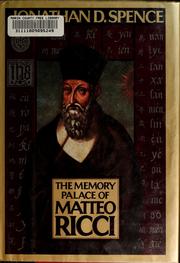
Spence builds his account of the first great China Jesuit around the mnemonic system Ricci taught Chinese scholars, using each image as a door into the encounter. An unconventional book and the most pleasurable on this list; read it first for the atmosphere, then Brockey for the institution.
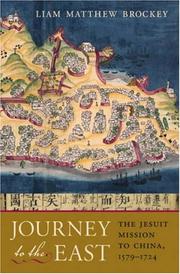
The archival history of the China mission from 1579 to 1724, based on Portuguese and Chinese sources. Brockey deliberately displaces the Ricci-centred story to show the ordinary missionaries and the Chinese Christian communities that actually sustained it — and the collapse when Rome ruled against the rites.
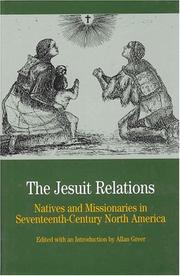
The annual reports the New France missionaries sent home, edited down to a usable volume with Greer's commentary. The best primary-source access on this path: propaganda, ethnography and eyewitness account at once, and the reason we know as much as we do about the seventeenth-century Huron and Iroquois.
Paraguay, suppression, and the modern Society
IntermediateUnderstand the Paraguay reductions and the arguments they still generate, why Catholic monarchs expelled the Jesuits and forced the 1773 suppression, and what the order became after Vatican II turned it toward social justice.
▸ Study plan for this stage
Pace: Four to five weeks for 1,025 pages, and the first two books are a matched pair. Caraman's The Lost Paradise is 341 pages, the fullest English account of the Guarani reductions and written by a Jesuit, so read it as an insider's history — sympathetic to the missionaries and comparatively uninterested
- What a reduction actually was: a semi-autonomous mission settlement of Guarani under Jesuit administration, with its own economy, militia and legal standing, largely outside the reach of colonial labour demands.
- Why the reductions provoked such hostility: they withheld indigenous labour from Spanish and Portuguese settlers, they armed the Guarani, and they made the Society look like a state within a state to Bourbon ministers already inclined to think so.
- The argument the reductions still generate — whether they were a shelter from enslavement or a paternalist enclosure, and whether those descriptions are actually incompatible.
- The sequence of the suppression: expulsion from Portugal, from France, from Spain and its empire, then the papal brief of 1773 dissolving the order, and the survival of Jesuits in Russia during the suppression years.
- Restoration in the nineteenth century and the order's re-entry into education, which returned it to the position stage three showed it improvising into.
- The post-Vatican II turn: the General Congregation that made the promotion of justice constitutive of the service of faith, the consequences in Latin America, and why this made the order politically contentious again in a way it had not been for a century.
- McDonough's picture of the contemporary Society: shrinking numbers, universities that outlast the men who staffed them, and men who stayed and men who left giving very different accounts of the same institution.
- Cunninghame Graham's romantic reading as itself part of the history — it stands behind the popular memory of the reductions and behind the film The Mission.
- Describe the working economy of a reduction: what was produced, who decided, where the surplus went, and what the Guarani got.
- State the case that the reductions protected the Guarani, and the case that they subjected them. What evidence does Caraman offer for the first, and what does he pass over?
- Why did Catholic monarchs, not Protestant enemies, destroy the Society? Give the political interests involved rather than the stated charges.
- Cunninghame Graham was not a historian. Identify three moves in his book that a historian would not make, and say what his account is nevertheless good evidence about.
- What did the promotion of justice as constitutive of the faith mean in practice, and how does McDonough's evidence show it dividing the order?
- Take the founding documents from stage two and ask whether the modern Society McDonough describes is continuous with them. Argue it either way, but argue it from the texts.
- Write out the daily and annual round of a reduction from Caraman as a schedule. Then mark every point at which you are relying on a Jesuit's account of it and note what an independent source would be.
- Read Caraman and Cunninghame Graham on the same episode — the Guarani War is the obvious choice — and produce a two-column comparison of claim and rhetoric. The exercise is in distinguishing a partisan history from a romance, which are not the same failing.
- Trace the suppression through Wright, Lacouture and whichever Companion chapter covers it, and assemble a dated account with the political actors named. This stage deliberately has no dedicated book on 1773, so the reconstruction is yours to make.
- From McDonough's interviews, write two short first-person accounts of the same period in the order — one by a man who stayed, one by a man who left — using only material he reports. Then say what each account cannot see.
- Close the path by going back to the timeline you built in stage one and annotating every entry with the book that most changed your understanding of it.
Next up: The path ends with the order arguing about its own purpose, which is where it began — an improvised institution working out what it is for.

The fullest English account of the Guarani reductions — the semi-autonomous mission settlements that fascinated Enlightenment Europe and helped provoke the expulsions. Caraman was a Jesuit, so read him as an INSIDER account, sympathetic to the missionaries and less interested in what the Guarani made of it.
The 1901 book that made the reductions famous in English and stands behind the film The Mission. Cunninghame Graham was a Scottish adventurer and socialist rather than a historian; his romantic reading is unreliable as scholarship and is itself part of the story of how the reductions have been remembered. Read it after Caraman, as a document.
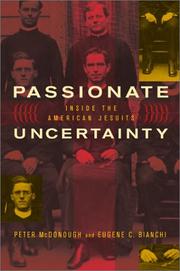
A sociological study of American Jesuits at the end of the twentieth century, built on hundreds of interviews with men who stayed and men who left. It ends the path where the order actually is: shrinking, running universities, arguing about its own purpose. The suppression and restoration are covered in Wright, Lacouture and O'Malley rather than by a dedicated book here — the specialist literature on 1773 is largely in edited collections we could not verify.
Discussion
Keep reading
Paths that share books, cover the same subject, or open a related topic.