Best Books on the Meiji Restoration, in Order
This curriculum traces the Meiji Restoration from its turbulent origins in the late Tokugawa period through the dramatic 1868 upheaval, the breathtaking modernization drive, and finally the ideological and imperial ambitions that defined Japan's rise as a world power. Starting at an intermediate level, each stage deepens analytical complexity — moving from accessible narrative history to specialized political, cultural, and intellectual analysis — so that each book's concepts and vocabulary unlock the next.
The Late Shogunate & the Road to 1868
IntermediateUnderstand the structural weaknesses of the Tokugawa bakufu, the crisis triggered by Western pressure, and the political forces that made the Restoration possible.
▸ Study plan for this stage
Pace: 8–10 weeks, ~40–50 pages/day (accounting for dense historical analysis in Jansen; ~2 weeks for Musui's Story, ~4–5 weeks for The Making of Modern Japan, ~2–3 weeks for Sakamoto Ryōma)
- The Tokugawa bakufu's structural vulnerabilities: the daimyo system, financial strain, and loss of military monopoly by the 1850s
- The impact of Western pressure (Perry's arrival, unequal treaties, and the opening of Japan) as a catalyst for regime collapse
- The ideological and political split between bakufu loyalists and anti-foreign/pro-imperial factions (sonnō jōi movement)
- The role of lower-ranking samurai (shishi) and merchant networks in destabilizing the old order, as exemplified in Musui's Story and Sakamoto Ryōma's biography
- The transition from bakufu dominance to imperial restoration: how competing regional powers (Satsuma, Chōshū) and reformers exploited the crisis
- The lived experience of samurai decline and social mobility during the late Shogunate, illustrated through Katsu Kokichi's memoir
- The intellectual currents (Rangaku, National Learning, sonnō jōi ideology) that shaped political consciousness
- How individual actors (merchants, low-ranking samurai, domain leaders) navigated and accelerated institutional collapse
- What were the three main structural weaknesses of the Tokugawa bakufu that made it vulnerable to collapse by the 1850s?
- How did Western pressure—particularly Perry's arrival and the unequal treaties—destabilize the bakufu's political legitimacy and unite diverse factions against it?
- What was the sonnō jōi movement, and how did it differ from bakufu-centered visions of Japan's future?
- How does Musui's Story illustrate the lived experience of samurai during the late Shogunate, and what does it reveal about social mobility and the breakdown of traditional hierarchies?
- What role did Sakamoto Ryōma and merchants like him play in bridging regional powers and facilitating the transition from bakufu to imperial rule?
- How did Satsuma and Chōshū exploit the bakufu's crisis to emerge as the dominant forces in the Restoration?
- Create a timeline of key events from 1853–1868 (Perry's arrival through the Restoration) using all three texts, marking bakufu crises, treaty signings, and major political shifts
- Write a 2–3 page character analysis of Katsu Kokichi from Musui's Story, explaining how his life trajectory reflects broader samurai decline and the opportunities created by institutional instability
- Map the political factions of the late Shogunate (bakufu loyalists, sonnō jōi radicals, domain reformers, merchants) using evidence from Jansen's Making of Modern Japan, noting their competing visions for Japan
- Analyze Sakamoto Ryōma's role as a bridge-builder: write a short essay (3–4 pages) on how his merchant background and political networks allowed him to facilitate cooperation between Satsuma and Chōshū
- Create a visual diagram showing the structural weaknesses of the Tokugawa system (daimyo autonomy, financial crisis, military obsolescence, ideological fragmentation) and annotate it with specific examples from the texts
- Conduct a close reading of a key passage from Musui's Story (e.g., his account of samurai poverty or his mercenary activities) and cross-reference it with Jansen's analysis of samurai social mobility to write a 2-page reflection on lived experience vs. structural history
Next up: This stage equips you with a granular understanding of why the bakufu fell and which actors and ideologies drove the Restoration, preparing you to examine how those same forces shaped the actual policies, institutions, and conflicts of the early Meiji period.
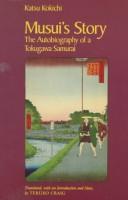
This vivid samurai memoir from the late Edo period gives an insider's ground-level feel for Tokugawa society — its class tensions, economic strains, and restless energies — before any analytical framework is introduced.
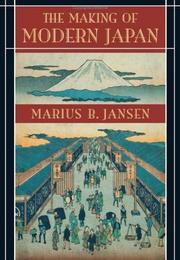
The single most authoritative and readable one-volume history of Japan from the Tokugawa era through the twentieth century; read the early chapters first to build the political and institutional vocabulary needed for everything that follows.

A deep biographical study of the pivotal anti-shogunate activist that illuminates the loyalist movement, domain politics, and the human drama behind the 1868 coup — a natural follow-on once the broader framework is in place.
The Restoration Itself — Politics & Power
IntermediateGrasp the mechanics of the 1868 Restoration: who seized power, how the new Meiji state was constructed, and how the oligarchs consolidated authority.
▸ Study plan for this stage
Pace: 4–5 weeks, ~40–50 pages/day (approximately 200–250 pages total)
- The role of the samurai class and daimyo in initiating and executing the Restoration coup
- The Boshin War and military consolidation of Meiji authority (1868–1869)
- The structure and ideology of the new Meiji state: centralization vs. traditional feudal power
- Key oligarchs (Satsuma, Choshu, Tosa, Hizen clans) and their competing interests in power-sharing
- The Charter Oath and early Meiji institutions as legitimizing frameworks
- How the new government dismantled the old feudal order (abolition of the han system, samurai class dissolution)
- The concept of 'restoration' as political rhetoric vs. revolutionary change
- What were the primary motives of the Satsuma and Choshu clans in overthrowing the Tokugawa shogunate, and how did these differ from other participants?
- How did the Meiji oligarchs use the young Emperor as a symbol of legitimacy, and what was the actual distribution of power in early Meiji government?
- What was the Boshin War, and why was military victory essential to consolidating the Restoration?
- How did the abolition of the han system and the samurai class fundamentally reshape Japan's political and social structure?
- What role did the Charter Oath play in framing the Restoration as a modernizing, progressive movement rather than a reactionary coup?
- How did regional rivalries among the oligarchic clans shape the institutions and policies of the early Meiji state?
- Create a timeline of key events from 1868–1872, marking the Restoration coup, the Boshin War, the abolition of the han system, and the samurai class dissolution; annotate each with the oligarchs involved and the political stakes
- Construct a power-mapping diagram showing the Satsuma, Choshu, Tosa, and Hizen clans, their representatives in the early Meiji government, and their competing interests; use Beasley's account to identify tensions and compromises
- Write a 500-word analysis of how the Meiji oligarchs used the Emperor and the Charter Oath as political tools to legitimize their seizure of power and consolidate authority
- Compare and contrast the Tokugawa feudal system with the centralized Meiji state structure; create a table showing the key institutional differences and explain how each change strengthened oligarchic control
- Identify 3–4 critical decisions made by the oligarchs in 1868–1871 (e.g., abolishing the han, dissolving the samurai class) and write a short paragraph for each explaining the political calculation behind it
- Debate or write a response: Was the Meiji Restoration primarily a 'restoration' of imperial power or a revolutionary seizure of power by a new oligarchic class? Use specific evidence from Beasley
Next up: Understanding how the oligarchs consolidated political and military power in 1868–1872 provides the foundation for examining how they then pursued rapid modernization and institutional reform—the subject of the next stage.

The classic scholarly treatment of the Restoration's political and institutional dimensions by one of the foremost Western historians of Japan; essential for understanding the oligarchic state and its ideological foundations.
Rapid Modernization — Society, Economy & Culture
IntermediateUnderstand how Meiji Japan transformed itself economically, socially, and culturally at extraordinary speed, and what that transformation cost ordinary people.
▸ Study plan for this stage
Pace: 4–5 weeks, ~25–30 pages/day, with 2–3 days per week reserved for review and exercises
- The ideology of *bunmei kaika* (civilization and enlightenment) as the intellectual framework driving Meiji transformation
- The role of the Meiji elite in selectively adopting Western institutions while preserving Japanese identity
- Economic modernization through industrialization, banking reform, and the zaibatsu system
- Social upheaval: the dissolution of the samurai class, urbanization, and the emergence of new social hierarchies
- Cultural synthesis: how Western education, technology, and ideas were adapted to Japanese contexts
- The human cost of rapid modernization—labor exploitation, rural displacement, and social dislocation
- The tension between traditional values (Shinto, emperor worship) and Western rationalism in Meiji ideology
- What was *bunmei kaika* and how did it shape Meiji policy across different sectors?
- How did the Meiji government balance Western institutional adoption with the preservation of Japanese cultural identity?
- What were the major mechanisms of economic modernization in Meiji Japan, and who benefited most?
- How did the abolition of the samurai class and the modernization of society create new social tensions and inequalities?
- What specific cultural and educational changes did the Meiji government implement, and what were their intended effects?
- What were the concrete costs of rapid modernization for ordinary Japanese people—farmers, workers, women?
- Create a two-column chart: 'Western Institutions Adopted' vs. 'Japanese Elements Preserved' with specific examples from Craig's text
- Write a 500-word analytical essay on how *bunmei kaika* ideology justified both modernization and the suppression of dissent
- Trace the economic transformation: map the rise of zaibatsu, banking reforms, and industrial sectors using Craig's data and create a visual timeline
- Conduct a close reading of Craig's discussion of education policy and write a reflection on how curriculum choices shaped national identity
- Interview or survey 3–5 people about modernization in their own country/region; compare the patterns Craig identifies with contemporary examples
- Create character sketches of 2–3 Meiji-era figures discussed by Craig (e.g., Fukuzawa Yukichi, Ito Hirobumi) showing how their ideas reflected the tensions of the era
- Compile a primary source dossier: find and annotate 3–4 excerpts from Meiji-era writings (speeches, manifestos, journalism) that Craig references, analyzing how they embody *bunmei kaika* ideology
Next up: This stage establishes the ideological and structural foundations of Meiji transformation, preparing you to examine how these rapid changes generated political resistance, social movements, and competing visions of Japan's future in the next stage.

Reading Fukuzawa — the era's most influential public intellectual — in his own words reveals the ideological engine of Meiji modernization: the urgent drive to adopt Western 'civilization' as a survival strategy.
Ideology, Identity & Imperial Japan's Rise
ExpertAnalyze the ideological contradictions of Meiji Japan — emperor-worship, nationalism, and Westernization — and trace how they propelled Japan toward imperial expansion.
▸ Study plan for this stage
Pace: 6–7 weeks, ~40–50 pages/day. Begin with "Inventing Japan" (weeks 1–3, ~200 pages), then move to "Japan's Modern Myths" (weeks 4–7, ~250 pages). Allocate 1 week for overlap and synthesis of both texts.
- The invention of Meiji identity: how Japan constructed a modern nation-state by selectively adopting Western institutions while maintaining emperor-centered tradition
- The emperor as ideological anchor: how Meiji leaders weaponized the imperial institution to legitimize rapid modernization and suppress dissent
- The contradiction between Westernization and nationalism: how Japan absorbed Western technology, law, and military systems while simultaneously asserting cultural and racial superiority
- Myth-making as state apparatus: how Meiji intellectuals and officials crafted narratives (emperor worship, bushidō revival, Shinto nationalism) to mobilize the population for modernization and expansion
- The link between domestic ideology and imperial ambition: how internal contradictions—between tradition and modernity—were externalized through territorial expansion and military aggression
- The role of intellectuals and elites in propagating Meiji ideology: how writers, educators, and bureaucrats shaped public consciousness to align with state goals
- How does Buruma in 'Inventing Japan' explain the paradox of Japan simultaneously embracing Western modernization and reasserting traditional emperor worship? What specific examples does he provide?
- According to 'Japan's Modern Myths,' what myths did Meiji leaders deliberately construct, and what social or political purposes did each myth serve?
- How did the Meiji state use Shinto, bushidō, and the imperial cult to create a sense of national unity and justify expansion, as discussed in both texts?
- What role did Western ideas (e.g., Social Darwinism, nationalism, militarism) play in shaping Meiji ideology, and how did Japanese thinkers adapt these ideas to their own context?
- How do Buruma and Gluck each explain the connection between Meiji Japan's internal ideological contradictions and its turn toward imperial aggression in Korea, Manchuria, and beyond?
- What evidence do these texts provide that Meiji ideology was a deliberate construction rather than an organic expression of Japanese culture?
- Close-read 3–4 key passages from 'Inventing Japan' (e.g., Buruma's discussion of the Meiji Constitution, emperor symbolism, or Western influence) and write a 500-word analysis of how each passage illustrates the modernization-tradition paradox.
- Create a visual timeline or concept map showing the major myths Gluck identifies in 'Japan's Modern Myths' (e.g., emperor worship, bushidō, racial superiority) and annotate each with: (a) when it was constructed, (b) who promoted it, (c) what social function it served, (d) how it justified expansion.
- Comparative essay (800–1000 words): How do Buruma and Gluck differ in their explanations of why Meiji leaders embraced both Westernization and nationalism? Which author's argument is more convincing, and why?
- Primary source analysis: Find 2–3 primary documents (e.g., excerpts from the Meiji Constitution, imperial rescripts, or nationalist writings) referenced or discussed in either book, and analyze how they embody the ideological contradictions Buruma and Gluck describe.
- Debate preparation: Argue both sides—'Meiji ideology was primarily a tool of state control' vs. 'Meiji ideology reflected genuine Japanese values and aspirations.' Use specific evidence from both texts to support each position.
- Synthesis essay (1000–1200 words): 'How did the ideological contradictions of Meiji Japan identified by Buruma and Gluck make imperial expansion inevitable?' Ground your argument in concrete examples from both texts.
Next up: This stage equips you to recognize how ideology legitimizes state power and imperial ambition, preparing you to examine the concrete military, diplomatic, and colonial consequences of Meiji Japan's contradictory worldview in the next stage.

A concise, sharp intellectual history of how modern Japanese identity was constructed and contested from the Meiji era onward — an ideal bridge between the modernization stage and the deeper ideological analysis that follows.
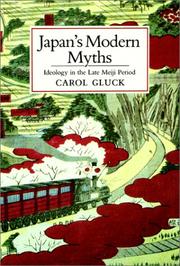
A landmark work of intellectual history examining how Meiji ideologues fabricated a national ideology around the emperor and 'tradition'; essential for understanding the political culture that made imperial expansion possible.
Discussion
Keep reading
Paths that share books, cover the same subject, or open a related topic.