The Tokugawa shogunate: books to read, in order
For two and a half centuries after 1603 Japan was governed by a military house that kept the emperor decorative, immobilised the daimyo through compulsory attendance in Edo, restricted foreign contact to a handful of controlled channels, and produced no significant war. The result was a peace that made samurai into bureaucrats and Edo into one of the largest cities on earth. This path establishes the political system first, then spends its longest stage on how people actually lived inside it, and ends with the samurai as a social problem and the regime's rapid collapse in the 1860s.
The prelude and the frame
BeginnerUnderstand the sixteenth-century unification that made the Tokugawa settlement possible, and get the whole 1600-1868 arc in outline.
▸ Study plan for this stage
Pace: Ten to twelve weeks, and the length is almost entirely one book. Read Berry's Hideyoshi first — around 290 pages, analytical rather than narrative, and best taken over three weeks. Jansen's The Making of Modern Japan runs past 900 pages; roughly half of it covers the Tokugawa period and that half is
- The unification settlement the Tokugawa inherited rather than invented: a fixed status order, disarmed villages, a national land survey and a subordinated warrior class, all substantially in place before 1600
- Hideyoshi's sword hunt and cadastral survey as the two instruments that made the later peace administrable — one removed the capacity for rural revolt, the other made taxation legible
- The separation of warrior from peasant, which converted samurai from landholders into stipendiary retainers living in castle towns, and which is the precondition for everything in stage three
- Hideyoshi's Korean invasions as the last great military exertion before two and a half centuries without significant war, and their role in exhausting the coalition Tokugawa Ieyasu then inherited
- Berry's argument about the limits of Hideyoshi's authority — that he ruled through negotiation with great houses rather than by command, which sets up the question of what the Tokugawa did differently
- The overall arc Jansen supplies: consolidation, a long stable middle, commercial and demographic change the political order did not accommodate, then rapid collapse in the 1860s
- The emperor kept decorative in Kyoto while real authority sat with the shogun in Edo — a division that lasted until the moment it became the instrument of the regime's overthrow
- That the period's conventional dates, 1603 to 1868, are administrative rather than social markers, and Jansen is careful about the difference
- What did the sword hunt actually confiscate, and from whom? The specifics matter more than the symbolism.
- How did Hideyoshi's authority over the great houses work in practice, given that he could not simply order them?
- Berry argues Hideyoshi's rule was more negotiated than it appears. What would the Tokugawa have had to change to make it stick for 250 years?
- From Jansen, name the three or four structural changes across the period that the political system did not adapt to.
- Why did the Korean invasions matter for what came after, beyond the immediate cost?
- Build a one-page chronology from Jansen running from the 1580s to 1868, with the shogunal successions and the major reforms marked. You will use it for the rest of the path.
- Draw a diagram of the status order after Hideyoshi — warrior, peasant, artisan, merchant, and the groups outside it. Every later book assumes you can place a person in it instantly.
- Summarise the sword hunt and the land survey in 200 words each, stating what each made possible administratively rather than what each symbolised.
- Mark in Jansen the chapters covering 1600 to 1868 and read only those first. Deciding this in advance is what makes a 900-page book usable at this point.
- Write two paragraphs on what Ieyasu had that Hideyoshi did not. It is the question the whole first stage exists to set up.
Next up: You know where the settlement came from and how the whole period ran; the next stage takes the machinery apart to show how a regime with no standing army held the country still for two and a half centuries.
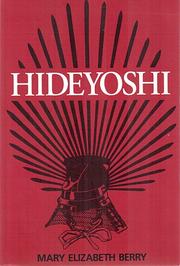
A biography of the peasant-born warlord who unified Japan, disarmed the villages, fixed the status order and invaded Korea — every one of which the Tokugawa inherited. Start here: the shogunate is largely a consolidation of his settlement.
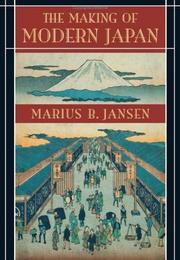
A magisterial survey from the sixteenth century to the twentieth, and roughly half of it is Tokugawa. Read it as the spine of the whole path; nothing else here covers as much ground as well.
How the system worked
IntermediateBe able to explain sankin-kotai, the bakuhan division of authority, the status order and what sakoku actually was — a set of managed foreign relations rather than sealed borders.
▸ Study plan for this stage
Pace: Ten to twelve weeks. Totman's Early Modern Japan is around 590 pages and is the densest reading on the path — political economy, demography and forest management rather than narrative — so allow five weeks at a hundred pages a week and do not expect it to move quickly. Tour of Duty is around 320 pag
- The bakuhan division of authority: the shogunate governed its own domains and the great affairs of state, while roughly 250 daimyo governed their domains internally — a federation held together by obligation rather than administration
- Sankin-kotai, the alternate attendance system, requiring daimyo to reside in Edo in alternation and to leave family behind permanently, which was simultaneously a hostage system, a financial drain and a national infrastructure programme
- What alternate attendance did unintentionally: it built the highway network, created a national market in luxury goods, standardised elite culture and made Edo one of the largest cities on earth
- Vaporis's contribution — the processions and residences as lived experience, including what provincial samurai made of the capital and what they carried home
- Totman's ecological argument: a closed country with a growing population ran into forest exhaustion, and the regime's response is one of the best-documented cases of early modern resource management anywhere
- Demography as the surprise — population growth stalls in the eighteenth century, and the explanations for that are contested and not simply famine
- Sakoku reconsidered: Toby shows sustained diplomacy with Korea, the Ryukyus, China and the Dutch, conducted through four controlled channels and used to build the shogunate's own legitimacy
- Dejima and the Dutch as one channel among several rather than the sole window, which is the specific correction most readers need, and a reminder that the word sakoku itself postdates the policies it names
- Explain sankin-kotai to someone who has never heard of it in five sentences, including at least two of its unintended effects.
- What could a daimyo do inside his own domain without reference to Edo, and what could he not do?
- What was the shogunate's forest policy, and what does Totman argue it demonstrates about the regime's capacity?
- Toby identifies several channels of foreign relations. Name them, and say what each was for.
- If Japan was not sealed, what was it? State the policy in your own words without using the word closed.
- Where does Totman's account of the eighteenth century sit uneasily with a story of a stable and successful system?
- Draw the alternate attendance cycle for a single distant domain: the journey, the time in Edo, the time at home, the household left behind. Doing it for one case makes the national effect obvious.
- From Vaporis, cost out a daimyo procession as far as the book allows. The figure is the reason the institution worked as control.
- Map the four channels of foreign relations from Toby, with the counterpart on each end. It is a fifteen-minute exercise that permanently replaces the sealed-country picture.
- Summarise Totman's forestry argument in 300 words, stating what evidence he uses. It is the strongest example on this path of environmental history doing political work.
- Write down what you believed about sakoku before reading Toby, then list the specific claims he overturns. Keeping the before-and-after is worth more than the corrected version alone.
Next up: With the institutions understood from above, the next stage looks at the same two and a half centuries from inside a townhouse, a print shop and a failed samurai's life.
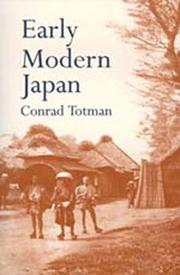
The standard scholarly survey of the period, strong on political economy, demography and forestry — Totman's own specialism, and the reason this is the best book on the material limits the regime ran into.

The alternate-attendance system in practice: the processions, the costs, the Edo residences, and what samurai from the provinces made of the capital. The best demonstration of how a single institution shaped the entire country.
The book that dismantled the sealed-country picture, showing sustained diplomacy with Korea, the Ryukyus, China and the Dutch, used to build the shogunate's own legitimacy. Read it as the correction to the version of sakoku you almost certainly arrived with.
Life inside the peace
IntermediateSee Tokugawa society from below and from within — its cities, its commercial print culture, its material standard of living, and one ordinary samurai's chaotic life.
▸ Study plan for this stage
Pace: Eight to ten weeks, and the most enjoyable stage. Dunn's Everyday Life in Traditional Japan is around 200 pages, class by class, and reads in a week — treat it as an orientation rather than as current scholarship, since it is an older book and the field has moved considerably. Japan in Print is arou
- The texture of the status order in daily life: what a townsman, a farmer, a priest, an actor and a samurai each could and could not do, wear, own and buy
- The paradox at the centre of the period — merchants at the bottom of the formal status order and increasingly at the top of the real economy, with sumptuary law as the regime's losing response
- Berry's argument in Japan in Print: a seventeenth-century explosion of commercial publishing produced maps, guidebooks, directories and encyclopaedias that let people imagine Japan as a single knowable place
- Information as a social force rather than a background condition — the claim that a public formed around printed reference works before it formed around politics
- Edo, Osaka and Kyoto as three cities with three functions, and the urban culture of theatre, publishing and pleasure districts that grew in the space the peace created
- Musui's Story as the sharpest available corrective to any idealised warrior class: a low-ranking samurai brawling, running confidence tricks and failing for decades to obtain an appointment
- The structural problem the autobiography illustrates without arguing — far more hereditary retainers than posts, fixed stipends against rising prices, and no legitimate route out
- That an older survey like Dunn's remains useful as a first picture precisely because it is descriptive, and that its interpretive frame should be checked against Berry and Totman
- Using Dunn, describe a day for a townsman and a day for a low-ranking samurai. Which has more freedom of action, and in what respects?
- What kinds of books were actually being printed in Berry's seventeenth century, and who bought them?
- Berry claims print created a public. What exactly does she mean by that, and what evidence supports it?
- What is Katsu Kokichi's income, and what does he actually do to live? The gap between the two is the samurai problem in one life.
- Musui shows no shame about conduct the official ideology condemned. What does that tell you about how much the ideology governed behaviour?
- Where does Dunn's picture of the period conflict with Totman's or Berry's, and which would you trust on what?
- Read Musui's Story in two sittings. It is short, comic and cumulative, and spreading it out blunts it.
- List every printed genre Berry discusses and note what each let a reader do that they could not do before. The list is the argument.
- From Dunn, write a one-page description of a single Edo street, drawing only on what he documents. The exercise forces you to notice how much is furniture and how much is evidence.
- Track Katsu Kokichi's sources of income across the book and total them. Doing the arithmetic is the fastest route to understanding the retainer surplus.
- Compare Dunn's account of samurai life with Musui's own. Deciding which to believe, and about what, is the skill this stage teaches.
Next up: Musui's failure is not personal but structural, which is exactly the problem the final stage takes up in scholarly form — a warrior class with no war, and a regime that ran out of time to solve it.
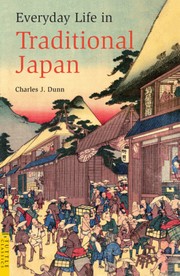
A short, warm, class-by-class account of how townsmen, farmers, priests, actors and samurai lived. It is from 1969 and the scholarship has moved on, but nothing has replaced it as a first picture of the texture of the period.

On the seventeenth-century explosion of commercial publishing — maps, guidebooks, directories, encyclopaedias — and how it created a public that could imagine Japan as a whole. A genuinely original argument about how information changes a society.
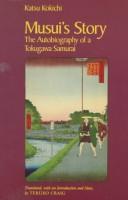
The autobiography of a low-ranking samurai who spent his life brawling, running con games and failing to get an appointment. Short, funny, and the sharpest possible corrective to any idealised picture of the warrior class.
The samurai problem, and the end
IntermediateEngage scholarship on how a warrior class was domesticated, whose lives the standard narrative omits, and how the regime fell so quickly once Perry arrived.
▸ Study plan for this stage
Pace: Fourteen to sixteen weeks and by far the heaviest stage. The Taming of the Samurai is around 450 pages of historical sociology with a substantial theoretical apparatus; four weeks, and read the theoretical chapters slowly rather than skipping them. The Weak Body of a Useless Woman is around 410 page
- Ikegami's central question: how a violent honour culture was converted into disciplined bureaucratic service without the honour ideology ever being abandoned
- Honorific individualism as her key term — the argument that samurai self-assertion was not suppressed but redirected, which is why the class could produce both meticulous administrators and political assassins
- Walthall's method: recovering the political life of a village woman from sources not designed to record such a person, which is a lesson in what the standard narrative structurally omits
- Matsuo Taseko as evidence that late Tokugawa political activism reached well beyond the samurai class, and that the standard actors are an artefact of the archive
- Totman's insistence that the shogunate's own reform attempts be taken seriously rather than treated as doomed gestures, which turns the collapse from an inevitability into a sequence of decisions
- The specific pressures of the final six years: foreign treaties, domainal factionalism, the imperial court as a rival source of legitimacy, and a fiscal position that could not fund a modern military
- Beasley on the transfer of power itself — who made the restoration, from which domains, and by what means — which is the clearest available account of the actual mechanics
- That both Beasley and Walthall answer the same question differently: who overthrew the shogunate, and what the answer depends on is which sources you count
- What does Ikegami mean by honorific individualism, and how does it explain both bureaucratic discipline and political violence in the same class?
- What sources does Walthall use to reconstruct Taseko's life, and what would be invisible without them?
- Which of the shogunate's final reforms does Totman treat as genuinely promising, and why did each fail?
- Beasley and Walthall would give different answers to who made the restoration. Set out both, and say what the difference rests on.
- Was the collapse inevitable after Perry? Argue that it was, then that it was not, using Totman's evidence for both.
- Having read the whole path, what was the Tokugawa peace's greatest achievement and its most serious unresolved failure?
- Write 300 words applying Ikegami's framework to Katsu Kokichi from the previous stage. The fit is imperfect and working out where is the most useful thing in this stage.
- Build a timeline of 1853 to 1868 from Totman with each shogunal decision marked. The density of decisions in those years is itself the finding.
- List every source type Walthall uses and mark which ones the standard political narrative also draws on. The non-overlap is the point of the book.
- Compare Totman's and Beasley's accounts of any single event in 1867, noting where they differ in emphasis rather than fact.
- Write a 1,000-word answer to why the shogunate fell so fast, citing at least four books from this path and marking every sentence that is a judgement rather than a finding.
- Return to your chronology from the first stage and annotate the final decade with what you now know. The difference between the two versions measures the path.
Next up: This is the end of the path. The natural next step is the Meiji period itself, read with the awareness this path has given you that the new state was built by people formed entirely inside the old one.
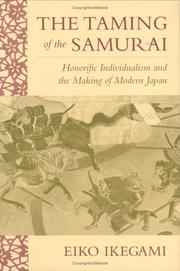
A historical sociologist's account of how a violent honour culture was converted into disciplined bureaucratic service without ever quite losing the violence. Theoretically framed and the most intellectually ambitious book on the path.
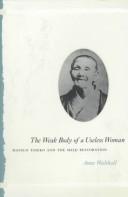
A biography of Matsuo Taseko, a village woman who became a political activist in the last Tokugawa years. Read it against Ikegami: it recovers a life the standard sources were not designed to record.
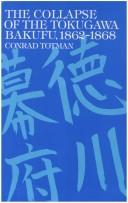
A close political history of the final six years, taking the shogunate's own attempts at reform seriously rather than treating its fall as foregone. Detailed and assumes you know the institutions from stage two.

The standard account of what replaced the shogunate and who actually made the restoration. From 1972 and long superseded on some points, but still the clearest treatment of the transfer of power itself — the right closing book because the Tokugawa period is defined partly by how it ended.
Discussion
Keep reading
Paths that share books, cover the same subject, or open a related topic.
