The Meiji Restoration is usually compressed into a slogan — Japan modernized fast — which hides the strangest thing about it. The men who overthrew the shogunate were samurai, and within fifteen years they had abolished their own hereditary class, its stipends, and its swords. Reading in the right order is what makes that legible rather than miraculous.
The second difficulty is that "restoration" is itself a claim. The 1868 settlement was presented as returning power to an emperor who had not exercised it for centuries, and that framing was constructed deliberately, in stages, by people who knew what they were doing. If you read the political narrative before you read anything about how the ideology was manufactured, you will absorb the manufactured version.
Start inside a samurai life
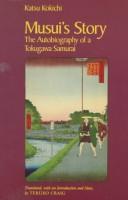
Musui's story is the autobiography of Katsu Kokichi, a low-ranking samurai who wrote it in the 1840s — before the Restoration, and with no idea one was coming. He was a brawler, a horse trader, and a serial embarrassment to his family, and the book is invaluable precisely because it is not heroic. It shows a warrior class that had been without a war for two centuries and was drifting into debt and idleness, which is the actual precondition for everything that follows.
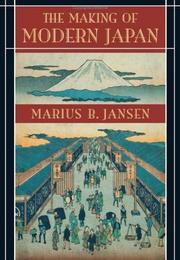
Then read The Making of Modern Japan by Marius Jansen. It is long, and it covers the Tokugawa period through the twentieth century, but it is the best single narrative in English and it puts the Restoration where it belongs — in the middle of a longer story rather than at the beginning of one.
Get the politics and the people
Sakamoto Ryōma and the Meiji Restoration, also by Jansen, follows one of the Restoration's key brokers, the Tosa samurai who helped negotiate the Satsuma-Chōshū alliance and was assassinated before he could see the outcome. Because Jansen wrote it decades before the survey, it is a more granular, archival book, and the two together give you both altitude and detail.
W. G. Beasley's The Meiji restoration is the standard political history of the period itself: the treaty crisis, the domain rivalries, the collapse of the bakufu, and the early institution-building. It is drier than Jansen and worth the effort. If you only have room for one of Jansen's two books alongside Beasley, take the survey and skip the Sakamoto biography until later.
Then the ideas and the myth-making
Civilization and enlightenment is Albert Craig's study of Fukuzawa Yukichi and the intellectual program — bunmei kaika — that gave the reforms their language. It explains why Japanese elites read Guizot and Buckle, and what they thought "civilization" was a ladder toward.
Inventing Japan is Ian Buruma's short, argumentative account running from 1853 to 1964, useful for its bluntness about how the Meiji state's inventions carried into the militarism of the 1930s. Finish with Carol Gluck's Japan's Modern Myths, which dissects how late-Meiji ideologues built the emperor-centered national creed out of assorted and often contradictory materials. Read Gluck last and you will be able to see the seams in everything you read earlier.
For the comparative angle — state-building, elite revolutions, constitutional design — the political science hub carries the theoretical literature.
Work through in this order and the Restoration becomes a set of contested choices rather than a national coming-of-age story. Follow the full path to keep the sequence.
Follow the full ordered path here: How to Learn the Meiji Restoration from Books, in Order.