How to learn Physics
This curriculum takes a complete beginner from intuitive wonder about the physical world all the way to university-level classical and modern physics. Each stage builds the conceptual vocabulary and mathematical toolkit needed for the next, so that by the end the reader can engage with graduate-level texts and research with confidence.
Foundations: Wonder & Intuition
BeginnerDevelop a vivid, qualitative understanding of how the physical world works — from motion and energy to atoms and light — with no mathematics required.
▸ Study plan for this stage
Pace: 10–12 weeks total, roughly 20–25 pages/day, 5 days/week. Week 1–5: Feynman Lectures Vol. 1 (focus on Chapters 1–20, skipping heavy math — read for narrative and physical intuition). Weeks 6–7: Six Easy Pieces (a curated, accessible distillation — read one "piece" per 2–3 days, re-reading key passage
- The atomic hypothesis — Feynman's claim in Vol. 1 that all physical knowledge could be captured in the idea that matter is made of atoms in constant motion
- Conservation laws — energy, momentum, and why 'something is always preserved' even as the world changes, introduced qualitatively across Feynman Vol. 1 and Six Easy Pieces
- The nature of physics as a way of thinking — Feynman's recurring theme that science is about doubt, observation, and successive approximation, not memorized facts
- Gravity as geometry and universal force — from Feynman's treatment of gravitation in Vol. 1 to Hawking's spacetime curvature in A Brief History of Time
- Quantum weirdness and the limits of classical intuition — Feynman's introduction to quantum behavior in Six Easy Pieces (wave-particle duality, probability, uncertainty)
- The arrow of time and entropy — Hawking's discussion of why time has a direction and what the second law of thermodynamics means for the universe
- Relativity and the fabric of spacetime — special and general relativity as presented by both Feynman (Vol. 1) and Hawking, emphasizing conceptual over mathematical content
- The large-scale structure of the universe — Hawking's narrative of the Big Bang, black holes, and cosmological expansion as the grand stage on which physics plays out
- In your own words, what is the atomic hypothesis, and why does Feynman call it the single most important scientific idea? (Feynman Lectures Vol. 1, Ch. 1)
- What does it mean to say energy is 'conserved'? Can you give two everyday examples — one from Feynman Lectures Vol. 1 and one you observe yourself?
- How does Feynman in Six Easy Pieces explain the difference between the way physics works and the way most people think science works — and why does he emphasize doubt?
- What is the key conceptual leap from Newtonian gravity to Einstein's general relativity as Hawking describes it in A Brief History of Time — and why does mass 'curve' spacetime?
- What makes quantum mechanics so counterintuitive, according to Feynman in Six Easy Pieces, and what everyday analogy does he use to gesture at wave-particle duality?
- Why does time have a direction (the 'arrow of time'), and how does Hawking connect this to the expansion of the universe and to entropy?
- Atomic imagination sketch: After reading Feynman Vol. 1 Ch. 1, draw or describe in a paragraph what a glass of water looks like 'zoomed in' to the atomic scale — motion, spacing, and collisions included. Compare your sketch to Feynman's own description.
- Energy audit journal: For one full day, track five energy transformations you personally witness (e.g., phone charging, a ball rolling, food being eaten). Label the 'before' and 'after' energy forms using vocabulary from Feynman Lectures Vol. 1 and Six Easy Pieces.
- Six Easy Pieces re-read & précis: After finishing each of the six chapters, write a 3–5 sentence plain-English summary as if explaining it to a curious 12-year-old. Collect all six into a personal 'mini-textbook.'
- Spacetime thought experiment: Using only Hawking's descriptions in A Brief History of Time (no outside sources), write a one-page explanation of why a clock runs slower near a massive object. Then find one real-world technology (e.g., GPS) that must account for this effect.
- Question wall: Keep a running list of every question these three books raise but do not fully answer for you. At the end of the stage, sort them into categories (quantum, cosmology, thermodynamics, etc.) — this list becomes your personal roadmap for the next stage.
- Concept web: Draw a single diagram connecting at least six key concepts across all three books (e.g., atoms → energy → entropy → arrow of time → Big Bang). Annotate each link with one sentence explaining the connection, citing the specific book where you encountered it.
Next up: By building rich qualitative intuitions about motion, energy, atoms, spacetime, and quantum strangeness through Feynman and Hawking's narrative styles, the reader has the conceptual scaffolding needed to engage with the mathematical language that makes these ideas precise — setting the stage for an introductory quantitative physics curriculum.
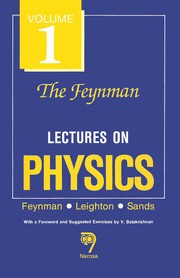
Feynman's conversational genius makes the deepest ideas in physics feel accessible and exciting; Vol. 1 covers mechanics, heat, and waves and is the single best entry point for building physical intuition.

Distilled from the Feynman Lectures, this slim book reinforces the core concepts of energy, gravity, and quantum behavior in plain language — perfect for cementing beginner intuition before moving on.

Broadens the beginner's horizon to cosmology, space-time, and black holes, motivating why deeper study of physics is worth the effort.
Building the Mathematical Language
BeginnerAcquire the algebra, trigonometry, and introductory calculus needed to read and write physics equations, and see them applied to real physical problems.
▸ Study plan for this stage
Pace: 10–13 weeks total. Weeks 1–5: "Calculus Made Easy" (~20–25 pages/day, reading every chapter sequentially and pausing to work every example). Weeks 6–13: "University Physics" by Sears (~25–30 pages/day, focusing on the mechanics, waves, and introductory electromagnetism chapters); revisit "Calculus M
- Limits and the intuitive meaning of 'infinitely small' quantities (dx, dy) as introduced by Thompson's plain-language approach
- Differentiation rules: power rule, product rule, quotient rule, and chain rule, all derived and practiced through Thompson's worked examples
- Integration as the reverse of differentiation and as area under a curve, including definite integrals and constants of integration
- Algebraic manipulation of physics equations: isolating variables, unit consistency, and dimensional analysis as practiced throughout Sears
- Trigonometric functions (sin, cos, tan) and their derivatives/integrals, essential for wave motion and vector components in Sears
- Vectors: addition, subtraction, dot product, and cross product as the geometric-algebraic language of forces and fields in University Physics
- Translating physical situations into differential equations (e.g., Newton's second law as F = ma = m d²x/dt²) using both books together
- Graphical interpretation of derivatives (slope of a position–time curve = velocity) and integrals (area under a velocity–time curve = displacement), reinforced by Sears' kinematics chapters
- After reading Thompson, can you explain in plain language what a derivative represents, and correctly differentiate at least five different function types (polynomial, trigonometric, exponential, product, composite)?
- Can you set up and evaluate a definite integral to find the displacement of an object given its velocity function, as modeled in the kinematics sections of University Physics?
- Given a force diagram in Sears, can you resolve all forces into x- and y-components using trigonometry and write the corresponding Newton's-law equations?
- Can you explain the relationship between position, velocity, and acceleration using both the calculus notation from Thompson (dx/dt, d²x/dt²) and the graphical representations in University Physics?
- Can you perform dimensional analysis on any equation encountered in Sears to verify it is physically consistent, and identify the SI units of each quantity?
- Can you use vector dot and cross products to compute work done by a force and the torque produced by a force, as defined in University Physics?
- Thompson drill set: After each chapter of 'Calculus Made Easy,' write out every example from memory on a blank sheet, then check against the book. Aim for zero errors before moving to the next chapter.
- Derivative/integral flashcards: Create a two-sided card deck (function on front, derivative and integral on back) covering all function types in Thompson. Review daily for the entire stage using spaced repetition.
- Unit-conversion and dimensional-analysis worksheet: Pick 10 equations from the first five chapters of University Physics, strip the numbers, and verify dimensional consistency from scratch using only SI base units.
- Kinematics graphing exercise: Using data from any projectile-motion problem in Sears, plot x(t), v(t), and a(t) by hand; confirm that the slope of each curve equals the next curve, linking Thompson's calculus to Sears' physics.
- Vector decomposition practice: Draw 15 force diagrams from the statics and dynamics chapters of University Physics, resolve every force into components, and solve for unknowns algebraically — without using a calculator until the final arithmetic step.
- Integrated problem journal: For every worked example in University Physics, rewrite the solution in full calculus notation (using d/dt, integrals, and limit arguments from Thompson) even when Sears uses an algebraic shortcut. Collect these in a dedicated notebook as a personal reference.
Next up: ">Mastering the mathematical toolkit in these two books — derivatives, integrals, vectors, and their direct mapping onto physical laws — gives the reader the fluency needed to engage confidently with the more advanced theoretical frameworks and quantitative problem-solving that characterize the next stage of the curriculum.

The friendliest introduction to differential and integral calculus ever written; removes the mathematical fear that blocks most beginners from progressing in physics.

The gold-standard first-year university textbook covering mechanics, thermodynamics, waves, electricity, and optics with worked examples — reads naturally after calculus basics are in place.
Classical Physics: Going Deeper
IntermediateMaster Newtonian mechanics, electromagnetism, and thermodynamics at a rigorous analytical level, and develop problem-solving fluency.
▸ Study plan for this stage
Pace: 20–24 weeks total, reading ~25–35 pages/day, 5 days/week. Suggested breakdown: Griffiths' Introduction to Electrodynamics — 7–8 weeks (cover all 12 chapters, ~500 pp); Schroeder's An Introduction to Thermal Physics — 5–6 weeks (cover Parts I–III, ~400 pp); Goldstein's Classical Mechanics — 8–10 week
- Electrostatics and magnetostatics: Coulomb's law, Gauss's law, the Biot–Savart law, and the multipole expansion as developed in Griffiths Chapters 1–5
- Maxwell's equations in both integral and differential form, electromagnetic waves, and the Poynting vector (Griffiths Chapters 7–9)
- Potentials, gauges (Coulomb and Lorenz), and radiation from accelerating charges (Griffiths Chapters 10–11)
- The laws of thermodynamics, entropy, and the statistical basis of temperature and pressure as built up in Schroeder Part I
- Thermodynamic potentials (Helmholtz, Gibbs), chemical potential, and phase equilibria (Schroeder Part II)
- Partition functions, Boltzmann and quantum statistics, and connections to macroscopic thermodynamic quantities (Schroeder Part III)
- The Lagrangian and Hamiltonian formulations of classical mechanics, generalized coordinates, and the principle of least action (Goldstein Chapters 1–2, 8)
- Canonical transformations, Poisson brackets, and Hamilton–Jacobi theory as the classical precursor to quantum mechanics (Goldstein Chapters 9–10)
- Starting from Maxwell's equations as presented in Griffiths, how do you derive the wave equation for electromagnetic fields in vacuum, and what does the speed of light represent in that derivation?
- Using Griffiths' treatment of the multipole expansion, how does the leading-order term of the potential from a charge distribution change as you move far from the source, and why does this matter for real-world approximations?
- As Schroeder develops it, what is the statistical definition of entropy, and how does it reconcile with the thermodynamic definition dS = dQ/T?
- How do thermodynamic potentials (Helmholtz free energy, Gibbs free energy) in Schroeder determine the direction of spontaneous processes under different constraints, and when do you choose one over the other?
- In Goldstein's Lagrangian framework, how does the choice of generalized coordinates simplify a constrained mechanical problem compared with the Newtonian approach, and what role do Lagrange multipliers play?
- What is the physical and mathematical significance of Poisson brackets in Goldstein's Hamiltonian mechanics, and how do they foreshadow the commutator structure of quantum mechanics?
- Griffiths problem sets (boundary-value problems): Work through at least 10 boundary-value problems from Griffiths Chapters 3–4 using separation of variables in Cartesian and spherical coordinates; verify your solutions satisfy all boundary conditions explicitly.
- Maxwell's equations drill: Derive each of the four Maxwell equations from the corresponding integral law (as Griffiths presents them), then re-derive them in differential form using the divergence and Stokes theorems — do this from memory at least twice.
- Schroeder thermodynamic cycles: For at least three different engines (Carnot, Otto, refrigerator), compute efficiency or COP using Schroeder's framework; draw the full P–V and T–S diagrams and identify where each thermodynamic potential is minimized.
- Partition function calculations: Using Schroeder's Part III approach, compute the partition function, average energy, and heat capacity for at least three systems (e.g., two-state paramagnet, Einstein solid, ideal gas) and verify the high-temperature classical limit.
- Lagrangian mechanics problems from Goldstein: Set up and solve the equations of motion for at least five systems (e.g., double pendulum, bead on a rotating hoop, central-force orbit, coupled oscillators) using the Lagrangian method; compare the effort with the Newtonian approach.
- Canonical transformation and Poisson bracket exercise: Using Goldstein Chapters 9–10, verify that a given transformation is canonical by computing Poisson brackets, then apply the Hamilton–Jacobi equation to solve the simple harmonic oscillator and the Kepler problem completely.
Next up: Mastering Maxwell's equations, statistical mechanics, and the Lagrangian/Hamiltonian formalism here provides the essential mathematical language and physical intuition — wave equations, operator-like structures, energy quantization hints — that makes the leap into quantum mechanics and relativity both natural and rigorous.

The definitive undergraduate text on electromagnetism; its clear prose and superb problem sets build the vector-calculus intuition essential for all advanced physics.
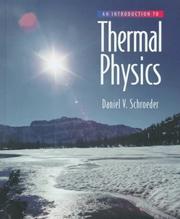
Covers thermodynamics and statistical mechanics with exceptional clarity, bridging the gap between classical and modern physics and preparing the reader for quantum statistics.
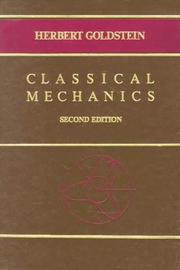
The canonical graduate-level treatment of Lagrangian and Hamiltonian mechanics; reading it after Griffiths and Schroeder reveals the deep mathematical structure underlying all of classical physics.
Modern Physics: Quantum & Relativity
IntermediateUnderstand the two great revolutions of 20th-century physics — quantum mechanics and special/general relativity — at a mathematical level.
▸ Study plan for this stage
Pace: 16–20 weeks total. Weeks 1–11: Griffiths' Introduction to Quantum Mechanics — aim for ~25–30 pages/day, 5 days/week, working through all chapters in order (Ch. 1–2 in weeks 1–2, Ch. 3–4 in weeks 3–4, Ch. 5–6 in weeks 5–6, Ch. 7–9 in weeks 7–9, Ch. 10–12 in weeks 10–11). Weeks 12–20: Carroll's Spacet
- The Schrödinger equation (time-dependent and time-independent) and its probabilistic interpretation of the wavefunction (Griffiths Ch. 1–2)
- Operator formalism, Hermitian operators, eigenvalues/eigenfunctions, and Dirac bra-ket notation (Griffiths Ch. 3)
- Exactly solvable systems: infinite square well, harmonic oscillator (ladder operators), hydrogen atom, and their quantized energy spectra (Griffiths Ch. 2, 4)
- Spin, angular momentum addition, and identical particles/exchange symmetry (Griffiths Ch. 4–5)
- Approximation methods: time-independent perturbation theory, the variational principle, and the WKB approximation (Griffiths Ch. 6–9)
- The postulates of special relativity, Lorentz transformations, spacetime intervals, and four-vectors (Carroll Ch. 1)
- Differential geometry foundations: manifolds, tensors, covariant derivatives, and the metric tensor (Carroll Ch. 2–3)
- Einstein's field equations, the Schwarzschild solution, geodesics, and the physical predictions of general relativity (gravitational redshift, light bending, black holes) (Carroll Ch. 4–9)
- Starting from the time-dependent Schrödinger equation, how do you derive stationary states, and what physical meaning does the wavefunction |ψ|² carry? (Griffiths Ch. 1–2)
- How does the operator formalism unify the wave-mechanics and matrix-mechanics pictures, and what does the generalized uncertainty principle say about non-commuting observables? (Griffiths Ch. 3)
- Why are spin-1/2 particles fundamentally different from classical spinning objects, and how does the Pauli exclusion principle arise from the symmetrization requirement for identical fermions? (Griffiths Ch. 4–5)
- When and why does first-order perturbation theory break down, and how does the variational principle provide an upper bound on the ground-state energy? (Griffiths Ch. 6–7)
- What is a spacetime manifold, and how does the metric tensor encode the geometry of curved spacetime in Carroll's framework? (Carroll Ch. 2–3)
- How do Einstein's field equations relate the curvature of spacetime (Einstein tensor) to the distribution of matter and energy (stress-energy tensor), and what does the Schwarzschild solution tell us about black holes? (Carroll Ch. 4–6)
- Work every odd-numbered problem in Griffiths Chapters 1–3 by hand; check normalization, orthogonality, and expectation values explicitly to build fluency with the wavefunction machinery.
- Derive the energy ladder of the quantum harmonic oscillator using only the algebraic (ladder operator) method from Griffiths Ch. 2, then re-derive the same spectrum using the power-series (Hermite polynomial) method and reconcile the two approaches.
- For the hydrogen atom (Griffiths Ch. 4), compute ⟨r⟩, ⟨r²⟩, and the most probable radius for the 1s and 2p states from scratch; compare with the Bohr model predictions and explain the differences.
- Apply first-order degenerate perturbation theory (Griffiths Ch. 6) to the first excited state of the infinite square well with a delta-function perturbation; verify your result numerically by diagonalizing the 2×2 perturbation matrix.
- Using Carroll's index notation (Ch. 2–3), practice raising/lowering indices and computing the Christoffel symbols Γᵅ_μν for the Schwarzschild metric by hand; then verify one geodesic equation (e.g., radial free-fall) matches the Newtonian limit.
- Derive the three classic tests of general relativity (gravitational redshift, deflection of light, perihelion precession) from the Schwarzschild solution using Carroll Ch. 5–6, writing out each step of the geodesic calculation and comparing the GR prediction to the Newtonian result.
Next up: Mastering the mathematical language of quantum mechanics and curved-spacetime geometry here — wavefunctions, operators, tensors, and field equations — provides the indispensable foundation for the next stage, where these two frameworks are pushed to their limits in quantum field theory, statistical mechanics, and the frontier of modern theoretical physics.
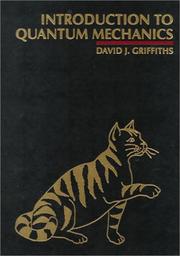
The most widely used undergraduate quantum mechanics text; its step-by-step approach from wave functions to spin makes the subject tractable immediately after classical mechanics.

A rigorous yet readable introduction to general relativity and differential geometry; pairs perfectly with Griffiths QM to complete the modern-physics picture.
Advanced Synthesis: Field Theory & Beyond
ExpertEngage with quantum field theory and the deepest current framework of fundamental physics, synthesizing everything learned in prior stages.
▸ Study plan for this stage
Pace: 16–20 weeks total. Weinberg Vol. 1: ~8–10 weeks at ~20–25 pages/day (dense formalism — budget extra time for derivations). Weinberg Vol. 2: ~6–8 weeks at ~15–20 pages/day (non-Abelian gauge theory and the Standard Model demand slower, more deliberate reading). Feynman's memoir: 1 week, read freely a
- Canonical quantization of fields: promoting classical fields to operators and deriving commutation/anticommutation relations for bosons and fermions (Weinberg Vol. 1, Ch. 1–5)
- S-matrix theory and the cluster decomposition principle: understanding why local quantum field theory is essentially the unique framework consistent with Lorentz invariance and cluster decomposition (Weinberg Vol. 1, Ch. 3–4)
- Feynman rules derived from first principles: path integrals, Wick's theorem, and the systematic generation of perturbation-theory diagrams without 'just drawing pictures' (Weinberg Vol. 1, Ch. 6–9)
- Renormalization theory: regularization schemes, counterterms, the Wilsonian renormalization group, and why renormalizability is a physical — not merely aesthetic — requirement (Weinberg Vol. 1, Ch. 11–12)
- Non-Abelian gauge theories (Yang–Mills): local symmetry, covariant derivatives, gauge-fixing, Faddeev–Popov ghosts, and BRST symmetry (Weinberg Vol. 2, Ch. 15–17)
- Spontaneous symmetry breaking and the Higgs mechanism: Goldstone's theorem, mass generation for gauge bosons, and the electroweak unification (Weinberg Vol. 2, Ch. 19–21)
- Anomalies: chiral anomalies, their cancellation conditions, and their role in constraining consistent theories (Weinberg Vol. 2, Ch. 22)
- The culture and psychology of discovery: Feynman's memoir illustrates how deep physical intuition, play, and relentless questioning drive real scientific progress — a meta-lesson for reading Weinberg
- Starting from Weinberg's axioms (Lorentz invariance + cluster decomposition), why is a local quantum field theory the natural — almost inevitable — mathematical structure? Trace the argument through Vol. 1.
- Derive the Feynman rules for scalar φ⁴ theory and QED from the path-integral formalism as presented in Weinberg Vol. 1. What role does the generating functional play, and how do sources J couple to fields?
- Explain the physical meaning of renormalization beyond 'removing infinities': how does Weinberg's Wilsonian perspective reframe divergences as signals of new physics at short distances?
- What is the Faddeev–Popov procedure in Weinberg Vol. 2, and why are ghost fields not a pathology but a necessary bookkeeping device for maintaining unitarity in non-Abelian gauge theories?
- Walk through the Higgs mechanism as presented in Vol. 2: how does spontaneous breaking of a local gauge symmetry give mass to gauge bosons without violating unitarity or introducing physical Goldstone bosons?
- Reflecting on Feynman's memoir: identify two specific anecdotes that illuminate a habit of mind or problem-solving strategy directly applicable to mastering the formalism in Weinberg. How do they connect?
- Derivation drill (Weinberg Vol. 1): Reproduce, by hand and without notes, the derivation of the Feynman propagator for a free scalar field from the canonical commutation relations. Then repeat for the Dirac field, paying attention to the sign differences that enforce Fermi statistics.
- Feynman-rule extraction (Weinberg Vol. 1, Ch. 6–9): Starting from the QED Lagrangian, systematically extract all Feynman rules (vertices, propagators, external-line factors) using Weinberg's path-integral approach. Cross-check by computing the tree-level electron–electron scattering amplitude and comparing with the known Møller scattering formula.
- Renormalization group exercise (Weinberg Vol. 1, Ch. 18): Compute the one-loop beta function for φ⁴ theory and for QED. Plot the running coupling as a function of energy scale and identify the Landau pole in QED vs. asymptotic freedom in a non-Abelian theory (anticipating Vol. 2).
- Ghost and gauge-fixing exercise (Weinberg Vol. 2, Ch. 15–16): For SU(2) Yang–Mills theory, write out the full Faddeev–Popov Lagrangian including ghost terms in Rξ gauge. Verify that the ghost contribution cancels the unphysical longitudinal polarizations in a one-loop self-energy calculation.
- Symmetry-breaking calculation (Weinberg Vol. 2, Ch. 19–21): Work through the SU(2)×U(1) electroweak model step by step — identify the Higgs doublet, apply the Brout–Englert–Higgs mechanism, and derive the W and Z boson masses and the Weinberg angle from the parameters of the scalar potential.
- Feynman reflection journal: After each major chapter of Weinberg, write a one-paragraph 'Feynman entry' — explain the core idea as if telling a story to a curious non-specialist, in the irreverent, concrete spirit of the memoir. This forces genuine comprehension and surfaces hidden gaps.
Next up: Mastering Weinberg's rigorous QFT framework and internalizing Feynman's ethos of fearless inquiry positions the reader to tackle frontier topics — string theory, loop quantum gravity, effective field theories, or condensed-matter applications of QFT — where the Standard Model is the known starting point and the challenge is pushing beyond it.
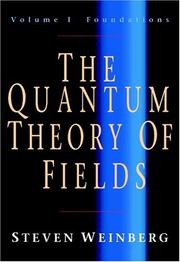
Written by a Nobel laureate who helped build the Standard Model, this is the authoritative graduate text on quantum field theory and the natural culmination of the entire curriculum.
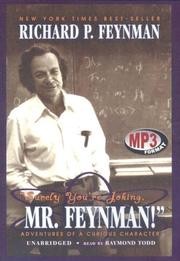
Placed last as a reward and a reminder: Feynman's memoir illustrates the curiosity, creativity, and joy that drive great physicists — the perfect closing inspiration after years of rigorous study.
Discussion
Keep reading
Paths that share books, cover the same subject, or open a related topic.