Actually enjoy Shakespeare
This four-stage curriculum takes a complete beginner from "Shakespeare is intimidating" to genuinely loving the plays on the page and stage. It starts with approachable guides that demystify the language and context, moves through the essential comedies and tragedies in a reader-friendly order, then deepens understanding of Shakespeare's craft and cultural staying power — so each stage builds the confidence and vocabulary needed for the next.
Cracking the Code — How to Read Shakespeare
BeginnerOvercome fear of the language, understand how to read a play (not a novel), and get a mental map of Shakespeare's world before touching a single play.
▸ Study plan for this stage
Pace: 6–8 weeks total. Week 1–2: Greer's "Shakespeare" (~20–25 pages/day) — read as a brisk biographical and cultural orientation. Week 3–4: Macrone's "Brush Up Your Shakespeare!" (~15–20 pages/day, dipping in thematically rather than cover-to-cover) — treat it as a reference companion, spending time with
- Shakespeare as a product of his time: Greer's portrait of the Elizabethan/Jacobean world — the theatre industry, patronage, and social hierarchies — gives language and plot choices their historical logic.
- The play as performance text, not literary novel: Royle's central argument that Shakespeare wrote for ears and bodies on a stage, not eyes on a page, reshapes how you approach every line.
- Verse vs. prose as a dramatic signal: understanding when and why characters shift between iambic pentameter and prose (status, emotion, sanity, comedy) as introduced through both Royle and illustrated by Macrone's examples.
- The living afterlife of Shakespeare's language: Macrone demonstrates that hundreds of everyday English phrases originate in the plays, making the language feel familiar rather than alien.
- Character voice and dramatic function: Royle's guidance on reading speeches as actions — what a character is *doing* with words, not just saying — is the single most important reading skill at this stage.
- The folio/quarto question and textual instability: Greer's biographical sections touch on how the plays were published and why no single 'perfect' text exists, calibrating beginner expectations.
- Genre as a map: the rough taxonomy of Comedies, Histories, and Tragedies (introduced by Greer and reinforced by Macrone's phrase groupings) gives the reader a mental filing system before reading any play.
- Reading aloud as comprehension tool: all three books, in different ways, imply that silent reading is the wrong mode — sound unlocks meaning.
- After reading Greer, can you describe in two or three sentences the social and commercial world Shakespeare was writing for — who paid, who performed, and who watched?
- What does Royle mean when he says a Shakespeare play should be read as a 'score' rather than a finished artwork, and how does that change your reading posture?
- Pick any five phrases from Macrone's book that you use (or have heard) in daily life — can you now trace each back to the play and dramatic context it came from?
- How do you identify whether a character is speaking in verse or prose, and what dramatic inference can you draw from that choice according to Royle?
- What is iambic pentameter, and why does knowing its rhythm help you when a line feels confusing or incomplete?
- Based on all three books, how would you explain to a nervous friend *why* Shakespeare's language feels hard — and give them two concrete strategies for getting past that barrier?
- Phrase archaeology (Macrone): Choose 10 phrases from 'Brush Up Your Shakespeare!' and for each one write one sentence on its original dramatic context and one sentence on how its modern meaning has shifted or stayed the same. Pin the list somewhere visible.
- Read-aloud drill (Royle): Select any two passages Royle quotes or analyses. Read each one silently first, then read it aloud twice — once at normal pace, once exaggerating the iambic beat. Write three observations about what changed in your understanding between the silent and spoken versions.
- Verse/prose detective (Royle + Macrone): Using the passages quoted across both books, go through and mark each one V (verse) or P (prose). For each, write one sentence guessing *why* Shakespeare made that choice for that character at that moment.
- Elizabethan world map (Greer): After finishing Greer, draw or diagram a simple 'ecosystem' of Shakespeare's world — include the Globe, the court, the printing trade, the acting companies, and the audience classes. Label each node with one fact from Greer.
- Personal glossary: As you move through all three books, keep a running document of words or constructions that confused you. By the end of week 6, look up each one and write a plain-English gloss. Aim for at least 30 entries.
- Stage reflection essay: Write 400–600 words answering: 'What was my biggest misconception about Shakespeare before this stage, and what from these three books most changed my thinking?' This becomes the baseline document you revisit at the end of the full curriculum.
Next up: By dismantling the language barrier and establishing how to listen to a play rather than decode it like a novel, this stage equips the reader with the perceptual tools — verse recognition, dramatic context, historical grounding — needed to sit down with an actual Shakespeare text and experience it as a living thing rather than an intimidating monument.
A slim, punchy overview of who Shakespeare was and why he matters — perfect first contact that takes under two hours and dissolves the myth of the unapproachable genius.
Shows how deeply Shakespeare's phrases live in everyday English, instantly making the language feel familiar rather than foreign — great confidence-builder before reading full plays.
A practical, friendly guide to the mechanics of reading verse drama: how speeches work, what to do when you're lost, and how to hear the rhythm — essential toolkit before Stage 2.
First Plays — Comedy and Wonder
BeginnerRead two of Shakespeare's most accessible and joyful plays with pleasure, using the tools from Stage 1, and discover that Shakespeare is genuinely funny.
▸ Study plan for this stage
Pace: 3–4 weeks total (~15–20 pages per sitting, 4–5 sittings per week). Week 1–2: Read A Midsummer Night's Dream — one act per sitting, re-reading key scenes (the lovers' quarrel, Bottom's transformation, the mechanicals' play-within-a-play) before moving on. Week 3–4: Read Much Ado About Nothing — one a
- Shakespearean comedy conventions: misunderstanding, disguise, and the happy ending as a feature, not a surprise
- The play-within-a-play as a device: how the mechanicals' performance in A Midsummer Night's Dream comments on theatre, illusion, and the audience's own experience
- Prose vs. verse as a social and tonal signal: how Shakespeare shifts between them to mark class, mood, and comedy (e.g., Bottom speaks prose; the lovers speak verse)
- The 'green world' or enchanted space: the forest in A Midsummer Night's Dream as a place where normal rules are suspended and transformation becomes possible
- Wit as character: how Beatrice and Benedick in Much Ado About Nothing use wordplay, insults, and banter as a form of intimacy and self-protection
- Dramatic irony in comedy: the audience knowing more than the characters (the gulling scenes in Much Ado, Puck's mistakes in A Midsummer Night's Dream) as the engine of comic pleasure
- The role of gender and power in comedy: how both plays use female characters (Helena, Hermia, Beatrice, Hero) to expose the absurdity of male authority
- Shakespeare's language as performance: understanding that the text is a script, meant to be heard and acted, not just read silently
- In A Midsummer Night's Dream, what does the forest represent, and how does the behavior of the characters change once they enter it compared to the Athenian court?
- How does Shakespeare use Bottom and the mechanicals to create comedy, and what does their play-within-a-play in Act 5 say about the nature of theatre and imagination?
- In Much Ado About Nothing, what is the difference between the 'merry war' of Beatrice and Benedick and the more conventional romance of Hero and Claudio — and which feels more alive, and why?
- How do the gulling scenes (Act 2, Scene 3 and Act 3, Scene 1) in Much Ado About Nothing work as comedy? What does the audience know that the characters don't, and how does that create pleasure?
- Both plays involve deception — Puck's love-potion errors and Don John's slander of Hero. How does Shakespeare signal which deceptions are harmless fun and which carry real danger?
- Where in each play did you genuinely laugh, smile, or feel delight? Can you point to the specific lines or moments, and explain what Shakespeare did to create that effect?
- Act it out: Choose one short scene from each play — the Bottom-as-ass scene (A Midsummer Night's Dream, Act 3, Scene 1) and the orchard gulling scene (Much Ado About Nothing, Act 2, Scene 3) — and read them aloud, ideally with another person taking different roles. Notice which lines land as funny when spoken that weren't obvious on the page.
- Prose vs. verse hunt: Go through one act of each play and mark every passage in prose with a 'P' and every passage in verse with a 'V'. Then ask: who is speaking, what is happening, and why might Shakespeare have made that choice? Write 3–4 sentences of reflection.
- Character voice journal: After finishing each play, write a short paragraph (5–8 sentences) in the voice of one character — Bottom bragging about his dream, or Beatrice writing a private letter about Benedick. Use their vocabulary and rhythm as you understand it from the text.
- Dramatic irony map: For Much Ado About Nothing, draw a simple diagram showing what each major character knows (or believes) at the end of Act 3. Use it to trace exactly where the audience's superior knowledge creates comedy or tension.
- Compare the endings: Both plays end in marriage. Write a half-page comparison: Do the endings feel earned? Which couple do you most believe in, and why? Use at least two specific quotations from the texts to support your view.
- Watch a scene: Find a freely available filmed production of either play (e.g., the RSC or Globe Theatre recordings) and watch one scene you have already read. Write three observations about how the performance changed or deepened your understanding of the text.
Next up: By discovering that Shakespeare's comedy is built on precise language, dramatic irony, and vivid character, the reader is now equipped to handle the greater emotional and moral complexity of his histories and tragedies, where those same tools — irony, disguise, the gap between appearance and reality — carry far higher stakes.
The ideal first play: short, visually magical, and full of broad comedy — the plot is easy to follow and the language is among Shakespeare's most musical and approachable.

Introduces Shakespeare's sparkling wit and battle-of-the-sexes comedy; after the Dream's fantasy, this grounds the reader in recognizable human relationships and sharper wordplay.
The Great Tragedies — Heart and Darkness
IntermediateEngage with Shakespeare's most celebrated tragic works, understanding how he builds character, moral complexity, and emotional devastation — and why these plays have defined Western drama.
▸ Study plan for this stage
Pace: 6–8 weeks total; ~20–25 pages/day. Suggested breakdown: Romeo and Juliet — 1 week (read the full play in 3–4 sittings, then spend 2–3 days reviewing); Hamlet — 2.5 weeks (read one act per sitting, allowing time to re-read key soliloquies); King Lear — 2.5 weeks (same act-by-act pace, with extra time
- The Tragic Hero: how Shakespeare constructs protagonists with a fatal flaw (hamartia) — Romeo's impulsive passion, Hamlet's paralytic introspection, Lear's catastrophic pride — that drives their downfall from within
- Fate vs. Free Will: the tension between external forces (the stars in Romeo and Juliet, the Ghost's command in Hamlet, the storm in King Lear) and the characters' own choices that seal their fates
- Moral Complexity and the Absence of Simple Villains: how figures like Tybalt, Claudius, and Edmund are given comprehensible motivations, blurring the line between antagonist and tragic agent
- The Function of Language: soliloquy as a window into interiority (Hamlet's 'To be, or not to be'), the contrast between verse and prose as a social and psychological marker, and the power of imagery (light/dark in Romeo and Juliet, sight/blindness in King Lear)
- Grief, Madness, and Emotional Devastation: the spectrum from Romeo and Juliet's romantic grief to Hamlet's performed and real melancholy to Lear's genuine psychological collapse — and what each reveals about the human mind under pressure
- The World Turned Upside Down — Social and Political Order: how each play stages a disruption of legitimate authority (feuding families, a usurped throne, a kingdom divided) and the catastrophic cost of restoring or failing to restore order
- Love in Multiple Registers: romantic love (Romeo and Juliet), filial love and its betrayal (King Lear), and the corrosive absence of love (Hamlet's disillusionment with Gertrude) as engines of tragedy
- Catharsis and the Purpose of Tragedy: Aristotle's concept applied — how Shakespeare uses pity and fear to produce emotional release, and why audiences leave these plays feeling enlarged rather than merely crushed
- In each of the three plays, identify the protagonist's central fatal flaw. How does that flaw interact with external circumstances — could the tragedy have been avoided if only the character had acted differently, or does the world of the play make catastrophe inevitable?
- Compare the role of language and speech in all three plays: How does Romeo use poetic language as both a weapon and a vulnerability? How do Hamlet's soliloquies function differently from his public speech? How does Lear's language deteriorate — and what does that deterioration mean?
- Each play features a moment of irreversible action — Romeo killing Tybalt, Hamlet killing Polonius, Lear dividing his kingdom. How does Shakespeare signal to the audience that the point of no return has been crossed, and what dramatic techniques does he use in each case?
- How does Shakespeare use secondary characters — the Nurse and Friar Lawrence in Romeo and Juliet, Horatio and the Gravedigger in Hamlet, the Fool and Edgar/Poor Tom in King Lear — to comment on, contrast with, or deepen the central tragic action?
- Trace the theme of sight and blindness — literal and metaphorical — across King Lear and compare it to the theme of light and darkness in Romeo and Juliet. What does Shakespeare suggest about the relationship between perception, knowledge, and suffering?
- After reading all three plays, how would you define 'Shakespearean tragedy' as a genre? What distinguishes it from simple sad stories, and what makes these particular plays feel timeless rather than merely historical?
- Soliloquy Close-Read: Choose one major soliloquy from each play (e.g., Romeo's balcony speech, Hamlet's 'To be, or not to be,' Lear's storm speech on the heath). Write a one-page annotation for each: paraphrase the argument line by line, identify the dominant imagery, and explain what the speech reveals about the character's inner state at that exact moment.
- Fatal Flaw Diagram: For each protagonist, draw a simple cause-and-effect chain showing how their specific flaw interacts with at least three plot events to produce the final catastrophe. Then write a short paragraph arguing whether you think the character is more victim of themselves or victim of circumstance.
- Rewrite a Scene with a Different Choice: Pick the pivotal 'point of no return' scene in one play (e.g., Romeo killing Tybalt, or Lear's division of the kingdom). Rewrite it — in prose is fine — so the character makes a different decision. Then write a brief analysis of how the rest of the play would have to change, and what this reveals about the play's internal logic.
- Character Voice Journal: After finishing each play, write a one-page journal entry in the first person from the perspective of a secondary character (the Nurse, Horatio, or the Fool). Have them reflect on the protagonist's downfall — what did they witness, what did they fail to prevent, and how do they feel about it? This forces you to inhabit the play's world from a different angle.
- Comparative Grief Essay (500–700 words): Write a short essay comparing how grief is expressed and functions differently in Romeo and Juliet versus King Lear. Consider: Who grieves? What do they grieve? Does grief lead to wisdom, madness, or paralysis? Use at least two specific textual quotations from each play.
- Staging Decision Exercise: Pick one scene from Hamlet that you find ambiguous (e.g., the 'To be, or not to be' scene, or Hamlet's behavior toward Ophelia in the nunnery scene). Write a director's note explaining two completely different ways the scene could be staged and acted, what each interpretation implies about Hamlet's character, and which you would choose and why.
Next up: Mastering how Shakespeare builds tragic interiority and moral ambiguity in these three plays equips the reader to engage with his more politically and philosophically complex works — the Roman tragedies, the problem plays, or the late romances — where the same tools of character, language, and dramatic structure are pushed into even more unsettling and experimental territory.

The most culturally familiar tragedy; reading it after the comedies shows how Shakespeare uses the same romantic energy but twists it into catastrophe — a perfect bridge into darker territory.
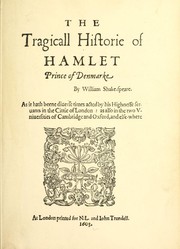
The central Shakespeare play in the Western canon; by this point the reader has enough language confidence to sit with its complexity and feel why it has haunted readers for four centuries.
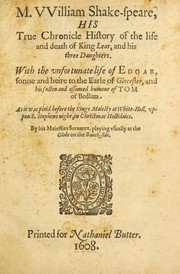
Shakespeare's most emotionally devastating work; saved for after Hamlet so the reader can appreciate how he pushes tragic form to its absolute limit.
Going Deeper — Craft, Context, and Enduring Power
ExpertUnderstand WHY Shakespeare has lasted 400 years — his language, his stagecraft, his cultural adaptability — and gain the critical vocabulary to watch productions and read any play independently.
▸ Study plan for this stage
Pace: 10–13 weeks total, reading ~25–35 pages/day on weekdays with weekends reserved for reflection and exercises. Suggested breakdown: Kermode's "Shakespeare's Language" — 3–4 weeks (dense linguistic close-reading; go slowly); Rosenbaum's "The Shakespeare Wars" — 4–5 weeks (longer, essayistic, and debate
- The evolution and idiosyncrasy of Shakespeare's dramatic language — Kermode's argument that Shakespeare's late style deliberately resists easy comprehension, creating 'difficulty' as a feature, not a flaw
- Crux and ambiguity as interpretive engines — how single words or punctuation choices (explored obsessively in Rosenbaum) can overturn an entire production's meaning, and why editors and directors must choose
- The 'Shakespeare Wars' themselves — the real intellectual and theatrical battles between rival scholars, directors, and editors (e.g., the Folio vs. Quarto debate, the Harold Bloom vs. new historicist divide) as a window into how meaning is contested and constructed
- New Historicism as a critical method — Greenblatt's foundational idea that literary texts are not isolated artifacts but sites where social energy is negotiated, circulated, and transformed
- Social energy and cultural exchange — Greenblatt's concept that Shakespeare's plays absorbed and redirected the ideological tensions of Elizabethan/Jacobean England (religion, power, gender, mortality)
- Stagecraft as meaning-making — how theatrical choices (casting, cutting, pacing, space) are themselves interpretive acts, as illustrated through the production debates in Rosenbaum
- Shakespeare's adaptability across cultures and centuries — why the plays function as vessels that different eras fill with their own anxieties and values, a theme running across all three books
- Critical vocabulary for independent reading — combining Kermode's linguistic tools, Rosenbaum's editorial awareness, and Greenblatt's historicist lens into a personal interpretive toolkit
- According to Kermode, how does Shakespeare's language change from his early to his late plays, and what specific linguistic strategies — such as compression, neologism, or syntactic dislocation — does Kermode identify as hallmarks of his mature style?
- Rosenbaum documents fierce disagreements between scholars and directors over textual choices. Choose one specific crux or debate he examines: what is at stake interpretively, and how does the resolution (or irresolution) of that crux change the meaning of the play?
- What does Greenblatt mean by 'social energy,' and how does he argue it moves between non-literary practices (rituals, institutions, power structures) and Shakespeare's dramatic texts? Use a specific example from 'Shakespearean Negotiations'.
- How do the three books collectively explain Shakespeare's 400-year endurance? What does each author emphasize — language, performance, or cultural negotiation — and where do their explanations complement or contradict each other?
- Rosenbaum positions himself as a journalist navigating academic and theatrical wars. How does his outsider perspective illuminate tensions that might be invisible from inside the academy or the rehearsal room?
- After working through all three books, what is your own critical position: is Shakespeare's greatness primarily in the language (Kermode), in the performance event (Rosenbaum), or in cultural adaptability (Greenblatt)? What evidence from the texts supports your view?
- CLOSE-READING DRILL (Kermode): Select one speech from a late play (e.g., Prospero's 'Our revels now are ended' or Leontes' jealousy soliloquy in The Winter's Tale). Annotate it line by line using Kermode's framework — mark every compression, neologism, syntactic inversion, or moment of deliberate difficulty. Then write a one-page explanation of how the difficulty itself creates dramatic effect.
- CRUX JOURNAL (Rosenbaum): Pick three 'cruxes' Rosenbaum discusses — moments where a single word, punctuation mark, or line reading is contested. For each, write out both sides of the interpretive argument, then render your own verdict with a one-paragraph justification. Compare your verdicts with Rosenbaum's own leanings.
- PRODUCTION COMPARISON (Rosenbaum): Watch two different filmed productions of the same scene Rosenbaum analyzes in depth (e.g., the 'To be or not to be' soliloquy, or the storm in King Lear). Take notes on every directorial and acting choice that reflects a specific textual or interpretive decision. Write a 400-word comparison using Rosenbaum's vocabulary of 'choices' and 'stakes'.
- NEW HISTORICIST READING (Greenblatt): Choose a Shakespeare play NOT discussed in 'Shakespearean Negotiations.' Identify one non-literary Elizabethan/Jacobean practice or institution (e.g., sumptuary laws, the practice of exorcism, apprenticeship) that the play seems to negotiate. Write a 500-word Greenblatt-style analysis showing how 'social energy' flows between that practice and the play's drama
- SYNTHESIS ESSAY: Write a 600–800 word critical essay answering: 'Why has Shakespeare lasted 400 years?' You must draw explicitly on all three books — Kermode's linguistic analysis, Rosenbaum's performance and editorial debates, and Greenblatt's cultural negotiation thesis — and you must take a clear argumentative position rather than simply summarizing each author.
- BUILD YOUR CRITICAL TOOLKIT: Create a personal one-page reference sheet of 15–20 critical terms and concepts drawn from all three books (e.g., 'social energy,' 'crux,' 'syntactic dislocation,' 'textual instability,' 'New Historicism'). For each term, write a one-sentence definition in your own words and a concrete example from a Shakespeare play. Keep this sheet for use in all future Shakespeare r
Next up: Having built a rigorous critical vocabulary — linguistic, theatrical, and historicist — from Kermode, Rosenbaum, and Greenblatt, the reader is now equipped to move into independent, sustained engagement with Shakespeare's full canon, approaching any unfamiliar play with the analytical confidence and interpretive pluralism this stage has developed.
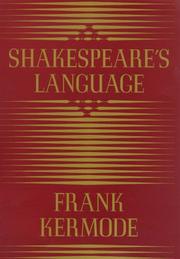
A rigorous but readable analysis of how Shakespeare's language evolved across his career; now that you've read the plays, this book makes you hear them at a completely new level.
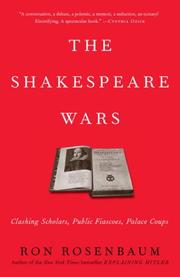
A thrilling, journalistic dive into the fiercest debates among directors, scholars, and actors about how to perform Shakespeare — shows the plays as living, contested, endlessly renewable art.

A landmark work of New Historicism that reveals how Shakespeare's plays were shaped by and in turn shaped Elizabethan culture — the ideal capstone for understanding his 400-year staying power.
Discussion
Keep reading
Paths that share books, cover the same subject, or open a related topic.