The history of money: debt, gold & modern finance
This curriculum traces money from its ancient origins through modern financial systems, building conceptual fluency before introducing complexity. Each stage assumes the vocabulary of the last, moving from intuitive storytelling to rigorous economic and historical analysis — so that by the end, the reader genuinely understands how money, debt, and central banking shape the world today.
Foundations: What Is Money?
BeginnerBuild an intuitive, story-driven understanding of what money is, where it came from, and why societies invented it — dispelling common myths (like the barter myth) along the way.
▸ Study plan for this stage
Pace: 6–8 weeks total: Weeks 1–3 cover "The Ascent of Money" (~30 pages/day, reading the Prologue and Chapters 1–2 most carefully); Weeks 4–7 cover "Money" by Felix Martin (~20 pages/day, as the prose is denser and more argumentative); Week 8 is reserved for review, reflection, and completing exercises.
- The origins of money as a social technology, not a physical commodity — money is a system of credit and social trust, not simply metal or paper
- Debunking the barter myth: anthropological and historical evidence (drawn from Felix Martin's argument) shows that barter economies between strangers never preceded money — credit and obligation came first
- Money's three classical functions: medium of exchange, store of value, and unit of account — and why Martin challenges whether these functions fully capture what money really is
- The concept of money as transferable credit: Martin's 'monetary settlement' framework, where money is a claim on society rather than a thing with intrinsic worth
- Ferguson's narrative of financial innovation: how early instruments like Mesopotamian clay tablets, coins, and bills of exchange were responses to real human problems (war, trade, debt)
- The role of sovereign authority and collective belief in giving money its value — money works because people agree it does, making it irreducibly social and political
- Debt and credit as the bedrock of monetary history: Ferguson's opening chapters show that lending and borrowing predate coinage by millennia
- The difference between commodity money, representative money, and fiat money — and why the transition between them matters for understanding modern finance
- According to Felix Martin, why is the standard 'barter-first' story of money's origins a myth, and what does the anthropological record suggest actually came first?
- How does Ferguson's account of Mesopotamian and ancient financial systems support the idea that credit and debt are more fundamental to money than coins or physical tokens?
- What are money's three traditional functions, and why does Martin argue they are insufficient to explain what money truly is?
- In Martin's framework, what makes money 'transferable credit,' and how does the concept of a 'monetary settlement' differ from simply handing over a coin?
- What role does collective belief and sovereign authority play in giving money its value, according to both Ferguson and Martin?
- How do Ferguson's historical examples (e.g., the Medici bank, early coinage) illustrate that financial innovation is always a response to a specific social or political need?
- Myth-busting journal: Before starting the books, write a one-page explanation of where you think money came from. After finishing both books, rewrite it. Compare the two versions and note every assumption that changed — this makes the conceptual shift visceral and personal.
- Credit-before-coins timeline: Using Ferguson's narrative as your source, build a simple hand-drawn or digital timeline of monetary milestones (Mesopotamian tablets → coinage → bills of exchange). Annotate each entry with one sentence explaining the social problem it solved.
- Martin's framework in your own words: After finishing 'Money,' write a 300-word explanation of the 'transferable credit' definition of money as if writing to a curious 16-year-old. Avoid jargon. If you can't explain it simply, identify exactly which part of Martin's argument you need to re-read.
- Spot the money around you: For one full week, log every transaction or financial interaction you observe or participate in. For each one, identify which of money's functions (medium of exchange, store of value, unit of account) is most prominent — and note any cases where Martin's 'social credit' lens feels more explanatory than the classical functions.
- Debate prep — 'Is Bitcoin money?': Using only the definitions and frameworks from Ferguson and Martin (no outside sources), write a one-page argument for AND against Bitcoin qualifying as 'real' money. This forces you to operationalize both authors' definitions rigorously.
- Comparative author analysis: Ferguson writes as a narrative historian; Martin writes as a conceptual economist-philosopher. Write a half-page reflection on how each author's method shapes what they can and cannot explain about money's origins. Which account do you find more convincing, and why?
Next up: By establishing that money is fundamentally a system of social trust, transferable credit, and political authority rather than a neutral commodity, this stage equips the reader to ask the natural next question: how have the institutions — banks, states, and markets — that manage and manipulate this trust actually evolved, and what happens when that trust breaks down?
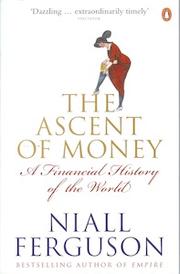
A sweeping, accessible narrative of financial history from ancient Mesopotamia to modern markets — the perfect first book to see the whole landscape before zooming in.

Challenges the textbook definition of money and introduces the idea that money is fundamentally a social credit relationship, not a commodity — essential vocabulary for everything that follows.
Debt and Credit Through the Ages
BeginnerUnderstand that debt, not barter or coins, is the true foundation of economic life, and trace how credit relationships have driven civilizations for 5,000 years.
▸ Study plan for this stage
Pace: 4–5 weeks, ~20–25 pages/day (the book is ~280 pages); read in three natural arcs — Part 1 (origins & ancient money, weeks 1–2), Part 2 (coins, paper & banking revolutions, weeks 3–4), Part 3 (modern & electronic money, week 5) — with one review day per week
- Debt precedes barter: archaeological and anthropological evidence shows that credit obligations existed thousands of years before coined money or market exchange
- Money as social technology: money is not a neutral tool but a system of trust, obligation, and power embedded in culture and politics
- The myth of barter: the classic story of barter-then-coins-then-credit is largely a modern invention; Weatherford shows credit came first
- Commodity money vs. fiat money: the shift from objects with intrinsic value (cattle, grain, shells, metals) to tokens whose value rests purely on collective belief
- Coinage as statecraft: ancient rulers minted coins not merely for convenience but to pay armies, collect taxes, and project political authority
- Banking and credit networks: how merchant credit, bills of exchange, and early banking houses (long before modern banks) financed trade across civilizations
- Inflation, debasement, and collapse: how rulers manipulated currency — shaving coins, printing paper — and the civilizational consequences that followed
- Globalization of money: how each monetary revolution (metal coinage → paper → electronic) expanded the geographic reach of credit and debt relationships
- According to Weatherford, why is the standard 'barter → coins → credit' narrative historically backwards, and what evidence does he offer?
- How did early Mesopotamian grain and silver accounting systems function as credit instruments, and what does this reveal about the true origin of economic life?
- In what ways did ancient and medieval rulers use coinage as a political tool rather than purely an economic one?
- What role did merchant credit networks and proto-banking institutions play in sustaining long-distance trade before the rise of formal banks?
- How does Weatherford trace the recurring cycle of monetary innovation, overextension (debasement/inflation), and crisis across different civilizations?
- What does the transition from commodity money to fiat money tell us about the relationship between trust, authority, and economic value?
- Debt-before-barter journal: After reading each major historical section, write a 1-paragraph entry in your own words explaining how credit or debt — not coins — was driving economic activity in that era. Accumulate these into a personal timeline.
- Annotate the myth: Find the classic barter story (e.g., in an economics textbook or online explainer) and, using Weatherford's evidence, write margin notes or a short rebuttal paragraph identifying exactly where the myth diverges from history.
- Monetary innovation map: Draw a hand-drawn world map and, as you read, pin each monetary innovation (Lydian coins, Chinese paper money, Italian bills of exchange, etc.) to its place and approximate date — annotate each pin with who benefited and who bore the debt.
- Debasement case study: Choose one episode of currency debasement Weatherford describes (e.g., Roman coin clipping or Chinese paper inflation) and write a one-page cause-and-effect analysis: What pressures led to it? What were the social consequences? Does it echo any modern event?
- Vocabulary ledger: Keep a running two-column ledger of financial terms Weatherford introduces (e.g., 'fiat,' 'seigniorage,' 'bill of exchange,' 'specie') with a plain-English definition in your own words — aim for at least 15 entries by the end of the book.
- Reflection discussion (solo or with a partner): After finishing the book, argue both sides of this proposition for 10 minutes: 'Debt is the engine of civilization' vs. 'Debt is the chain of civilization.' Use only evidence from Weatherford to support each side.
Next up: By establishing that debt and credit — not coins or barter — are the bedrock of economic life across 5,000 years, this stage gives the reader the historical lens needed to examine how modern financial systems, institutions, and crises are direct descendants of those ancient credit relationships.
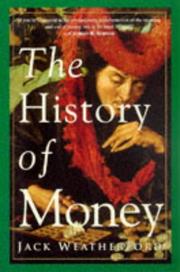
A concise, chronological account of how physical money — coins, paper, plastic — evolved across cultures, grounding Graeber's abstract arguments in concrete artifacts and events.
Gold, Central Banks, and the Architecture of Modern Money
IntermediateUnderstand the gold standard, how central banks were created, how they work, and how the modern system of fiat money and fractional-reserve banking actually functions.
▸ Study plan for this stage
Pace: 10–13 weeks total. Book 1 — "The Creature from Jekyll Island": 6–7 weeks at ~25–30 pages/day (the book is ~600 pages; Griffin is accessible but dense with argument, so allow time to pause and verify claims). Book 2 — "A History of the Federal Reserve, Volume 1": 4–6 weeks at ~20–25 pages/day (Meltze
- The Jekyll Island meeting of 1910 and the political/banking interests that shaped the Federal Reserve Act of 1913 (Griffin's central narrative)
- The mechanics of the Aldrich Plan vs. the final Federal Reserve Act — what changed, what stayed the same, and why it matters
- Fractional-reserve banking: how money is created as debt, the money multiplier effect, and the role of reserve requirements
- The gold standard in its classical (pre-1914), interwar (gold-exchange), and Bretton Woods forms — how each version worked and why each collapsed
- The Federal Reserve's original mandate vs. its actual behavior in its early decades, as documented by Meltzer through policy records and meeting minutes
- The Fed's role in the Great Depression: Meltzer's evidence-based account of policy errors (failure to act as lender of last resort, allowing money supply contraction) contrasted with Griffin's more conspiratorial framing
- Open-market operations, the discount rate, and reserve requirements as the three classic tools of central bank monetary policy
- The transition from commodity-backed money to pure fiat money: the suspension of gold convertibility in 1933 (domestically) and Nixon's closing of the gold window in 1971
- According to Griffin, who were the key figures at Jekyll Island, what were their respective interests, and how did those interests shape the structure of the Federal Reserve as ultimately enacted?
- How does fractional-reserve banking allow commercial banks to expand the money supply, and what role does the Federal Reserve play in setting the boundaries of that expansion?
- What does Meltzer's archival evidence reveal about the Fed's decision-making during the 1929–33 contraction, and how does his explanation of policy failure differ from Griffin's?
- Trace the evolution of the gold standard from its classical form through Bretton Woods to its final abandonment in 1971 — what economic and political pressures drove each transition?
- What are the primary tools available to a central bank to influence the money supply and credit conditions, and how were those tools actually used (or misused) in the Fed's first four decades according to Meltzer?
- Where do Griffin and Meltzer agree and disagree on the causes and consequences of early Federal Reserve policy, and how should a critical reader weigh a polemical primary source against a scholarly one?
- Debt-money diagram: Draw a step-by-step flow chart showing how a single $1,000 deposit travels through the fractional-reserve system across multiple banks. Calculate the theoretical maximum money creation using the money multiplier formula, then annotate where Griffin's critique and Meltzer's empirical data each enter the picture.
- Jekyll Island cast of characters: Build a one-page reference table listing each figure Griffin identifies at the 1910 meeting (Aldrich, Vanderlip, Warburg, etc.), their institutional affiliation, their stated goal, and the specific provision of the Federal Reserve Act Griffin links to their influence. Note which claims Meltzer's scholarly account corroborates, qualifies, or contradicts.
- Gold standard timeline: Create a annotated timeline from 1870 to 1971 marking: the classical gold standard era, WWI suspension, the interwar gold-exchange standard, Bretton Woods (1944), and Nixon's 1971 shock. For each phase, write 2–3 sentences on the monetary rules in force and why the system broke down, drawing on both books.
- Fed policy audit (1913–1951): Using Meltzer's policy narrative, build a simple table of major Fed decisions decade by decade (1910s–1940s), recording: the economic context, the action taken, Meltzer's assessment of whether it was correct, and any counterpoint Griffin raises. This forces active engagement with Meltzer's dense policy chapters.
- Source-credibility worksheet: Choose three specific factual claims from Griffin that are dramatic or controversial. For each, spend 30 minutes finding at least two independent sources (academic papers, Federal Reserve historical records, or Meltzer's own citations) that either support, complicate, or refute the claim. Write a one-paragraph verdict on each.
- Personal monetary glossary: Maintain a running glossary of at least 20 terms encountered across both books (e.g., lender of last resort, seigniorage, sterilization, real bills doctrine, open-market operations). For each term, write the definition in your own words and cite the page in whichever book introduced or best explained it.
Next up: By understanding how the Federal Reserve was built, how fiat money is created through debt, and how gold was progressively dethroned, the reader is now equipped to explore the consequences of that system — inflation, financial crises, monetary policy debates, and modern alternatives — which form the natural focus of the next stage.
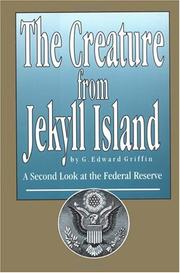
A detailed, if polemical, account of the founding of the U.S. Federal Reserve — read critically, it forces the reader to grapple with how central banking was designed and who it serves.
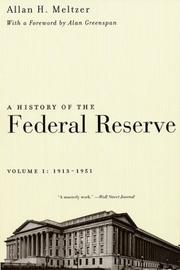
The authoritative scholarly counterweight to Griffin — Meltzer's rigorous institutional history gives the reader a balanced, evidence-based picture of central bank decision-making over a century.
Crises, Power, and How Modern Finance Really Works
IntermediateSee how the theoretical architecture of the previous stage plays out in real crises, policy failures, and the hidden mechanics of global finance.
▸ Study plan for this stage
Pace: 8–10 weeks total: ~5 weeks on "Lords of Finance" (~30 pages/day, 6 days/week) and ~3–4 weeks on "The Big Short" (~25 pages/day, 5 days/week), with one buffer week for review and synthesis between the two books.
- The Gold Standard as a structural straitjacket: how the interwar commitment to gold constrained central bank responses in Lords of Finance and amplified the Great Depression
- Central banker psychology and groupthink: how the four protagonists in Lords of Finance (Norman, Strong, Schacht, Moreau) let ideology and personal relationships override economic reality
- Policy transmission failures: how decisions made in central bank boardrooms rippled into mass unemployment, deflation, and political extremism — the gap between theory and real-world outcome
- Securitization and the originate-to-distribute model: how mortgage loans in The Big Short were sliced, repackaged into CDOs, and sold so that no single actor bore the full risk
- Incentive misalignment and moral hazard: how rating agencies, investment banks, and mortgage originators in The Big Short each profited from a chain of willful blindness
- Synthetic instruments and leverage: the role of credit default swaps (CDS) and synthetic CDOs in multiplying exposure far beyond the underlying asset base in The Big Short
- The sociology of financial crisis: how institutional prestige, regulatory capture, and the 'this time is different' mindset delayed recognition of both the 1929 and 2008 collapses
- Contrarian epistemology in finance: what it means — and costs personally — to be correct too early, as illustrated by the short-sellers in The Big Short
- According to Lords of Finance, what specific policy decisions by the Bank of England and the Federal Reserve between 1927 and 1931 deepened the Depression, and what alternatives were available at the time?
- How did the personalities and ideological commitments of Montagu Norman and Benjamin Strong shape monetary policy in ways that pure institutional analysis would miss?
- In The Big Short, what was the mechanical chain from a subprime mortgage in Bakersfield, California to a AAA-rated CDO tranche held by a European pension fund — and where exactly did risk get hidden?
- Why did the credit rating agencies (Moody's, S&P) systematically mislabel mortgage-backed securities, and what structural incentives drove that failure?
- What do both books reveal about the role of narrative and consensus — the stories financial elites tell themselves — in preventing early recognition of systemic danger?
- Comparing the two crises: in what ways did the 2008 crisis repeat the institutional failures documented in Lords of Finance, and in what ways was it structurally novel?
- Crisis timeline mapping: Build a dual-column chronology — one column for Lords of Finance (1919–1933), one for The Big Short (2003–2008) — marking key policy decisions, warning signs ignored, and tipping-point events. Annotate each entry with which actor was responsible and what incentive or ideology drove them.
- Character incentive audit: For each major figure across both books (Norman, Strong, Schacht, Moreau; Burry, Eisman, Lippmann, the CDO managers), write a one-paragraph 'incentive profile' — what did they stand to gain or lose, and how did that shape their perception of risk?
- Instrument explainer in plain language: After finishing The Big Short, write a 300-word explanation of how a synthetic CDO works as if explaining it to a smart non-finance friend. Use only analogies grounded in the book's own examples (e.g., the Las Vegas side-bet framing Lewis uses).
- Policy counterfactual memo: Choose one pivotal decision in Lords of Finance (e.g., Britain's return to gold in 1925 at pre-war parity, or the Fed's rate hike in 1931) and write a one-page memo arguing for the alternative policy, using the economic logic the book itself surfaces.
- Regulatory gap analysis: List five specific regulatory or institutional gaps exposed in The Big Short (e.g., no requirement for skin-in-the-game by originators, rating agency conflicts of interest). For each, research in one paragraph whether post-2008 Dodd-Frank legislation addressed it — and how completely.
- Cross-book synthesis essay: Write a 500-word comparative essay answering: 'What is the single most important lesson about the relationship between human judgment and financial system design that both books, taken together, teach?' Cite specific scenes or characters from each book to support your argument.
Next up: By internalizing how real crises unfold — through the lens of flawed human actors, perverse incentives, and structural blind spots — the reader is now equipped to engage critically with deeper, more systemic questions about who money serves, how financial power is distributed globally, and what reforms or alternatives have been proposed.
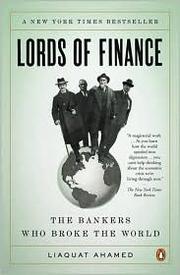
A Pulitzer Prize-winning narrative of the four central bankers whose decisions caused the Great Depression — the best case study of how monetary policy can go catastrophically wrong.
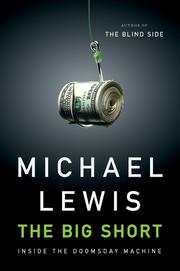
Brings the story to the 2008 financial crisis, showing how modern financial instruments (CDOs, credit default swaps) are built on the same credit logic traced throughout this curriculum.
Deep Theory: Money, Power, and the Future
ExpertSynthesize everything into a sophisticated theoretical understanding of money as a political and social institution, and engage with debates about where money is heading.
▸ Study plan for this stage
Pace: 8–10 weeks, ~25–35 pages/day — Greenspan first (weeks 1–4), then Skidelsky (weeks 5–10); allow extra time for Skidelsky's denser historical and theoretical chapters. Budget 1–2 reflection days per week to synthesize across both texts.
- Animal spirits and the limits of economic forecasting — Greenspan's admission that rational-actor models failed to predict the 2008 crisis, and what that means for monetary theory
- Irrational exuberance and systemic risk — how asset bubbles form, why regulators miss them, and the tension between market freedom and financial stability in Greenspan's framework
- The ideology of market self-correction — Greenspan's lifelong Randian faith in deregulated markets, its intellectual foundations, and his post-crisis reassessment of that worldview
- Money as a creature of the state — Skidelsky's core argument that money is not a neutral market instrument but a political institution shaped by government power and legal authority
- The history of macroeconomic doctrine as political history — Skidelsky's tracing of how Keynesianism, monetarism, and austerity politics each reflect specific power interests and historical moments
- The 'sound money' myth — Skidelsky's critique of the gold standard, balanced-budget orthodoxy, and the recurring political appeal of fiscal austerity despite its empirical failures
- Debt, deficits, and the politics of constraint — how governments use (and are constrained by) monetary and fiscal tools, and who benefits from each configuration of rules
- The future of money and monetary governance — both authors' implicit and explicit visions for reform, central bank independence, digital currencies, and the unresolved tension between technocratic and democratic control of money
- According to Greenspan in 'The Map and the Territory,' what specific intellectual assumptions underpinned his pre-2008 regulatory philosophy, and which of those did he revise — and which did he retain — after the financial crisis?
- How does Skidelsky in 'Money and Government' define the relationship between the state and money, and how does this definition challenge the conventional 'commodity' or 'medium of exchange' view of money's origins?
- Comparing both books: Greenspan and Skidelsky lived through the same post-war economic era but draw starkly different lessons from it. What are the two or three deepest points of disagreement between their frameworks, and what underlying values drive those disagreements?
- Skidelsky argues that austerity is not a technical economic prescription but a political and moral choice. What historical evidence does he marshal for this claim, and how does it reframe debates about government debt?
- Both authors grapple with the limits of economic models. How do Greenspan's 'map vs. territory' metaphor and Skidelsky's critique of mainstream macroeconomics each diagnose the same problem differently, and what does each prescribe as a remedy?
- Based on both books, what is the strongest case for greater democratic oversight of monetary policy, and what is the strongest counter-argument for technocratic central bank independence? Which do you find more persuasive, and why?
- Intellectual biography exercise: After finishing Greenspan, write a 500-word profile of his monetary worldview — its philosophical roots, its peak expression in policy, and the precise cracks the 2008 crisis opened in it. Then revisit this profile after finishing Skidelsky and annotate it with Skidelsky's likely rebuttals.
- Doctrine timeline: Build a single visual timeline spanning 1900–2020 that maps the major monetary doctrines (gold standard, Keynesianism, monetarism, inflation targeting, QE) against the political events and crises Skidelsky links to each shift. Annotate where Greenspan's career intersects the timeline.
- Steel-man debate: Write a structured 800-word debate between a 'Greenspan position' and a 'Skidelsky position' on one specific policy question — e.g., 'Should central banks be independent of elected governments?' Give each side its strongest possible argument using only evidence from the two books.
- Predictive audit: Select three major economic events since 2010 (e.g., Eurozone austerity, U.S. QE tapering, COVID-era fiscal stimulus). For each, write a short paragraph predicting what Greenspan's framework would have recommended and what Skidelsky's would have recommended, then briefly note what actually happened and which framework better explains the outcome.
- Glossary of contested terms: Both books use terms like 'sound money,' 'animal spirits,' 'fiscal space,' and 'market discipline' — but with very different connotations. Create a two-column glossary of 8–10 such terms, defining each as Greenspan uses it and then as Skidelsky uses it, to make the ideological stakes of language explicit.
- Synthesis essay: Write a 1,000-word essay answering the question: 'Is money best understood as a technical instrument or a political institution?' Draw explicitly on both 'The Map and the Territory' and 'Money and Government,' and stake out your own defended position.
Next up: By resolving the tension between Greenspan's market-centric and Skidelsky's state-centric views of money into a personal theoretical synthesis, the reader is now equipped to engage with forward-looking debates — such as cryptocurrency, central bank digital currencies, and post-growth economics — that demand exactly this kind of integrated political-economic literacy.
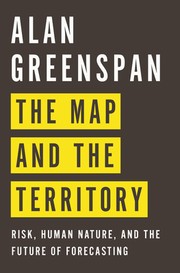
A rare insider's reflection on the limits of economic forecasting and financial models — valuable at this stage as a primary source from the most powerful central banker of the modern era.

A rigorous intellectual history of economic thought about money and the state, from mercantilism to MMT — the ideal capstone that ties together every thread of the curriculum.
Discussion
Keep reading
Paths that share books, cover the same subject, or open a related topic.