The Housing Crisis: The Best Books on Why Homes Cost So Much, in Order
Housing costs are a policy outcome, not a market accident: what may be built, where, at what density and after whose objection is decided by local rules that were written for other purposes and are very hard to change. This path starts with what high costs do to people, then reads the rulebook, then the twentieth-century history that produced the current pattern of American housing and its racial geography, then the supply-and-price economics, and finishes on homelessness, where the empirical argument is sharpest. It is about policy and evidence, not about buying property. Housing writing dates quickly — several of these books are now historical documents about a specific moment, and the notes say which.
What high housing costs actually do
BeginnerStart with consequences rather than theory: eviction as a cause of poverty rather than a symptom, and the political fight that erupts when a city tries to build. Finish able to describe what a housing shortage looks like from inside a household and from inside a planning meeting.
▸ Study plan for this stage
Pace: About four weeks for 736 pages, both reported nonfiction at 40 pages an evening. Desmond's Evicted (448pp) first, two and a half weeks: ethnographic fieldwork with eight households and their landlords, and the book that made eviction a mainstream policy subject. It follows families through eviction,
- Eviction as a cause of poverty rather than only a symptom of it
- The rent burden, and what a household gives up once it passes half of income
- The landlord's business model in a low-income market, which Desmond reports from both sides
- Informal housing instability: doubling up, serial moves, and what does not appear in official counts
- The politics of a planning fight: who organises, who funds, and who turns up
- Why a bill that would add housing is harder to pass than its polling suggests
- What is Desmond's evidence that eviction causes rather than follows poverty?
- How does a low-income landlord make money, and what does that imply about rent enforcement?
- What happens to a household in the months after an eviction, on his fieldwork?
- In Golden Gates, which coalitions form on each side of a housing bill, and what does each want?
- Which specific legislative outcomes in Dougherty's account would you need to check before citing?
- Trace one Evicted household month by month and record every cost the eviction imposed on them and on the public.
- For your own area, look up the eviction filing rate and the median rent burden, and compare them with Desmond's figures.
- Map the coalitions in one Golden Gates fight as a diagram: who supported, who opposed, and on what stated grounds.
- Check the current status of three bills named in Golden Gates and record what changed.
Next up: Both books end in the same place — a room where a small number of people decide whether housing gets built — which is the machinery the next stage takes apart.

Ethnographic fieldwork with eight Milwaukee families and their landlords, and the book that made eviction a mainstream policy subject. Read it first because everything after is an argument about how to prevent what it documents; the catalogue record carries a Spanish translator in the author field.

A New York Times reporter following California's housing fight through activists, developers, homeowners and legislators over several years. The best narrative introduction to why building housing is politically hard, and it is fair to people it clearly disagrees with. Some of the specific legislation has since passed or been superseded.
The rulebook, and who gets to say no
BeginnerRead the actual machinery: single-family zoning, minimum lot sizes, parking minimums, height limits, discretionary review and the public-comment process. The key finding to take away is that participation in local land-use decisions is systematically unrepresentative — the people who show up are older, wealthier, longer-tenured homeowners, and the process gives them a veto.
▸ Study plan for this stage
Pace: Four weeks for 730 pages, and the three are short but not equally easy. Gray's Arbitrary Lines (257pp) first, ten days: a professional planner's clear explanation of what zoning does, where it came from and what abolishing it would mean, and it is openly an abolitionist argument, which the author st
- Single-family zoning, minimum lot sizes, parking minimums and height limits as separate constraints with separate effects
- Discretionary review, and the difference between a rule and a permission
- The public-comment process as a veto point rather than a consultation
- Who actually participates: older, wealthier, longer-tenured homeowners, and the size of the skew
- Delay as the real cost, since a project killed by time never appears as a refusal
- The international comparison, and what other countries regulate instead
- Reading an openly argued book by a practitioner who knows the machinery best
- Which zoning constraint binds hardest on the cost of a new home, and how would you test that?
- What is discretionary review, and what does it allow that a code alone does not?
- How did Einstein and her co-authors code the meeting comments, and what would a critic attack?
- How representative is participation, on their evidence, and by how much?
- What does Hirt identify as distinctive about American zoning, and what caused it?
- What would abolition actually change, on Gray's account, and what would it not?
- Read your own municipality's zoning code and write down the maximum legal building on a typical residential lot.
- Attend or watch a planning meeting and code the comments the way Einstein's team did. Compare your distribution with theirs.
- For one proposed project near you, reconstruct the approval steps and estimate the elapsed time at each.
- Write a page comparing one American zoning provision with the equivalent regulation in a country Hirt discusses.
Next up: The rules did not appear from nowhere, and the pattern they protect was built deliberately in the twentieth century.
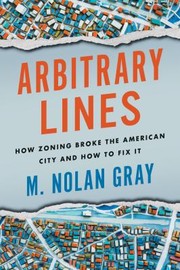
A professional city planner's clear explanation of what American zoning does, where it came from and what abolishing it would mean. The most efficient way to understand the rules; openly an abolitionist argument, which Gray states up front.

The comparative question Gray does not ask: why American zoning is unusual internationally in its devotion to detached single-family housing, traced to specific cultural and legal choices. Academic and the necessary check on assuming the American arrangement is the default.

Political scientists coding thousands of planning-meeting comments across Massachusetts to show exactly who participates and how it delays or kills housing. The strongest empirical evidence on the path and the answer to anyone who treats local process as neutral.
How the pattern was built
IntermediateEstablish the twentieth-century history, because the geography of American housing was constructed deliberately by federal policy and cannot be explained by preferences alone. Understand redlining, the FHA underwriting manuals, highway and suburb subsidy, and what happened when the same system later attempted inclusion through private lending.
▸ Study plan for this stage
Pace: Six to seven weeks for 1,109 pages of history — read it as evidence about how the current geography was produced, not as a description of present policy. Jackson's Crabgrass Frontier (396pp) first, two and a half weeks: the standard history of suburbanisation through streetcars, mortgages, highways
- Federal mortgage insurance and underwriting manuals as instruments of settlement pattern
- Redlining: what the maps were used for and by whom
- Highway and infrastructure subsidy as an implicit housing policy
- Restrictive covenants and their enforcement, and what replaced them when they became unenforceable
- Inclusion through private credit, and why it produced predation rather than wealth
- De jure and de facto segregation, and why the distinction is legally load-bearing
- How a history built for a legal argument selects and presents its evidence
- What did the underwriting manuals actually instruct, and what effect did that have on where insured lending went?
- How did highway and utility subsidy shape the settlement pattern?
- What is Rothstein's legal purpose, and how does it shape which evidence he foregrounds?
- What have historians disputed about his de jure emphasis, and what turns on it?
- What went wrong in the programmes Taylor documents, and who profited?
- Which parts of stage two's rulebook are direct descendants of the policies in this stage?
- Find a historical redlining map for a city you know and overlay current demographic and price data. Write what has and has not changed.
- Take three provisions Rothstein reproduces and check what the original document says in full.
- Reconstruct one lending case from Race for Profit: who lent, who insured, who brokered, and who bore the loss.
- Write a page connecting one twentieth-century policy to one zoning rule you found in your own code.
Next up: With the history and the rulebook in hand, the economics of supply and price can be assessed on the evidence rather than on intuition.
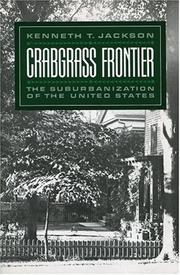
The standard history of American suburbanisation — streetcars, mortgages, highways and federal subsidy — and the origin of most of what the previous stage regulates. Published in 1985 and still the reference; treat its data as historical and its causal account as live.

The documentary case that residential segregation was imposed by federal, state and local government action rather than by private preference, with the statutes and agency manuals reproduced. Argumentative by design and legally framed; historians have disputed the weight it places on de jure over de facto forces, which is the debate worth following.

What happened after redlining formally ended: federally insured lending to Black homebuyers channelled through predatory brokers and speculators. The essential sequel to Rothstein and the reason inclusion-through-credit is treated sceptically in current policy debate.
Supply, prices and what a city can actually do
IntermediateGet to the economics and the toolkit. Understand why constrained supply raises prices, what filtering is and how slowly it works, and the real trade-offs between upzoning, subsidy, rent stabilisation and public or social housing. Assess honestly where the evidence is strong (supply constraints raise prices) and where it is contested (the local effects of new market-rate building on nearby rents).
▸ Study plan for this stage
Pace: Seven weeks. Three lengths are recorded — Bertaud's Order without Design at 432pp, Phillips's The Affordable City at 248pp and Escaping the Housing Trap at 225pp, 905 pages between them — while Schuetz's Fixer-Upper carries no page count in our catalogue; it is a short survey, so allow it a week. Be
- Supply constraint and price: the finding the field agrees on, and the evidence behind it
- Filtering, and how slowly a new expensive unit becomes an affordable one
- Land price as the variable planners can actually influence, in Bertaud's framing
- The three-legged toolkit — supply, stability and subsidy — and why any one alone fails
- Rent stabilisation: what the evidence says about incumbents and about new supply
- The contested question: local effects of new market-rate building on nearby rents
- Housing as consumer good and as appreciating asset, and the contradiction Marohn and Herriges press
- Incremental small-scale development as an alternative to large-project delivery
- State the supply-price finding precisely, and name the evidence you would cite for it.
- How does filtering work, and over what timescale?
- What does Bertaud say planners get wrong about land prices, and what would he have them measure?
- For each instrument in Schuetz's toolkit, say what it costs and what the evidence supports.
- Where exactly is the evidence contested on new market-rate building near existing homes?
- What is the contradiction Marohn and Herriges identify, and does the mainstream consensus have an answer to it?
- For one city, gather permits issued and price change over a decade and see whether the supply-price relationship holds in that case.
- Score every instrument in Fixer-Upper as settled, contested or untested, using her own labels, and keep the list.
- Take Phillips's programme and write which parts your own city could adopt without state-level change.
- Write a page arguing the Marohn and Herriges position against the supply consensus, using only evidence from books on this path.
- Compare one of Bertaud's international cases with your own city on density, land price and commute time.
Next up: Every argument in this stage meets its hardest test on the one outcome nobody can ignore, which is people sleeping outside.

A former World Bank urban planner arguing that planners should treat cities as labour markets and take land prices seriously, with international comparisons from Mumbai to New York. The most economically rigorous book here and unsparing about planning orthodoxy on both left and right.

A Brookings economist's short survey of American housing policy instruments — what each is meant to do, what it costs and what the evidence says. The best single reference for the toolkit, and it is careful to separate settled findings from contested ones.

A practitioner's programme organised around supply, stability and subsidy together, written for people who have to get something through a city council. The most operational book on the path; its specific California examples have moved on since 2020.

Marohn and Herriges arguing that treating housing as both a consumer good and an appreciating investment is a contradiction, and that incremental small-scale development is the way out. The Strong Towns position, which is a movement's argument rather than a neutral survey — read it as the most interesting dissent from the mainstream supply consensus.
Homelessness, where the evidence is sharpest
IntermediateFinish on the question the whole field turns on. Rates of addiction and mental illness are broadly similar across American cities, while homelessness rates are not — what varies with them is housing cost and vacancy. Read the strongest statement of that finding alongside its best-known opponent, and be able to say precisely which claim each is making and what evidence would settle it.
▸ Study plan for this stage
Pace: Four weeks, and the two books have to be read together. Our catalogue holds no page count for Colburn and Aldern's Homelessness Is a Housing Problem; it is a short book, so allow ten days, and spend them on the methodology rather than the conclusion — it is a cross-city regression analysis, methodol
- The cross-city comparison: rates of addiction and mental illness broadly similar, homelessness rates not
- What varies with regional homelessness rates — housing cost, vacancy and rent burden — on the regression evidence
- Individual risk factors versus population-level rates, and why conflating them produces the whole dispute
- Point-in-time counts as data: what they capture and what they miss
- Housing First as a policy claim, and the evidence base attached to it
- How to check a contested book: follow the citation to the source and read what it says
- Stating precisely what each side claims, so that a disagreement can be tested rather than asserted
- What exactly does the regression in Homelessness Is a Housing Problem show, and what does it not?
- What limits do Colburn and Aldern state for their own analysis?
- Why does the distinction between individual risk factors and population rates dissolve most of the apparent conflict?
- What is San Fransicko's central claim, and what evidence does it give for it?
- Which of Shellenberger's citations have been challenged, and on what grounds?
- What evidence would settle the disagreement, and does it exist?
- Take three cities and gather their homelessness rate, median rent and vacancy rate. See whether the pattern in Colburn and Aldern holds.
- Pick five citations in San Fransicko and read the underlying sources. Record for each whether it supports the claim made.
- Write both positions in a single page each, as their own authors would state them, then mark every point where they are answering different questions.
- Connect this stage back to stage one: what would Desmond's households have needed at each point, and which policy from stage four supplies it?
- Write 1,000 words on why homes cost so much, citing at least six books on this path and marking each claim as settled, contested or argued.
Next up: You can now read a housing claim — about rents, zoning, supply or homelessness — and say what evidence stands behind it and where the genuine disagreements are.

Colburn and Aldern's cross-city regression analysis showing that housing market conditions, not individual characteristics, predict regional homelessness rates. Short, methodologically explicit about its own limits, and the current reference point; Christopher Jencks's 1994 The Homeless is the historical precursor that framed the same question.

The best-known argument on the other side — that permissive drug and encampment policy, not housing cost, drives West Coast street homelessness. Heavily criticised by researchers for its handling of data and sourcing, and included so the disagreement is visible rather than assumed away; read it against Colburn and check the citations.
Discussion
Keep reading
Paths that share books, cover the same subject, or open a related topic.