Poverty in America: The Best Books on Who Is Poor and Why, in Order
Nobody disputes that tens of millions of Americans are poor; the argument is about why, and it has been running in roughly its present form since the 1960s. On one side sit structural accounts, which locate the cause in labour markets, housing, race and policy; on the other sit behavioural and cultural accounts, which locate it in family formation, work attachment and the incentives created by welfare itself. This path is built so you read both sides in their strongest form rather than in caricature, and every book below is flagged with where its author stands. It starts with reporting that shows what poverty looks like from inside, moves to the close-up ethnography and quantitative work of the last decade, then reads the structural argument and the behavioural argument in turn, and does not tell you which is right.
The Books That Made Poverty Visible
BeginnerSee what American poverty looked like to the reporters who put it back on the national agenda, and understand why immersion journalism has been the genre's dominant form.
▸ Study plan for this stage
Pace: Two to three weeks for around 670 pages. Harrington's The Other America (191 pages) is short and can be read in two sittings, but read it as a period document rather than as current reporting. Nickel and Dimed (242 pages) and Hand to Mouth (240 pages) are both fast and both angry; give each three or
- Immersion journalism has been the dominant form in this literature, and the stage exists to make you conscious of the form's strengths and its built-in limits before you meet the research.
- Harrington was a democratic socialist and The Other America is polemic as much as reportage. Its argument was that tens of millions of poor Americans had become invisible to an affluent society, and it is credited with prompting the War on Poverty. Almost everything later in the path is downstream o
- Ehrenreich is a self-described socialist and a journalist with a science doctorate, and Nickel and Dimed is structured as a test: she took low-wage jobs to see whether the wages covered the cost of living them. The design produces arithmetic rather than sentiment.
- The standing criticism of Nickel and Dimed is that a temporary participant with an exit is not in the same situation as a permanent one — no accumulated debt, no dependants, no history. That is a real methodological objection, and it is why Tirado is placed next.
- Tirado wrote from inside the working poor rather than from a visit, and her book expands a blog post that went viral. It is unsystematic by design, and its central contribution is showing why decisions that look self-defeating from outside are rational from within.
- Scarcity as a decision environment: when every choice is made under acute constraint, the rational option and the prudent-looking option come apart. This is the mechanism Tirado dramatises and that later quantitative work formalises.
- Visibility itself is a political variable. All three books are attempts to make a population legible to people who do not encounter it, and the question of who gets to narrate poverty runs through the rest of the path.
- What did Harrington mean by invisibility, and how much of his account describes a distributional fact rather than a perceptual one?
- Nickel and Dimed is designed as an experiment. State its hypothesis, its method and its controls, then name the confounds a critic would raise.
- Tirado is answering a criticism of Ehrenreich. What exactly does insider standing let her establish that participant journalism cannot, and what does she lose in rigour by having it?
- Pick one decision Tirado describes that looks irrational from outside and reconstruct the reasoning that makes it rational from inside.
- All three authors write with an explicit political position. Does that make the reporting less reliable, more, or neither? Answer with reference to a specific passage.
- Rebuild Ehrenreich's budget for one of her jobs from the figures in the book — wage, hours, housing, transport, food — and identify the line that breaks it.
- List every criticism you can construct against Nickel and Dimed, then check which of them Tirado actually answers and which she does not.
- Write a one-page note stating each of the three authors' political standpoints as plainly as they do themselves, with a supporting quotation-free summary of the argument each is making.
- Take one scene of low-wage work from Ehrenreich and one from Tirado and describe the difference in what each writer notices. The difference is the point of reading both.
Next up: Reportage establishes what poverty looks like; the next stage brings the sustained ethnography and the quantitative work that identify specific mechanisms rather than general conditions.
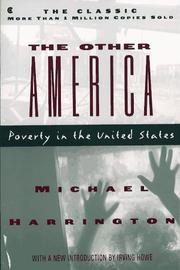
The 1962 book credited with prompting the War on Poverty: Harrington's argument was that forty million poor Americans had become invisible to an affluent society. He was a democratic socialist writing polemic as much as reportage, and it is the origin point for almost everything after it.

Ehrenreich, a self-described socialist and a journalist with a science PhD, spent 1998 working as a waitress, cleaner and Walmart associate to test whether low-wage work covers low-wage living. Read second because it turns Harrington's abstraction into arithmetic — and note the criticism it has drawn, that a temporary participant is not the same as a permanent one.

The answer to that criticism, written from inside rather than from a visit: Tirado was working poor when a blog post of hers went viral, and this expands it. Angry, unsystematic and deliberately so — the best single account of why decisions that look self-defeating from outside are rational from within.
The Modern Close-Ups
BeginnerFollow specific families and neighbourhoods over years, and get familiar with the two mechanisms most contemporary work centres on: housing instability and the near-cash-free bottom of the income distribution.
▸ Study plan for this stage
Pace: Four to five weeks for roughly 1,350 pages. Evicted (448 pages) is the anchor and deserves two weeks — read the methodological appendix, which is where Desmond explains what he did and how. $2.00 a Day (264 pages) is shorter and can be read in a week, alternating between the ethnographic and the sta
- Desmond is a sociologist, and Evicted's central claim is causal rather than descriptive: eviction is not only a consequence of poverty but a cause of it, driving job loss, school disruption and downward moves. That reversal is what reset the field.
- Desmond followed landlords as well as tenants, which is the methodological choice that gives the book its force — the market has two sides and profit is being made at the bottom of it, not merely absent.
- Edin and Shaefer's finding is that a growing number of American households live on almost no cash income at all, combined with ethnography of how such households actually survive. The book pairs a quantitative claim with fieldwork about the same population.
- The two-dollar threshold is disputed. Critics argue that counting only cash income understates resources by excluding in-kind transfers such as food assistance and housing subsidies; the authors defend the cash measure as capturing something distinct. Hold both positions rather than picking one.
- Housing instability and cash-poverty are the two mechanisms most contemporary work centres on, and this stage is organised to introduce them in their strongest empirical form.
- Elliott's eight years with one homeless girl in New York is the longest time horizon on the path, and its contribution is showing how poverty, foster care, schooling, housing and addiction interlock rather than stack.
- Ethnography and statistics answer different questions. The close-up establishes mechanism and plausibility; the survey establishes prevalence. A reader who demands one to do the other's job will misjudge both.
- State Desmond's causal claim about eviction precisely. What evidence in the book supports it, and what kind of study would be needed to establish it more firmly?
- Why does Evicted follow landlords? What does the landlord material establish that a tenant-only study could not?
- How is the two-dollar-a-day threshold constructed, what does it deliberately exclude, and what is the strongest version of the objection to it?
- In $2.00 a Day, how do the households actually survive with almost no cash? List the strategies and note which ones carry long-term costs.
- Invisible Child covers eight years. Name three things that only become visible at that time scale and would be invisible in a one-year study.
- Where do ethnography and quantitative work in this stage disagree, and where do they simply measure different things?
- Read Desmond's methodological appendix and write a one-page summary of what he did, how the families were selected, and what he acknowledges as limitations.
- Trace one family through Evicted and draw the chain of consequences from a single eviction — housing, work, schooling, health, next housing. This is the causal argument in one diagram.
- Reconstruct the $2.00 a Day threshold arithmetic and then recalculate a household's position including in-kind transfers. Note how much the picture changes and what it does not change.
- From Invisible Child, list every institution that touches the family — schools, shelters, child services, courts, benefits — and mark where each helps, harms or does both.
- Write 400 words on what these three books, taken together, identify as the proximate causes of persistent poverty. Keep it; the next two stages will argue about exactly this list.
Next up: The close-ups identify mechanisms; the structural literature makes them into a general explanation, and it is worth reading that argument in its strongest form before meeting its opponents.
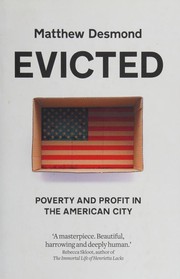
Desmond, a sociologist, followed eight Milwaukee families and their landlords, and made the case that eviction is a cause of poverty rather than only a symptom. The Pulitzer winner that reset the field, and the right first modern book.

Edin and Luke Shaefer's finding that a growing number of American households live on almost no cash income at all, combined with ethnography of how they survive. Read after Evicted for the quantitative counterpart to its narrative, and note the methodological dispute over how the two-dollar threshold is measured.

Eight years reporting on one homeless girl in New York, from a New York Times journalist. The longest time horizon on this path, and the book that shows most clearly how poverty, foster care, schooling and addiction interlock across a childhood.
The Structural Account
IntermediateRead the case that poverty is produced by labour markets, housing, segregation and policy design, in the works that argue it most rigorously.
▸ Study plan for this stage
Pace: Four to five weeks for around 1,315 pages. Wilson's The Truly Disadvantaged (254 pages) is the foundational text and the hardest reading of the four — allow ten days and take notes on the argument's structure. Piven and Cloward's Regulating the Poor (389 pages) is polemical and can be read faster, i
- Wilson is a liberal sociologist, and his argument is that concentrated urban poverty followed the disappearance of manufacturing employment and the departure of middle-class Black families from inner-city neighbourhoods, rather than a culture of dependency. He is deliberately first here because the
- Concentration effects are Wilson's key mechanism: the same individual outcomes differ depending on the density of joblessness around them, because networks, norms, institutions and marriage markets all shift together.
- Piven and Cloward are of the radical left, and their thesis is that relief expands to quell disorder and contracts to enforce low-wage work. It frames welfare as labour discipline rather than as assistance, and the claim recurs in every later argument on this path.
- Regulating the Poor has been attacked at length, including on its historical evidence and its functionalist reasoning. Read it for the frame it supplies rather than as a settled finding.
- Shipler is a liberal journalist and is unusually willing to describe structural traps and individual choices operating in the same life, which is why he sits as the bridge between the two halves of the path rather than inside either camp.
- Desmond's Poverty, by America argues that American poverty persists because non-poor Americans benefit from it — through tax expenditures that flow upward, cheap labour, and land use and zoning that protect asset values. It is his most polemical book and is written to persuade rather than to survey.
- The structural account's strongest form is not that individuals never make bad choices, but that the distribution of outcomes is set by labour markets, housing, segregation and policy design before individual variation operates. Keep that formulation in mind for the next stage.
- Race and place are not separable in this literature. Segregation, disinvestment and the geography of work are load-bearing in Wilson and in Desmond, and any summary that drops them misrepresents both.
- State Wilson's argument in five sentences. What is the mechanism, what is the evidence, and what would falsify it?
- What does Wilson mean by concentration effects, and why does the claim require neighbourhood-level rather than individual-level data?
- Summarise the Piven and Cloward thesis and then construct the strongest objection to it. What would you need to observe historically for it to be wrong?
- Shipler describes structure and choice in the same lives. Find a case where he does both and say how he keeps the two from collapsing into each other.
- Desmond claims the non-poor benefit from poverty. Identify his three main channels and assess the evidence he gives for each.
- Which of these four books is doing social science and which is doing advocacy? Where does the line blur, and does blurring it damage the argument?
- Diagram Wilson's causal chain from deindustrialisation to concentrated poverty, with each link labelled and each link's evidence noted. Mark the weakest link.
- Write a one-page brief arguing Piven and Cloward's thesis and a second refuting it, using only material from the book itself.
- From Poverty, by America, list every policy Desmond identifies as an upward transfer and check each against a neutral description of what the policy does. Note where you agree and where you think he overreaches.
- Take the list of proximate causes you wrote at the end of the last stage and mark which ones the structural account explains well and which it handles awkwardly.
- For each of the four authors, write one sentence stating their standpoint as they state it themselves. Do not editorialise; you will do the same for the next stage and the pair of lists is the point.
Next up: You have the structural case at full strength; the next stage supplies the case that rivals it, in the authors' own words rather than through their critics, and then the history of the quarrel itself.
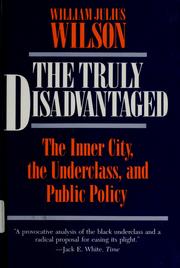
Wilson, a liberal sociologist, argued that concentrated urban poverty followed the disappearance of manufacturing work and the departure of middle-class Black families, not a culture of dependency. Deliberately first here: it is the structural argument's foundational text, and Wilson's later When Work Disappears extends it with fieldwork.
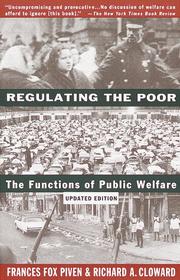
Piven and Richard Cloward's radical-left thesis from 1971: relief expands to quell disorder and contracts to enforce low-wage work. Contentious, frequently attacked, and worth reading because it frames welfare as labour discipline — a claim you will meet again in every later argument.
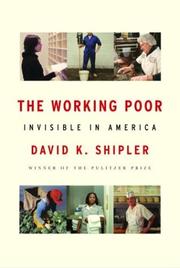
Shipler, a liberal journalist, spent years with people who work full time and remain poor, and is unusually willing to describe both structural traps and individual choices in the same life. Placed here as the bridge between the two halves of this path.

Desmond's follow-up to Evicted, and the most polemical structural book on the list: his claim is that American poverty persists because non-poor Americans benefit from it through tax expenditures, labour costs and land use. Read it as an argument, not a survey — it is written to persuade.
The Behavioural Account and the History of the Argument
IntermediateRead the conservative case in its own words rather than through its critics, and then step back to see how the whole two-hundred-year quarrel about deserving and undeserving poverty has been conducted.
▸ Study plan for this stage
Pace: Four to five weeks for around 1,425 pages. Murray's Losing Ground (323 pages) and Mead's Beyond Entitlement (318 pages) are the arguments and should be read consecutively and slowly — ten days each, with the empirical chapters read carefully rather than skimmed. DeParle's American Dream (432 pages)
- Murray is a libertarian scholar who was at the Manhattan Institute when he wrote Losing Ground, and his argument is that Great Society programmes worsened the outcomes they targeted by changing the incentives facing poor households. It shaped a generation of policy.
- Murray's data and causal claims have been contested at length, particularly on whether the trends he attributes to programme incentives track programme expansion, and on his handling of labour-market changes over the same period. Read the criticism alongside the book. His later Coming Apart makes a
- Mead's position is paternalist rather than libertarian, and the distinction matters: he does not argue for withdrawing assistance but for attaching work obligations to it, on the grounds that the poor are undermotivated rather than overtaxed. This supplied much of the intellectual basis for the 1996
- Mead is drier and more careful than Murray, and the clearer statement of the behavioural position, which is why he is read second rather than first.
- The behavioural account's strongest form is not that poverty is deserved but that programme design shapes family formation, work attachment and dependency, and therefore that policy has behavioural consequences it did not intend.
- DeParle is a New York Times reporter and American Dream is the empirical test of what those arguments produced: three Milwaukee women followed through welfare reform. He treats both sides seriously and reaches an unresolved verdict — employment rose, poverty did not disappear.
- The unresolved verdict is the honest state of the evidence and is the reason DeParle sits after the arguments rather than before them. A reader who wants the path to conclude will be disappointed here, correctly.
- Katz is a historian, and his contribution is showing that Americans have sorted the poor into deserving and undeserving categories since the nineteenth century, so that most of the modern debate is a rerun with new vocabulary. That is a reframing, not a resolution.
- State Murray's causal claim precisely. What behaviour does he say changed, in response to what, and what is his evidence for the timing?
- What are the strongest empirical objections to Losing Ground, and which of them would Murray concede?
- How does Mead's paternalism differ from Murray's libertarianism in both diagnosis and prescription? Where would the two men actually disagree about policy?
- In DeParle's account, what changed for the three women after welfare reform and what did not? Which side of the argument does each finding support?
- Katz argues the deserving and undeserving distinction is a recurring American structure. Identify it operating in Harrington, in Murray and in Desmond.
- Set your standpoint list from the last stage beside the one from this stage. Which disagreements are empirical and could in principle be settled by evidence, and which are disagreements about values?
- Write the strongest one-page version of the structural argument and the strongest one-page version of the behavioural argument, without indicating which you find persuasive. If a partisan of either side would accept your summary, you have read well.
- Take three specific empirical claims from Murray and three from Wilson and mark for each what evidence would settle it. The exercise separates the testable disagreements from the untestable ones.
- Trace one of DeParle's three women against both frameworks — what does the structural account explain about her trajectory, what does the behavioural account explain, and what does neither?
- Using Katz, build a timeline of the deserving and undeserving distinction and place every book on this path onto it.
- Finish with a 500-word statement of where you think the evidence stands, written so that it names what you are still uncertain about rather than concluding. The path does not tell you which side is right, and neither should your summary.
Next up: That closes the path: the reporting that made poverty visible, the modern research that identified mechanisms, and both halves of a two-hundred-year argument read in their own words — with the disagreement intact, because that is the actual state of the question.
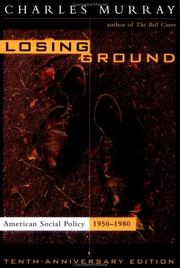
The most influential conservative book on this subject: Murray, a libertarian scholar then at the Manhattan Institute, argued that Great Society programmes worsened the outcomes they targeted by changing incentives. Its data and causal claims have been contested at length; read it because it shaped a generation of policy, and read the criticism alongside it. Murray's later Coming Apart makes a related argument about class divergence among white Americans.
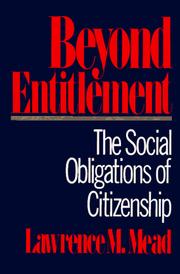
Mead's paternalist case that assistance should carry work obligations, which supplied much of the intellectual basis for the 1996 welfare reform. Drier and more careful than Murray, and the clearer statement of the position — read it second for that reason.

The empirical test of what the previous two books produced: DeParle, a New York Times reporter, followed three Milwaukee women through welfare reform. He treats both sides seriously and reaches an unresolved verdict — work went up, poverty did not go away — which is why it sits after the arguments rather than before them.
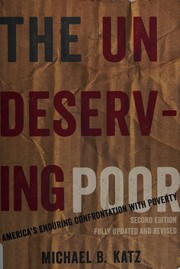
The historian's closing move: Katz traces how Americans have sorted the poor into deserving and undeserving categories since the nineteenth century, and shows how much of the modern debate is a rerun. Read last, when you can recognise every position it describes.
Discussion
Keep reading
Paths that share books, cover the same subject, or open a related topic.