Best Books to Become an Urban Planner, in Order
This curriculum is designed for intermediate learners — people who already have some exposure to cities and planning concepts — and builds systematically from the theoretical and historical foundations of urban planning through the practical mechanics of land use, transportation, and housing, into the political realities of the planning process, and finally toward professional mastery and AICP certification readiness. Each stage deepens the vocabulary and analytical lens needed for the next, so books should be read in the order presented.
Foundations: How Cities Work and Why Planning Matters
IntermediateEstablish a shared mental model of urban form, land use logic, and the planner's role — building the conceptual vocabulary needed for every later stage.
▸ Study plan for this stage
Pace: 8–10 weeks, ~25–30 pages/day, with 1–2 days per week for reflection and exercises. Allocate roughly 3 weeks to Jacobs' *Death and Life* (450 pages), 2 weeks to Lynch's *Image of the City* (200 pages), and 2–3 weeks to Jacobs' *Cities and the Wealth of Nations* (250 pages).
- The neighborhood as the fundamental unit of urban vitality: diversity, density, mixed-use development, and short blocks as drivers of street life and safety
- Sidewalk culture and informal social capital: how public space generates trust, surveillance, and community resilience
- The planner's role as a systems thinker, not a designer imposing order: understanding emergent complexity and unintended consequences of top-down interventions
- Mental maps and legibility: how citizens perceive and navigate cities through landmarks, paths, edges, districts, and nodes—and why this matters for planning
- Land use diversity and economic vitality: why mixed-use neighborhoods and local economic ecosystems outperform single-use zoning and centralized economic planning
- The distinction between static plans and dynamic urban processes: cities as living systems that evolve through human behavior, not blueprints
- Incremental, adaptive urbanism: how small-scale, locally-driven changes often succeed where grand master plans fail
- What does Jacobs mean by 'eyes on the street,' and how does this concept challenge conventional urban planning wisdom about parks, playgrounds, and public safety?
- How do short blocks, mixed-use zoning, and high density interact to create vibrant neighborhoods according to Jacobs, and what happens when planners eliminate these conditions?
- What are the five elements of the city image that Lynch identifies, and how do they shape the way people navigate and feel about urban environments?
- Why does Jacobs argue that cities generate wealth differently than nations, and what role do local, diverse economies play in urban resilience?
- How would you explain the difference between a planner's abstract master plan and the lived, emergent reality of neighborhood life as described across these three books?
- What are the practical implications of Lynch's legibility framework for how planners should design or redesign urban districts?
- Map your own mental image of a neighborhood you know well using Lynch's five elements (paths, landmarks, edges, districts, nodes). Compare it with an actual street map and reflect on what you noticed versus what you missed.
- Conduct a 1–2 hour 'sidewalk audit' in a mixed-use neighborhood and a single-use zone (e.g., residential vs. commercial district). Document street activity, diversity of uses, pedestrian comfort, and informal social interaction. Analyze your observations through Jacobs' framework of diversity and density.
- Read a recent urban planning proposal or zoning change in your city. Identify assumptions it makes about human behavior and public space. Critique it using concepts from Jacobs (e.g., diversity, short blocks, eyes on the street) and Lynch (legibility, wayfinding).
- Create a simple case study: choose a neighborhood that has changed significantly over 20–30 years. Research what planning decisions or market forces drove the change. Assess whether the outcomes matched the planners' intentions, and explain discrepancies using Jacobs' concept of unintended consequences.
- Interview 3–5 long-time residents of a neighborhood about how they navigate it, what makes it feel safe or unsafe, and what they value. Map their mental model and compare it to the official street grid and zoning map.
- Sketch or photograph a street that exemplifies Jacobs' principles (mixed use, short blocks, density, activity) and one that violates them. Write a brief analysis of how each supports or undermines the conditions Jacobs identifies as vital to urban life.
Next up: This stage equips you with a conceptual foundation—understanding cities as complex, human-scaled systems driven by diversity and legibility—that is essential for the next stage, where you will learn specific planning tools, regulations (zoning, transportation, housing policy), and design methods to either support or undermine these foundational principles.
The essential starting point for any serious planner: Jacobs dismantles top-down planning orthodoxy and introduces the street-level logic of mixed use, density, and urban vitality that underpins modern land use thinking.
Lynch's framework of paths, edges, districts, nodes, and landmarks gives planners a precise vocabulary for analyzing urban form and spatial experience — foundational for design and zoning work.

Read after Lynch, this book situates cities within economic systems, explaining why urban economies — not nations — are the true engines of growth, a key argument for understanding why land use decisions matter at scale.
Land Use and Zoning: The Planner's Core Toolkit
IntermediateUnderstand the legal, regulatory, and design mechanics of zoning and land use planning, including how codes are written, challenged, and reformed.
▸ Study plan for this stage
Pace: 8–10 weeks, ~40–50 pages/day. Shoup's book (~500 pages) over 5–6 weeks, then Hirt's book (~300 pages) over 3–4 weeks. Allocate 1 week for review, synthesis, and exercises.
- Parking as a hidden land use: how minimum parking requirements distort urban development, increase housing costs, and consume valuable urban land
- The relationship between zoning codes and market outcomes: how regulatory constraints shape what gets built and where
- Zoning's historical origins and evolution: how American zoning differs from European models and why those differences matter
- The mechanics of zoning reform: variance procedures, conditional use permits, and the political economy of code change
- Regulatory capture and path dependency: why zoning codes persist even when they produce undesirable outcomes
- The equity implications of land use regulation: how zoning enforces segregation and limits housing supply for lower-income residents
- Design standards embedded in codes: setbacks, lot sizes, building heights, and how they shape neighborhood character
- The role of planners as code writers and advocates: professional responsibility in shaping regulatory frameworks
- What are Shoup's main arguments about why minimum parking requirements are economically inefficient and socially harmful?
- How do zoning codes function as a form of land use control, and what are the mechanisms by which they constrain development?
- What are the key historical differences between American zoning and European land use planning systems, and why did those differences emerge?
- How do variance procedures and conditional use permits work in practice, and what do they reveal about the flexibility (or rigidity) of zoning codes?
- What is regulatory capture in the context of zoning, and how does it prevent reform even when codes produce negative outcomes?
- How do zoning regulations contribute to housing affordability crises and residential segregation?
- Obtain and analyze your local zoning code: identify minimum parking requirements, lot size minimums, setback rules, and height restrictions. Calculate how these rules would constrain a hypothetical mixed-use development on a real vacant lot in your city.
- Map parking in a neighborhood: count parking spaces (on-street and off-street) in a 5-block radius, estimate their land area, and calculate the percentage of land devoted to parking. Compare to Shoup's findings about parking consumption.
- Interview a local planner or zoning administrator about variance requests in your city: How often are they granted? What triggers them? How does this reveal code inflexibility?
- Conduct a comparative zoning analysis: select a similar neighborhood in two different cities and compare their zoning codes (setbacks, lot sizes, parking requirements, permitted uses). Hypothesize how these differences shape development patterns.
- Write a zoning code amendment proposal: identify one regulation in your local code that you believe is counterproductive (based on Shoup's or Hirt's arguments) and draft a reform proposal with justification.
- Create a timeline of zoning evolution in your city or region: research when zoning was first adopted, what major amendments occurred, and what political or economic factors drove changes. Identify path dependency.
Next up: This stage equips you with a critical understanding of how zoning codes are constructed, justified, and perpetuated—the regulatory foundation of urban form—preparing you to examine how planners can strategically reform these codes and design alternative regulatory frameworks in the next stage.
A landmark text that uses parking policy as a lens to expose how zoning mandates distort land use, urban form, and transportation — essential reading before tackling broader zoning reform debates.
A rigorous comparative analysis of American zoning's unique character — its separation of uses, its suburban bias — giving planners the historical and international context to critique and reform existing codes.
Transportation and Housing: The Big Policy Arenas
IntermediateDevelop a command of transportation planning principles and housing policy, understanding how mobility systems and housing markets interact with land use decisions.
▸ Study plan for this stage
Pace: 8–10 weeks, ~40–50 pages/day (accounting for dense policy content and note-taking)
- The relationship between transportation infrastructure, housing supply, and land use patterns—how mobility systems shape where people can afford to live
- Market-rate urbanism and the 'option of urbanism' concept: how to create economically viable mixed-income neighborhoods through density and mixed-use development
- Housing as a fundamental policy lever: understanding homelessness as a housing shortage problem rather than a social services problem, and the role of supply-side solutions
- Zoning, land use regulation, and their effects on housing affordability and transportation accessibility—how restrictive zoning limits housing supply and increases costs
- The interaction between housing policy, transportation networks, and equitable urban development: who benefits from current systems and who is excluded
- Case studies of policy successes and failures: real-world examples of how transportation and housing decisions create or perpetuate urban inequality
- The economics of density: how compact, walkable neighborhoods reduce transportation costs and increase housing options across income levels
- Regulatory reform as a planning tool: specific policy changes (zoning reform, parking requirements, density bonuses) that can improve housing and transportation outcomes
- What is the 'option of urbanism' and how does it differ from traditional suburban development models in terms of housing affordability and transportation access?
- How does Leinberger argue that transportation infrastructure and housing markets are interconnected, and what evidence does he provide?
- According to Colburn, why is homelessness fundamentally a housing problem, and what policy solutions does he propose based on housing supply?
- What is the relationship between zoning restrictions and housing affordability, and how do these regulations affect transportation patterns in cities?
- How do the three books collectively argue that current land use and housing policies create or perpetuate inequality in urban areas?
- What specific regulatory or policy changes do these authors recommend, and how would those changes affect both housing supply and transportation systems?
- Map your own city or region: Identify neighborhoods with high housing costs and trace their transportation connectivity. Compare this to lower-cost areas. What patterns emerge regarding density, zoning, and transit access?
- Zoning audit: Obtain your city's zoning code and identify restrictive regulations (minimum lot sizes, parking requirements, height limits, single-family zoning). Document how these regulations would prevent the mixed-use, mixed-income development Leinberger advocates for.
- Housing supply analysis: Research housing production data for your region over the past 10 years. Calculate the gap between housing units built and population growth. Relate this to Colburn's argument about housing shortage and homelessness.
- Policy proposal exercise: Draft a 2–3 page reform proposal for one specific regulation in your city (e.g., parking minimums, setback requirements, or density limits). Explain how the change would affect both housing supply and transportation accessibility, grounding your argument in the books.
- Case study comparison: Select two neighborhoods in your city—one walkable/transit-rich and one car-dependent. Research their zoning histories, housing costs, and demographics. Analyze how land use decisions created these different outcomes.
- Interview a local planner or housing advocate: Ask them about the biggest barriers to housing supply and transportation connectivity in your region. Discuss how the policy solutions proposed in the books apply (or don't apply) locally.
Next up: This stage establishes the foundational understanding that transportation and housing are inseparable policy domains shaped by regulation and market forces, preparing you to explore how urban design, community engagement, and implementation strategies can translate these principles into actual neighborhood transformation.
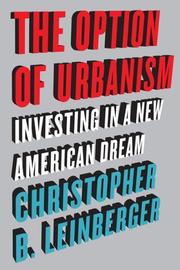
Bridges land use and transportation by explaining the market shift toward walkable urbanism, giving planners an economic framework for advocating transit-oriented development and mixed-use corridors.

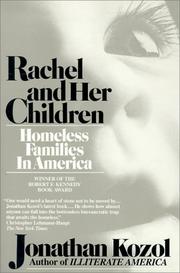
A data-driven corrective to common misconceptions about housing and homelessness, this book sharpens a planner's ability to argue for housing supply and affordability policy with evidence.
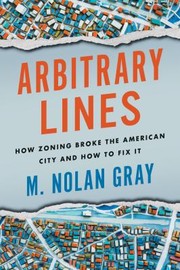
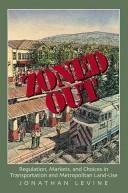
A clear, accessible case for abolishing single-use zoning, synthesizing land use, housing, and transportation arguments into a reform agenda — ideal capstone for this stage before moving into process and politics.
The Planning Process and Politics
ExpertUnderstand how plans are actually made, negotiated, and implemented — including community engagement, political conflict, equity, and the gap between planning ideals and real-world outcomes.
▸ Study plan for this stage
Pace: 4–5 weeks, ~25–30 pages/day, with 2–3 days per week for reflection and exercises
- Information as a political tool: how planners select, frame, and use data to shape planning outcomes and whose interests are served or excluded
- The gap between rational planning theory and messy political reality: understanding why plans fail, get modified, or succeed despite flawed processes
- Community engagement and negotiation: techniques for meaningful participation, power dynamics, and how to navigate conflicting stakeholder interests
- Land use planning as a regulatory and equity instrument: zoning, comprehensive plans, and how land use decisions affect housing access, environmental justice, and economic opportunity
- Implementation challenges: how plans move from paper to action, including financing, institutional capacity, legal constraints, and political will
- Equity and justice in planning: recognizing whose voices are centered or marginalized in planning processes and outcomes
- Plan-making as iterative and contested: understanding planning as ongoing negotiation rather than a one-time technical exercise
- How does the selection and presentation of information by planners influence which policy options are considered viable, and whose interests does this serve?
- What are the main reasons plans fail to be implemented, and how can planners anticipate and mitigate these barriers?
- How do power dynamics and political conflict shape the planning process, and what strategies can planners use to engage communities authentically rather than superficially?
- What is the relationship between land use planning, zoning decisions, and outcomes like housing affordability, racial segregation, and environmental equity?
- How do you balance competing stakeholder interests (residents, developers, environmental groups, municipal budgets) in a realistic planning scenario?
- What are the ethical responsibilities of planners when their technical recommendations conflict with political pressures or community preferences?
- Analyze a real comprehensive plan or zoning code from a city: identify what data was used, what was omitted, and whose interests appear to be prioritized in the land use decisions
- Interview or shadow a local planner about a current project: document the gap between their initial proposal and final outcome, and identify the political, financial, or community factors that caused changes
- Map stakeholder power in a local planning controversy: identify who has decision-making authority, who has influence, and who is excluded; analyze how information flows between groups
- Design a community engagement process for a hypothetical land use conflict (e.g., affordable housing in a single-family neighborhood): specify methods, timeline, and how you'd handle disagreement
- Create a plan implementation roadmap: take a real or fictional plan and identify specific barriers (financing, zoning changes, institutional capacity, legal challenges) and realistic solutions
- Conduct a land use equity audit: examine how current zoning and land use patterns in a neighborhood affect access to jobs, transit, parks, and affordable housing by income or race
Next up: This stage grounds you in the political and practical realities of planning, preparing you to critically evaluate planning tools, methodologies, and emerging approaches (such as participatory planning, data analytics, or sustainability frameworks) in subsequent stages.

A practical guide to how planners gather, analyze, and present data and qualitative information in real planning processes — essential for understanding the craft behind public reports and plans.
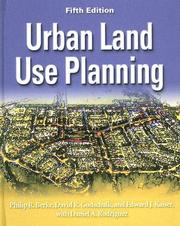
The most comprehensive academic text on the full planning process — from visioning and comprehensive plans to implementation and evaluation — and a direct reference for AICP exam preparation.
Discussion
Keep reading
Paths that share books, cover the same subject, or open a related topic.