Urban Economics: The Best Books on Why Cities Make Money, in Order
Urban economics asks why people keep paying more to live closer together: what agglomeration actually buys, how land values and commuting costs sort a city, and why a handful of metropolitan areas capture most of the gains. This is the economics of cities rather than their design, so the path runs from the popular case for density, through the formal apparatus of land rent and spatial equilibrium, into the argument that regulation is the binding constraint, and finally to the housing and inequality problems that success creates.
Why cities exist at all
BeginnerGet the central claim: proximity raises productivity, and that surplus shows up in wages and in land prices. Learn to see a city as a labour market rather than as a place, and notice that all three books here are making an economic argument, not an aesthetic one.
▸ Study plan for this stage
Pace: Six to seven weeks for 966 pages, all three readable at trade-book pace. Glaeser's Triumph of the City is 404 pages and goes first because it introduces almost every mechanism the technical books later formalise; three weeks, and read it noting that the author did much of the underlying research him
- Agglomeration: proximity raises productivity, and that surplus shows up in wages and in land prices rather than being handed to anyone. Every later chapter is an argument about the size and the distribution of that surplus.
- The three canonical mechanisms — labour market pooling, input sharing, and knowledge spillovers — which Glaeser introduces informally and O'Sullivan formalises in the next stage.
- A city as a labour market rather than a place. Once you can hold that framing, metropolitan boundaries stop mattering and commuting sheds start to.
- Moretti's multiplier: each additional job in the traded innovation sector is associated with several additional local service jobs, which is the mechanism behind divergence between American metros after 1980.
- Divergence itself. Wages and house prices across American metros stopped converging and began pulling apart, and explaining that is the applied core of the field.
- Jacobs externalities: growth from diversity, where a city generates new work by improvising on existing work, as against specialisation externalities where a city grows by doing one thing better.
- Jacobs's inversion of the standard story — cities generate their rural hinterland rather than being sustained by it — which is the claim that makes her book economics rather than urbanism.
- The consumption side of cities, which Glaeser covers and the older models do not: people pay for amenities, safety and other people, not only for wages.
- Name the three main agglomeration mechanisms and give a concrete example of each from Glaeser or Moretti.
- What is Moretti's multiplier, and what exactly is being multiplied? Why does the direction of causality matter for the policy conclusions people draw from it?
- Glaeser argues building up beats sprawling out. What is the economic argument, as distinct from the environmental one?
- What are Jacobs externalities, how do they differ from specialisation externalities, and which does each of these three books emphasise?
- If proximity raises productivity, who captures the gain — workers, firms or landowners? Answer from what these books say and note where they disagree.
- Take one metropolitan area you know and list its traded and non-traded sectors, then apply Moretti's multiplier logic to estimate the local employment attached to the traded side. Note every assumption you had to invent.
- Look up wage and house price data for two American metros that diverged after 1980 and plot them. The divergence Moretti describes is visible in fifteen minutes and is more persuasive than any paragraph about it.
- Read one chapter of Jacobs's The economy of cities and rewrite her argument as a testable proposition with a variable and a prediction. The difficulty is the point; it is why economists spent decades formalising her.
- Write down, before stage two, your own explanation for why a firm pays more for downtown office space. You will check it against the bid-rent model.
Next up: You have the mechanisms stated informally, which is exactly the condition in which a formal model is worth the effort of learning.
The most readable statement of the agglomeration case by the economist who did much of the underlying research — density as an engine of ideas, and the argument that building up is usually better than sprawling out. Start here because it introduces almost every mechanism the technical books later formalise.

Moretti's account of why innovation clusters and why each high-skilled job appears to create several local service jobs — the multiplier that explains why some American metros pulled decisively ahead after 1980. Read it second: it is Glaeser's argument narrowed to labour markets and made much more concrete.
Jacobs's 1969 argument that cities generate economic growth by improvising new work out of old, rather than merely servicing a rural hinterland — the origin of what economists now call Jacobs externalities. Her better-known book is about street design; this one is about economics, which is why it is the one here.
The formal apparatus
IntermediateLearn the models: the monocentric city, bid-rent curves, spatial equilibrium and why land prices fall with distance from the centre. This is textbook work, and it is what separates urban economics from urban commentary.
▸ Study plan for this stage
Pace: Three to four months for 1,372 pages, and this is textbook work rather than reading. O'Sullivan's Urban economics is 738 pages, the standard undergraduate text in the field, and needs eight to ten weeks at 30 to 40 pages a session with the worked models done on paper rather than followed on the page
- The monocentric city model: all employment at a centre, commuting costs rising with distance, and land rent falling to compensate, which yields the density gradient every real city approximately shows.
- The bid-rent curve, and why different users — retail, office, housing, agriculture — have different slopes and therefore sort into rings.
- Spatial equilibrium: if people can move, then wages, rents and amenities must adjust so that no location offers a free lunch. This is the discipline's single most powerful and most counter-intuitive tool.
- The direct implication of spatial equilibrium that a high-wage city is not necessarily a better place to live, because the wage premium is capitalised into rent.
- The four-quadrant model in DiPasquale and Wheaton, connecting the space market to the asset market to construction to the stock, and why it explains property cycles that a pure rent model cannot.
- Housing supply elasticity as the variable that determines whether demand shows up as new units or as higher prices — the hinge on which the entire next two stages turn.
- Local public finance: how a jurisdiction funds itself, why property tax and land use are inseparable, and what Tiebout sorting predicts about who lives where.
- Cheshire, Nathan and Overman's evidence on place-based policy, and their repeated finding that interventions frequently move activity rather than create it.
- Derive the density gradient from the monocentric model and say what happens to it when commuting costs fall.
- State the spatial equilibrium condition, then use it to explain why a city with the highest wages in a country need not have the highest quality of life.
- Work through the four-quadrant model and trace what happens to rents, prices, construction and stock following a permanent increase in demand for space.
- What is housing supply elasticity, how is it measured, and what does a low value do to a demand shock?
- Which British policies do Cheshire, Nathan and Overman find the evidence does not support, and what is the mechanism of failure in each case?
- The models in O'Sullivan assume a single centre. Which of their predictions survive in a polycentric metro, and which do not?
- Draw bid-rent curves for three land uses on one diagram and derive the ring structure, then compare it with a real land-value map of a city you know. Where reality departs from the model, name the reason.
- Work O'Sullivan's numerical exercises on land rent and commuting yourself rather than reading the solutions. This is the difference between recognising the model and being able to use it.
- Run the four-quadrant model through a demand shock, a construction-cost shock and an interest-rate shock, and note that the three produce different paths. This is the exercise DiPasquale and Wheaton exists for.
- Find published housing supply elasticity estimates for several metropolitan areas and rank them, then check the rank against price growth over the same period.
- Take one intervention Cheshire, Nathan and Overman criticise and write the strongest case for it. Then say which of their pieces of evidence you cannot answer.
Next up: The models say supply elasticity governs everything, which makes the rules that constrain supply the next thing to understand properly.
The standard undergraduate textbook in the field, covering agglomeration, land rent, housing, local public finance and transport with worked models. Our record is an early edition of a book that has been revised many times, so use it to identify the text and get a current printing for the data.
DiPasquale and Wheaton connect the spatial theory to how property markets actually clear, including the four-quadrant model linking rents, asset prices, construction and stock. Read it alongside O'Sullivan if you care about real estate, which is where most of the money in a city sits.
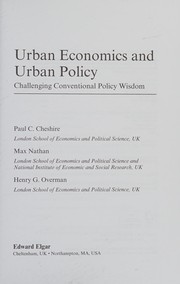
Cheshire, Nathan and Overman apply the same tools to British policy — enterprise zones, greenbelts, regeneration schemes — and are unusually blunt about which interventions the evidence does not support. Included because almost everything else on this path is American, and the contrast in land-use regimes is the point.
Land, rules and the shape of a city
IntermediateUnderstand the argument that a city's form is determined less by planning intent than by land markets and the rules constraining them. By the end you should be able to say what a zoning code does to prices, and why planners and economists so often talk past each other.
▸ Study plan for this stage
Pace: Two and a half months for 946 pages. Bertaud's Order without Design is 432 pages and is the pivotal book on the path — four to five weeks, read attentively, because it is the bridge from stage two's models to stage four's politics. He is a career urban planner arguing that planners should treat citi
- Bertaud's central claim: a city's form is determined mainly by land markets and the rules constraining them, and planning intent is a much weaker force than planners assume.
- Why planners and economists talk past each other on Bertaud's account — one profession reasons in norms and standards, the other in prices and trade-offs, and neither habitually converts into the other's terms.
- The cost of a rule expressed as a price. Minimum lot sizes, height limits, parking minimums and setback requirements each have a computable effect on the price of housing, which is the calculation Bertaud insists on.
- Mobility and affordability as the two outcomes he thinks a planner should optimise, and the specific regulations he identifies as trading one away for the other.
- Jacobs's city-region thesis and her argument about currency feedback: a national currency cannot signal to a declining city and a booming one simultaneously, which she treats as a structural defect.
- How American zoning actually operates in Gray: use separation, density caps, and the discretionary review layer where most of the real decisions are made.
- The origins of American zoning, including the racially explicit ordinances struck down in the 1910s and the exclusionary techniques that followed them, which is why the institution is not neutral even where the text is.
- The abolition versus reform argument. Gray's case is that a code built to separate uses cannot be incrementally repaired into one that permits housing, and knowing why he thinks so is more useful than agreeing.
- What does Bertaud think planners get wrong, and what does he propose they optimise instead?
- Take three specific land-use rules and state the mechanism by which each raises housing costs, using Bertaud's method.
- What is Jacobs's argument about national currencies and city regions, and what would count as evidence for or against it?
- Describe how a use-based zoning code works from Gray, and identify where discretion enters the process.
- Why does Gray argue for abolition rather than reform, and what is the strongest objection to that position?
- Bertaud is a planner and Gray is arguing against the planning apparatus. Where do they actually agree, and where does Bertaud stop short of Gray?
- Look up the zoning code for your own address and identify what could legally be built there today, then compute how the lot-size, height and parking rules change the number of units. Nothing on this path is more clarifying.
- Take Bertaud's method and apply it to one rule in that code: express the constraint as a cost per unit and state your assumptions explicitly.
- Read the historical chapters of Arbitrary Lines and trace one American city's zoning from its first ordinance to the present, noting each amendment's stated purpose against its effect on supply.
- Write out Jacobs's currency argument as a formal claim with a prediction, then check whether any monetary union offers a test of it.
- Compare a zoning map with the bid-rent diagram you drew in stage two. The places where the map contradicts the diagram are where the rules are binding, and that is the whole subject of this stage.
Next up: Rules that bind supply in productive cities produce a housing crisis and a politics around it, which is where the field's applied argument now lives.

A career urban planner arguing that planners should treat cities as labour markets and stop making decisions that economists can show will raise housing costs — written from inside the profession it criticises. The pivotal book on this path, and the one that connects stage two's models to stage four's politics.

Jacobs's most economic book, arguing that city regions rather than nations are the real units of economic life and that national currencies mask the feedback a city needs. Idiosyncratic and unproven in parts, and worth reading because it frames questions the standard models do not ask.
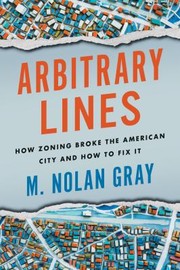
The clearest short account of how American zoning works, where it came from, and the case for abolishing it rather than reforming it. Read it after Bertaud, as the specific institutional target for the general argument.
What success costs
IntermediateProductive cities become expensive cities, and the housing politics that follows is now the central applied question in the field. Read the reporting, the political-science evidence and the housing data together, and note where each one is descriptive rather than causal.
▸ Study plan for this stage
Pace: Two to two and a half months. Dougherty's Golden Gates is 288 pages of reported narrative on California's housing fight — developers, tenant organisers, YIMBY activists and the legislature — and it goes first because the abstractions from stage three land harder after the people; two to three weeks
- The supply constraint argument in narrative form: productive cities that cannot add housing convert their productivity gain into rent, which is stage two's spatial equilibrium arriving as politics.
- Who actually participates in local land-use decisions, which is Einstein's Neighborhood Defenders finding: participants are older, whiter, longer-tenured homeowners, and overwhelmingly opposed to new housing.
- The unrepresentativeness gap. Participants differ systematically from the population of their own municipality, so more participation does not mean more representative decisions.
- Delay as the operative mechanism rather than refusal. Projects are more often slowed, shrunk and made conditional than rejected outright, and the cost of delay is what does the work.
- The tension between participatory process and housing supply, which Einstein documents rather than assert and which is genuinely uncomfortable for both sides of the politics.
- Colburn and Aldern's cross-metro test: rent levels and vacancy rates predict per-capita homelessness across American metros, while rates of mental illness, addiction and poverty do not track it in the way the folk explanations require.
- The individual versus aggregate distinction that makes their result coherent — individual vulnerabilities determine who becomes homeless, market conditions determine how many people do.
- Where the evidence in this stage is descriptive rather than causal. Dougherty is reporting, Einstein describes a population, and Colburn and Aldern establish a strong cross-sectional association; none of the three is an experiment.
- Whose interests are represented in the California fights Dougherty reports, and which of them are represented by nobody at a public meeting?
- What did Einstein actually measure, how did they measure it, and what does their method miss?
- Why does delay function as effectively as refusal, and what does that imply about reforms aimed only at approval rates?
- Set out Colburn and Aldern's finding and explain how it can be true that individual factors determine who becomes homeless while market factors determine how many do.
- Which claims in these three books are causal and what identifies them? Be specific about the strategy in each case.
- How does the evidence in this stage bear on the supply elasticity concept from stage two — does it confirm the model or complicate it?
- Attend or read the minutes of one real land-use meeting in your area and record who spoke, what they said, and what the outcome was. Then compare the speakers' demographics with your municipality's. This reproduces the Neighborhood Defenders method at n equals one.
- Take Colburn and Aldern's variables and rebuild their comparison for a handful of metros using publicly available rent, vacancy and homelessness counts. Even a rough version makes the association visible.
- Follow one project from Golden Gates and build a timeline of every procedural step, marking the months added at each. The total is the cost of process expressed in a unit that matters.
- Write the strongest argument against the supply constraint thesis using only evidence from these three books. If it is weak, say which finding makes it weak.
- Return to the housing supply elasticity rankings you built in stage two and check them against the political dynamics described here. The correlation is the link between the model and the meeting room.
Next up: If clustering makes cities expensive and exclusionary, the open question is whether it still makes them engines of opportunity at all.

Reported narrative of California's housing fight — developers, tenant organisers, YIMBY activists and the legislature — which puts human beings behind the supply-constraint argument. Read it first here, because the abstractions land harder after the people.

The empirical study of who actually turns up at local land-use meetings, using thousands of meeting minutes: overwhelmingly older, whiter homeowners opposing new housing. The best evidence on this path that participatory process and housing supply are in tension.

Colburn and Aldern test the usual explanations for homelessness across American metros and find that rents and vacancy rates predict it far better than mental illness, addiction or weather. A clean piece of applied urban economics, and the sharpest test of whether the supply argument survives contact with data.
Inequality within and between cities
IntermediateEnd on the two hardest open questions: whether clustering makes cities engines of opportunity or of sorting, and whether density itself is fragile. Neither book resolves its question, and you should be able to state the disagreement rather than the answer.
▸ Study plan for this stage
Pace: Seven to eight weeks for 819 pages, and neither book resolves its question, which is the reason both are here. Florida's The new urban crisis is 339 pages and takes three weeks; it is a partial retraction of his own earlier creative-class thesis, now arguing that the winner-take-all city concentrate
- The winner-take-all urbanism Florida now describes: gains concentrating in a small number of superstar metros and, within them, in a small number of neighbourhoods.
- Florida's revision itself, and what it tells you about the original creative-class thesis — the mechanism he identified was real and the distributional consequence was the part he had not weighted.
- Sorting versus opportunity as the central unresolved question. The same clustering that raises aggregate productivity may be selecting people rather than improving them, and the two are hard to distinguish in the data.
- Spatial inequality within cities, not only between them, which is where the housing-cost mechanism from stage four converts an agglomeration gain into a barrier.
- The density-and-contagion trade-off in Glaeser and Cutler: proximity transmits ideas and disease by the same mechanism, and urban history is largely the record of building institutions to keep the second in check.
- Remote work as the live threat to the agglomeration case. If knowledge spillovers survive distance, the central empirical claim of stage one weakens; if they do not, cities reassert.
- Urban public-health capacity as infrastructure rather than as policy, and the argument that failures of local government are a bigger risk to cities than technology is.
- That the field's central claim is now genuinely contested. Being able to state the strongest version of the case against agglomeration is the correct end point of this path.
- What did Florida get right in his earlier thesis and what does he now concede, and are the two claims actually inconsistent?
- Distinguish sorting from opportunity as explanations for high productivity in a clustered city. What evidence would separate them?
- What is the density and contagion trade-off, and what institutions did cities historically build to manage it?
- Which of the agglomeration mechanisms from stage one does remote work plausibly weaken, and which does it leave untouched?
- Glaeser wrote both the opening and the closing book on this path. What has changed in his argument, and what has not?
- State the strongest case against the agglomeration thesis using evidence from across the whole path, then say what you would need to settle it.
- Read Florida's earlier position as summarised in his own retraction and write both versions of the thesis side by side, marking the sentence where they part company.
- Take the three agglomeration mechanisms from stage one and score each against remote work: which of them require physical proximity and which merely correlate with it. Defend each score.
- Look up post-pandemic office occupancy and rent data for two metros with different industry mixes and see whether the pattern matches what Glaeser and Cutler expected. Their book predates the data you can now get.
- Write a one-page memo to a mayor recommending one policy, drawing on at least four books from this path, and state explicitly which pieces of evidence are causal and which are descriptive.
- Return to the explanation you wrote in stage one for why a firm pays more for downtown space, and rewrite it now. Keeping both versions is the honest record of what the path taught.
Next up: The field's central claim is now under active stress rather than settled, which is the right place to stop reading and start watching the data as it arrives.

Florida's partial retraction of his own creative-class thesis, now arguing that the winner-take-all city concentrates advantage and pushes everyone else out. Read both sides of his career as one argument about whether talent clustering is a public good.

Glaeser and Cutler on what pandemics, remote work and urban public-health failures do to the agglomeration case the path opened with. The right closing book because it puts the field's central claim under stress rather than restating it.
Discussion
Keep reading
Paths that share books, cover the same subject, or open a related topic.