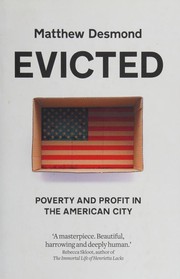
Start with Evicted. Matthew Desmond spent months with eight Milwaukee families and their landlords, and the book is the reason eviction is now a mainstream policy subject rather than a private misfortune. Read it first because everything after it is an argument about how to prevent what it documents. Then read Golden Gates, a reporter's account of California's housing fight followed over several years through activists, developers, homeowners and legislators — the best narrative introduction to why building housing is politically hard, and unusually fair to people it clearly disagrees with.
Two things to say about this list before the stages. First, it is about policy and evidence, not about buying property; there is no advice here on mortgages or landlording. Second, housing writing dates fast. Several of these books are now documents about a specific moment — the California legislation in Golden Gates has partly passed or been superseded since 2020, and the same goes for the local examples in The Affordable City. The notes below say which.
The rulebook, and who gets to say no
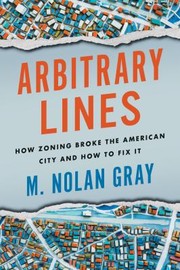
Arbitrary Lines is a professional planner's explanation of what American zoning does, where it came from and what abolishing it would mean. It is openly an abolitionist argument and says so up front, which makes it easy to read critically. Zoned in the USA asks the comparative question that Nolan Gray does not: why American zoning is internationally unusual in its devotion to detached single-family housing. It is academic, and it is the check on assuming the American arrangement is the default.
Neighborhood Defenders is the strongest empirical work on this list. Political scientists coded thousands of planning-meeting comments across Massachusetts and found that the people who show up are older, wealthier and longer-tenured homeowners, and that the process gives them an effective veto. It is the answer to anyone who treats local process as neutral.
How the pattern was built
Crabgrass Frontier is the standard history of American suburbanisation — streetcars, mortgages, highways, federal subsidy. Published in 1985: treat its data as historical and its causal account as live. The Color of Law makes the documentary case that residential segregation was imposed by government action rather than private preference, reproducing the statutes and agency manuals. It is argumentative by design and legally framed, and historians have disputed the weight it places on de jure over de facto forces — that dispute is worth following rather than resolving. Race for Profit is the essential sequel: what happened after redlining formally ended, when federally insured lending to Black homebuyers was channelled through predatory brokers and speculators.
Supply, prices and the toolkit
Order without Design is the most economically rigorous book here — a former World Bank planner arguing that cities are labour markets and that land prices have to be taken seriously, with comparisons from Mumbai to New York. It is unsparing about planning orthodoxy on both left and right. Fixer-Upper is a short Brookings survey of American housing policy instruments: what each is meant to do, what it costs, and what the evidence says, with settled findings kept separate from contested ones. The Affordable City is the operational one, organised around supply, stability and subsidy together and written for people who have to get something past a city council.
Escaping the Housing Trap argues that treating housing as both a consumer good and an appreciating investment is a contradiction, and that incremental small-scale development is the way out. It is the Strong Towns position — a movement's argument rather than a neutral survey, and the most interesting dissent from the mainstream supply consensus.
Homelessness, where the evidence is sharpest
Finish on the question the field turns on. Homelessness Is a Housing Problem is a cross-city regression analysis finding that housing market conditions, not the individual characteristics of homeless people, predict regional homelessness rates: rates of addiction and mental illness are broadly similar across American cities, while homelessness rates are not. It is explicit about the limits of its own method. Christopher Jencks's 1994 book The Homeless is the precursor that framed the same question.
San Fransicko is on this list as the labelled opponent to that finding, and for no other reason. Michael Shellenberger argues that permissive drug and encampment policy rather than housing cost drives West Coast street homelessness; researchers have criticised the book heavily over its handling of data and its sourcing. It is included so the disagreement is visible rather than assumed away — read it against Colburn and Aldern, and check the citations. The full ordered version, with stage goals and study plans, is at /paths/pt_ai_the-housing-crisis-and-housing-policy.