Best Books on Redlining and Housing Segregation, in Reading Order
American residential segregation was not an accident of private preference; it was built by federal underwriting rules, local zoning, restrictive covenants and violence, and then monetised. This path establishes that policy history first, then follows how the postwar suburb and the postwar ghetto were made as two halves of one process, then examines who profited, then looks at segregation outside the big-city frame, and ends on the housing crisis as it stands today.
The policy case
BeginnerBe able to explain, with specifics, how federal and local government created segregated housing markets, and why the distinction between de jure and de facto segregation matters legally.
▸ Study plan for this stage
Pace: 4 weeks. The Color of Law (345 pages) is written for a general reader and can be done in two weeks at 25 pages a day. American Apartheid (304 pages) is an academic monograph with real quantitative content — give it two weeks and do not skip the measurement chapters, which are the point.
- The de jure versus de facto distinction, and why it is the hinge of Rothstein's whole book: a constitutional remedy is available for segregation imposed by government and not for segregation attributed to private preference
- The specific federal instruments Rothstein documents — FHA and VA underwriting manuals, the Home Owners' Loan Corporation appraisal maps, the siting of public housing, and federal enforcement or non-enforcement of racial covenants
- That Shelley v. Kraemer (1948) made covenants judicially unenforceable without unwinding the settlement patterns they had already produced — the pattern of a remedy arriving after the damage is baked into property
- Massey and Denton's central measurement claim: Black segregation in American cities is different in kind, not degree, from any immigrant group's, and it did not decline with income or generation the way immigrant segregation did
- Hypersegregation — segregation that is extreme on multiple dimensions at once (evenness, exposure, clustering, centralisation, concentration) — and why measuring on several axes gives a different picture than a single index
- The concentration-of-poverty argument: that segregation converts a rise in Black poverty rates into a far larger rise in neighbourhood poverty exposure, so the same individual poverty produces worse neighbourhood conditions
- Rothstein is arguing toward a legal remedy and Massey and Denton toward a policy one. Both are stronger for having a destination; note where the destination shapes the selection of evidence
- Explain, using three specific federal programmes Rothstein names, why he insists this is de jure segregation. What would a critic have to show to move any one of them back into the de facto column?
- Massey and Denton show Black segregation did not fall with rising income, while immigrant segregation did. Why is that comparison the load-bearing evidence in their book?
- What does the multi-dimensional definition of hypersegregation capture that a single dissimilarity index misses?
- Rothstein's remedy argument requires identifying a state actor. For a family excluded from a suburb in 1955 by a covenant a court would not enforce and a bank that would not lend, who is the state actor?
- Where does American Apartheid supply evidence for a claim Rothstein asserts, and where do the two books rest on different kinds of evidence entirely?
- Find your own metropolitan area on the digitised HOLC maps (Mapping Inequality hosts them) and compare the 1930s grades against a current demographic map of the same tracts. Write 300 words on what persisted and what did not
- Make a one-page inventory of every federal or local government action Rothstein names, with the decade and the agency. You will use this list to check whether later books add mechanisms he missed
- Take one of Massey and Denton's segregation indices, look up its definition, and compute or find it for two cities. Write a paragraph on what the number does and does not tell a resident of either
- Write a 250-word statement of the strongest de facto counter-argument — that these patterns reflect private preference and market sorting — and mark which of Rothstein's chapters answers each part of it
Next up: With the legal history and the measurement in hand, the next stage watches the same machinery operating in real time in two cities as the suburb and the ghetto are built out of the same postwar decisions.

The clearest single statement of the case that segregation was imposed by law — FHA underwriting manuals, public housing siting, covenant enforcement — rather than arising from private choice. Rothstein is arguing toward a constitutional remedy, which sharpens the book and is worth keeping in view.

The sociological foundation: Massey and Denton demonstrate that Black residential segregation is categorically different in degree and persistence from any immigrant group's, and that it concentrates poverty by design. It supplies the measurement behind Rothstein's legal history.
How the suburb and the ghetto were built together
IntermediateFollow the postwar housing boom and the making of the second ghetto as a single process, and understand why deindustrialisation hit segregated cities the way it did.
▸ Study plan for this stage
Pace: 8-9 weeks. Crabgrass Frontier (396 pages) is a synthetic history and reads steadily — three weeks. Making the Second Ghetto (362 pages) is a tight archival monograph; two to three weeks. The Origins of the Urban Crisis (416 pages) is the densest of the three and should get three weeks and your full
- Jackson's argument that American suburbanisation was not a natural preference but a subsidised outcome — mortgage interest deduction, federally insured long-term amortised mortgages, highway construction — with the appraisal system built into the subsidy
- The chapter in Crabgrass Frontier on federal mortgage insurance and the appraisal maps is the origin of the word redlining; read it against Rothstein and note what Jackson established first and what later work sharpened
- Hirsch's central finding: Chicago's mid-century ghetto was newly constructed after 1940, not inherited from earlier decades — through urban renewal clearance, the deliberate siting of high-rise public housing, and sustained organised white violence at the boundaries
- Hirsch's phrase for the arrangement of interests that produced this — an alliance of city government, downtown business, universities and neighbourhood groups — and why locating agency in institutions rather than in diffuse prejudice changes the historical account
- The routine violence at racial boundaries that Hirsch documents from police records: hundreds of incidents that never entered the public history of the city. This is the material Loewen's work in stage 4 will parallel
- Sugrue's fusion: in Detroit, housing segregation and the collapse of industrial employment reinforced each other from the late 1940s, so the 1967 uprising followed two decades of decline rather than causing it
- Sugrue's revision of the standard chronology — the urban crisis predates the events usually blamed for it, which reframes what 'white flight' was fleeing
- Jackson explains suburbanisation by subsidy; a simpler account explains it by preference for space and cars. What evidence in Crabgrass Frontier distinguishes them, and how much of the pattern does each explain?
- Why does Hirsch's claim that the ghetto was rebuilt after 1940 matter more than the claim that it existed? What does the word 'second' commit him to?
- Sugrue argues the urban crisis preceded the riots. Which specific Detroit data series makes that case, and what does it do to the popular chronology?
- Hirsch and Sugrue study different cities with different industries. Which of their findings are city-specific and which generalise? Be precise about the boundary
- Add up the mechanisms in these three books and compare them to the inventory you made in stage 1. What does Rothstein's legal frame leave out?
- Build a parallel timeline 1930-1970 with three tracks — federal housing policy from Jackson, Chicago from Hirsch, Detroit from Sugrue. The synchronies are the argument; mark every year that appears in two tracks
- Take one Chicago public housing project Hirsch discusses and map its siting relative to the racial boundaries he describes. Write 200 words on whether the siting looks like a constraint or a choice, citing his evidence
- From Sugrue's employment data, sketch the Detroit manufacturing employment curve and mark on it the housing conflicts he narrates. Then write 300 words on which is driving which
- Return to your stage-1 inventory of government actions and add every mechanism these three books introduce that Rothstein does not name. Keep the expanded list
- Write a 400-word account of how one white family accumulated home equity between 1945 and 1970 and one Black family did not, drawing every step from a specific passage in one of these three books
Next up: You have seen how people were kept out; the next stage examines the far less familiar story of how being kept out was turned into a business.
The standard history of American suburbanisation, including the chapter on federal mortgage insurance and the appraisal maps that gave redlining its name. Everything since has been written against or on top of it.
Hirsch's study of postwar Chicago shows the ghetto being deliberately reconstructed after 1940 through urban renewal, public housing placement and organised white violence. It is the book that established that the mid-century ghetto was a new creation, not an inheritance.
Sugrue's Detroit shows housing segregation and the collapse of industrial employment reinforcing each other decades before the 1967 uprising. Read it third, because it fuses the two previous books into one causal account.
Who made money from it
IntermediateSee segregation as an extractive market — contract selling, predatory inclusion, urban renewal — rather than only as exclusion.
▸ Study plan for this stage
Pace: 8 weeks. Family Properties is 536 pages and part legal history, part family memoir — three weeks, and read the memoir sections rather than skimming to the analysis, because Satter's stake in the material is disclosed rather than hidden. Race for Profit (368 pages) needs two to three weeks. Root Shoc
- Contract selling as Satter reconstructs it: a buyer locked out of mortgage credit buys on contract, accrues no equity, holds no deed, and can be repossessed after a single missed payment — with the property then resold on the same terms
- The arithmetic of the extraction — speculators buying in white neighbourhoods at market price and reselling to Black buyers at large markups, with the difference being the price of exclusion itself
- Satter's disclosure that her father was a lawyer who fought these contracts, and how that access to his files shapes both what she can document and what she is arguing for. Read the personal frame as evidence about sources, not as a flaw
- Taylor's concept of predatory inclusion: after the 1968 Housing Act finally extended federally backed mortgages to Black buyers, the real estate and lending industries reorganised around extracting from access rather than from exclusion
- Why Race for Profit is the necessary sequel — it demonstrates that access to credit is not by itself a remedy, and that a reform can be captured by the industries it was meant to discipline
- Fullilove's root shock: the argument that demolishing a community's physical fabric inflicts a durable collective and psychological injury distinct from the loss of individual property
- The methodological range across these three — legal and archival, political-economic, clinical — and why the third measures a cost the first two structurally cannot
- Walk through a single Chicago contract sale as Satter describes it and identify every party who profited and how much. Where does the money come from?
- Taylor shows extraction continuing after exclusion formally ended. Does that undermine the 1968 Act, or show that a law without enforcement does nothing? What in the book decides between those readings?
- If contract selling and predatory inclusion were both profitable, what does that imply about remedies aimed at increasing access to credit — and does either author draw that implication?
- Fullilove measures a harm in clinical terms. What is the strongest objection to treating community displacement as a health outcome, and how does she answer it?
- Which of these three books would most change a reader's mind who already accepted everything in stages 1 and 2? Say why
- Take one contract sale from Family Properties and write out the full cash flow on paper — purchase price, resale price, monthly payment, what happens on a missed payment. Doing the arithmetic yourself is the exercise; the numbers are more extreme than prose conveys
- Set a passage from Satter beside one from Taylor describing the same city two decades apart and write 300 words on what changed in the mechanism and what did not
- Find one urban renewal project in a city you know, identify what was demolished and what replaced it, and write a paragraph applying Fullilove's framework to it. Note where you are extrapolating beyond your evidence
- Add a column to your stage-2 mechanism inventory: for each mechanism, who profited from it. Some rows will be empty, and which ones are empty is itself informative
- Write a 400-word summary of Taylor's central argument in Race for Profit for a reader who believes expanding mortgage access is straightforwardly good. Do not overstate her position: she is not arguing against access
Next up: These books all study large cities; the next stage shows that the same exclusion operated through whole towns and through the quiet machinery of municipal zoning.

Satter reconstructs Chicago contract selling, in which Black buyers locked out of mortgages bought on terms that let sellers repossess after one missed payment, partly through her own father's legal work against it. The most concrete demonstration anywhere of how exclusion was converted into profit.

After 1968, Black buyers were finally offered federally backed mortgages — and Taylor shows how the real estate and lending industries turned that inclusion into a new extraction. It is the necessary sequel, and it complicates any assumption that access alone is the remedy.
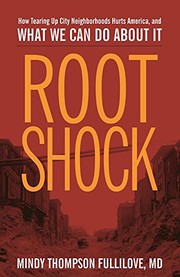
A psychiatrist examines what urban renewal did to the people whose neighbourhoods were demolished, arguing the loss of a community's physical fabric produces lasting collective damage. It measures a cost the economic histories cannot.
Beyond the big-city frame
IntermediateRecognise segregation enforced by whole towns and by municipal boundaries and zoning, not only by neighbourhood-level practices in large cities.
▸ Study plan for this stage
Pace: 6 weeks. Sundown Towns is 576 pages and repetitive by design — Loewen is accumulating cases — so read the framing and methodology chapters closely and move faster through the catalogue; three weeks. Segregation by Design (282 pages) is a compact political-science monograph with real statistical cont
- The sundown town as a distinct institution: whole municipalities that excluded Black residents outright, enforced by ordinance, sign, custom and violence, and overwhelmingly located outside the South
- Loewen's methodology and its contested status — he works from census discontinuities, local oral history and newspaper records, and reconstructs exclusion that local histories deliberately did not record. The county-level method has been debated; the phenomenon is now widely accepted
- Why absence is hard to document: a town with no Black residents leaves no record of the mechanism, so Loewen must infer from the demographic discontinuity and then corroborate. Watch how he handles cases where corroboration fails
- Trounstine's argument that local land-use and zoning decisions — the least visible layer of American government — do the ongoing work of segregation, and are driven by property values and the desire to control who shares municipal services
- The public-goods mechanism: municipalities segregate to control the tax base and the service population, which means segregation is produced by ordinary fiscal incentives rather than requiring animus at every decision point
- Why this stage matters for the present: covenants and FHA manuals are gone, but zoning is fully operative, so Trounstine identifies the mechanism still running today
- How does Loewen infer exclusion from a demographic discontinuity, and what alternative explanations does he have to rule out in each case?
- Trounstine locates segregation in fiscal incentives rather than in prejudice. Does that make it easier or harder to remedy, and does she say?
- Sundown towns were mostly outside the South. What does that do to the standard regional story of American segregation?
- Compare the mechanism in Trounstine's book to Rothstein's federal instruments from stage 1. Which is more consequential today, and what evidence would settle it?
- Loewen's method has been criticised for over-inclusion. Take one of his cases and decide whether the evidence he gives would satisfy you if the conclusion were unwelcome
- Check whether any town near where you grew up appears in Loewen's catalogue or matches his demographic profile. Look at the census figures yourself for 1930, 1970 and today, and write 300 words on what the numbers support and where you would need documents
- Read your own municipality's zoning map and identify how much land permits only single-family detached housing. Write a paragraph connecting the figure to Trounstine's mechanism
- Take one of Trounstine's statistical results and write a plain-English sentence stating what it shows and a second stating what it does not. Apply the same test you have used since stage 1
- Add zoning and municipal incorporation to your running mechanism inventory, and mark which entries on the whole list are still legally operative today. That subset is the subject of stage 5
Next up: The zoning mechanism Trounstine identifies is still running, which is exactly what makes the final stage's live political fight a continuation of this history rather than a new subject.
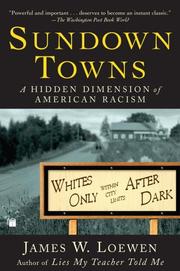
Loewen documents thousands of American towns that excluded Black residents outright, mostly outside the South and mostly unrecorded in local histories. His county-by-county methodology has been debated, and the phenomenon he identified is now widely accepted.

A political scientist shows how local land-use and zoning decisions — the least visible layer of American government — do the ongoing work of segregation, and how they were driven by property values and municipal service provision. This is the mechanism that still operates today.
The present crisis
IntermediateConnect the historical apparatus to current housing instability and to the live political fight over building more of it.
▸ Study plan for this stage
Pace: 5 weeks. Evicted (448 pages) is narrative ethnography and reads fast, but pace yourself to two to three weeks so the individual cases stay distinct. Golden Gates (288 pages) is reported journalism and can be read in two weeks. Read them in this order deliberately — one is about tenants losing housin
- Desmond's central reversal: eviction is a cause of poverty, not only its consequence — losing housing costs people jobs, possessions, schooling stability and access to better housing later
- The profitability of poor-neighbourhood rental property in Milwaukee, which means there is an operating business model with no interest in the arrangement changing. This is the direct descendant of Satter's contract sellers in stage 3
- Why Desmond's decision to follow landlords as well as tenants matters methodologically: it makes the extraction visible as a market rather than as individual misfortune
- The supply-side argument in Golden Gates: that constrained construction, driven by the local land-use politics Trounstine described, is a primary cause of housing cost, with the Bay Area as the extreme case
- That Dougherty reports a genuinely unresolved fight and does not settle it — the participants he follows include tenant organisers who fear displacement from new development and advocates who argue only supply can lower rents. Both positions have real evidence and real constituencies
- The specific point of tension worth holding: the historical apparatus of this path indicts exclusionary zoning, which the supply argument also attacks — but tenant-protection and anti-displacement arguments come from the same history. Where they conflict is a live disagreement, not a settled one
- Desmond argues eviction causes poverty. What in the Milwaukee fieldwork distinguishes that from the simpler claim that poor people get evicted?
- Trounstine showed zoning produces segregation; the supply argument says zoning produces high rents. Are those the same finding with two consequences, or two different claims about zoning?
- In Golden Gates, state the strongest version of the case Dougherty's tenant organisers make and the strongest version his supply advocates make. Which evidence would each side need to change the other's mind — and does either book contain it?
- Does building more housing help or harm the people in Desmond's Milwaukee? Answer separately for the short run and the long run, and be clear about which parts of your answer are supported by either book
- Run the whole path forward: which mechanisms from stages 1 through 4 are still operating in the situations these two books describe, and which have genuinely ended?
- Trace one family in Evicted through every move and write out what each eviction cost them in money, work and schooling. Do it before reading Desmond's conclusion so the tally is yours
- Look up your own metropolitan area's eviction filing rate and median rent-to-income ratio from public sources and compare them to the Milwaukee figures. Write 300 words on what the comparison establishes and what it cannot
- Write two 300-word memos on a proposed apartment building in a low-income neighbourhood — one from the tenant-organiser position, one from the supply position — each using only evidence from these two books. Do not write a third memo declaring a winner; the exercise is to make both defensible
- Take your complete mechanism inventory from stages 1 through 4 and mark each row as ended, transformed, or still operating. That final table is the deliverable of the path
- Write 500 words answering the question this path opened with — was segregation imposed or chosen — using the strongest evidence you now have, and mark every sentence where you are relying on one author's framing rather than on evidence multiple authors share
Next up: This is the end of the path: you can now read a current housing dispute and identify which parts of it are inherited from a documented policy history and which are genuinely open questions today.
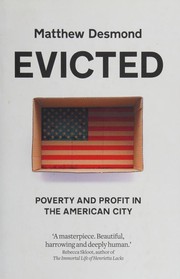
Desmond's ethnography of eviction in Milwaukee showed that losing housing is a cause of poverty and not merely a symptom, and it reframed the policy debate around tenants rather than owners. The Pulitzer-winning consequence of everything in the earlier stages.

The San Francisco Bay Area housing fight, reported through the activists, developers and homeowners on each side. It brings in the supply and zoning argument that has become central since 2015, and it ends the path on a live and unresolved question rather than a settled history.
Discussion
Keep reading
Paths that share books, cover the same subject, or open a related topic.