Best Books on the History of Sweden, in Order
This curriculum takes the reader from a broad, accessible overview of Swedish history all the way through the Viking Age, the Swedish Empire, the age of neutrality, and the rise of the modern welfare state. Each stage builds on the last — first establishing a mental map of Sweden's story, then diving into its most dramatic eras, and finally grappling with the political and social forces that shaped contemporary Sweden.
Foundations: The Big Picture
BeginnerGain a confident, chronological overview of Swedish history from prehistory to the present, establishing the key names, dates, and turning points needed for deeper reading.
▸ Study plan for this stage
Pace: 4–5 weeks, ~40–50 pages/day (total ~280 pages)
- The periodization of Swedish history: Viking Age, Medieval Kingdom, Kalmar Union, Great Power era (Stormaktstiden), and the transition to constitutional monarchy
- Sweden's geographic position in the Baltic and its strategic importance for regional power dynamics
- The Vasa dynasty and its role in establishing Swedish independence and religious reformation
- Sweden's rise as a military and imperial power in the 17th century under Gustavus Adolphus and the acquisition of Baltic territories
- The Great Northern War and Sweden's transition from great power to regional player
- The shift from absolute monarchy to constitutional governance and parliamentary democracy in the 18th–20th centuries
- Sweden's path to neutrality, industrialization, and the development of the modern welfare state
- Key figures and their impact: Gustav Vasa, Gustavus Adolphus, Charles XII, and 20th-century reformers
- What are the major chronological periods in Swedish history, and what defines the transition between them?
- How did Sweden's geographic location shape its historical development and regional relationships?
- What role did the Vasa dynasty play in Swedish independence and religious reform?
- Why did Sweden rise to great power status in the 17th century, and what caused its decline after the Great Northern War?
- How did Sweden transition from absolute monarchy to constitutional democracy, and what were the key turning points?
- What were the main drivers of Sweden's industrialization and the development of its welfare state?
- Who were the most consequential leaders in Swedish history, and what did they accomplish?
- How has Sweden's approach to neutrality and international relations evolved from the 18th century to the present?
- Create a timeline of Swedish history from prehistory to the present, marking major dynasties, wars, and constitutional changes
- Write a one-page summary of each major historical period (Viking Age, Medieval, Kalmar Union, Great Power era, Great Northern War, constitutional transition, modern era)
- Map Sweden's territorial changes over time, noting acquisitions and losses (especially Baltic territories and Scania)
- Create character profiles for 5–6 key Swedish historical figures mentioned in Scott, noting their contributions and historical significance
- Identify and explain 3–4 major turning points in Swedish history—moments where the nation's trajectory fundamentally changed
- Compare Sweden's path to democracy with one other European nation discussed in your reading, noting similarities and differences
Next up: This stage establishes the chronological skeleton and major themes of Swedish history, preparing you to dive deeper into specific periods, institutions, and cultural developments in subsequent stages with a solid foundational framework.

Scott's scholarly but readable survey is the standard English-language reference for Swedish history, covering politics, society, and culture in one volume. It fills in the analytical depth that Moberg's popular narrative leaves out, preparing you for more specialized reading.
The Viking Age
BeginnerUnderstand who the Vikings really were — their society, religion, expansion, and legacy — with a particular focus on the Swedish (Varangian) dimension of the Viking world.
▸ Study plan for this stage
Pace: 4–5 weeks, approximately 25–30 pages per day. Start with Roesdahl's "The Vikings in England" (weeks 1–2), then move to Winroth's "The Age of the Vikings" (weeks 3–5) for deeper context on Swedish/Varangian expansion and Viking society.
- Viking society structure: jarls, karls, and thralls, and how social hierarchy shaped expansion and settlement
- Norse religious beliefs (paganism and the transition to Christianity) and their influence on Viking behavior and culture
- The Swedish/Varangian Vikings: their distinct eastward expansion into Russia and the Byzantine world, contrasted with western Viking movements
- Viking ships, navigation, and maritime technology as the foundation for their far-reaching raids and trade
- The economic motivations behind Viking expansion: trade, plunder, and land acquisition
- Viking settlement patterns and integration into conquered territories (England as a case study)
- The legacy of Viking expansion: political, cultural, and genetic impact on medieval Europe
- Chronology and geography: understanding the Viking Age timeline and the different regions Vikings reached
- What were the main social classes in Viking society, and how did this structure enable their expansion?
- How did Norse religious beliefs differ from Christian Europe, and what role did religion play in Viking raids and settlement?
- What distinguished Swedish/Varangian Vikings from their Norwegian and Danish counterparts, and where did they primarily expand?
- How did Viking maritime technology and navigation techniques allow them to reach such distant lands?
- What were the primary economic drivers of Viking expansion—was it primarily raiding, trade, or land-seeking?
- How did Vikings integrate into and transform the societies they conquered, using England as a primary example?
- What was the lasting legacy of the Viking Age on medieval European politics, culture, and society?
- Create a detailed social pyramid of Viking society (jarls, karls, thralls) and explain how each class contributed to Viking expansion efforts.
- Map the Viking routes discussed in both books, color-coding by origin (Swedish, Norwegian, Danish) and destination, with annotations on major raids and settlements.
- Write a comparative character sketch of a Swedish Varangian trader and a Norwegian raider, based on details from Winroth, highlighting their different motivations and methods.
- Compile a timeline of major Viking events in England from Roesdahl's book, then cross-reference with Winroth's broader chronology to see how English events fit into the larger Viking Age narrative.
- Design a Viking ship based on descriptions in both texts, labeling key features that enabled long-distance navigation and warfare.
- Write a short analytical essay (500–750 words) comparing Viking pagan beliefs with Christian European beliefs, using examples from both books to explain how this religious divide shaped Viking behavior.
- Create a before-and-after comparison chart showing how England (or another conquered region) changed politically, culturally, and demographically due to Viking settlement, citing specific evidence from Roesdahl.
Next up: This stage establishes the foundational understanding of who Vikings were—their society, beliefs, technology, and methods—which prepares you to explore deeper topics such as Viking trade networks, the emergence of Scandinavian kingdoms, and the broader medieval European context in which Viking influence took root.
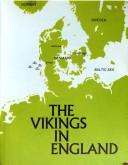
Roesdahl's book is the most respected single-volume introduction to Viking civilization in English, covering archaeology, society, religion, and expansion. Starting here grounds you in the facts before encountering more interpretive works.

Winroth, a leading scholar of medieval Scandinavia, corrects popular myths and offers a rigorous yet engaging portrait of Viking-age culture and power. His focus on primary sources and recent archaeology makes this the ideal follow-up that deepens and sometimes challenges what Roesdahl established.
The Swedish Empire and the Great Power Era
IntermediateUnderstand how a small northern kingdom became one of Europe's great powers in the 17th century, and why it collapsed — covering figures like Gustavus Adolphus, Charles XII, and the era of Baltic dominance.
▸ Study plan for this stage
Pace: 8–10 weeks, ~40–50 pages/day. Roberts' volume is substantial (~600+ pages); allocate 5–6 weeks. Hatton's biography (~400 pages) takes 2–3 weeks. Build in 1 week for review, synthesis, and exercises.
- Gustavus Adolphus's military innovations (the Carolean system, combined arms tactics) and their role in establishing Swedish dominance in the Baltic and Central Europe
- The Thirty Years' War as the crucible for Swedish power: intervention strategy, religious and political motivations, and territorial gains (Peace of Westphalia)
- The structure and cost of maintaining a great power: military organization, taxation, administration, and the strain on a small population
- Charles XII's personality and strategic vision: aggressive expansionism, the Great Northern War, and the pursuit of absolute monarchy
- The fatal consequences of overextension: Charles XII's invasion of Russia, the Battle of Poltava (1709), and the collapse of Swedish hegemony
- The role of individual leadership and decision-making in shaping empire: how personal ambition and miscalculation led to decline
- Baltic geopolitics: competition with Denmark, Poland, Russia, and the Ottoman Empire for regional control and trade dominance
- The transition from warrior-king to absolute monarch: how military success enabled centralization of power and cultural flourishing
- What were Gustavus Adolphus's key military innovations, and how did they enable Sweden to compete with larger European powers?
- Why did Sweden intervene in the Thirty Years' War, and what territorial and political gains did it secure from the Peace of Westphalia?
- How did Sweden finance and sustain its role as a great power given its small population and limited resources?
- What were Charles XII's primary strategic objectives in the Great Northern War, and how did his personality shape his decision-making?
- What were the causes and consequences of the Battle of Poltava, and how did it mark the turning point in Swedish decline?
- How did the collapse of Swedish hegemony in the early 18th century compare to its rise in the 17th century—what factors were decisive?
- Create a timeline of major military campaigns and treaties (1611–1721) using both Roberts and Hatton; annotate each with territorial changes and strategic outcomes.
- Analyze Gustavus Adolphus's military reforms by reading Roberts' sections on tactics and organization, then sketch a diagram comparing Swedish vs. contemporary European armies.
- Write a 2–3 page comparative character study of Gustavus Adolphus and Charles XII using evidence from both biographies: ambitions, decision-making styles, and outcomes.
- Map the territorial extent of the Swedish Empire at three points: 1611, 1660 (after Gustavus's era), and 1721 (after Charles XII's defeat); annotate with key acquisitions and losses.
- Debate exercise: Prepare arguments for whether Charles XII's invasion of Russia was a rational strategic choice or a catastrophic miscalculation, citing specific passages from Hatton.
- Create a cost-benefit analysis table: list the resources (military, financial, human) Sweden invested in great power status vs. the benefits gained, using data from Roberts on taxation and military expenditure.
Next up: This stage establishes how Sweden rose to and fell from great power status through military genius and overreach; the next stage will examine how Sweden adapted to its reduced circumstances and evolved into a different kind of European player—constitutional monarchy, cultural influence, and regional stability rather than imperial dominance.

Roberts is the definitive English-language historian of Sweden's imperial rise, and this biography of Gustavus Adolphus is the essential entry point into the Great Power era. It establishes the military, political, and religious context of Swedish expansion.

Hatton's authoritative biography of the warrior-king whose campaigns ended in catastrophe at Poltava is the natural sequel to Roberts — it traces the arc of Swedish imperial power to its dramatic collapse and is the benchmark scholarly account in English.
Neutrality, Social Democracy, and the Welfare State
IntermediateUnderstand how Sweden navigated two world wars through neutrality, built the world's most ambitious welfare state under Social Democratic rule, and became a global model for equality and social policy.
▸ Study plan for this stage
Pace: 4–5 weeks, ~40–50 pages/day
- The Nordic Model as a synthesis of capitalism and social solidarity, not socialism
- Sweden's deliberate neutrality strategy during WWI and WWII and its geopolitical consequences
- The role of the Social Democrats and labor unions in building consensus-based welfare policies
- Janteloven (the Law of Jante) and its cultural impact on egalitarianism and collective identity
- The concept of 'folkhemmet' (the people's home) as the ideological foundation of the Swedish welfare state
- How trust in institutions and high social cohesion enabled ambitious redistribution policies
- The historical contingency of Swedish exceptionalism: why these conditions emerged in this specific context
- What is the Nordic Model, and how does it differ from both American capitalism and Soviet socialism according to Andersen and Björkman?
- How did Sweden's neutrality during the world wars shape its post-war economic and political development?
- What role did the Social Democrats and the labor movement play in creating the Swedish welfare state, and how did they build broad political consensus?
- How does Janteloven reflect and reinforce egalitarian values in Swedish society, and what are its cultural implications?
- What is 'folkhemmet' and why was this concept so powerful in mobilizing support for welfare policies?
- Why do the authors argue that high social trust and institutional confidence were prerequisites for the Nordic Model's success?
- Create a timeline comparing Sweden's neutrality policies during WWI and WWII with those of other Nordic countries; annotate key turning points and their economic/political consequences
- Write a 2–3 page comparative analysis: How did the concept of 'folkhemmet' differ from competing visions of the state (conservative, communist, liberal) in early 20th-century Sweden?
- Diagram the relationship between Janteloven, social trust, and welfare policy generosity; explain how each element reinforces the others
- Research and present on one specific Swedish welfare policy (e.g., universal childcare, healthcare, education) mentioned in the book; trace its origins and ideological justification
- Conduct a close reading of the authors' explanation of why the Nordic Model emerged in Scandinavia but not elsewhere; list the historical preconditions they identify
- Debate or write a reflection: To what extent was Swedish exceptionalism the result of deliberate political choices versus fortunate historical circumstances? Use evidence from the text
Next up: This stage establishes the historical and ideological foundations of the modern Nordic welfare state, positioning you to examine how these systems have evolved, faced challenges, and influenced global policy debates in the contemporary era.

This widely read book argues that Scandinavian modernization was driven by a specific cultural and psychological transformation, offering a provocative and accessible complement to Berman's political analysis and bridging the historical welfare state with its cultural underpinnings.
Modern Sweden: Challenges and Contradictions
ExpertCritically examine contemporary Sweden — its immigration debates, the strains on the welfare model, its foreign policy identity, and the tensions between its self-image and social reality.
▸ Study plan for this stage
Pace: 4–5 weeks, ~40–50 pages/day (approximately 300 pages total)
- The Nordic exceptionalism myth: how Scandinavian self-image diverges from reality
- Immigration and integration tensions in Sweden's welfare state
- The sustainability crisis of the Swedish welfare model under demographic and fiscal pressure
- Sweden's contradictory foreign policy identity: military non-alignment vs. NATO proximity and geopolitical realities
- Class, inequality, and social stratification hidden beneath egalitarian rhetoric
- The role of cultural homogeneity in building and maintaining welfare consensus
- Contemporary Swedish anxieties: crime, integration, and national identity
- What specific contradictions does Booth identify between Sweden's international reputation and its internal social realities?
- How has immigration challenged the assumptions underlying Sweden's welfare state model, and what tensions has this created?
- What role did historical cultural and ethnic homogeneity play in building Swedish consensus, and why is this becoming problematic?
- How does Booth characterize Sweden's foreign policy stance, and what contradictions exist in Sweden's relationship with NATO and military security?
- What evidence does Booth present about inequality and class divisions in contemporary Sweden, and how does this complicate the egalitarian myth?
- What are the key fiscal and demographic pressures threatening the long-term viability of the Swedish welfare model?
- Create a two-column comparison chart: 'Sweden's Self-Image' vs. 'Booth's Findings' — populate it with specific examples from each chapter as you read
- Write three short position papers (500–700 words each) on: (1) whether Sweden's welfare model is sustainable given current immigration patterns, (2) how Sweden should resolve its foreign policy identity crisis, (3) whether Nordic exceptionalism is a myth or a partial truth
- Conduct a critical annotation exercise: mark passages where Booth identifies contradictions, and write margin notes explaining why each contradiction matters for understanding modern Sweden
- Research and compare: find 2–3 recent Swedish news articles (2023–2024) on immigration, welfare, or foreign policy, and analyze how they reflect or challenge Booth's arguments
- Create a stakeholder analysis: identify 4–5 different groups in Swedish society (e.g., recent immigrants, rural Swedes, business owners, welfare recipients) and write brief notes on how each group might experience the contradictions Booth describes
- Develop a debate outline: prepare arguments for and against the proposition 'Sweden's welfare state is fundamentally incompatible with large-scale immigration,' using Booth's evidence
Next up: This stage equips you with a critical, evidence-based understanding of contemporary Swedish contradictions, preparing you to examine how historical legacies and structural factors have produced today's tensions—setting up deeper analysis of Sweden's political responses, social movements, and possible futures in subsequent stages.

Booth's witty, well-researched cultural portrait of the Nordic countries (with substantial focus on Sweden) is the most readable entry into modern Scandinavian self-examination, puncturing myths while remaining deeply informed — a perfect bridge from history to current affairs.
Discussion
Keep reading
Paths that share books, cover the same subject, or open a related topic.