There are two Swedens in most people's heads and no bridge between them. One is the seventeenth-century military power that intervened decisively in the Thirty Years War; the other is the twentieth-century social democracy with parental leave and flat-pack furniture. Neither makes much sense without the other, and books that cover only one leave you with a country that seems to have swapped personalities.
A good sequence connects them. Take the survey first, then the medieval and Viking background, then the great-power century and its collapse, then the ideas and institutions that produced the modern state. Read that way and the continuity is visible: a sparsely populated northern kingdom repeatedly punching above its size, first militarily, later administratively.
One survey, then the deep past
Start with Sweden, Franklin D. Scott's single-volume national history. It is old-fashioned in style and comprehensive in coverage, running from prehistory to the modern era, and it is the most efficient way to get the shape of the whole thing before you specialise.
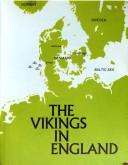
For the early period, two books cover adjacent ground. The age of the Vikings by Anders Winroth is the general modern account, using archaeology and coinage to replace the raider caricature with traders, settlers, and state-builders. The Vikings in England by Else Roesdahl looks at the westward diaspora specifically. If you are here strictly for Sweden, note that Swedish-based expansion ran mostly east, toward the rivers of Rus and Byzantium, so Winroth serves you better and Roesdahl is optional.
The great-power century
Then the era that made Sweden matter to European history. GUSTAVUS ADOLPHUS A History of Sweden 1611-1632 Vol 2 is Michael Roberts on the king who reformed the army and intervened in Germany. Roberts is the historian who framed the military revolution thesis, and this is dense, archival, argumentative work. Read it after the survey, and be willing to skim the administrative chapters on a first pass.
Charles XII of Sweden by Ragnhild Hatton covers the other end of the arc: the warrior king whose campaigns against Russia ended at Poltava and effectively closed the empire. Hatton's biography is the standard corrective to both the heroic and the deranged-fanatic caricatures. Together the two books give you the rise and the fall of the Swedish empire in the hands of its two most careful historians.
How the modern country was built
For the leap to the present, The Nordic Secret by Lene Rachel Andersen and Tomas Björkman argues that the nineteenth-century folk high schools and the German concept of Bildung were central to how the Nordic countries developed. It is an interpretation rather than a consensus history, and reading it as an argument to be tested is the right posture.
Finish with The almost nearly perfect people. Michael Booth is a journalist, not a historian, and his tour of the Nordic countries is funny and deliberately sceptical about the utopian image, including on Swedish conformity, immigration debates, and the wartime record. It is the lightest book in the path and a useful counterweight to the previous one.
A practical note on pacing: Scott is a reference read, Winroth and Booth move quickly, and Roberts and Hatton are the slow ones. Budgeting a month for the great-power pair and a week each for the rest is a realistic plan for most readers.
Work through the whole sequence and the two Swedens become one country with a long argument running through it: how a thinly populated kingdom on the edge of Europe kept organising itself to punch above its weight, first with armies and later with institutions. More national histories are collected on the Swedish history hub.
Follow the full ordered path here: The Best Books on Swedish History to Read First.