Best Books on the History of Norway, in Order
This curriculum takes the reader from a broad, accessible introduction to Norwegian history all the way through its most dramatic and defining chapters — the Viking Age, centuries of union and the road to independence, the Nazi occupation and heroic resistance, and finally the transformation wrought by North Sea oil. Each stage builds on the last, deepening chronological knowledge and analytical sophistication so that later, more specialised books land with full context and impact.
Foundations: The Full Norwegian Story
BeginnerGain a confident chronological overview of Norwegian history from earliest times to the modern era, establishing the names, dates, turning points, and themes that all later books will assume you know.
▸ Study plan for this stage
Pace: 4–5 weeks, ~25–30 pages/day (approximately 150–180 pages total)
- The Viking Age as a transformative period: Norse expansion, exploration, and cultural influence across Europe (800–1066)
- The Christianization of Norway and its role in unifying the kingdom under early medieval monarchs like Harald Fairhair and Olav Tryggvason
- The Kalmar Union (1397–1523): Norway's political integration with Denmark and Sweden, and its consequences for Norwegian autonomy
- The Danish-Norwegian period (1523–1814): economic, religious, and cultural developments under absolute monarchy
- The 1814 turning point: the Kiel Treaty, the brief Swedish union, and the Norwegian Constitution as a foundational document
- The growth of Norwegian nationalism and independence movements in the 19th century, culminating in the 1905 dissolution of the union with Sweden
- Modernization and nation-building in the early 20th century: industrialization, social reforms, and cultural identity
- Norway's experience in World War II and the postwar establishment of a modern welfare state
- What were the major achievements and limitations of the Viking Age, and how did Norse expansion shape medieval Europe?
- How did Christianization serve as a tool for political unification in early medieval Norway, and who were the key figures?
- What was the Kalmar Union, and how did it affect Norwegian political independence and cultural identity over nearly 400 years?
- Why was 1814 a pivotal year in Norwegian history, and what role did the Constitution play in Norwegian identity?
- How did 19th-century nationalism and industrialization create the conditions for Norway's independence in 1905?
- What were the major social, economic, and political changes in Norway during the 20th century, particularly after World War II?
- Create a visual timeline of Norwegian history from the Viking Age to the present, marking major turning points (Christianization, Kalmar Union, 1814, 1905, WWII, welfare state). Include 2–3 key events per century.
- Write a one-page summary of each major historical period (Viking Age, Medieval Kingdom, Kalmar Union, Danish-Norwegian era, 1814–1905, 20th century), focusing on the political, economic, and cultural characteristics of each.
- Trace the evolution of Norwegian identity by identifying how national consciousness shifted across different eras—from Viking warrior culture to Christian kingdom to independence movement to modern welfare state.
- Create a comparison chart showing Norway's relationship with Denmark and Sweden across different periods (Kalmar Union, Danish-Norwegian union, Swedish union, independence). What changed, and why?
- Write short biographical sketches (200–300 words each) of 3–4 pivotal figures mentioned in Danielsen's book (e.g., Harald Fairhair, Olav Tryggvason, Christian IV, or key 19th-century independence leaders). Explain their historical significance.
- Develop a study guide with 15–20 key dates and events, organized chronologically. For each, note the cause, the immediate consequence, and the long-term impact on Norwegian society.
Next up: This stage establishes the chronological backbone and major themes of Norwegian history, equipping you with the shared vocabulary, key figures, and turning points that all subsequent, more specialized books will build upon and explore in greater depth.
This is the standard single-volume survey of Norwegian history written by leading Norwegian historians, covering every major era in readable prose. Reading it first gives you the full timeline and vocabulary needed to go deep on any individual period.
The Viking Age
BeginnerUnderstand who the Vikings really were — their society, seafaring, mythology, and world impact — moving beyond myth to historically grounded knowledge of Norway's most iconic era.
▸ Study plan for this stage
Pace: 4–5 weeks, ~25–30 pages/day. Start with "The Age of the Vikings" (approximately 350 pages) over 2–3 weeks, then "The Vikings in England" (approximately 200 pages) over 1–2 weeks, allowing time for review and exercises.
- Viking society was hierarchical and complex, with distinct classes (jarls, karls, thralls) and gender roles that shaped their civilization
- Norse seafaring technology and navigation techniques enabled unprecedented maritime expansion and trade networks across Europe, Asia, and beyond
- Norse mythology and religious beliefs (polytheistic paganism) directly influenced Viking values, warfare, and cultural practices before Christianization
- The Viking Age was not primarily defined by raiding but by trade, settlement, and cultural exchange—raiding was one strategy among many
- Viking expansion into England (and elsewhere) involved conquest, settlement, and integration that fundamentally altered English society, law, and language
- Archaeological and textual evidence (sagas, chronicles, runestones) reveals the Vikings as skilled craftspeople, farmers, merchants, and administrators, not just warriors
- The decline of the Viking Age coincided with Christianization, political consolidation in Scandinavia, and changing European military tactics
- What were the main social classes in Viking society, and how did their roles and responsibilities differ?
- How did Viking ship design and navigation technology enable their far-reaching voyages, and what were the major trade routes they established?
- What role did Norse mythology and pagan beliefs play in shaping Viking culture, values, and military practices?
- Why is the characterization of Vikings as primarily 'raiders' historically incomplete, and what other activities defined their civilization?
- What were the major consequences of Viking settlement and conquest in England, particularly regarding language, law, and political structures?
- What types of evidence (archaeological, textual, linguistic) do historians use to reconstruct Viking life, and what are the limitations of each source?
- Create a detailed social hierarchy chart of Viking society based on Winroth's descriptions, then write a 300-word character sketch of a Viking from each social class, explaining their daily life and motivations
- Map the major Viking trade routes and raiding expeditions discussed in both books, marking key destinations, dates, and the goods exchanged; annotate with specific examples from the texts
- Compile a glossary of key Norse mythology terms and gods mentioned in Winroth's work (Odin, Thor, Valhalla, etc.), explaining their cultural significance and how they influenced Viking behavior
- Compare two primary source excerpts—one from a Viking saga and one from an English chronicle account of Viking invasion—analyzing how each source portrays Vikings differently and why
- Design a Viking longship based on Winroth's technical descriptions, labeling key features and writing a brief explanation of how each design element served seafaring and warfare
- Write a 500-word analytical essay: 'Beyond the Raid: Economic and Social Dimensions of Viking Expansion,' using specific evidence from both Winroth and Roesdahl to challenge the 'raider' stereotype
Next up: This stage establishes the foundational knowledge of Viking society, technology, and impact—particularly in England—that will enable deeper exploration of specific Viking settlements, cultural legacy, and the long-term transformation of medieval Europe in subsequent stages.

A modern, authoritative, and highly readable reassessment of the Viking Age by a leading scholar. It corrects popular myths and grounds the era in archaeology and primary sources — the ideal first deep-dive after your survey.
Roesdahl's classic covers Viking material culture, ships, religion, and expansion in rich detail. Reading it after Winroth adds archaeological and cultural depth to the historical narrative you have already absorbed.
Occupation and Resistance, 1940–1945
IntermediateUnderstand the German invasion, the Quisling regime, the mechanisms of occupation, and the remarkable civilian and military resistance — one of the most dramatic chapters in modern Norwegian history.
▸ Study plan for this stage
Pace: 6–7 weeks, ~40–50 pages/day. Start with "Hitler's Scandinavian Legacy" (weeks 1–4, approximately 200–250 pages), then transition to "Skis against the atom" (weeks 5–7, approximately 250–300 pages). Allow 1–2 days between books for reflection and note consolidation.
- The German invasion strategy and military conquest of Norway in April 1940, including the rapid collapse of Norwegian defenses and the role of surprise
- Vidkun Quisling's rise to power and the establishment of the puppet Quisling regime (Nasjonal Samling) under Nazi oversight
- The mechanisms of Nazi occupation: economic exploitation, cultural suppression, forced conscription, and the persecution of Norwegian Jews
- The ideological appeal and collaboration of Norwegian Nazis, and how the Quisling regime attempted to legitimize itself
- Civilian resistance networks, underground press, and the psychological and moral dimensions of living under occupation
- Military resistance: the role of the Norwegian government-in-exile, SOE operations, and the sabotage campaign against Nazi war production
- The Vemork heavy water plant and its strategic importance to the Nazi atomic weapons program
- Knut Haukelid's leadership of the sabotage operations and the human cost of resistance, including sacrifice and moral complexity
- How did the German invasion succeed so rapidly in April 1940, and what were the key military and political factors that led to Norway's defeat?
- What was the Quisling regime, how did it come to power, and what methods did it use to consolidate control over Norwegian society?
- How did ordinary Norwegians resist Nazi occupation through both civilian and military means, and what were the personal risks and moral dilemmas they faced?
- Why was the Vemork heavy water plant strategically critical to Nazi Germany, and what made its sabotage such a significant achievement?
- What role did the Norwegian government-in-exile and British SOE play in coordinating resistance operations during the occupation?
- How did Knut Haukelid and other resistance leaders balance military effectiveness with the protection of Norwegian civilians, and what were the consequences of their decisions?
- Create a detailed timeline of major events from April 1940 to May 1945, marking invasion, regime establishment, key resistance operations, and liberation, using both books as sources
- Write a character profile of Vidkun Quisling based on Stephenson's analysis, including his background, ideology, and how he is portrayed differently in each book
- Map the Norwegian resistance networks described in both books—civilian, military, and intelligence—showing how they were organized and interconnected
- Analyze the Vemork sabotage operation from 'Skis against the atom' by creating a detailed operational breakdown: planning, execution, risks, and outcomes
- Debate or write a reflective essay: Was the sabotage of Vemork justified given the risk to Norwegian civilians? Use evidence from Haukelid's account
- Compile a list of 10–15 key individuals mentioned across both books (resisters, Nazi officials, collaborators) with brief biographical notes and their roles in the occupation
Next up: This stage establishes the foundational narrative of Norwegian occupation and resistance, providing the historical context and human drama necessary to understand how Norway emerged from WWII and the long-term consequences of collaboration, trauma, and national identity that shaped post-war Norwegian society and politics.

Provides essential comparative context for the occupation of Norway, explaining German strategic aims in Scandinavia and how Norway's experience differed from Denmark's — a strong framing book before reading the resistance narratives.

A first-hand account by one of the Norwegian commandos who sabotaged the Vemork heavy-water plant, denying Nazi Germany a potential path to an atomic bomb. Reading it after the broader occupation context makes its stakes electrifying.
The Oil Era and Modern Norway
ExpertGrasp how the discovery of North Sea oil after 1969 transformed Norway's economy, politics, and society, and how Norway made the consequential choices that turned a resource windfall into a sovereign wealth fund and a social model.
▸ Study plan for this stage
Pace: 6–8 weeks, ~40–50 pages/day (The Prize is ~900 pages; focus on Part 5 covering the 1970s oil boom and Norway's strategic response)
- The geopolitical and economic significance of North Sea oil discoveries post-1969 and their timing during the OPEC embargo and energy crisis
- How Norway's institutional framework (state ownership via Statoil, regulatory control) differed from other oil-rich nations and prevented the 'resource curse'
- The role of oil revenues in funding Norway's welfare state expansion and establishing the Government Pension Fund Global (Oil Fund)
- The political and social debates within Norway about managing sudden wealth and balancing extraction with environmental and social concerns
- The strategic decisions that made Norway a model of resource management: reinvestment, sovereign wealth fund discipline, and long-term thinking
- How oil transformed Norway's international standing and energy security in Cold War geopolitics
- The tension between short-term economic gains and long-term sustainability that shaped Norwegian policy choices
- What were the key geological and timing factors that made North Sea oil discoveries after 1969 transformative for Norway specifically?
- How did Norway's state-controlled approach to oil extraction (Statoil model) prevent the resource curse that affected other oil-rich nations?
- What was the Government Pension Fund Global, when was it established, and what principles guided its creation and management?
- How did oil revenues reshape Norway's welfare state, and what political debates emerged about distributing this wealth?
- What role did Norway's oil play in Cold War geopolitics and European energy security during the 1970s energy crisis?
- What were the main environmental and social concerns raised by Norwegians about rapid oil development, and how were they addressed?
- Create a timeline of major North Sea oil discoveries and production milestones (1969–1980) with annotations on their economic impact on Norway's GDP and government revenue
- Compare Norway's oil governance model (state ownership, Statoil, fund discipline) with one other oil-rich nation covered in Yergin's book (Saudi Arabia, Iran, or Russia); write a 2–3 page comparative analysis
- Map out the political actors and interest groups in Norway's oil debates (labor unions, environmentalists, business, government) and their competing visions; create a stakeholder analysis chart
- Analyze the founding principles of the Government Pension Fund Global: extract key passages from Yergin on its creation and write a brief memo explaining why these principles were radical for resource management
- Track Norway's oil production and revenue figures across the 1970s–1980s (from Yergin's data) and calculate what percentage went to the Oil Fund vs. government spending; visualize this with a chart
- Write a 1,500-word essay: 'How did Norway avoid the resource curse?' using specific examples from Yergin's account of Norwegian decision-making
Next up: This stage establishes how Norway transformed oil wealth into institutional safeguards and long-term thinking, setting the foundation for understanding how those frameworks have been tested, refined, and adapted in contemporary debates about climate transition, fund governance, and post-oil economic planning.
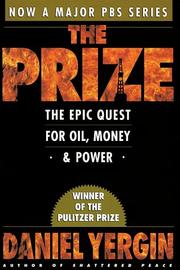
This Pulitzer Prize-winning global history of oil provides the essential international backdrop — geopolitics, markets, and the power of petroleum — so that Norway's specific choices stand out as deliberate and remarkable rather than inevitable.
Discussion
Keep reading
Paths that share books, cover the same subject, or open a related topic.