Read the rocks: how to learn geology
This four-stage curriculum takes a complete beginner from vivid, story-driven introductions to geology all the way to reading the rock record and understanding Earth's deep history like a working geologist. Each stage builds the vocabulary, conceptual framework, and observational skills needed to tackle the next, moving from narrative wonder → core concepts → deep time & Earth history → field-ready landscape reading.
Foundations — Awakening a Geological Eye
BeginnerDevelop an intuitive feel for deep time, the scale of Earth's story, and why geology matters — without yet needing technical vocabulary.
▸ Study plan for this stage
Pace: 10–12 weeks total. Weeks 1–7: "Annals of the Former World" (~25–30 pages/day, reading one of McPhee's five sections per 1–1.5 weeks — Basin and Range → In Suspect Terrain → Rising from the Plains → Assembling California → Crossing the Craton). Weeks 8–12: "The Story of Earth" (~20–25 pages/day, foll
- Deep time: internalizing the 4.5-billion-year age of Earth as a felt reality, not just a number — McPhee's roadside geology along I-80 makes this visceral by anchoring eons to landscapes you can picture
- Uniformitarianism: the present is the key to the past — slow, ordinary processes (erosion, deposition, uplift) operating over vast time produce extraordinary results, a thread woven through both McPhee's cross-country journey and Hazen's evolutionary narrative
- Plate tectonics as the unifying framework: continents drift, collide, and rift; oceans open and close — McPhee dramatizes this through the stories of geologists reading rocks, while Hazen traces how it shaped every chapter of Earth's biography
- Rock as a record: every outcrop is a compressed archive of events — McPhee teaches you to 'read' roadcuts the way a geologist does, treating stone as narrative rather than scenery
- Earth's layered interior and differentiation: Hazen's early chapters explain how a molten, undifferentiated ball sorted itself into core, mantle, and crust — the physical foundation everything else rests on
- Co-evolution of the geosphere, hydrosphere, atmosphere, and biosphere: Hazen's central thesis is that life and minerals shaped each other across time — geology is not separate from biology or chemistry
- The human timescale vs. geological timescale: both books repeatedly force the reader to confront how brief human civilization is, cultivating the humility and wonder that define a geological eye
- Narrative as a tool for science: McPhee embeds geological concepts inside vivid character portraits of geologists (Deffeyes, Love, Moores) — recognizing how storytelling makes abstract science accessible is itself a key lesson of this stage
- After reading McPhee's Basin and Range, can you explain in plain language why the American West looks so different from the East, and roughly how long those differences took to develop?
- What does it mean to say that a roadcut is 'reading the Earth backward in time,' and where does McPhee make this idea most concrete?
- How does Hazen's concept of mineral evolution challenge the idea that geology and biology are separate sciences?
- If you had to explain 'deep time' to a curious 10-year-old using only an image or analogy drawn from one of these two books, which would you choose and why?
- Both McPhee and Hazen describe processes that are imperceptibly slow yet produce enormous change. Name two specific examples — one from each book — and explain what force or mechanism is at work.
- How does plate tectonics, as described across both books, connect events happening miles underground to the landscapes and even the climates that living things experience at the surface?
- Keep a 'Geological Eye' field journal: once a week, go outside (a park, a road cut, a riverbank, even a gravel driveway) and sketch or photograph what you see, then write a paragraph asking 'What process made this, and how long might it have taken?' — do this throughout both books and watch your observations deepen
- Build a personal deep-time timeline: use a roll of toilet paper or a long strip of paper (1 sheet = 10 million years) and physically mark the events Hazen describes chapter by chapter — pin it to a wall so the emptiness of pre-life Earth is impossible to ignore
- After each of McPhee's five sections, draw a rough cross-section sketch of the landscape he describes (e.g., the Basin and Range fault-block mountains, the Appalachian folds) — no artistic skill required; the act of translating prose into a diagram forces comprehension
- Choose one geologist McPhee profiles (Deffeyes, Anita Harris, David Love, or Eldridge Moores) and write a one-page 'character study' explaining both who they are as a person and what specific geological idea they embody in the narrative — this sharpens the link between personality and concept
- Pair Hazen's chapter on the Great Oxidation Event with a quick look at a world map of banded iron formations (freely available via USGS or Wikipedia) — locate where these ancient rocks are found today and reflect in writing on what their global distribution tells you about early Earth
- After finishing both books, write a 300-word 'letter to a skeptic' explaining why geology matters to someone alive today — draw at least one specific detail from McPhee and one from Hazen to make the case concrete
Next up: By the end of this stage the reader has an intuitive, story-driven feel for deep time and Earth's grand arc, which creates the appetite and the mental scaffolding needed to engage confidently with the technical vocabulary, stratigraphic principles, and mineralogical detail that a more intermediate stage will introduce.
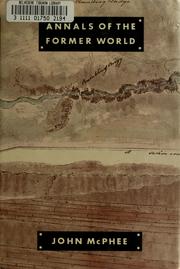
A Pulitzer-winning narrative journey across North America's geology told through vivid prose; it makes deep time and plate tectonics feel real and personal before any textbook is opened.
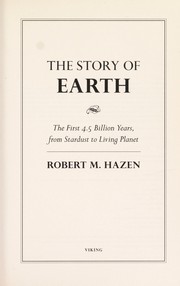
Hazen narrates Earth's 4.5-billion-year biography chapter by chapter, introducing rocks, minerals, atmosphere, and life in a logical, accessible sequence that builds the timeline the rest of the curriculum hangs on.
Core Concepts — Rocks, Minerals, and Plate Tectonics
BeginnerUnderstand the three rock types, how minerals form, and the engine of plate tectonics — the conceptual toolkit every geologist uses daily.
▸ Study plan for this stage
Pace: 8–10 weeks total. Weeks 1–5: "Rocks and Minerals (Smithsonian Handbook)" by Chris Pellant — treat it as both a cover-to-cover read and a field reference; aim for ~15–20 pages/day, pausing frequently to study the photographs and identification keys. Weeks 6–10: "Plate Tectonics" by Naomi Oreskes — mo
- The three rock types and the rock cycle: igneous (intrusive vs. extrusive), sedimentary (clastic, chemical, organic), and metamorphic (foliated vs. non-foliated) — as catalogued and illustrated in Pellant's handbook.
- Mineral identification properties: crystal system, hardness (Mohs scale), cleavage vs. fracture, luster, streak, and specific gravity — the diagnostic toolkit Pellant uses throughout his mineral entries.
- How minerals form: crystallization from magma, precipitation from solution, and metamorphic recrystallization — processes underpinning every specimen in Pellant's handbook.
- The concept of uniformitarianism: present-day processes explain the rock record, a foundational idea Oreskes traces through the history of geology.
- Continental drift vs. plate tectonics: Oreskes details how Wegener's hypothesis was initially rejected and how accumulating evidence (paleomagnetism, seafloor spreading, seismicity) forced a paradigm shift.
- The three plate boundary types and their geological products: divergent (mid-ocean ridges, rift valleys), convergent (subduction zones, mountain belts, volcanic arcs), and transform (strike-slip faults) — the engine that explains rock and mineral distribution globally.
- The role of the scientific community and evidence standards: Oreskes shows how geology's acceptance of plate tectonics is a case study in how paradigm shifts actually happen in science.
- Connections between plate tectonics and rock formation: subduction drives volcanism (igneous rocks), collision drives metamorphism, and erosion of uplifted ranges produces sedimentary basins — linking both books into one coherent system.
- Using the identification criteria in Pellant's handbook, how would you distinguish a feldspar from a quartz specimen, and which physical properties are most diagnostic?
- Describe the complete rock cycle: starting from a cooling magma body, trace at least two different pathways a rock could follow to become each of the three rock types.
- What evidence did scientists accumulate — as recounted by Oreskes — that finally convinced the geological community to accept plate tectonics over continental drift, and why was Wegener's original proposal insufficient on its own?
- How does the type of plate boundary determine what kinds of rocks and minerals are likely to form there? Give one specific example for each boundary type, drawing on rock families described in Pellant.
- What is the significance of paleomagnetism and seafloor spreading to the plate tectonics revolution, as explained by Oreskes, and what does it reveal about Earth's dynamic interior?
- Why is the rock cycle inseparable from plate tectonics? Explain how the movement of plates drives the creation and destruction of rocks at a global scale.
- Mineral hand-sample lab (Pellant-guided): Collect or purchase 8–10 common mineral specimens (quartz, feldspar, mica, calcite, pyrite, olivine, etc.). Use Pellant's identification keys and property descriptions to formally identify each one, recording hardness, streak, luster, and cleavage in a field notebook.
- Rock type sorting exercise: Gather 10–15 rock samples (from a local park, garden center, or geology kit). Classify each as igneous, sedimentary, or metamorphic using Pellant's photographic guides and descriptions. Write one sentence explaining the formation environment of each.
- Draw the rock cycle from memory: Without looking at any reference, sketch the full rock cycle with labeled arrows showing the processes (melting, cooling, weathering, erosion, compaction, heat & pressure) connecting all three rock types. Then compare your diagram to Pellant's overview sections and correct any gaps.
- Plate boundary map exercise (Oreskes-informed): Print or draw a blank world map. Mark and label all major tectonic plates, the three boundary types, and annotate each with the geological feature it produces (e.g., Himalayas = continent-continent convergence). Add one rock type from Pellant that you would expect to find at each boundary type.
- Paradigm-shift reading journal (Oreskes-guided): As you read Oreskes, keep a two-column journal: LEFT column — evidence presented for plate tectonics; RIGHT column — the scientific or institutional resistance it faced. At the end, write a one-page reflection on what this reveals about how scientific consensus forms.
- Virtual or local geology walk: Visit a local outcrop, road cut, or geological museum (or use a virtual tour like the USGS photo library). Identify at least three rocks or minerals in situ, photograph or sketch them, and write a short paragraph connecting each to a plate tectonic setting using concepts from both Pellant and Oreskes.
Next up: Mastering rock types, mineral properties, and plate tectonics in this stage gives you the physical and conceptual vocabulary needed to read Earth's stratigraphic record — the next stage's focus — where those same rocks and tectonic forces are decoded across deep time to reconstruct Earth's full 4.5-billion-year history.
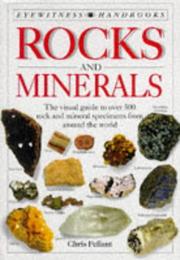
A highly visual, widely used field-guide-style reference that teaches rock and mineral identification from scratch; reading it here gives concrete names and properties to the materials McPhee and Hazen described.
Oreskes traces how the theory of plate tectonics was built and accepted, deepening understanding of the mechanism that drives nearly everything in geology — best read after the narrative stage so the science lands with full context.
Going Deeper — Earth's 4.5-Billion-Year History
IntermediateMaster the geologic time scale, major events in Earth's history (snowball Earth, mass extinctions, mountain-building), and how scientists reconstruct the past from the rock record.
▸ Study plan for this stage
Pace: 10–12 weeks total, reading ~25–35 pages per day. Week 1–3: "A Short History of Nearly Everything" (focus on Parts 1–3 covering Earth's formation, deep time, and geological forces). Week 4–7: "The Earth: An Intimate History" by Fortey (denser prose; slow to ~20 pages/day; take notes on each geologica
- The Geologic Time Scale: eons, eras, periods, and epochs — and how Bryson, Fortey, and Brannen each use it as a narrative backbone
- Deep time and the human difficulty of intuitively grasping 4.5 billion years (Bryson's accessible analogies as an entry point)
- The rock record as a historical archive: stratigraphy, unconformities, and index fossils as explained through Fortey's field-based storytelling
- Plate tectonics and mountain-building events (e.g., the Himalayas, the Appalachians) as Fortey traces them through landscape and rock
- Snowball Earth and other extreme climate episodes — how the planet has oscillated between hothouse and icehouse states
- The Big Five mass extinctions (End-Ordovician, Late Devonian, End-Permian, End-Triassic, End-Cretaceous) as the structural core of Brannen's 'The Ends of the World'
- Proximate vs. ultimate causes of mass extinctions: asteroid impacts, volcanism (Large Igneous Provinces), ocean anoxia, and rapid CO₂ shifts — as Brannen weighs the evidence for each event
- Radiometric dating and other geochronological tools that allow scientists to assign absolute ages to rocks and events (introduced by Bryson, deepened by Fortey)
- After reading Bryson, can you explain — using at least one of his analogies — why 'deep time' is so hard for humans to grasp intuitively, and why that matters for understanding Earth history?
- Fortey grounds abstract geology in specific landscapes and outcrops. Choose one mountain range or geological feature he discusses and explain what its rocks reveal about Earth's tectonic past.
- What is the rock record, and what are its limitations? Drawing on Fortey, explain how gaps (unconformities) and preservation biases affect what scientists can and cannot know about the past.
- Using Brannen's book as your primary source, compare any two of the Big Five mass extinctions: What were the leading hypotheses for each cause, what was the kill mechanism, and how long did recovery take?
- The End-Permian extinction wiped out ~96% of marine species. Based on Brannen's reporting, what combination of factors made it so severe, and what parallels does he draw to present-day trends?
- How do the three books complement each other as a set? Where does Bryson's breadth give way to Fortey's depth, and where does Brannen's crisis-focused narrative add something neither of the others provides?
- Build a personal geologic time scale: Create a hand-drawn or spreadsheet timeline from the Hadean to the Holocene. As you read each book, annotate it with specific events, species, and landscapes mentioned by Bryson, Fortey, and Brannen — color-coding each author. By the end, you should have a single integrated reference document.
- Analogy stress-test (Bryson-inspired): Bryson uses scaled analogies to make deep time tangible (e.g., compressing Earth's history into a single year or a football field). Create your own original analogy for at least three different time spans discussed in the books and share or explain it to someone unfamiliar with geology.
- Extinction cause-and-effect matrix (Brannen): Make a table with the Big Five extinctions as rows and the following columns: approximate date (Ma), duration, primary kill mechanism(s), % species lost, recovery time, and one present-day parallel Brannen draws. Fill it in as you read 'The Ends of the World.'
- Rock record field observation: Visit a road cut, riverbank, cliff face, or even a gravel pit. Sketch the visible layers, note any color or texture changes, and hypothesize what each layer might represent (different depositional environments, erosion events, etc.). Reflect on how this mirrors Fortey's approach of reading landscapes as historical documents.
- Cross-book concept mapping: After finishing all three books, draw a concept map linking at least 10 major terms or events (e.g., 'Large Igneous Provinces' → 'End-Permian extinction' → 'ocean anoxia'). Draw connections between nodes and label each arrow with a causal or temporal relationship. Identify which book was your primary source for each node.
- Socratic self-quiz: Write out five 'why' or 'how' questions that the books raised but did not fully answer for you (e.g., 'How exactly does volcanic CO₂ cause ocean acidification fast enough to drive extinction?'). Research brief answers using one external source per question, then write a one-paragraph reflection on how scientific uncertainty is portrayed differently by Bryson, Fortey, and Branne
Next up: Mastering Earth's deep history and the forces that have repeatedly reshaped life and landscape sets the essential chronological and conceptual foundation for the next stage, where the focus shifts from broad historical narrative to the specific mechanisms of rock formation, plate tectonics, and surface processes in greater technical detail.

Bryson's celebrated survey dedicates substantial chapters to geology, paleontology, and deep time, synthesizing the big picture and reinforcing the timeline with memorable stories of scientific discovery.
Fortey, a professional paleontologist, walks through iconic geological sites worldwide to explain how each reveals a chapter of Earth's history — bridging narrative and technical understanding at exactly the right moment.
A gripping account of Earth's five mass extinctions that teaches stratigraphy, ocean chemistry, volcanism, and climate change through the lens of the most dramatic events in the rock record.
Advanced Synthesis — Reading Landscapes Like a Geologist
ExpertApply everything learned to interpret real landscapes, read geological maps, and think quantitatively about Earth processes — approaching the level of a self-taught field geologist.
A rigorous but accessible university-level text that formalizes understanding of faults, folds, and crustal deformation — the final step toward thinking quantitatively and systematically about how the Earth is built.
Discussion
Keep reading
Paths that share books, cover the same subject, or open a related topic.