Quantum physics, actually explained
This curriculum moves from vivid, math-light introductions through the landmark experiments and paradoxes, then into the honest philosophical battleground of interpretations, and finally to the actual mathematical framework — so each stage builds the vocabulary and conceptual scaffolding the next one demands. The goal throughout is clarity over hype: understanding what quantum mechanics genuinely says, where it succeeds, and where physicists still genuinely disagree.
First Foothold — Intuition Without Equations
BeginnerBuild a vivid, honest mental picture of what quantum mechanics is actually claiming — superposition, measurement, wave-particle duality, entanglement — without being misled by pop-science mysticism.
▸ Study plan for this stage
Pace: 10–12 weeks total, reading roughly 20–25 pages per day on weekdays with weekends reserved for review and exercises. Approximate breakdown: "Six Easy Pieces" — 2 weeks (it's short and punchy; re-read key chapters twice); "In Search of Schrödinger's Cat" — 5 weeks (the historical and conceptual core o
- Wave-particle duality — light and matter behave as waves OR particles depending on how they are observed, not because they switch, but because 'wave' and 'particle' are classical labels that only partially fit (Feynman's photon/electron discussions; Gribbin's double-slit treatment)
- Superposition — a quantum system genuinely exists in multiple states simultaneously until a measurement interaction occurs; this is not ignorance about a hidden definite state (Gribbin Ch. 8–10; Ford's orbital cloud imagery)
- The measurement problem — the act of gaining information about a quantum system irreversibly changes it; Schrödinger's Cat is a reductio ad absurdum exposing how strange this is at macroscopic scales (Gribbin's central narrative thread)
- Quantization — energy, spin, and other properties come in discrete, indivisible packets (quanta); Feynman's 'Six Easy Pieces' grounds this in atomic structure before the formalism appears
- The uncertainty principle — position and momentum (and other conjugate pairs) cannot both be sharply defined simultaneously; this is a feature of nature, not a limitation of instruments (Gribbin Part II; Ford's electron-in-a-box examples)
- Entanglement — two particles can share a quantum state such that measuring one instantly fixes the outcome for the other, regardless of distance; this is correlation without classical communication (Gribbin's EPR and Bell chapters)
- Probability as fundamental — quantum mechanics predicts only probabilities of outcomes, not certainties; the wave function encodes these probabilities (Feynman's tone-setting; Gribbin's Copenhagen interpretation chapters)
- Interpretations of quantum mechanics — Copenhagen, Many-Worlds, and others are different philosophical stories told around the same mathematics; honest pop-science distinguishes the math (agreed upon) from the story (contested) (Gribbin Part III; Ford's closing chapters)
- After reading Feynman's 'Six Easy Pieces,' can you explain in plain language why physicists say an electron has both wave and particle properties — and why that phrasing is itself a little misleading?
- Gribbin uses the double-slit experiment as a recurring touchstone. Can you describe what happens to the interference pattern when a detector is placed at one slit, and explain what that implies about the role of measurement?
- What is Schrödinger's Cat actually meant to illustrate? (Hint: Schrödinger invented it as a criticism, not a celebration — what was he criticizing?)
- How does the Heisenberg uncertainty principle differ from ordinary everyday uncertainty, such as not knowing where your keys are? Use an example from Ford's 'The Quantum World' to anchor your answer.
- What did the EPR thought experiment (as described by Gribbin) claim to prove, and how did Bell's theorem — and subsequent experiments — respond to that claim?
- What is the Copenhagen interpretation, and what does it deliberately refuse to say? After reading all three books, do you find that refusal satisfying or frustrating — and why?
- Double-slit diagram exercise: Draw the double-slit experiment from memory three times — once showing wave behavior (both slits open, no detector), once showing particle behavior (detector at one slit), and once showing the entangled-particle variant Gribbin describes. Annotate each with what changes and why.
- Concept-card deck: Make one index card per key concept (superposition, entanglement, uncertainty, quantization, measurement, wave function, probability amplitude, interpretation). On the front: the term. On the back: a one-sentence definition in your own words + one concrete image or analogy drawn from one of the three books — no equations allowed.
- Schrödinger's Cat rewrite: Write a 200-word explanation of Schrödinger's Cat aimed at a curious 14-year-old. Deliberately avoid the phrase 'both alive and dead at the same time' — force yourself to be more precise about what superposition does and doesn't mean, drawing on Gribbin's treatment.
- Interpretation comparison table: Create a three-column table (Copenhagen | Many-Worlds | Pilot-Wave/Hidden Variables). For each interpretation, fill in: (a) what it says happens during measurement, (b) what it says the wave function 'is,' and (c) one objection Gribbin or Ford raises against it.
- Feynman re-read and margin notes: Re-read the chapters on atoms and quantum behavior in 'Six Easy Pieces' after finishing the other two books. In the margins (or a notebook), flag every claim that now means more to you than it did on first read — this tracks genuine conceptual growth.
- Misconception audit: List five things you believed about quantum mechanics before this stage (from movies, social media, or prior reading). For each one, write a sentence explaining whether 'Six Easy Pieces,' 'In Search of Schrödinger's Cat,' or 'The Quantum World' confirmed, refined, or debunked it — and cite the specific chapter.
Next up: Completing this stage gives you a stable, myth-resistant mental scaffolding — vivid pictures of superposition, measurement, and entanglement — so that when the next stage introduces the actual mathematical language (wave functions, operators, Hilbert space), you will be anchoring new symbols to concepts you already trust rather than memorizing formulas in a vacuum.

Feynman's own distillation of his legendary Caltech lectures gives a physicist's honest, no-nonsense feel for quantum ideas before any other voice shapes your intuitions.

A classic narrative of how quantum theory was built historically — the people, the experiments, the shock — giving essential context for why the theory is strange rather than just asserting that it is.
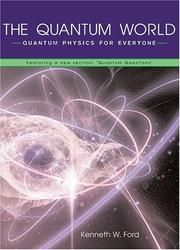
A careful, equation-light survey of the actual content of quantum mechanics written by a physicist; it corrects common misconceptions and prepares the reader for more rigorous treatments.
The Famous Experiments and What They Force Upon Us
BeginnerUnderstand the specific experiments — double-slit, Bell tests, delayed choice, EPR — that make quantum mechanics unavoidably weird, and grasp exactly what each one rules out.
▸ Study plan for this stage
Pace: 10–13 weeks total. Book 1 — "The Meaning of the Wave Function" (Shan Gao): 4–5 weeks at ~15–20 pages/day, reading carefully and re-reading dense sections on ontology and measurement. Book 2 — "Sneaking a Look at God's Cards" (Giancarlo Ghirardi): 6–8 weeks at ~20–25 pages/day, pausing after each maj
- The wave function as a physical entity vs. a mere calculational tool — Gao's central ontological question about what the wave function *is*
- The double-slit experiment as the foundational demonstration of wave-particle duality and the destruction of classical trajectories
- The measurement problem: why observation appears to 'collapse' the wave function, and why this is philosophically explosive
- Quantum superposition and what it genuinely means for a particle to be in multiple states simultaneously before measurement
- The EPR argument (Einstein-Podolsky-Rosen): how Einstein tried to show quantum mechanics was incomplete, and what assumptions he relied on
- Bell's theorem and Bell test experiments: the mathematical proof and experimental confirmation that no local hidden-variable theory can reproduce quantum predictions
- Nonlocality and entanglement — what Bell tests force us to abandon (local realism) and what they do not tell us (faster-than-light signaling)
- The delayed-choice experiment (Wheeler): how choosing the measurement apparatus *after* a particle has 'decided' its path retroactively determines its behavior, challenging classical notions of causality
- After reading Gao, can you articulate in your own words the difference between treating the wave function as a physical wave in 3D space versus a representation of our knowledge — and why Gao finds the latter unsatisfying?
- Using Ghirardi's account of the double-slit experiment, can you explain precisely what result would be expected if electrons behaved like classical particles, and how the actual interference pattern contradicts that?
- What exactly did Einstein, Podolsky, and Rosen argue in the EPR paper, and what hidden assumption does Bell's theorem show was unjustified?
- Can you state Bell's inequality in plain language and explain what it means experimentally that quantum systems *violate* it?
- What does Wheeler's delayed-choice experiment demonstrate about the role of the observer and the moment of 'decision' in quantum mechanics — and what does Ghirardi say it does and does not prove?
- Which specific classical worldview assumptions — locality, realism, determinism, counterfactual definiteness — does each experiment (double-slit, EPR/Bell, delayed-choice) individually rule out or leave open?
- Double-slit diagram exercise: Draw the experimental setup from Ghirardi's description — source, slits, screen — and annotate it with three columns: (1) what classical physics predicts, (2) what quantum mechanics predicts, (3) what is actually observed. Keep it on one page as a reference card.
- EPR vs. Bell mapping: Create a two-column chart. Left column: list every assumption Einstein made in the EPR argument (as reconstructed through Ghirardi). Right column: write next to each assumption whether Bell's theorem or a subsequent experiment has ruled it out, qualified it, or left it intact.
- Wave function ontology journal: After finishing Gao, write a one-page personal position statement answering 'What do I think the wave function represents?' Revisit and revise it after finishing Ghirardi to see how your view evolved.
- Bell inequality calculation walk-through: Using the simple CHSH version of Bell's inequality described in Ghirardi, plug in the quantum-mechanical predictions for a spin-½ entangled pair at the standard angles (0°, 45°, 90°, 135°) and verify numerically that the quantum value (~2.83) exceeds the classical bound of 2.
- Experiment timeline: Build a chronological timeline of the key experiments covered across both books (double-slit with electrons, EPR thought experiment, Aspect's Bell tests, Wheeler's delayed-choice). For each entry, note: year, what was tested, and one sentence on what it ruled out.
- Teach-back exercise: Pick one experiment — ideally the Bell test — and explain it out loud (or in writing) to an imaginary intelligent friend who has never studied physics, using no jargon beyond what Ghirardi himself uses in his lay-accessible chapters. Record yourself or write it up, then check it against the book for accuracy.
Next up: By having mapped exactly what each landmark experiment rules out — local realism, classical trajectories, pre-existing definite values — the reader has a precise list of constraints that any interpretation of quantum mechanics must satisfy, which is exactly the problem the next stage (exploring the major interpretations: Copenhagen, Many-Worlds, Bohmian mechanics, etc.) is designed to address.

Focuses tightly on what the wave function is and what the measurement problem really is, grounding the paradoxes in precise physical questions rather than vague wonder.
Written by one of the physicists who proposed a rival theory (GRW), this book walks through the key experiments and paradoxes with unusual precision and intellectual honesty about what they imply.
The Interpretation Wars — What Does It All Mean?
IntermediateUnderstand the main serious interpretations of quantum mechanics — Copenhagen, Many-Worlds, Pilot Wave, QBism, Relational QM — what each claims, and why the debate is genuinely unresolved.
▸ Study plan for this stage
Pace: 8–10 weeks total. Week 1–4: "What Is Real?" by Adam Becker (~25–30 pages/day, reading alongside its historical narrative arc). Week 5–7: "Something Deeply Hidden" by Sean M. Carroll (~20–25 pages/day, pausing after each major interpretational chapter to take notes). Week 8–10: "Quantum Theory Cannot
- The Copenhagen Interpretation: Bohr's insistence on the primacy of measurement, the observer-dependent collapse of the wave function, and why it became the 20th-century default — as critically examined in Becker's 'What Is Real?'
- The political and sociological suppression of alternatives: Becker's central thesis that Copenhagen's dominance was enforced by authority (Bohr, Heisenberg) rather than won on scientific merit, and how this shaped decades of physics culture
- The Many-Worlds Interpretation (MWI): Carroll's core argument in 'Something Deeply Hidden' that the wave function is real, never collapses, and that every quantum branch is equally real — eliminating the measurement problem at the cost of a vast proliferation of worlds
- The Pilot Wave / de Broglie–Bohm theory: a deterministic hidden-variable framework covered in Becker, showing that quantum mechanics can be recast without fundamental randomness or observer-dependence
- QBism (Quantum Bayesianism): the view that the wave function represents an agent's personal degrees of belief rather than an objective feature of reality — introduced in Becker and contrasted sharply with Carroll's realism
- Relational Quantum Mechanics (RQM): the idea that quantum states are only defined relative to a given observer/system, with no absolute, observer-independent description of reality
- The measurement problem as the engine of the debate: why the transition from quantum superposition to definite classical outcomes is not solved by the formalism itself, and why each interpretation is essentially a different answer to this one question
- Chown's pedagogical reframing: how 'Quantum Theory Cannot Hurt You' uses accessible analogies to strip interpretational baggage away and reveal what the bare mathematics actually demands — serving as a consolidating lens on the more polemical accounts of Becker and Carroll
- After reading Becker's 'What Is Real?', can you articulate his historical argument: in what specific ways did the Copenhagen Interpretation gain dominance through sociological and political pressure, and which alternative interpretations were sidelined as a result?
- What is the measurement problem, and how do Copenhagen, Many-Worlds, Pilot Wave, QBism, and Relational QM each attempt to dissolve or solve it — using the specific framings offered by Becker and Carroll?
- Carroll argues in 'Something Deeply Hidden' that the wave function is the complete, real description of physical reality and that branches are not 'created' by measurement but were always there. What are the strongest objections to this view, and how does Carroll respond to them?
- How does the Pilot Wave theory restore determinism to quantum mechanics, and why does Becker present it as a serious scientific alternative that was historically neglected rather than refuted?
- In what sense does QBism, as discussed by Becker, make quantum mechanics 'agent-centered'? What does it gain philosophically, and what do critics say it sacrifices in terms of scientific realism?
- Having read all three books, which interpretational disagreements are empirical (in principle testable) and which are purely philosophical? Use examples from Becker, Carroll, and Chown to support your answer.
- Interpretation comparison matrix: After finishing each book, build and iteratively update a table with rows for Copenhagen, Many-Worlds, Pilot Wave, QBism, and Relational QM, and columns for: 'Is the wave function real?', 'Does collapse happen?', 'Is there randomness?', 'Role of the observer', and 'Main unsolved problem'. Ground every cell in a specific claim from Becker or Carroll.
- Steelman debates: Pick any two interpretations and write a 300-word dialogue in which each side makes its strongest possible case, then a 150-word rebuttal. Repeat for at least two different pairings (e.g., MWI vs. Copenhagen; Pilot Wave vs. QBism). Use Carroll's arguments for MWI and Becker's historical accounts for the others.
- Becker's thesis stress-test: Re-read the key historical chapters of 'What Is Real?' and list every piece of evidence Becker uses to support the claim that Copenhagen's dominance was sociological rather than scientific. Then write a one-page counter-argument: what would a defender of Copenhagen say in response?
- Chown consolidation exercise: After finishing 'Quantum Theory Cannot Hurt You', go back to the single concept from Becker or Carroll that confused you most (e.g., decoherence, the Born rule, wave function branches) and write a one-paragraph plain-English explanation in Chown's accessible style — no jargon allowed.
- Personal interpretation audit: Write a one-page reflection on which interpretation you find most compelling after all three books, and — crucially — identify whether your preference is based on empirical adequacy, philosophical parsimony, or aesthetic/intuitive appeal. Be explicit about which of Carroll's or Becker's arguments moved you most.
- Timeline of the interpretation wars: Construct a chronological timeline (1900–present) of key events in the debate — e.g., Bohr–Einstein debates, Bohm's 1952 paper, Everett's 1957 thesis, Bell's theorem, the rise of QBism — annotating each event with the page or chapter in Becker where it appears. This builds the historical scaffolding Becker's narrative depends on.
Next up: By mapping the full landscape of interpretational positions and understanding why the debate remains open, the reader is now equipped to move from "what does quantum mechanics mean?" to "what can quantum mechanics do?" — making the transition to the technological and mathematical frontier (quantum computing, entanglement, and quantum field theory) both motivated and conceptually grounded.

A rigorously researched history of the interpretation debate that exposes how sociology and politics shaped which views were taken seriously; essential for understanding why Copenhagen dominated and what was suppressed.
A clear, committed defense of the Everett (Many-Worlds) interpretation by a working physicist, giving the reader a serious modern alternative to Copenhagen to weigh against.

A witty but surprisingly accurate bridge text that consolidates the conceptual landscape before the reader steps into mathematical formalism.
The Real Theory — Mathematics and Structure
IntermediateGrasp the actual mathematical structure of quantum mechanics — state vectors, operators, the Schrödinger equation, spin, entanglement — at the level a physicist uses it, not just talks about it.
▸ Study plan for this stage
Pace: 16–20 weeks total. Weeks 1–8: Susskind's "Quantum Mechanics" (~20–25 pages/day, 4–5 days/week) — work through all 10 lectures sequentially, pausing to redo every derivation by hand. Weeks 9–20: Griffiths' "Introduction to Quantum Mechanics" (~25–30 pages/day, 4–5 days/week) — read Chapters 1–6 deepl
- State vectors and Hilbert space: kets |ψ⟩, bras ⟨ψ|, and the Dirac notation that Susskind builds from scratch in his early lectures
- Observables as Hermitian operators: eigenvalues as measurement outcomes, eigenvectors as definite states, and the spectral theorem — the backbone of both books
- The postulates of quantum mechanics: the Born rule for probabilities, collapse of the state upon measurement, and how Griffiths formalizes these in Chapter 3
- The time-dependent and time-independent Schrödinger equation: derivation and physical meaning in Susskind's Lecture 4 and Griffiths' Chapters 1–2
- Canonical quantization and commutation relations: [x̂, p̂] = iℏ as the bridge from classical Poisson brackets to quantum operators, emphasized in both texts
- Spin and two-state systems: Susskind's entire framework is built on spin-1/2 as the prototype quantum system; Pauli matrices, spin operators, and measurement along arbitrary axes
- Entanglement and tensor products: product states vs. entangled states, the EPR argument, Bell inequalities, and why classical hidden variables fail — Susskind's Lectures 6–7
- Quantum harmonic oscillator: ladder operators (â⁺, â), energy quantization, and the algebraic method in Griffiths' Chapter 2 as a template for all of quantum field theory
- Given a Hamiltonian matrix for a two-state system (as in Susskind's spin examples), can you find the energy eigenvalues, write the time-evolved state |ψ(t)⟩, and compute the expectation value of an observable at time t?
- What is the physical meaning of the commutator [Â, B̂] = 0, and how does it determine whether two observables can be simultaneously measured with certainty? Derive the generalized uncertainty principle from first principles as Griffiths does in Chapter 3.
- Starting from the time-independent Schrödinger equation, solve for the allowed energies and normalized wavefunctions of the infinite square well (Griffiths Chapter 2) and explain why only discrete energies arise.
- How does Susskind's density matrix formalism distinguish a pure state from a mixed (entangled) state? What does it mean for the reduced density matrix of one qubit in a Bell state to be maximally mixed?
- Using the ladder operator method from Griffiths Chapter 2, derive the energy spectrum of the quantum harmonic oscillator without solving any differential equation. What is the physical significance of the zero-point energy?
- Explain Bell's theorem in your own words: what assumption does it challenge, what inequality must classical hidden-variable theories satisfy, and how does quantum mechanics violate it?
- Dirac notation drill (Susskind-based): Write out the completeness relation, compute inner products, and express an arbitrary state as a superposition of eigenstates for at least three different bases (Sz, Sx, Sy for spin-1/2). Verify orthonormality by hand.
- Matrix mechanics workout: For the spin-1/2 system, explicitly construct the 2×2 matrices for Sx, Sy, Sz using Pauli matrices. Diagonalize each, find eigenvalues/eigenvectors, and verify the commutation relations [Si, Sj] = iℏ εijk Sk by direct matrix multiplication.
- Schrödinger equation solving: Solve the infinite square well and the quantum harmonic oscillator (both algebraically with ladders and analytically with Hermite polynomials) from scratch on blank paper, normalizing the wavefunctions and computing ⟨x⟩, ⟨p⟩, ⟨x²⟩, ⟨p²⟩, and Δx·Δp for the ground state.
- Griffiths problem sets — mandatory selection: Complete at least 15 of Griffiths' end-of-chapter problems, prioritizing: Ch.1 #1.3, 1.7; Ch.2 #2.5, 2.11, 2.22; Ch.3 #3.5, 3.13, 3.18; Ch.4 #4.3, 4.11, 4.25 (hydrogen atom); Ch.6 #6.1. Check answers against the solution manual only after a genuine attempt.
- Entanglement and density matrix exercise (Susskind-based): Write down the four Bell states. For each, compute the reduced density matrix for qubit A by tracing out qubit B. Confirm that each is proportional to the identity. Then write a product state and show its reduced density matrix is a pure state (ρ² = ρ).
- Numerical simulation mini-project: Using Python (NumPy/SciPy) or a CAS like Mathematica, numerically diagonalize a 10×10 Hamiltonian matrix for a particle in a box with a perturbation, plot the first five eigenfunctions, and animate the time evolution of a Gaussian wave packet — connecting the abstract formalism to visual intuition.
Next up: Mastering the mathematical skeleton here — state spaces, operators, the Schrödinger equation, and entanglement — gives you the fluency to tackle the next stage's more advanced topics, such as approximation methods (perturbation theory, WKB), identical particles, and ultimately the leap to quantum field theory, where these same structures are promoted to infinite-dimensional function spaces.
Susskind's 'Theoretical Minimum' series is uniquely designed for adult learners who want real physics with real math but without a full university prerequisite chain; this is the ideal entry into the formalism.
The canonical undergraduate textbook — clear, well-paced, and honest about what the formalism says and doesn't say; reading it after Susskind makes the step up in rigor feel natural rather than brutal.
Discussion
Keep reading
Paths that share books, cover the same subject, or open a related topic.