How to learn Chemistry
This curriculum takes a complete beginner from everyday chemical intuition all the way to university-level physical and organic chemistry. Each stage builds the conceptual vocabulary and mathematical comfort needed for the next, so no step feels like a leap into the unknown.
Foundations — Chemistry in Everyday Life
BeginnerDevelop an intuitive feel for what chemistry is, why it matters, and how atoms and molecules behave — with no prior science background required.
▸ Study plan for this stage
Pace: 8–10 weeks total. Weeks 1–4: Read "The Disappearing Spoon" (~20–25 pages/day, leisurely narrative pace — pause to look up any element or story that sparks curiosity). Weeks 5–10: Work through "Chemistry: Concepts and Problems" (~10–15 pages/day with active problem-solving — never skip a practice pro
- The periodic table as a map of matter: how elements are organized by atomic number, period, and group, and what that organization predicts about behavior (drawn from both Kean's stories and Houk's systematic coverage)
- Atomic structure: protons, neutrons, and electrons; the nucleus vs. electron cloud; and why electron configuration drives nearly all chemical behavior
- The mole concept and atomic mass: how chemists count invisibly small particles in measurable, lab-scale quantities (Houk, Chapters on measurement and stoichiometry)
- Chemical bonding fundamentals: ionic vs. covalent bonds, electronegativity, and why atoms 'want' to bond at all — illustrated by Kean's vivid element stories and formalized in Houk
- Chemical reactions and equations: reactants, products, balancing equations, and the conservation of mass (Houk's core problem-solving chapters)
- States of matter and physical vs. chemical change: how temperature and pressure shift matter between solid, liquid, and gas, and how to tell a physical change from a chemical one
- The human and historical context of chemistry: how element discovery, industrial use, and scientific rivalry shaped the modern world (Kean's narrative arc throughout 'The Disappearing Spoon')
- Dimensional analysis and unit conversion: the problem-solving backbone of Houk's workbook approach, essential for every quantitative chemistry task ahead
- After reading Kean, can you explain — in plain language — why elements in the same column of the periodic table tend to behave similarly, and give one vivid example from the book?
- What is the difference between an atom and a molecule, and how does Houk's treatment of atomic structure help explain why some elements exist as diatomic molecules (e.g., H₂ or O₂)?
- Using the mole concept from Houk, how would you calculate the number of atoms in a 12-gram sample of carbon-12, and why is this unit useful to chemists?
- How do ionic and covalent bonds differ in terms of electron behavior, and can you identify one compound from everyday life that exemplifies each type?
- Choose any element whose story is told in 'The Disappearing Spoon' and explain both its human/historical significance (Kean) and at least one chemical property that explains that significance (Houk)?
- How do you balance a simple chemical equation, and what law of nature does balancing an equation reflect?
- Element journal: As you read 'The Disappearing Spoon,' keep a one-page log for every element Kean discusses — write its symbol, atomic number, group/period, and one sentence on why its story stuck with you. By the end, you'll have built your own annotated periodic table.
- Kitchen chemistry observation: Identify three physical changes and three chemical changes in your home this week (e.g., melting ice vs. baking bread). Write a brief justification for each classification using vocabulary from Houk's early chapters.
- Mole calculation drill: Using Houk's practice problems on the mole and molar mass, work at least 10 problems without a calculator first — estimate, then verify. Focus on unit-cancellation (dimensional analysis) as the method, not memorized formulas.
- Balancing equations worksheet: Write out 8–10 unbalanced equations from Houk's exercises, balance them by inspection, then check conservation of mass by counting every atom on both sides. Repeat any you got wrong until the logic feels automatic.
- Periodic table prediction game: Cover the properties column of a reference table and, using only an element's position (period and group from Kean + Houk), predict whether it is a metal/nonmetal, likely reactive or stable, and solid/liquid/gas at room temperature. Uncover and score yourself.
- Concept connection essay (one page): After finishing both books, write a short essay linking one story from 'The Disappearing Spoon' to a specific concept formalized in Houk (e.g., mercury's liquid state at room temperature → intermolecular forces and melting points). This forces integration of narrative and technical knowledge.
Next up: By finishing these two books, the reader has both an emotional attachment to chemistry's story (Kean) and a working toolkit of quantitative reasoning (Houk), providing exactly the motivation and mechanical fluency needed to tackle more rigorous topics — such as thermodynamics, kinetics, or organic chemistry — in the next stage.
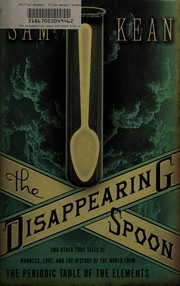
A narrative tour of the periodic table told through fascinating stories; it builds curiosity and a mental map of the elements before any formal study begins.

Stunning visual explanations of chemical reactions in daily life cement the idea that chemistry is everywhere, making abstract concepts feel tangible and real.

A self-teaching workbook that introduces core vocabulary — atoms, bonds, reactions, stoichiometry — with worked examples and practice problems to build early problem-solving habits.
General Chemistry — The Core Framework
BeginnerMaster the full scope of first-year university general chemistry: atomic theory, bonding, thermodynamics, equilibrium, acids/bases, and electrochemistry.
▸ Study plan for this stage
Pace: 20–24 weeks total. Weeks 1–16: "Chemistry: The Central Science" by Brown et al. — read ~2 chapters/week (~25–35 pages/day), working through all 24 chapters systematically. Weeks 17–24: "General Chemistry" by Linus Pauling — read ~1–1.5 chapters/week (~20–25 pages/day), using Pauling's deeper theoret
- Atomic theory and quantum mechanical model of the atom: electron configurations, orbitals, and periodic trends — introduced accessibly in Brown and deepened with Pauling's resonance and wave-mechanical treatment
- Chemical bonding: ionic, covalent, and metallic bonding, VSEPR theory, hybridization, and molecular orbital theory — Brown provides the operational framework while Pauling's original electronegativity and resonance concepts add theoretical richness
- Stoichiometry and the mole concept: balancing equations, limiting reagents, percent yield, and solution concentration — drilled extensively in Brown's early chapters
- Thermodynamics: enthalpy, entropy, Gibbs free energy, Hess's Law, and spontaneity — covered quantitatively in Brown and revisited with statistical/conceptual depth in Pauling
- Chemical equilibrium: the equilibrium constant (K), Le Chatelier's Principle, reaction quotient (Q), and the relationship between K and ΔG — a central thread in both books
- Acid-base chemistry: Arrhenius, Brønsted-Lowry, and Lewis definitions; pH, pKa, buffers, and titrations — Brown provides thorough problem-solving coverage; Pauling reinforces the electronic structural basis
- Electrochemistry: galvanic and electrolytic cells, standard reduction potentials, the Nernst equation, and the link between cell potential and Gibbs free energy — quantitatively treated in Brown
- Intermolecular forces, states of matter, and phase behavior: how molecular structure (from bonding chapters) governs bulk physical properties — bridging microscopic and macroscopic chemistry in both texts
- Starting from the quantum mechanical model in Brown and Pauling's wave-mechanical description, how do electron configurations and orbital shapes explain periodic trends such as ionization energy, atomic radius, and electronegativity?
- How do Brown's VSEPR rules and hybridization model connect to Pauling's resonance structures and electronegativity scale — and where do the two approaches agree or diverge in predicting molecular geometry and polarity?
- Given a multi-step reaction with known ΔH values, how would you apply Hess's Law (as practiced in Brown) to calculate the overall enthalpy change, and how does Pauling's thermodynamic treatment reinforce why bond enthalpies are additive?
- For a weak acid equilibrium problem, how do you set up an ICE table, solve for pH, and then design a buffer — and how does the Lewis acid-base framework from Pauling extend the Brønsted-Lowry picture covered in Brown?
- How does the relationship ΔG° = −nFE° (developed in Brown's electrochemistry chapters) unify thermodynamics and electrochemistry, and what does the Nernst equation tell you about cell behavior under non-standard conditions?
- After reading both books, how does Pauling's structural/theoretical perspective (resonance, electronegativity, the nature of the chemical bond) enrich or challenge the more application-oriented framework presented in Brown?
- **Chapter-end problem sets (Brown):** Complete every in-chapter 'Practice Exercise' and at least 20 end-of-chapter problems per chapter, prioritizing multi-step quantitative problems on stoichiometry, equilibrium, thermodynamics, and electrochemistry — these are the computational backbone of the stage.
- **Concept-mapping sessions:** After finishing each major topic in Brown (e.g., bonding, thermodynamics, equilibrium), draw a hand-written concept map linking the key terms; then re-read the corresponding Pauling chapter and annotate the map with Pauling's theoretical additions (e.g., add 'resonance hybrid' and 'electronegativity difference' to your bonding map).
- **ICE table drill bank:** Write out and solve at least 15 equilibrium problems (weak acid/base, Ksp, Kc/Kp conversions) from Brown's Chapters 16–17 without looking at examples first; check answers and re-derive any missed steps — this cements the single most tested skill in general chemistry.
- **Electrochemical cell diagrams:** For 10 different redox reactions from Brown's Chapter 20, draw the full galvanic cell (anode, cathode, salt bridge, electron flow), calculate E°cell from the standard reduction potential table, compute ΔG°, and then use the Nernst equation to find E at a non-standard concentration — connecting three major topic areas in one exercise.
- **Pauling reading journal:** For each chapter of Pauling's 'General Chemistry,' write a half-page journal entry answering: (1) What concept does Pauling explain more deeply than Brown? (2) What is one equation or argument Pauling derives from first principles that Brown states as a rule? This forces active reading of the denser, more theoretical text.
- **Mock AP/university exam blocks:** Every four weeks, set a 3-hour timed block and attempt a full mixed problem set (drawing questions from Brown's sample AP-style problems and Pauling's chapter exercises) covering all topics seen so far — simulate exam conditions to identify gaps before the final review weeks.
Next up: Mastering Brown's quantitative problem-solving toolkit and Pauling's structural-theoretical reasoning together builds the mathematical fluency and conceptual depth required to tackle the more specialized and mathematically rigorous treatments found in organic chemistry, physical chemistry, or advanced inorganic chemistry at the next stage.
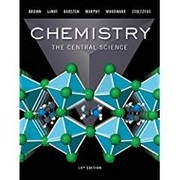
The most widely adopted general chemistry textbook worldwide; its clear progression from atomic structure to chemical reactions provides the essential theoretical backbone for everything that follows.
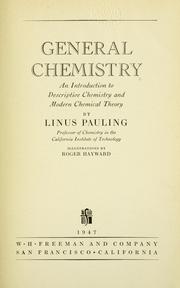
Written by a two-time Nobel laureate, this classic deepens conceptual understanding — especially of bonding and molecular structure — in a way that standard textbooks rarely achieve.
Going Deeper — Organic Chemistry
IntermediateUnderstand the logic of carbon-based molecules: functional groups, reaction mechanisms, stereochemistry, and synthesis — the language of biology and materials science.
▸ Study plan for this stage
Pace: 16–20 weeks total. Weeks 1–14: "Organic Chemistry" by Klein (~40–50 pages/day, 4–5 days/week), working through one to two chapters per session and pausing at each chapter's practice problems before moving on. Weeks 15–20: "Arrow-Pushing in Organic Chemistry" by Levy (~20–25 pages/day, 3–4 days/week)
- Functional groups and their chemical personalities — alcohols, aldehydes, ketones, carboxylic acids, amines, esters, ethers, and how each group dictates reactivity
- Electron flow and arrow-pushing notation: the core grammar of organic mechanisms (nucleophiles, electrophiles, leaving groups, lone pairs, π bonds)
- Reaction mechanisms in depth: SN1, SN2, E1, E2, addition, elimination, substitution, and condensation — understanding *why* each pathway is favored
- Stereochemistry: chirality, enantiomers, diastereomers, R/S and E/Z nomenclature, and how 3D geometry controls biological activity
- Resonance structures and their role in stabilizing intermediates (carbocations, carbanions, radicals, enolates)
- Carbonyl chemistry: nucleophilic addition to aldehydes/ketones, acyl substitution, enolate reactions (aldol, Claisen), and their central role in biosynthesis
- Retrosynthetic analysis: working backward from a target molecule to identify viable synthetic routes using Klein's systematic approach
- Spectroscopic identification: using IR, ¹H NMR, ¹³C NMR, and mass spectrometry to determine molecular structure — as taught through Klein's integrated spectroscopy chapters
- Given a multi-step reaction sequence, can you draw every curved arrow, identify each intermediate, and name the mechanism type at each step — as practiced throughout Levy's arrow-pushing framework?
- How does the geometry around a chiral center change during an SN2 versus an SN1 reaction, and what are the stereochemical consequences for the product?
- Why does a carbonyl group make the α-carbon acidic, and how does this explain enolate formation and reactions like the aldol condensation covered in Klein?
- Given an unknown compound's IR and ¹H NMR spectra, what functional groups and connectivity can you deduce, and how do you distinguish between, say, an aldehyde and a ketone?
- Starting from simple, commercially available starting materials, how would you design a 3–4 step synthesis of a target molecule using retrosynthetic analysis as outlined in Klein?
- What factors — sterics, electronics, solvent, temperature — determine whether a reaction follows an E2 versus E1 elimination pathway, and how do you predict the major product using Zaitsev's or Hofmann's rule?
- Mechanism marathon (Klein): After each chapter in Klein, close the book and redraw every named mechanism from memory on blank paper, including all curved arrows, formal charges, and stereochemistry — then compare to the text.
- Arrow-pushing drills (Levy): Work through every practice problem in Levy sequentially without looking ahead; for each one, verbally explain *why* each electron pair moves before drawing the arrow, reinforcing the logic rather than pattern-matching.
- Reaction map: Build a running 'functional group transformation map' on a large sheet or digital canvas — each node is a functional group, each arrow is a reaction with conditions — updating it as you progress through Klein's chapters.
- Stereochemistry model kit sessions: Use a molecular model kit (physical or digital, e.g., MolView.org) to build pairs of enantiomers and diastereomers from Klein's stereochemistry chapters, physically rotating them to confirm non-superimposability.
- Retrosynthesis journal: For 2–3 target molecules per week (drawn from Klein's end-of-chapter synthesis problems), write a full retrosynthetic analysis with disconnections, then write the forward synthesis with reagents and conditions, checking your answer against the solutions manual.
- Spectroscopy identification sets: Download free NMR/IR problem sets (e.g., from SDBS or university open-course sites) and practice identifying unknowns using only the spectroscopic tools covered in Klein, writing a structured argument: 'IR shows X, therefore… ¹H NMR shows Y, therefore…'
Next up: Mastering the logic of carbon reactivity, electron flow, and molecular structure here directly unlocks the next stage's exploration of biochemistry and materials science, where these same functional groups and mechanisms appear as the operating language of enzymes, polymers, and drug molecules.

Klein's intuition-first approach and heavy use of visual mechanism diagrams make it the most accessible bridge from general chemistry into the notoriously challenging world of organic chemistry.

Focuses exclusively on electron-pushing notation — the core skill of organic mechanisms — reinforcing and deepening what Klein introduces so the reader can tackle any reaction confidently.
Physical Chemistry — The Mathematical Heart
ExpertUnderstand the quantitative laws governing energy, entropy, quantum mechanics, kinetics, and spectroscopy that underpin all of chemistry at a rigorous level.
▸ Study plan for this stage
Pace: 16–20 weeks, ~25–35 pages/day, 5 days/week — Atkins' Physical Chemistry is a dense, mathematically rigorous text (~1,000+ pages); divide it into four thematic blocks: (1) Thermodynamics (Parts 1–2, ~4 weeks), (2) Quantum Mechanics & Atomic/Molecular Structure (Parts 3–4, ~5 weeks), (3) Molecular Spe
- The laws of thermodynamics: internal energy (U), enthalpy (H), entropy (S), and Gibbs free energy (G) as state functions, and their exact differentials and Maxwell relations
- Chemical potential and its role in phase equilibria, colligative properties, and the condition for spontaneity (dG ≤ 0 at constant T and P)
- Statistical thermodynamics: Boltzmann distribution, partition functions (translational, rotational, vibrational, electronic), and the bridge between microscopic states and macroscopic thermodynamic quantities
- Postulates of quantum mechanics: wavefunctions, operators, eigenvalue equations, the Schrödinger equation, and the Born interpretation of probability density
- Exactly solvable model systems in Atkins: particle in a box, harmonic oscillator, rigid rotor, and hydrogen atom — and what each reveals about quantization, zero-point energy, and atomic orbitals
- Many-electron atoms and molecular orbital theory: the variation principle, LCAO-MO approach, bonding/antibonding orbitals, and term symbols for atomic and molecular states
- Molecular spectroscopy: selection rules, rotational (microwave), vibrational (IR/Raman), and electronic (UV-Vis) spectroscopy, the Franck–Condon principle, and how spectra yield molecular constants
- Chemical kinetics: rate laws, integrated rate equations, Arrhenius equation, transition-state theory (Eyring equation), and elementary reaction mechanisms including chain reactions and enzyme kinetics
- Starting from the fundamental relation dU = TdS − PdV, derive the expressions for dH, dA, and dG, and state the natural variables of each thermodynamic potential — what does Atkins mean when it calls G the 'master variable' for chemistry at constant T and P?
- Using the Boltzmann distribution and the molecular partition function q, show how the internal energy U and the entropy S of an ideal gas can be calculated from first principles — how does this connect the microscopic world to the macroscopic thermodynamic quantities tabulated in Atkins' data tables?
- Solve the time-independent Schrödinger equation for a particle in a one-dimensional box and explain how the boundary conditions impose quantization — how does this model inform our understanding of conjugated π-systems and the color of dyes?
- What are the selection rules for rotational and vibrational spectroscopy, and how are they derived from the transition dipole moment integral? Given a measured IR spectrum, how would you extract the bond force constant and the equilibrium bond length of a diatomic molecule?
- Explain the physical meaning of the Eyring (transition-state theory) equation k = (k_BT/h)K‡ — what assumptions does it make, and how does it improve on the simple Arrhenius equation in describing the temperature dependence of reaction rates?
- How does the LCAO-MO treatment of H₂ in Atkins lead to bonding and antibonding orbitals, and what does the variation principle guarantee about the energy obtained? Extend this reasoning to explain the bond order and magnetic properties of O₂.
- Work every 'Brief illustration' and 'Worked example' in Atkins in writing before reading the solution — keep a dedicated notebook organized by chapter, and flag any step where your algebra diverges from the text for later review.
- Thermodynamics drill: for at least five reactions of your choice (using Atkins' thermodynamic tables in the appendix), calculate ΔH°, ΔS°, ΔG°, and the equilibrium constant K at 298 K and at one other temperature using the Gibbs–Helmholtz equation; verify your K values using the van 't Hoff equation.
- Quantum mechanics visualization: use free tools (Python/matplotlib or Wolfram Alpha) to plot wavefunctions and probability densities for the particle in a box (n = 1–5), the harmonic oscillator (v = 0–3), and the hydrogen 1s, 2s, 2p orbitals — annotate each plot with the corresponding energy eigenvalue from Atkins.
- Spectroscopy problem sets: take at least three real IR spectra (freely available from the NIST WebBook) for small diatomic or triatomic molecules, identify the fundamental vibrational frequencies, and back-calculate force constants and bond lengths using the equations derived in Atkins — compare your results to the accepted values.
- Kinetics modeling: for a reaction mechanism of your choice (e.g., the H₂ + Br₂ chain reaction treated in Atkins), write out the full set of differential rate equations, apply the steady-state approximation by hand, and then numerically integrate the exact equations using Python (scipy.integrate.odeint) to verify the approximation's validity over a range of rate-constant ratios.
- End-of-chapter integration: after completing each major part of Atkins, attempt all 'Discussion questions' and at least 50% of the numerical 'Exercises' and 'Problems' at the end of each chapter; use the Student Solutions Manual selectively — only after a genuine attempt — and write a one-paragraph 'concept summary' in your own words for each chapter.
Next up: Mastering the quantitative framework in Atkins — thermodynamic potentials, quantum mechanical wavefunctions, MO theory, spectroscopic selection rules, and kinetic rate laws — provides the rigorous mathematical and conceptual foundation needed to tackle advanced specialized topics such as computational chemistry, advanced organic/inorganic mechanisms, materials science, or biochemistry at a researc

The definitive physical chemistry text; it unifies thermodynamics, quantum mechanics, and kinetics into one coherent mathematical framework, rewarding the reader who has built up through the earlier stages.
Read alongside or just before the full Atkins text, this slim volume provides a conceptual roadmap so the big ideas never get lost in the mathematics.
Synthesis — Thinking Like a Chemist
ExpertIntegrate everything into the creative, problem-solving mindset of a practicing chemist: retrosynthetic analysis, real-world chemical design, and the frontier of the discipline.
▸ Study plan for this stage
Pace: 3–4 weeks, ~20–25 pages/day; Napoleon's Buttons is narrative-driven, so read in thematic chapter clusters (e.g., 2–3 chapters per sitting) rather than straight through, pausing after each molecule's story to reflect analytically before moving on.
- Structure-property relationships: how tiny molecular changes (e.g., a single hydroxyl group, a double bond, a halogen) cascade into radically different physical, biological, and historical properties
- Retrosynthetic thinking applied historically: tracing each molecule backward from its societal impact to its chemical identity and why that identity enabled the impact
- Functional group interplay: how the presence, absence, or rearrangement of functional groups (–OH, –NH2, halogens, aromatic rings) determines solubility, reactivity, toxicity, and utility
- Molecular mimicry and accidental discovery: recognizing how structurally similar molecules can have wildly divergent effects, and what that teaches about intentional chemical design
- Chemistry as a driver of history and geopolitics: using real-world case studies (spices, dyes, drugs, explosives, plastics) to understand how molecular innovation reshapes civilizations
- The ethics and dual-use nature of chemistry: every molecule discussed has both beneficial and destructive applications, modeling the moral reasoning a practicing chemist must apply
- Pattern recognition across chemical families: identifying recurring structural motifs (alkaloids, phenols, nitro compounds, polymers) and predicting behavior by analogy
- The frontier mindset: understanding that chemistry progresses through curiosity, analogy, and creative leaps — not just systematic procedure
- For any molecule featured in Napoleon's Buttons (e.g., tin, ascorbic acid, glucose, morphine, nitrocellulose), can you draw or describe its key structural features and explain precisely which structural element is responsible for its most important property?
- Choose two structurally similar molecules from the book that have dramatically different effects (e.g., glucose vs. fructose, or morphine vs. codeine). What does their comparison reveal about the relationship between molecular geometry and biological activity?
- LeCouteur argues that 17 molecules changed history. Using retrosynthetic logic, pick one molecule and work backward: what simpler precursors would a chemist need, and what reactions would connect them — even if only conceptually?
- How does Napoleon's Buttons illustrate the concept of 'accidental' vs. 'designed' chemistry? What does this suggest about how modern chemists should approach molecular design?
- Select one molecule from the book that has a dark or destructive history (e.g., DDT, mustard gas precursors, explosives). Articulate the ethical framework a chemist should apply when working with dual-use compounds.
- What recurring structural motif (e.g., the phenol ring, the nitro group, the polymer backbone) appears in the most historically impactful molecules, and what does that pattern suggest about where future high-impact chemistry might emerge?
- Molecule biography project: For 5 molecules from the book, create a one-page 'biography' for each — draw the structure, annotate every functional group, list its key properties, and write a one-paragraph retrosynthetic sketch tracing it back to simpler building blocks.
- Structural comparison matrix: Build a table of at least 8 molecule pairs from the book that are structurally related. For each pair, note the structural difference, the resulting property difference, and the historical consequence — training the pattern-recognition muscle of a practicing chemist.
- Retrosynthetic narrative: Pick one molecule (e.g., aspirin, indigo, or nitrocellulose) and write a 1–2 page 'design memo' as if you are a 19th-century chemist who has just identified the target molecule. Outline the retrosynthetic disconnections you would attempt and the reagents you would seek.
- Ethical case study debate: Choose one dual-use molecule from the book (e.g., DDT, an explosive, an opiate). Write a structured pro/con brief (one page each side) on its development and use, then write a final paragraph articulating your own reasoned position as a chemist.
- Frontier extrapolation exercise: For each chapter's featured molecule, write one sentence predicting a modern or future application that LeCouteur does not mention, grounded in the molecule's structure. Compile these into a 'future chemistry' one-pager.
- Cross-book synthesis essay (300–500 words): Write a reflective essay answering: 'What does Napoleon's Buttons reveal about the mindset required to think like a chemist — and how does structural intuition, historical awareness, and ethical reasoning combine into that mindset?'
Next up: By internalizing how molecular structure drives real-world consequence across history, the reader has built the integrative, creative, and ethically grounded mindset of a practicing chemist — the ideal launchpad for engaging with cutting-edge primary literature, research monographs, or specialized advanced topics such as medicinal chemistry, materials science, or green chemistry at the professiona
Written by a Nobel laureate who invented retrosynthetic analysis, this book teaches how to design complex molecules from scratch — the ultimate test of integrated chemical knowledge.
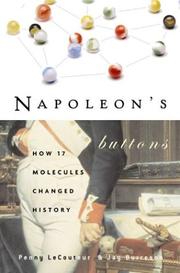
Closes the curriculum by showing how 17 molecules changed history, connecting deep technical mastery back to the human story of chemistry and inspiring continued exploration.
Discussion
Keep reading
Paths that share books, cover the same subject, or open a related topic.