The history of Russia: essential books from the tsars to today
This four-stage curriculum takes a beginner from the earliest foundations of Russian civilization all the way through the Soviet collapse and the emergence of modern Russia. Each stage builds on the last — first establishing the sweep of Russian history, then zooming into the Romanov dynasty and the revolutionary crisis, then diving deep into the Soviet experiment, and finally reckoning with what Russia has become since 1991.
Foundations: The Big Picture
BeginnerGain a confident, readable overview of Russian history from its origins to the present day, building the chronological backbone and key vocabulary needed for everything that follows.
▸ Study plan for this stage
Pace: 8–10 weeks, ~40–50 pages/day (Riasanovsky first: 5–6 weeks for ~600 pages; Service second: 3–4 weeks for ~400 pages)
- The Kievan Rus origins and the Byzantine-Orthodox inheritance that shaped Russian civilization
- The Mongol invasion and the long period of Tatar domination, and how Moscow emerged as the unifying center
- The rise of the Romanov dynasty and the expansion of the Russian Empire across three continents
- Serfdom as the defining social and economic institution, and the tensions it created
- The 19th-century conflict between Westernizers and Slavophiles, and the revolutionary movements that challenged autocracy
- The Russian Revolution of 1917, the Bolshevik seizure of power, and the creation of the Soviet state
- The Soviet system under Lenin and Stalin: ideology, industrialization, collectivization, and terror
- The Cold War era, de-Stalinization, stagnation, and the collapse of the Soviet Union in 1991
- How did the Byzantine-Orthodox tradition and the Mongol invasion shape Russia's distinct path compared to Western Europe?
- What role did Moscow play in unifying Russian territories, and how did the Romanovs consolidate their rule?
- What was serfdom, and why did its persistence into the 19th century create such acute social and political tensions?
- What were the main ideological and political currents (Westernizers, Slavophiles, revolutionaries) that challenged Tsarist autocracy in the 1800s?
- How did the Bolsheviks seize and consolidate power, and what was the vision behind the early Soviet state?
- What were the major consequences of Stalin's industrialization, collectivization, and the Great Purge?
- How did the Soviet Union emerge as a superpower after World War II, and what led to its eventual collapse?
- Create a detailed timeline from Kievan Rus (9th century) to 1991, marking major dynasties, wars, revolutions, and reforms. Use Riasanovsky's chronological structure as your backbone.
- Build a glossary of 40–50 essential Russian history terms (e.g., boyar, mir, Duma, Bolshevik, collectivization, glasnost) with definitions and the historical period each belongs to.
- Draw three maps: (1) Kievan Rus and its neighbors, (2) the Russian Empire at its territorial peak, (3) the Soviet Union. Annotate key cities, regions, and expansion patterns.
- Write a 2–3 page comparative essay on how Riasanovsky and Service each frame the causes of the 1917 Revolution. What does each author emphasize?
- Create a chart comparing the reigns of three major figures (e.g., Peter the Great, Catherine the Great, Nicholas II, Lenin, Stalin) with columns for: key policies, major events, and long-term consequences.
- After finishing Riasanovsky, write a 1-page synthesis of how geography, religion, and foreign pressure shaped Russian development differently from Western Europe. Then, after Service, revise it with his modern perspective.
Next up: This stage establishes the chronological spine and core vocabulary of Russian history, preparing you to dive into thematic deep dives—whether that's the Romanov court, revolutionary ideology, Soviet culture, or regional histories—with confident context and the ability to situate specific topics within the larger narrative arc.
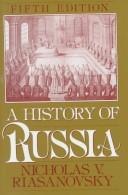
The gold-standard introductory survey used in universities for decades. It covers Kievan Rus through the post-Soviet era in clear, authoritative prose — the perfect map before exploring any single era in depth.

A highly readable narrative focusing on the period from the tsars to Putin. Reading it second reinforces the chronology from Riasanovsky while adding sharper political and social analysis, especially for the 20th century.
The Tsars and the Romanovs
BeginnerUnderstand the Romanov dynasty in depth — its culture, power, contradictions, and the seeds of its destruction — so that the 1917 revolution feels inevitable rather than sudden.
▸ Study plan for this stage
Pace: 8–10 weeks, ~40–50 pages/day (Massie's book is ~600 pages; adjust pace based on density of chapters)
- The Romanov dynasty's rise to power and consolidation of absolute rule under Peter the Great and Catherine the Great
- Nicholas II's personality, weaknesses, and inability to adapt to modern political pressures—the fatal gap between his autocratic ideology and Russia's evolving society
- Alexandra's influence over Nicholas, her obsession with Rasputin, and how court intrigue destabilized governance during WWI
- The role of Rasputin as a symbol of court corruption and the erosion of the monarchy's legitimacy among the Russian people
- The structural contradictions of Tsarist Russia: industrial modernization clashing with feudal autocracy, creating revolutionary ferment
- How World War I accelerated the dynasty's collapse by exposing military incompetence, economic strain, and Nicholas's disastrous decision to take personal command
- The lived experience of the Romanov family—their isolation, their love for each other, and their blindness to the forces gathering against them
- The inevitability of 1917: how personal failings, systemic rigidity, and historical forces converged to make revolution not a surprise but a logical outcome
- What were Nicholas II's core character flaws, and how did they prevent him from effectively governing Russia during a period of rapid change?
- Describe Alexandra's relationship with Rasputin and explain why this relationship became so damaging to the Romanov dynasty's public image and political stability.
- How did Russia's rapid industrialization create social and political tensions that the Tsarist system was structurally incapable of managing?
- What role did World War I play in accelerating the downfall of the Romanovs, and what were the consequences of Nicholas II taking personal command of the army?
- How did the Romanov family's personal isolation and insularity contribute to their political blindness regarding the revolutionary sentiment building in Russia?
- Why does Massie's portrayal of the Romanovs make the 1917 revolution feel inevitable rather than sudden? What specific evidence supports this?
- Create a timeline of key Romanov rulers (Peter the Great through Nicholas II) with 2–3 defining characteristics and achievements/failures for each; annotate how each ruler's decisions set conditions for the next crisis.
- Write a character study of Nicholas II (3–4 pages) analyzing his psychology, ideology, and decision-making patterns; use specific scenes from Massie to illustrate his fatal weaknesses.
- Map the relationship between Alexandra, Nicholas, and Rasputin using a diagram or narrative; explain how each person's motivations and vulnerabilities created a feedback loop that damaged the dynasty.
- Compile a list of structural contradictions in Tsarist Russia (e.g., modernizing economy vs. feudal politics) and trace how each one contributed to revolutionary pressure; cite specific examples from the book.
- Create a cause-and-effect chain showing how WWI decisions by Nicholas II cascaded into military, economic, and political crises; identify the turning points where different choices might have altered outcomes.
- Write a reflection (2–3 pages) on how Massie's intimate portrayal of the Romanov family's personal lives shapes your understanding of their political failures—what does knowing their humanity add to the historical analysis?
Next up: By understanding the Romanovs' internal contradictions, personal failings, and structural inability to adapt, you'll be prepared to examine the revolutionary movements and ideologies that rose to challenge them, making the transition to studying the causes and course of the 1917 revolution feel like a natural continuation rather than a new topic.
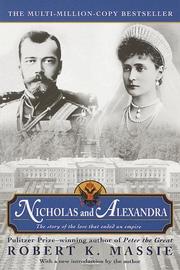
A Pulitzer Prize-winning intimate portrait of the last tsar and his family. Reading it after the dynasty-wide view gives the final Romanovs their full tragic weight and makes the revolution's causes deeply personal.
Revolution and the Soviet Era
IntermediateGrasp the causes and course of the 1917 revolution, Lenin's seizure of power, Stalin's terror, and the full arc of the Soviet experiment through its collapse in 1991.
▸ Study plan for this stage
Pace: 8–10 weeks, ~40–50 pages/day. Start with Reed's eyewitness account (1–2 weeks), move to Figes' comprehensive narrative (4–5 weeks), then Lovell's analytical overview (2–3 weeks). Build in 1 week for review and synthesis.
- The structural collapse of Tsarist Russia: economic crisis, military failure in WWI, and the breakdown of state authority that made revolution possible
- The Bolshevik seizure of power in October 1917: Lenin's strategy, the role of the Soviets, and how a minority party took control
- The Russian Civil War and War Communism as the crucible that shaped Soviet ideology and practice
- Stalin's consolidation of power, forced collectivization, and the Great Terror as mechanisms of totalitarian control
- The Soviet system's internal contradictions: centralized planning, ideological rigidity, and the gap between Marxist theory and brutal practice
- WWII as a defining moment that legitimized the Soviet state but deepened its militarization and paranoia
- The Cold War stalemate and the Soviet Union's inability to sustain economic competition with the West
- The structural reasons for Soviet collapse: economic stagnation, the failure of reform, and the loss of ideological conviction by 1991
- What were the immediate triggers for the February and October revolutions of 1917, and how did they differ in their causes and outcomes?
- How did Lenin's Bolsheviks, a minority party, successfully seize and consolidate power against competing revolutionary factions?
- What was the relationship between the Russian Civil War and the development of Stalinist totalitarianism?
- How did Stalin's policies of collectivization and the Great Terror reshape Soviet society, and what were their human costs?
- What role did WWII play in both strengthening and ultimately weakening the Soviet system?
- Why did the Soviet Union, despite its military and industrial achievements, ultimately fail to sustain itself economically and ideologically?
- Create a detailed timeline of key events from February 1917 to 1991, marking major turning points (revolutions, civil war, collectivization, terror, WWII, Cold War, collapse) and noting how each reshaped the system.
- Write character sketches of Lenin, Stalin, and one other major figure (e.g., Trotsky, Khrushchev) based on Figes' account, analyzing how their personalities and decisions shaped Soviet history.
- Map the competing revolutionary groups in 1917 (Bolsheviks, Mensheviks, SRs, anarchists) using Reed's eyewitness details and Figes' analysis—explain why the Bolsheviks won.
- Analyze a primary source document from the Soviet era (e.g., a Stalin decree, a purge confession, or propaganda poster) in light of Lovell's explanation of how the system functioned.
- Debate: Was the Soviet collapse inevitable from 1917, or were there moments when reform could have saved the system? Use evidence from all three books.
- Create a comparative chart showing how Soviet ideology (Marxism-Leninism) differed from Soviet practice under Lenin, Stalin, and later leaders, citing specific examples from the texts.
Next up: This stage provides the historical foundation and ideological context necessary to understand Soviet foreign policy, the Cold War, and Russia's post-1991 trajectory—preparing you to examine how the Soviet collapse reshaped global geopolitics and Russian identity.
An eyewitness account of the October Revolution by an American journalist on the ground. Reading a primary source here anchors the abstract politics of 1917 in vivid, street-level reality before moving to scholarly analysis.
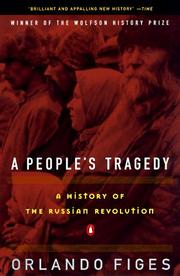
The definitive modern history of the Russian Revolution and its immediate aftermath. Figes weaves together the experiences of peasants, soldiers, and leaders into a monumental narrative — best read after Reed has set the scene.

A concise, analytically sharp overview of the entire Soviet system — its ideology, society, and economy. Reading it here consolidates everything learned so far and prepares the reader for the final stage on modern Russia.
The Fall and the Making of Modern Russia
ExpertUnderstand how the Soviet Union collapsed, how Russia reinvented itself under Yeltsin and Putin, and what the deeper historical forces mean for Russia's place in the world today.
▸ Study plan for this stage
Pace: 6–8 weeks, ~40–50 pages/day (approximately 400–500 pages total)
- Putin's rise from KGB operative to president: his formative experiences in East Germany, the collapse of Soviet authority, and his rapid ascent through St. Petersburg politics
- The Yeltsin era as a period of chaos, oligarchy, and national humiliation: how weak central authority and economic collapse shaped Putin's vision for Russia
- Putin's consolidation of power: the suppression of oligarchs, recentralization of state control, and the use of security services to maintain authority
- The relationship between Putin's personal history and his geopolitical ambitions: how his KGB background and experience of Soviet collapse inform his view of NATO, the West, and Russian sovereignty
- The role of energy (oil and gas) as both a source of state power and a tool of foreign policy under Putin
- Chechnya and the second Chechen war as a crucible for Putin's leadership and a turning point in Russian domestic and foreign policy
- Putin's ideology of managed democracy and sovereign verticality: the suppression of independent media and opposition as state strategy
- Russia's reassertion as a great power: Putin's vision for restoring Russian influence in the post-Soviet space and confronting Western encroachment
- How did Putin's experiences as a KGB officer in East Germany shape his worldview and his later approach to governance and foreign policy?
- What were the key factors that allowed Putin to rise from relative obscurity in Leningrad/St. Petersburg to the presidency, and how did the chaos of the Yeltsin era facilitate his ascent?
- How did Putin consolidate power once he became president, and what role did the oligarchs, the security services, and control of media play in this process?
- What is the connection between Putin's personal history and his geopolitical strategy toward NATO, Ukraine, and the former Soviet republics?
- How has Putin used Russia's energy resources as an instrument of state power and foreign policy leverage?
- What was the significance of the second Chechen war in establishing Putin's authority domestically and shaping his approach to security and dissent?
- Create a timeline of Putin's life and career from his KGB service through his first years as president, noting key turning points and how each shaped his worldview
- Map the oligarchs mentioned in the book: identify who they were, their sources of wealth, their relationship to Yeltsin, and how Putin dealt with each one
- Write a 2–3 page character study of Putin based on Myers' portrait, focusing on the psychological and historical factors that explain his approach to power
- Trace the evolution of Putin's relationship with the West and NATO from his early presidency to the end of the book; identify specific decisions and statements that reveal his strategic thinking
- Analyze 2–3 key moments of crisis or decision in the book (e.g., the second Chechen war, the suppression of oligarchs, the 2004 election) and explain how Putin's KGB background informed his response
- Create a visual diagram showing how Putin's control operates: the role of the security services, state-controlled media, the energy sector, and managed elections in maintaining his 'vertical of power'
Next up: This stage provides the essential biographical and political foundation for understanding Putin's Russia and its trajectory, preparing you to examine Russia's regional ambitions, its conflicts with the West, and the ideological and strategic forces that drive contemporary Russian foreign policy.
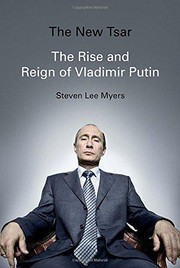
The most thorough and balanced biography of Vladimir Putin available, tracing his KGB roots through his consolidation of power. It shows how Russia's tsarist and Soviet past echoes directly in its present, bringing the entire curriculum full circle.
Discussion
Keep reading
Paths that share books, cover the same subject, or open a related topic.