Stalin and the Soviet Union: the best books to understand the era
This curriculum moves from accessible narrative history to rigorous scholarly analysis, building a complete picture of Stalin's Soviet Union across four stages. Each stage deepens the reader's conceptual vocabulary — starting with the human story, then the political mechanics, then the ideological and structural forces, and finally the revisionist and archival scholarship that continues to reshape our understanding.
Foundations: The World Stalin Entered
BeginnerUnderstand the revolutionary context that made Stalin possible — the collapse of Tsarist Russia, the Bolshevik seizure of power, and the early Soviet state — so that Stalin's rise feels historically grounded rather than inevitable.
▸ Study plan for this stage
Pace: 8–10 weeks, ~40–50 pages/day. Start with *A People's Tragedy* (600+ pages, 5–6 weeks), then move to *Young Stalin* (450+ pages, 3–4 weeks). Build in 1–2 weeks for review and synthesis.
- The structural collapse of Tsarism: how imperial overextension, military defeat, and rigid autocracy created revolutionary conditions rather than reform
- The Bolshevik seizure of power as a disciplined minority action, not a mass uprising—Lenin's organizational genius and the role of contingency
- The Russian Civil War and War Communism as formative crucibles that shaped Soviet state violence, centralization, and the cult of the party
- Stalin's early life in the Caucasus (Georgia, Baku) as a window into provincial radicalism, ethnic complexity, and the seminary education that shaped his worldview
- Stalin's rise within the Bolshevik party apparatus (1912–1924): his role as General Secretary, his alliance-building, and his exploitation of Lenin's death
- The concept of 'permanent revolution' vs. 'socialism in one country'—the ideological fault lines that Stalin would weaponize
- The role of contingency and personality in history: how individual choices and rivalries (not just structural forces) shaped the Soviet trajectory
- What were the primary structural weaknesses of Tsarist Russia that made revolution possible, and why did reform fail to prevent collapse?
- How did the Bolsheviks, as a minority party, successfully seize and consolidate power in 1917–1922? What role did Lenin play, and what role did contingency?
- What was the Russian Civil War, and how did the experience of fighting it shape Bolshevik ideology and Soviet state practices?
- Describe Stalin's early life and education. How did his Georgian background, seminary training, and work in the Caucasus radical movement influence his later worldview and methods?
- How did Stalin position himself within the party hierarchy after Lenin's death, and what advantages did his role as General Secretary give him in the succession struggle?
- What were the key ideological differences between Stalin and his rivals (Trotsky, Bukharin, Kamenev) in the 1920s, and how did Stalin use these differences politically?
- Timeline exercise: Create a detailed chronology of 1900–1924 marking key events in Tsarist collapse, revolution, civil war, and Stalin's rise. Annotate with 2–3 sentences explaining the significance of each cluster.
- Character map: For *Young Stalin*, build a visual network of Stalin's key relationships (mentors, rivals, allies) in the Caucasus and early Bolshevik party. Note how each relationship shaped his tactics or ideology.
- Comparative analysis: Write a 2–3 page essay comparing why Tsarism collapsed but the Bolshevik state survived the Civil War. What structural or organizational factors explain the difference?
- Primary source close-read: Select one key document (e.g., Lenin's April Theses, a passage from Stalin's writings on 'socialism in one country') and annotate it with historical context from Figes and Montefiore. What does it reveal about the ideological stakes?
- Debate prep: Prepare arguments for both sides of 'Was Stalin's rise inevitable given the revolutionary context, or was it contingent on his personal cunning and luck?' Ground your case in specific evidence from both books.
- Spatial analysis: Map the geography of Stalin's early life (Georgia, Baku, St. Petersburg, Moscow) and explain how regional dynamics (Caucasian nationalism, oil-industry radicalism, urban vs. provincial party structures) influenced his trajectory.
Next up: By understanding the revolutionary chaos, ideological ferment, and power structures of the 1920s, you are now positioned to examine how Stalin consolidated absolute power in the 1930s and transformed the Soviet state through industrialization, collectivization, and terror.
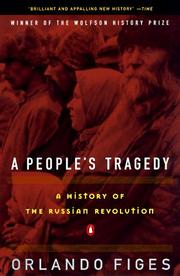
A sweeping, deeply human narrative of the Russian Revolution from 1891 to 1924. Reading this first gives the reader the essential backstory — the chaos, ideology, and violence — out of which Stalin would emerge.
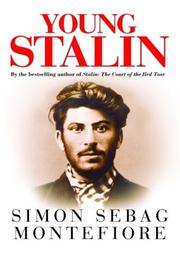
A vivid, accessible biography of Stalin's early life as a Georgian outlaw, bank robber, and underground revolutionary. It humanizes Stalin before his monstrous power, making his psychology legible for everything that follows.
The Rise and the Terror
BeginnerTrace how Stalin outmaneuvered rivals to seize total power, and confront the full horror of collectivization, the Ukrainian famine, and the Great Terror of the 1930s.
▸ Study plan for this stage
Pace: 12–14 weeks, ~40–50 pages/day. Start with Montefiore (4–5 weeks, ~600 pages), move to Snyder (3–4 weeks, ~450 pages), finish with Figes (4–5 weeks, ~700 pages). Build in 1–2 weeks for review and synthesis.
- Stalin's consolidation of power through eliminating rivals (Trotsky, Bukharin, Kamenev, Zinoviev) and the role of the Communist Party apparatus and secret police
- Collectivization as both economic policy and instrument of terror, and its catastrophic human costs
- The Ukrainian famine (Holodomor) of 1932–1933 as a deliberate or structurally inevitable consequence of Stalin's policies
- The Great Terror (1936–1938): the show trials, the purges of Old Bolsheviks, military officers, and ordinary citizens, and the logic of mass denunciation
- The role of fear, surveillance, and the secret police (NKVD) in sustaining totalitarian control
- How ordinary Soviet citizens experienced, rationalized, and survived Stalinist terror at the family and community level
- The geographical and ethnic dimensions of Soviet violence: the Bloodlands as a zone of overlapping Nazi and Soviet atrocities
- Competing narratives and evidence: how historians reconstruct and interpret Stalin's intentions and the terror's mechanisms
- How did Stalin use the Communist Party apparatus, the secret police, and ideology to outmaneuver his rivals between 1922 and 1928, and what was the significance of the 'Great Break'?
- What were the stated goals of collectivization, and how did it function as both an economic and political weapon against the peasantry and Ukraine?
- What evidence do historians present for the causes and scale of the Ukrainian famine, and how do interpretations differ regarding Stalin's intent?
- What were the mechanisms and logic of the Great Terror: who were the targets, what role did denunciation play, and how did the show trials serve Stalin's purposes?
- How did ordinary Soviet citizens—workers, party members, intellectuals, families—experience, justify, and survive the terror, and what does personal testimony reveal about daily life under Stalinism?
- How do Snyder's arguments about the Bloodlands as a zone of Nazi-Soviet violence complicate or reframe the history of Stalinist terror within a broader European context?
- Create a timeline of Stalin's rise to power (1922–1928) using Montefiore, marking key rivals eliminated, policy shifts, and turning points; annotate with the mechanisms he used (party purges, ideology, secret police).
- Map the geography of collectivization and famine using Snyder's Bloodlands framework: identify regions, ethnic groups, and death tolls; compare Soviet and Nazi violence geographically and chronologically.
- Read and analyze 2–3 excerpts from the show trials (available in Montefiore or supplementary sources) and write a 500-word analysis of how confessions were extracted and what political purposes they served.
- Construct a family tree or social network of one purged Old Bolshevik (e.g., Bukharin, Kamenev, or Zinoviev) using Montefiore, tracing how Stalin's policies affected their relatives, colleagues, and successors.
- Select one personal testimony or family narrative from Figes' The Whisperers and write a 750-word close reading that connects the individual experience to the broader terror: how did this person rationalize, resist, or comply?
- Debate or write a comparative essay (1000–1200 words) on a historiographical question: Did Stalin deliberately engineer the Ukrainian famine, or was it a tragic consequence of collectivization? Use evidence from Snyder and Montefiore.
Next up: This stage establishes the historical foundations of Stalinist terror and its human toll, preparing you to examine how the Soviet system evolved after 1938, how it mobilized for war, and how memory and legacy of the terror shaped Soviet and post-Soviet society.
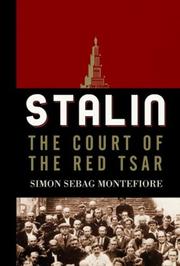
The essential narrative of Stalin at the height of his power, told through the inner circle of terrified loyalists around him. Its storytelling pace makes the terror viscerally real without requiring prior scholarly background.
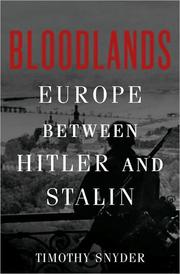
Focuses on the lands between Hitler and Stalin where mass killing was most concentrated, including the Ukrainian famine and the Great Terror. Reading it after Montefiore adds geographic and comparative depth to the human cost.
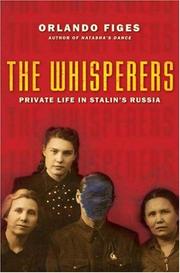
Built from hundreds of survivor testimonies, this book reveals how ordinary Soviet citizens lived, loved, informed on neighbors, and survived under Stalin. It grounds the terror in everyday private life.
The Gulag, the War, and the System
IntermediateUnderstand the institutional machinery of Stalinist rule — the gulag archipelago, the command economy, and the catastrophic yet ultimately victorious experience of World War II — as a functioning, if murderous, system.
▸ Study plan for this stage
Pace: 8–10 weeks, ~40–50 pages/day (Gulag: 5–6 weeks; Ivan's War: 3–4 weeks)
- The gulag as an instrument of state control: its origins, expansion, and role in the Stalinist system beyond mere punishment
- The mechanics of the command economy and how it intersected with gulag labor and resource allocation
- The dehumanization process within the camps: how the system broke down individual identity and agency
- The Soviet experience of World War II as both catastrophic and legitimizing—how the war reshaped the gulag and Soviet society
- The perspective of ordinary soldiers and civilians: how they endured, rationalized, and survived under Stalinist rule
- The long-term institutional legacy of Stalinist machinery—how the system perpetuated itself through fear, ideology, and bureaucratic inertia
- What were the origins of the Soviet gulag system, and how did it evolve from the 1920s through Stalin's rule?
- How did the gulag function as an economic institution, and what role did forced labor play in Stalin's command economy?
- What psychological and social mechanisms allowed the gulag system to persist, and how did prisoners maintain or lose their sense of self?
- How did World War II transform the Soviet gulag system, and what was the relationship between military mobilization and camp operations?
- What does Merridale's account of ordinary soldiers reveal about how Soviet citizens understood and justified their participation in the Stalinist system?
- How did the experiences of gulag prisoners and frontline soldiers differ, and what did they share in terms of state control and survival?
- Create a timeline of the gulag's institutional development (origins, major expansions, peak populations) using Applebaum's chronology, then annotate it with key policy decisions and their economic rationales
- Map the gulag archipelago: identify major camp complexes, their geographic locations, and their primary economic functions (mining, forestry, construction) as described in Applebaum
- Write a 500-word character study of a gulag prisoner from Applebaum's accounts, analyzing how they coped with dehumanization and what strategies they used to survive
- Construct a comparison table: gulag prisoners vs. frontline soldiers in Ivan's War—compare their living conditions, agency, ideological exposure, and mortality rates
- Analyze 2–3 excerpts from Ivan's War where soldiers rationalize or justify Soviet rule despite its brutality; write a brief reflection on how propaganda and survival instinct intertwined
- Create a visual diagram showing how the command economy, gulag labor, and military production were interconnected during WWII, using evidence from both books
Next up: This stage grounds you in the institutional and human reality of Stalinist control at its peak, preparing you to examine how this system either persisted, adapted, or fractured after Stalin's death and the war's end.
The definitive, Pulitzer Prize-winning history of the Soviet camp system. After two stages of narrative, this book provides the structural and archival depth needed to understand the gulag not as an aberration but as a pillar of the Soviet state.

A ground-level history of the Soviet soldier in World War II, drawn from diaries and interviews. It shows how Stalin's system both nearly destroyed and ultimately mobilized the USSR, making the war's outcome comprehensible.
Discussion
Keep reading
Paths that share books, cover the same subject, or open a related topic.