Women's suffrage: the best books on the fight for the vote
This curriculum traces the women's suffrage movement from its earliest stirrings to its global legacy, beginning with accessible narrative histories before moving into primary voices, transatlantic comparisons, and finally critical scholarly analysis. Each stage builds the historical vocabulary, key figures, and political context needed to fully appreciate the deeper and more complex works that follow.
Foundations: The Big Picture
BeginnerGain a confident, chronological overview of the suffrage struggle in Britain and America, learning the key figures, turning points, and basic vocabulary of the movement.
▸ Study plan for this stage
Pace: 4–5 weeks, ~40–50 pages/day (approximately 280–350 pages total across both books)
- The parallel but distinct suffrage movements in Britain and America, including their different strategies and timelines
- Key figures and their contributions: Emmeline Pankhurst, Susan B. Anthony, Elizabeth Cady Stanton, Carrie Chapman Catt, and others
- The evolution of tactics: from petitions and lobbying to civil disobedience, hunger strikes, and political organizing
- Major turning points and legislative victories: the 1918 Representation of the People Act (Britain) and the 19th Amendment (America)
- The role of World War I in accelerating suffrage in Britain and delaying it in America
- Core vocabulary: suffrage, enfranchisement, civil disobedience, militant activism, and political strategy
- The intersectional challenges faced by women of color and working-class women within the movement
- What were the main differences in strategy between British suffragists (particularly the Pankhursts) and American suffragists (particularly Catt and Anthony)?
- How did World War I affect the suffrage movements in Britain and America differently?
- Who were the key leaders in each country and what were their major contributions to the movement?
- What were the major legislative milestones that led to women gaining the vote in Britain (1918) and America (1920)?
- How did the suffrage movement evolve from peaceful petitioning to more militant forms of protest, and what prompted these changes?
- What obstacles did women of color and working-class women face within the broader suffrage movement?
- Create a detailed timeline comparing British and American suffrage events from 1850–1920, marking key figures, protests, and legislative moments from both books
- Write character sketches (1–2 pages each) of 4–5 major figures (e.g., Emmeline Pankhurst, Carrie Chapman Catt, Susan B. Anthony) based on how Atkinson and Weiss portray them
- Debate or write a comparative analysis: Why did militant tactics work (or not work) in Britain versus America? Use specific examples from the books
- Create an annotated visual map showing the geographic centers of suffrage activism in Britain and America, noting regional differences highlighted in the texts
- Compile a glossary of 15–20 key terms and concepts from both books with definitions and historical examples
- Write a 3–4 page synthesis essay: 'How did the First World War reshape the suffrage struggle?' using evidence from both Atkinson and Weiss
Next up: This stage establishes the foundational narrative and key players you'll need to understand the deeper ideological debates, internal conflicts, and long-term consequences of suffrage that the next stage will explore in detail.

A richly illustrated, accessible narrative of the British suffrage movement that introduces the major players — Emmeline Pankhurst, the WSPU, and the constitutional suffragists — making it the perfect entry point for a complete beginner.

A gripping, narrative-driven account of the final battle to ratify the 19th Amendment in America, giving beginners an equally strong grounding in the US suffrage story as a complement to the British picture just established.
Primary Voices: The Suffragettes and Suffragists Speak
BeginnerHear the movement in its own words by reading the memoirs and speeches of the women who lived it, building empathy and a feel for the ideological debates within the movement.
▸ Study plan for this stage
Pace: 4–5 weeks, ~40–50 pages/day. Start with "My Own Story" (2–3 weeks, ~40 pages/day), then move to "Shoulder to Shoulder" (2 weeks, ~50 pages/day). Build in 2–3 days for reflection and note-taking between books.
- Emmeline Pankhurst's evolution from constitutional suffragist to militant tactician and her justification for direct action
- The personal costs of activism: imprisonment, force-feeding, and the toll on family relationships documented in Pankhurst's memoir
- Ideological tensions within the suffrage movement—militant vs. constitutional approaches, explored through multiple first-person accounts in 'Shoulder to Shoulder'
- The role of emotion, moral conviction, and lived experience in driving political commitment, as revealed through intimate memoir and oral history
- Intersectionality within the movement: how class, nationality, and generational differences shaped women's participation and strategies
- The power of narrative and testimony as political tools—how suffragettes used their own stories to build public support and justify their methods
- What specific events and personal experiences led Emmeline Pankhurst to abandon constitutional methods and embrace militant tactics, according to 'My Own Story'?
- How does Pankhurst justify the use of property destruction and other militant actions in her memoir, and what does this reveal about her moral reasoning?
- What were the human costs of suffrage activism as depicted in Pankhurst's account—both for her personally and for her family?
- How do the multiple voices in 'Shoulder to Shoulder' reveal disagreements or tensions within the suffrage movement about strategy and goals?
- What role did class, nationality, or generational differences play in shaping how different women experienced and participated in the suffrage struggle?
- How do these first-person accounts use emotion and personal narrative to persuade readers of the justice of their cause?
- Create a timeline of Pankhurst's political evolution in 'My Own Story', marking key turning points where her tactics or beliefs shifted, with direct quotes from the text.
- Write a 2–3 page reflection comparing Pankhurst's justification for militancy with a contrasting voice from 'Shoulder to Shoulder'—what assumptions underlie each position?
- Select one powerful passage from each book and annotate it for rhetorical strategy: How does the author use language, emotion, and detail to persuade the reader?
- Create a character map of the women featured in 'Shoulder to Shoulder', noting their backgrounds (class, nationality, role in movement) and their stated positions on tactics.
- Write an imagined dialogue between Emmeline Pankhurst and one other suffragist from 'Shoulder to Shoulder', grounded in their actual positions and concerns as revealed in the texts.
- Identify 3–4 moments in these books where personal suffering or sacrifice is described, and analyze how the authors use these moments to build moral authority for their cause.
Next up: Having internalized the suffragettes' own justifications, moral reasoning, and lived experiences, you are now ready to examine the historical context, opposition, and broader political landscape that shaped and constrained their movement.
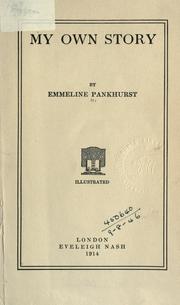
The autobiography of the most famous suffragette leader is essential primary source reading; after the overview in Stage 1, readers can now place Pankhurst's passionate, combative voice in full context.

A documentary history drawn from letters, diaries, and speeches of the British suffragette movement that broadens the picture beyond Pankhurst alone and introduces the internal tensions between militancy and constitutionalism.
Deeper Histories: Race, Class, and the Transatlantic Struggle
IntermediateUnderstand the suffrage movement's complex intersections with race and class, and appreciate how Black women and working-class women fought for — and were often excluded from — the vote on both sides of the Atlantic.
▸ Study plan for this stage
Pace: 8–10 weeks, ~40–50 pages/day (accounting for dense historical analysis and primary source excerpts)
- The dual exclusion of Black women from both white-led and male-led suffrage movements, and their independent organizing strategies
- How class divisions within the suffrage movement shaped tactics, alliances, and who benefited from the 19th Amendment
- The transatlantic circulation of suffrage ideas and strategies between American and British movements, and how race and class shaped these exchanges differently
- The role of Black women's organizations (like the National Association of Colored Women) in advancing voting rights alongside broader racial justice
- How intersectionality—the overlapping systems of racism, sexism, and class oppression—shaped women's suffrage experiences across the Atlantic
- The gap between formal legal victory (19th Amendment, 1920) and actual voting access for Black women and working-class women in practice
- The competing visions of 'womanhood' and citizenship that different suffrage factions promoted, and whose interests they served
- How did Black women's suffrage activism differ from white women's suffrage activism in goals, methods, and organizational structures?
- What role did class divisions play in fragmenting the American suffrage movement, and how did this affect the final outcome of the 19th Amendment?
- How did British and American suffrage movements influence each other, and did race and class shape these transatlantic connections differently than gender alone?
- Why did the 19th Amendment's passage in 1920 not guarantee voting rights for Black women and many working-class women, and what strategies did these groups use to fight for actual access?
- How did organizations like the National Association of Colored Women connect suffrage to other racial justice and economic justice goals?
- What does Terborg-Penn and Wheeler's work reveal about the limitations of a single-issue (gender-only) approach to understanding suffrage history?
- Create a timeline comparing Black women's suffrage milestones with white women's suffrage milestones (1850–1920), noting moments of collaboration and divergence
- Read and annotate 3–4 primary source documents from each book (speeches, letters, organizational records) and write a 2-page analysis of how race and class shaped the author's arguments and audience
- Map the organizational landscape: create a chart of major suffrage organizations mentioned in both books, noting their racial composition, class base, and positions on inclusion/exclusion
- Write a comparative essay (1,500–2,000 words) on one aspect of Black women's suffrage activism in America vs. British suffrage activism, using evidence from both books
- Conduct a close reading of Wheeler's discussion of the 19th Amendment's passage and aftermath; write a reflection on why legal victory did not equal voting access, with specific examples from the text
- Create a visual or written 'counter-narrative' of suffrage history from the perspective of one Black woman or working-class woman activist featured in Terborg-Penn's work, incorporating details from her life and organizing
Next up: This stage equips you to recognize that suffrage was never a monolithic movement and that understanding whose voices were centered—and whose were silenced—is essential for analyzing any social movement; the next stage will likely deepen your analysis of how these exclusions shaped post-1920 politics and modern feminist movements.
A landmark scholarly work that recovers the vital but long-overlooked role of Black suffragists, providing essential corrective context after the predominantly white narratives of the first two stages.
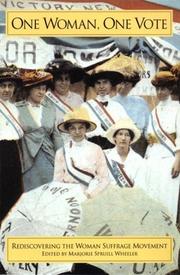
An edited collection of essays by leading historians covering the full sweep of the American suffrage movement, including its racial and class fault lines — ideal for consolidating and complicating what readers have learned so far.
Advanced Scholarship: Ideology, Militancy, and Legacy
ExpertEngage with rigorous historical and political scholarship that interrogates the tactics, ideologies, and long-term legacy of the suffrage movements, and situates them within the broader history of feminism.
▸ Study plan for this stage
Pace: 8–10 weeks, ~40–50 pages/day (accounting for dense scholarship and note-taking)
- Militant tactics and civil disobedience: how and why the WSPU escalated from petitions to property destruction and hunger strikes, and the strategic debates within the movement
- Ideological divisions: the fractures between moderate constitutionalists and radical militants, and how class, generation, and political philosophy shaped these splits
- The Pankhurst family's leadership and personality-driven activism: Emmeline, Christabel, and Sylvia's divergent visions and their impact on movement cohesion
- Suffrage as a gateway issue: how women's political enfranchisement connected to broader feminist demands for economic independence, reproductive autonomy, and social equality
- Historiographical debates: how scholars interpret suffragism—as a triumphalist narrative of progress, a story of class collaboration and compromise, or a radical challenge to patriarchal structures
- The long-term legacy and limitations: what suffrage achieved and failed to achieve, and how the movement's tactics and compromises shaped subsequent feminist waves
- Transatlantic and comparative contexts: how British suffragism differed from American movements and what these differences reveal about national politics and feminist strategy
- What were the key differences between the militant tactics of the WSPU and the constitutional methods of other suffrage organizations, and what strategic arguments did each side make for their approach?
- How did Sylvia Pankhurst's account in *The Suffragette Movement* differ from the official WSPU narrative, and what does this reveal about internal ideological conflicts within the movement?
- According to Baker's analysis, how did suffragism intersect with other feminist and political movements of the era, and what were the long-term consequences of the suffragists' strategic choices?
- What role did class divisions play in shaping suffrage activism, and how did different social groups envision the purpose and scope of women's political participation?
- How do these texts evaluate the legacy of suffragism for subsequent feminist movements—what did suffragists achieve, and what unfinished business remained?
- What historiographical frameworks do Pankhurst and Baker employ, and how do their interpretations challenge or complicate popular understandings of the suffrage movement?
- Create a detailed timeline mapping the escalation of WSPU militant tactics (1903–1914), noting specific events, the stated rationales, and the movement's internal responses to each escalation. Annotate with quotes from Pankhurst's account.
- Construct a comparative chart of the major suffrage organizations (WSPU, NUWSS, and others mentioned in the texts), listing their leadership, ideology, tactics, and class composition. Use this to analyze how organizational structure shaped strategy.
- Write a 1,500–2,000 word analytical essay: "Was militant suffragism strategically effective or counterproductive?" using evidence from both texts to construct and defend a nuanced argument.
- Identify 3–4 key historiographical debates evident in Baker's scholarship (e.g., suffragism as radical vs. conservative, as inclusive vs. exclusionary). For each, write a paragraph explaining the stakes of the debate and what evidence each side marshals.
- Trace the ideological evolution of one key figure (Emmeline, Christabel, or Sylvia Pankhurst) across both texts, noting how their vision of suffragism and feminism changed and what external/internal factors drove those changes.
- Conduct a close reading of Pankhurst's preface or introduction and Baker's historiographical framing chapters. Write a 500-word reflection on how each author positions herself in relation to the movement and what this reveals about their interpretive approach.
Next up: This stage equips you with a sophisticated understanding of suffragism's internal complexities, ideological stakes, and contested legacy—preparing you to examine how these historical lessons shaped (and were reinterpreted by) later feminist movements and to critically assess what \"winning\" the vote actually meant for women's liberation.
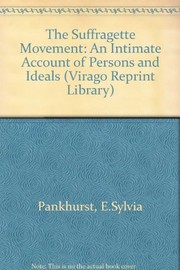
Emmeline's daughter Sylvia offers a sweeping, critical insider history of the British movement that is far more analytical and politically nuanced than her mother's memoir — essential for advanced readers ready to grapple with its contradictions.

A collection of cutting-edge scholarly essays that revisit and revise standard suffrage narratives, drawing on new archival research — the ideal capstone that challenges readers to think critically about everything they have read.
Discussion
Keep reading
Paths that share books, cover the same subject, or open a related topic.