The Best Books on the History of Photography, in Order
The history of photography has been written twice: once as a lineage of inventors and masterpieces, and once as an argument that the first version was a museum's invention. This path gives you both. It starts with the modern narrative surveys, goes back to the Newhall and Szarkowski account that defined the canon, then to the three books — Sontag, Barthes, Berger — that everyone still argues with, then to the critique that reads photographs as instruments of power, and finally to the histories written since: street photography, the photobook, and the photograph as contemporary art.
The narrative surveys
IntermediateHold the chronology in your head — daguerreotype and calotype, wet plate, the dry plate and the snapshot, Pictorialism, straight photography, documentary, colour, digital — and be able to place a photograph roughly by its process and its look
▸ Study plan for this stage
Pace: Six to eight weeks, and page count is a poor guide here because two of the three are half pictures. Gerry Badger's The genius of photography (256 pages) is a companion to a television series, generous with reproductions, and can be worked through in a week of evenings — the point is to acquire the i
- The process chronology — daguerreotype, calotype, wet plate, dry plate and the snapshot, colour, digital — and what each made newly possible
- Pictorialism against straight photography as a real argument about what a photograph should look like
- Documentary as a category with a funding history, not a neutral description
- The difference between a history organised by photographers and one organised by uses, which is Rosenblum against Marien
- How to date a photograph approximately from its process and its look
- Why an international survey turns out different from an Anglo-American one
- What can a wet-plate photographer do that a daguerreotypist cannot, and what does that change about the pictures?
- Where does Marien's social framing produce a different verdict on a photographer than Rosenblum's?
- What was Pictorialism arguing for, and what did straight photography accuse it of?
- Which parts of the medium's history does Badger's thematic structure make vivid and which does it obscure?
- Given an unlabelled photograph, what three features would you use to place it within twenty years?
- Take ten photographs reproduced in Badger and find each one again in Rosenblum; write what the fuller entry adds.
- Read Rosenblum's technical section on one process, then find a picture made with it and describe what the process did to the image.
- Read Marien and Rosenblum on the same decade and list the photographers only one of them includes.
- Build a one-page timeline of processes from Rosenblum and keep it beside you for the rest of the path.
Next up: You now have a chronology and a stock of images; the next stage shows you who decided which of those images counted.

The most readable way in: Badger's companion to the BBC series moves through the medium's history thematically and is generous with reproductions. Start here to acquire the images before you acquire the arguments — the later books assume you can picture what they are discussing.
The standard comprehensive survey, and genuinely international where earlier histories were Anglo-American. Its technical-history sections between chapters are the clearest short account anywhere of how the processes actually worked.

Catalogued simply as Photography. The modern textbook, and the best of the surveys at treating photography as embedded in social history rather than as a sequence of great photographers. Read it after Rosenblum, whose coverage it reorganises around use rather than authorship.
The canon and who made it
IntermediateUnderstand how photography was argued into art museums in the twentieth century, and see the canon as the product of specific curatorial decisions rather than as a natural fact
▸ Study plan for this stage
Pace: Two weeks, and by far the lightest stage in the path at 371 pages between the two. Beaumont Newhall's The history of photography from 1839 to the present day (216 pages) grew out of a museum exhibition and effectively created the field's canon: read it now as a primary source — an argument by a cura
- The canon as the product of specific curatorial decisions in a specific institution
- Szarkowski's five formal categories, and what they let you say about a picture
- Formalism: the claim that a photograph's meaning is in the picture rather than in its use
- What the exhibition format does to a history — what it must exclude to hang
- How Newhall's selection shaped the surveys you read in the previous stage
- The difference between reading a book as an account and reading it as evidence
- Which photographers does Newhall establish as central, and how many of them are still central in Rosenblum and Marien?
- What does Szarkowski's formalism let you say about a snapshot, and what does it stop you saying?
- What kinds of photography does a museum history structurally leave out?
- If the canon is curatorial rather than natural, does that make it wrong, or only contingent?
- Which of Szarkowski's five categories is doing the most work, and which is nearly empty?
- Apply all five of Szarkowski's categories to a single photograph and note which produces a real observation and which produces a platitude.
- List the photographers Newhall treats at length, then check how many appear in Rosenblum's non-Western chapters.
- Take a press photograph or a family snapshot and try to describe it in Szarkowski's terms; write down where the vocabulary fails.
- Write one paragraph stating the formalist position in your own words, to argue against later.
Next up: With the canon and the formalist case stated plainly, the three books everyone still argues with land as replies rather than as isolated classics.
Catalogued as The history of photography from 1839 to the present day. Newhall's book grew out of a 1937 MoMA exhibition and effectively created the field's canon. Read it now as a primary source: the standard history and, simultaneously, the thing every later critic is reacting against.
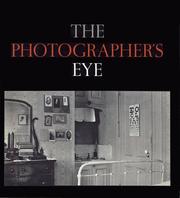
Szarkowski ran photography at MoMA after Newhall and made the formalist case here in about forty pages: the thing itself, the detail, the frame, time, vantage point. Short, enormously influential, and the clearest statement of the position the next two stages attack.
The arguments everyone still has
IntermediateSet out and evaluate the central claims about what a photograph is — a trace of the real, a way of acquiring the world, a picture whose meaning is supplied by its caption — and know which position you actually hold
▸ Study plan for this stage
Pace: Three to four weeks for 514 pages, which is deceptively short: these are dense essays and rereading is part of the work. Take Susan Sontag's On Photography (224 pages) first, one essay a sitting over about ten days, and expect to disagree while being unable to get around it. Then Roland Barthes's Ca
- Photography as acquisition and as aggression, which is Sontag's central charge
- Studium and punctum, and what kind of claim about a photograph each one is
- The indexical argument: that a photograph's power is that the thing was there
- Reproduction changing an image's meaning, and advertising borrowing the language of oil painting
- The caption problem — where a photograph's meaning is supplied from outside the frame
- Three incompatible answers to what a photograph is, and the evidence each would accept
- What exactly is Sontag accusing photography of, and does the charge apply to all photographs or a class of them?
- Can the punctum be argued about, or is it by definition private — and does that make it useless as criticism?
- How does Berger's account of reproduction bear on the museum canon you met in the previous stage?
- Which of these three positions does Szarkowski's formalism actually contradict?
- Which position do you hold, and what photograph would change your mind?
- Pick a photograph that has stayed with you and write what its studium is and what its punctum is; then decide whether Barthes's distinction survived the attempt.
- Take one Sontag claim and test it against a photograph she does not discuss — a family picture will do — and record where it holds.
- Recaption a news photograph three different ways and describe how the picture changes, then read Berger on the same effect.
- Read the essay in On Photography you disagree with most, twice, and write the strongest version of her case before writing yours.
Next up: These are arguments about photographs as images; the next stage refuses that frame entirely and reads them as documents produced by institutions.
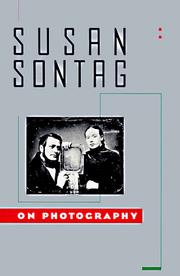
Six essays from the 1970s that remain the most cited writing on the medium: photography as acquisition, as aggression, as an anaesthetic for the conscience. Read it first in this stage, and expect to disagree with it while being unable to get around it.
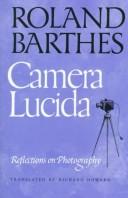
Barthes's last book, written after his mother's death, and the source of the studium and punctum distinction the whole field now uses. Half theory and half grief; it is the strongest available argument that a photograph's power is indexical rather than pictorial.

Not only about photography, and included because its account of how reproduction changes an image and how advertising uses the language of oil painting is the fastest route into the political reading that follows. Berger's Understanding a Photograph collects his photography writing specifically.
Photography as an instrument
IntermediateRead photographs as records produced by institutions — police, medicine, colonial administration, the press — and analyse a documentary image in terms of who commissioned it, who is looking, and what the picture is being used to prove
▸ Study plan for this stage
Pace: Five to six weeks, and the three books demand very different things. John Tagg's The burden of representation (242 pages) is the hard turn and the slowest reading in the path — theory built on archives of police and public-health photography, at 15 to 20 pages a session, three weeks. Susan Sontag's
- Authority as institutional rather than pictorial: the camera's evidential power granted by police, medicine and the state
- The archive as the unit of analysis instead of the individual image
- Who commissioned a documentary photograph, who is looking, and what it is being used to prove
- Sontag's change of mind, and what specifically caused it
- The academic field's main divisions as Wells maps them — documentary, the body, the archive, the gallery
- What a political reading of photography can establish and what it cannot
- What is Tagg's argument for saying the photograph has no inherent evidential force, and what would refute it?
- Where does Sontag revise On Photography, and is the revision a retraction or a refinement?
- How would Tagg read one of Szarkowski's exemplary pictures, and what would be lost?
- Which of the field divisions Wells describes is best served by the surveys you read in stage one?
- Does an atrocity photograph do anything that a written account of the same event does not?
- Take a documentary photograph from the surveys and reconstruct its commission — who paid, for what purpose, published where — then reread it.
- Read the same Sontag passage in On Photography and in Regarding the Pain of Others; write the two sentences that mark the change.
- Use one chapter of Wells as a reading list and follow up two of its references; report what the primary text says that the summary flattened.
- Find an institutional archive online — police, medical, colonial — and describe five images in Tagg's terms rather than aesthetically.
Next up: Having taken the canon apart, the last stage looks at the histories written since — of the street, the book, and the gallery.
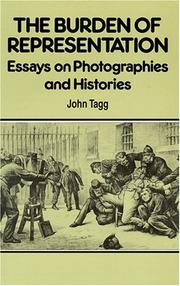
The hard turn: Tagg argues, from archives of police and public-health photography, that the camera's authority is granted by the institutions using it rather than by anything in the image. The most rigorous rejection of the Newhall and Szarkowski position in the path.
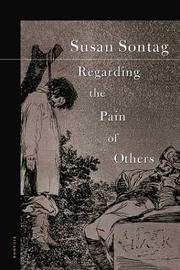
Sontag's late revision of her own position on war and atrocity photographs, and much less certain than On Photography. Read the two together — the change of mind is the lesson.

Catalogued simply as Photography. The standard university reader on photographic theory — documentary, the body, the archive, photography and the gallery — with a chapter-by-chapter bibliography. The best map of the field's arguments, and the book to steer by if Tagg is heavy going.
Histories written since
IntermediateFollow the medium's history through forms the canon underweighted — the street, the photobook, the contemporary gallery — and understand why the book, not the print, has become the historian's preferred unit
▸ Study plan for this stage
Pace: Four to five weeks for 1,010 pages, but two of the three are mostly pictures and should be scheduled as looking. Colin Westerbeck's Bystander (430 pages) is the exception: read it properly, at two or three chapters a week, as a real history of street photography from Atget onwards. Martin Parr and G
- Street photography as a practice defined by a relationship to strangers rather than by a subject
- The photobook as the historian's unit — sequence, edit, paper, size — instead of the single print
- Work that no museum history covered because it existed only as a book
- Cotton's categories of contemporary gallery practice, and which earlier argument each descends from
- What changed once photographers made work for the wall rather than the page or the magazine
- How a canon gets reopened: by finding a different object, not by relitigating the same one
- What does Bystander identify as the ethical problem of street photography, and how have practitioners answered it?
- Why does the sequence of a photobook carry meaning that a wall of the same prints does not?
- Which of Cotton's categories is doing work that Szarkowski would recognise, and which would he reject outright?
- Which photographers enter the history through Parr and Badger who are absent from Newhall and thin in Rosenblum?
- Does the photobook argument confirm Tagg's institutional account or complicate it?
- Take one photobook covered by Parr and Badger, find a full reproduction of its sequence, and write what the order does that the pictures alone do not.
- Photograph in a public place for an hour after reading Bystander, then write what the practice felt like against what the book describes.
- Assign three works from Cotton to the positions in stage three — Sontag, Barthes, Berger, Tagg — and defend each assignment in two sentences.
- Write a one-page account of the history of photography in your own words, naming which of the books on this path you are following and where you depart from it.
Next up: The path closes here: from this point the useful next move is a monograph on a single photographer or a single archive, read with the whole argument now in place.
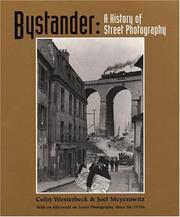
Catalogued as Bystander. Westerbeck and Winogrand's history of the genre from Atget to the present, and the best sustained account of a photographic practice defined by a relationship to strangers rather than by a subject.
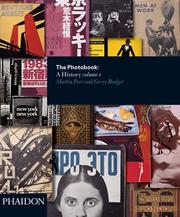
Catalogued as The photobook, a history. Parr and Badger rewrote the field's terms by arguing that the important unit is the book rather than the print, and the volumes are full of work no museum history had covered. A genuine reorientation of the canon.

The right last book: Cotton picks up where the historical surveys stop, organising the last three decades of gallery photography into workable categories. Read it to see which of the arguments in stages three and four contemporary practice actually took up.
Discussion
Keep reading
Paths that share books, cover the same subject, or open a related topic.