Best Books on the History of Myanmar and Burma
This curriculum takes an intermediate learner from a solid narrative foundation in Burmese history through the colonial era and independence struggle, into the complexities of military rule and Aung San Suu Kyi's democracy movement, and finally into the deeply contested modern crisis around the Rohingya. Each stage builds the political, cultural, and ethnic vocabulary needed to engage critically with the next, culminating in primary sources and investigative scholarship on Myanmar's most urgent contemporary tragedy.
Foundations: Kingdoms, Colonialism & the Making of Burma
IntermediateUnderstand the arc of Burmese history from the great kingdoms through British annexation and the colonial transformation of society, giving you the ethnic, geographic, and political vocabulary for everything that follows.
▸ Study plan for this stage
Pace: 8–10 weeks, ~40–50 pages/day (approximately 3–4 hours of focused reading per day). "The River of Lost Footsteps" (~400 pages) takes 5–6 weeks; "The Making of Modern Burma" (~300 pages) takes 3–4 weeks. Build in 1–2 weeks for review and synthesis.
- The rise and fall of the great Burmese kingdoms (Pagan, Ava, Toungoo) and their cultural/religious achievements
- The geographic and ethnic diversity of the Burmese region: Bamar, Shan, Karen, Mon, Rakhine, and other groups and their territorial claims
- British colonial expansion into Burma through three Anglo-Burmese Wars (1824–1885) and the logic of imperial conquest
- The transformation of Burmese society under colonial rule: administrative systems, economic extraction, social hierarchies, and the disruption of traditional institutions
- The role of Buddhism and kingship in pre-colonial Burmese identity and how colonialism severed this relationship
- The emergence of a Burmese nationalist consciousness and the early independence movement as a response to colonial rule
- The geographic and political vocabulary of Burma: the delta, the dry zone, the hill regions, and how colonial borders were drawn
- What were the major Burmese kingdoms before colonialism, and what were their key achievements and eventual decline?
- How did British imperial interests and military strategy drive the three Anglo-Burmese Wars, and what was the outcome of each?
- What were the major ethnic groups in Burma, and how did colonial rule reshape their relationships and territorial positions?
- How did British colonial administration transform Burmese society economically, socially, and politically?
- What role did Buddhism and the institution of kingship play in pre-colonial Burmese identity, and how did colonialism disrupt this?
- What were the early signs of Burmese nationalism, and what grievances drove the independence movement?
- Create a timeline of the major Burmese kingdoms (Pagan, Ava, Toungoo, Konbaung) with key dates, rulers, and cultural achievements; annotate with the factors that led to each kingdom's decline.
- Draw a map of pre-colonial Burma showing the territories of major ethnic groups (Bamar, Shan, Karen, Mon, Rakhine, Kachin) and compare it to a colonial-era map to identify how borders changed.
- Write a 500-word summary of each of the three Anglo-Burmese Wars (1824–26, 1852–53, 1885–86), including British motivations, key battles, and territorial outcomes.
- Create a two-column chart comparing pre-colonial and colonial Burmese society across categories: government, economy, religion, education, and social hierarchy.
- Read and annotate a primary source excerpt (e.g., a colonial administrator's report or a Burmese nationalist's statement) and explain how it reflects the tensions between tradition and colonial modernity.
- Write a reflective essay (800–1000 words) on how the severing of the link between Buddhism, kingship, and Burmese identity under colonialism created the conditions for modern nationalism.
Next up: This stage equips you with the historical foundations and political vocabulary—the kingdoms, ethnic groups, colonial structures, and early nationalist movements—necessary to understand modern Myanmar's independence struggle, civil wars, military rule, and contemporary ethnic conflicts in the subsequent stages.
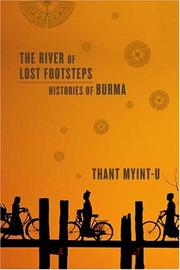
The single best narrative history of Burma from ancient kingdoms to the modern era, written by a leading Burmese historian. Read this first to build a confident mental map of the country's entire historical arc.
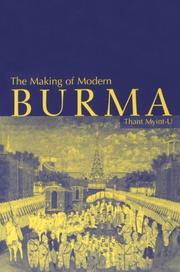
Thant Myint-U's earlier, more scholarly work zooms in on the critical colonial transformation — how British rule dismantled the Konbaung state and reshaped Burmese society. Read it second to deepen the colonial chapter introduced in the first book.
Independence, Nationalism & the Road to Military Rule
IntermediateGrasp the nationalist movement, the pivotal role of Aung San, the trauma of independence, and how Burma's fragile democracy collapsed into military dictatorship under Ne Win.
▸ Study plan for this stage
Pace: 8–10 weeks, ~40–50 pages/day. Start with "Burma" by Benedict Rogers (approximately 300 pages, 2–3 weeks), then move to "Perfect Hostage" by Justin Wintle (approximately 500 pages, 4–5 weeks). Allow 1–2 weeks for review, synthesis, and exercises.
- Aung San's emergence as the nationalist leader and his vision for a unified, independent Burma
- The Anti-Fascist People's Freedom League (AFPFL) and its role in mobilizing the independence movement
- The trauma and chaos of independence (1948): ethnic tensions, civil war, and the fragmentation of the nation-state
- The weakness of Burma's early democratic institutions and civilian governments (1948–1962)
- Ne Win's military coup (1962) and the ideological shift toward the 'Burmese Way to Socialism'
- The structural and political factors that enabled military authoritarianism (ethnic divisions, Cold War pressures, economic instability)
- Aung San's assassination (1947) and its destabilizing impact on the independence transition
- The role of the military as a modernizing but ultimately repressive institution in post-colonial Burma
- Who was Aung San, and what made him the dominant figure in Burma's independence movement? How did his vision for Burma differ from other nationalist leaders?
- What were the immediate crises Burma faced in the years following independence (1948), and why did the civilian government struggle to manage them?
- How did ethnic and regional tensions (particularly involving the Shan, Karen, and other minorities) contribute to the instability of early independent Burma?
- What were the key weaknesses of Burma's democratic institutions in the 1950s, and how did these vulnerabilities enable Ne Win's 1962 coup?
- What was the 'Burmese Way to Socialism,' and how did Ne Win use it to justify military rule?
- How did Aung San's assassination in 1947 affect Burma's transition to independence and the subsequent political trajectory?
- Create a timeline of key events from 1930–1962, marking major nationalist milestones, independence, and the coup. Annotate each with one sentence explaining its significance.
- Write a 500-word character sketch of Aung San based on Rogers and Wintle's accounts: his background, ideology, relationships with other leaders, and vision for Burma.
- Map the ethnic and regional divisions in Burma (using the books as reference), identifying which groups rebelled or resisted central authority and why.
- Compare and contrast the early democratic governments (1948–1962) with Ne Win's military regime: what problems did each claim to solve, and what new problems did military rule create?
- Analyze the 1962 coup: write a 400-word essay explaining the political, economic, and social conditions that made military takeover possible and seemingly justified to many Burmese.
- Create a two-column chart: 'Aung San's Vision for Burma' vs. 'What Actually Happened After Independence.' Use specific examples from both books to populate it.
Next up: By understanding how Burma's fragile democracy collapsed and military authoritarianism took root, you are now prepared to examine the long decades of Ne Win's rule and the emergence of resistance movements—including the role of Aung San's daughter, Aung San Suu Kyi, in challenging the regime.

A clear, well-sourced political history covering the independence era through the SLORC/SPDC military regimes. Rogers provides essential context on the ethnic conflicts and political structures that make later books intelligible.

A thorough biography of Aung San Suu Kyi that doubles as a political history of Burma from her father Aung San's assassination through her decades of house arrest. Reading it here bridges the independence era and the democracy struggle.
Military Dictatorship & the Democracy Movement
IntermediateDevelop a granular understanding of life under the generals, the 1988 uprising, Aung San Suu Kyi's activism, and the international dimensions of Burma's isolation.
▸ Study plan for this stage
Pace: 10–12 weeks, ~40–50 pages/day. Allocate 3–4 weeks per book to allow time for reflection and cross-textual synthesis. Begin with "Freedom from Fear" (essays, denser), move to "The Glass Palace" (narrative, longer), then "Finding George Orwell in Burma" (literary journalism, shorter).
- Aung San Suu Kyi's philosophy of non-violence and moral courage as articulated in her essays, and how it shaped the democracy movement
- The lived experience of ordinary Burmese under military rule, as depicted through the interconnected family narratives in 'The Glass Palace'
- The role of literature and intellectual resistance in authoritarian regimes, explored through Orwell's relevance to Burma
- The generational trauma and historical continuity from colonial Burma through the military era, spanning multiple timelines in 'The Glass Palace'
- International isolation and its effects on Burmese society, economy, and civil liberties under successive military governments
- The 1988 uprising as a pivotal moment: its causes, participants, suppression, and legacy for democracy activism
- How personal relationships and family bonds persist and fracture under political repression
- The intersection of nationalism, Buddhism, and political identity in Burmese resistance movements
- What does Aung San Suu Kyi mean by 'freedom from fear' as a precondition for democracy, and how does she argue non-violence can challenge authoritarian power?
- How does 'The Glass Palace' use the parallel stories of the Dinu and Rajkumar families to illustrate the impact of political upheaval on personal and national identity across generations?
- What specific parallels does Emma Larkin draw between Orwell's observations of Burma and the conditions under military dictatorship, and why does she argue Orwell remains relevant?
- What were the immediate triggers and broader grievances behind the 1988 uprising, and why was it ultimately suppressed despite widespread participation?
- How did international isolation under military rule affect Burma's economy, culture, and the ability of dissidents to organize and communicate?
- What role did Buddhism and Buddhist monks play in both the 1988 uprising and ongoing resistance to military rule, as depicted across these three texts?
- Close-read 3–4 key essays from 'Freedom from Fear' (e.g., 'In Quest of Democracy,' 'Intellectual Life in Burma Under Colonialism'). Annotate Aung San Suu Kyi's central arguments and trace how she defines courage, fear, and moral responsibility.
- Create a timeline of major political events in Burma (1962–1990) and cross-reference them with the narrative chronology of 'The Glass Palace' to understand how historical ruptures affect the characters' choices and relationships.
- Write a comparative character analysis of how Dinu (in 'The Glass Palace') and Aung San Suu Kyi (in her essays) each respond to political repression—one through private compromise, the other through public resistance—and reflect on what each approach reveals.
- Map the literary and intellectual references in 'Finding George Orwell in Burma' (Orwell's 'Shooting an Elephant,' Burmese literature, colonial history) and research 2–3 of them independently to deepen your understanding of Larkin's argument.
- Conduct a 'resistance audit': identify all forms of resistance depicted across the three books (political organizing, artistic expression, family loyalty, silence, compromise) and categorize them by effectiveness and cost.
- Write a reflective essay (1,500–2,000 words) answering: 'How do these three texts together explain why the 1988 uprising happened and why it failed, and what does each author suggest about the future of Burmese democracy?'
Next up: This stage grounds you in the lived reality, intellectual foundations, and historical trauma of the military era, preparing you to examine how Burma's transition to partial democracy (post-2011) and its subsequent backsliding have been shaped by these unresolved tensions and legacies.

Suu Kyi's own collected essays and speeches are an indispensable primary source — reading her words directly after a biographical account lets you hear her philosophy and moral framework in her own voice.

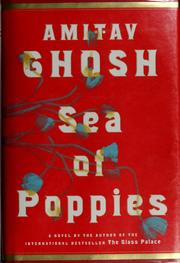
This landmark novel spans the fall of the Burmese monarchy through World War II and independence, humanizing the historical forces already studied. Fiction here builds emotional depth and cultural texture that pure history cannot.
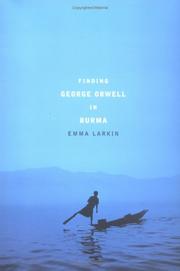
Larkin retraces Orwell's Burmese postings and finds his three novels prophetically mapped onto the country under military rule. It is one of the most vivid accounts of what dictatorship felt like from the inside, and a natural bridge to contemporary crisis.
The Rohingya Crisis & Contemporary Myanmar
ExpertEngage critically with the ethnic, religious, and political roots of the Rohingya persecution, the complicity of civilian leaders, and the international failure to prevent atrocity — equipping you to assess ongoing events with scholarly rigor.
▸ Study plan for this stage
Pace: 5–6 weeks, ~40–50 pages/day. Week 1–2: "The Rohingyas" by Azeem Ibrahim (approx. 250 pages). Week 3–4: "Everything is Broken" by Emma Larkin (approx. 300 pages). Week 5–6: Review, synthesis, and critical analysis exercises.
- The historical statelessness of the Rohingya: colonial legacies, citizenship laws, and the 1982 Citizenship Law that rendered Rohingya effectively non-citizens in Myanmar
- Religious and ethnic nationalism in Myanmar: how Buddhist nationalism and anti-Muslim sentiment became state ideology under military and civilian rule
- The role of civilian leaders and Aung San Suu Kyi: the paradox of democracy advocates enabling or failing to prevent atrocity crimes
- Structural factors enabling genocide: weak institutions, impunity, military dominance, and the absence of accountability mechanisms
- International complicity and failure: why the global community failed to intervene despite evidence of mass atrocity
- The 2012 communal violence and 2017 military crackdown: escalation patterns and the mechanisms of persecution
- Testimony and evidence: how survivor accounts and investigative journalism document atrocity and challenge official narratives
- Myanmar's political trajectory: how democratization paradoxically enabled rather than prevented ethnic cleansing
- What are the historical roots of Rohingya statelessness, and how did the 1982 Citizenship Law institutionalize their exclusion from Myanmar's political community?
- How did Buddhist nationalism become embedded in Myanmar's state ideology, and what role did it play in enabling anti-Rohingya violence?
- What is the paradox of Aung San Suu Kyi's role in the Rohingya crisis, and what does it reveal about the relationship between democratic transition and atrocity prevention?
- What were the key escalation points between 2012 and 2017, and what structural factors made large-scale persecution possible?
- How did international actors (UN, ASEAN, Western governments) fail to prevent or adequately respond to the Rohingya crisis, and what were their stated reasons?
- What evidence do Azeem Ibrahim and Emma Larkin present regarding military and civilian complicity, and how do their approaches to documenting atrocity differ?
- Timeline construction: Create a detailed chronology of Rohingya persecution from 1982–2017, marking key legislative changes, communal violence, military actions, and international responses. Cross-reference events across both books.
- Character analysis: Map the positions and actions of key figures (Aung San Suu Kyi, military leaders, Buddhist monks, international diplomats) across both texts. Identify contradictions and assess culpability.
- Comparative close reading: Select 3–4 passages from Ibrahim and Larkin describing the same events or periods. Analyze how their narrative framing, evidence, and conclusions differ, and what this reveals about journalistic vs. analytical approaches.
- International response audit: Document each international actor's (UN, ASEAN, US, EU, China) stated position and actual policy toward Myanmar/Rohingya. Identify gaps between rhetoric and action.
- Testimony analysis: Collect 5–6 survivor or witness accounts from both books. Analyze recurring themes, what they reveal about perpetrator intent, and how they challenge official state narratives.
- Policy brief: Write a 2,000-word analysis of why Myanmar's democratic transition failed to prevent atrocity, using evidence from both books to argue whether the problem was institutional, ideological, or international.
Next up: This stage equips you with deep historical and contemporary understanding of a specific atrocity crisis, positioning you to examine broader patterns of ethnic nationalism, democratic backsliding, and international failure across other cases and regions in subsequent stages.

A concise, policy-oriented account of the Rohingya's historical presence and systematic persecution. Read this first in the stage to establish the factual and legal framework before moving to deeper investigative work.

Larkin's account of the regime's catastrophic response to Cyclone Nargis (2008) exposes the full moral bankruptcy of military rule and the vulnerability of ordinary Burmese — a powerful closing lens on how power and suffering intersect in modern Myanmar.
Discussion
Keep reading
Paths that share books, cover the same subject, or open a related topic.